Chess Board Analysis: How to Analyze Your Chess Games and Actually Improve



Fianchetto in Chess: What It Means, How to Use It, and Why It Works
Discover what Fianchetto Chess means, how to set it up for both colors, and why top openings like the King's Indian and Catalan rely on this powerful bishop strategy.

Chess Tempo Explained: What It Is, Why It Matters, and How to Use It
Learn chess tempo with simple explanations, real-game examples, and proven strategies to gain advantage, avoid mistakes, and win more games—start now.
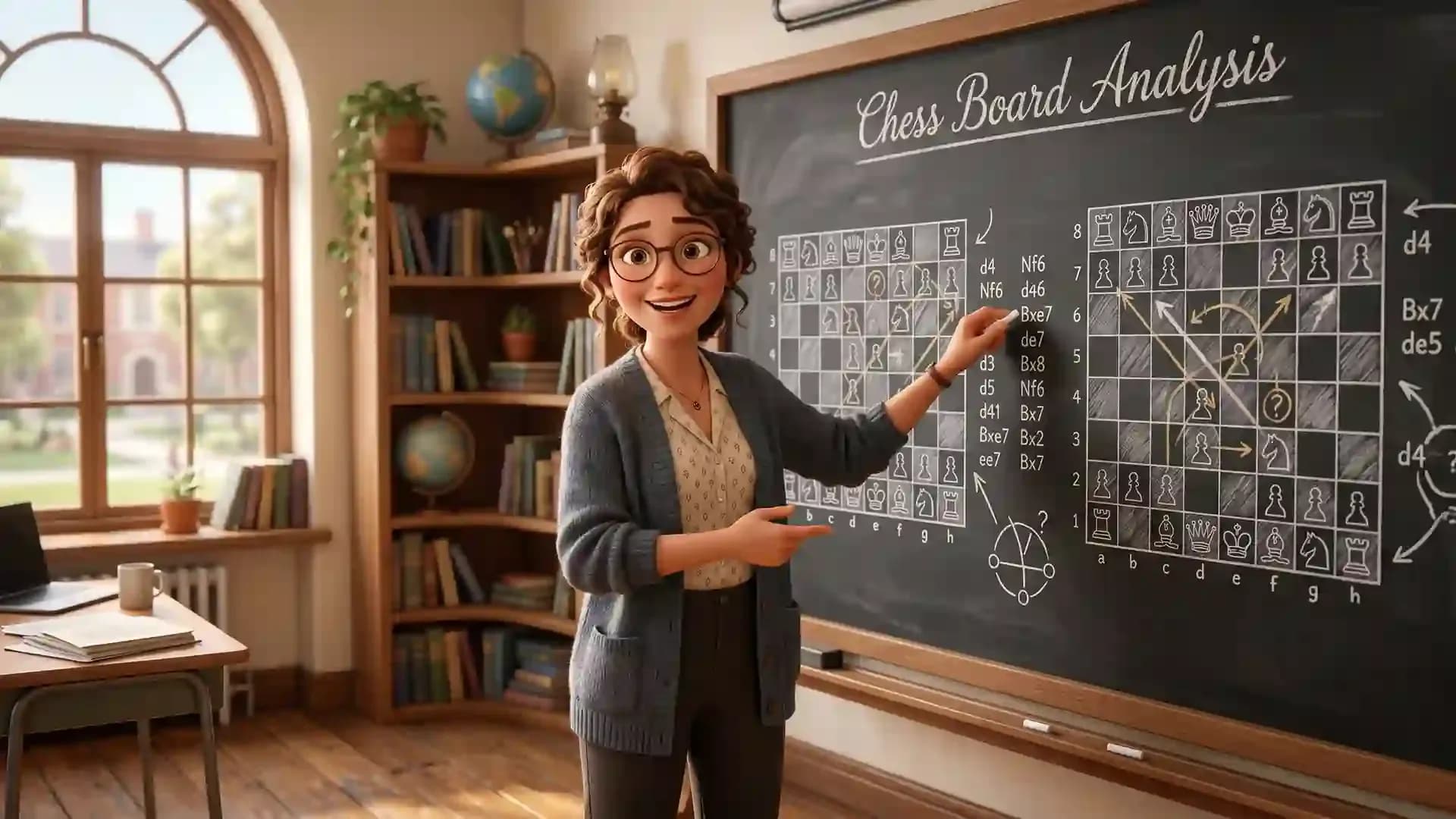
Chess Board Analysis: How to Analyze Your Chess Games and Actually Improve
Master chess board analysis with easy strategies and practical tips. Improve decision-making, spot tactics faster, and start winning more games today!
How to Win at Chess: Proven Strategies for Faster Improvement
Learn how to win at chess with clear strategies, smart planning, and mistake-free play. Improve faster, outplay opponents, and start winning games today.
Can a Pawn Take a King in Chess? (Full Explanation)
Can a pawn take a king in chess? Discover the real rule behind this common question and learn what happens in check and checkmate. Read the full guide now!

It is a fact that most beginners play chess regularly, while only a few spend time analyzing chessboards and studying chess tactics. But for those who wish to improve their chess game, it is best to do the opposite. Playing games provides the experience, but chessboard analysis provides the education. By not implementing a good feedback mechanism, you end up practicing your bad habits every time you click the “New Game” button.
We will show you how to use an online board analysis software efficiently, analyze the results, and explain what steps should be taken in order for you to win more often when playing chess online.
Table of contents
- What Is a Chess Board Analysis?
- What Can a Chess Board Analysis Tool Do?
- Why Chess Game Analysis Is the Fastest Way to Improve
- How to Read Chess Analysis: Key Features Explained
- PGN vs. FEN — What's the Difference?
- How to Analyze a Chess Game Step by Step
- The Best Free Chess Board Analysis Tools
- Common Chess Analysis Mistakes to Avoid
- Conclusion
What Is a Chess Board Analysis?
At its core, chessboard analysis is the process of reviewing a completed game to identify where the balance of power shifted. It involves looking beyond the game's result to uncover the objective truth of the positions reached.
The primary purpose of analysis is to bridge the gap between what you thought was happening during the heat of the battle and what was actually happening on the board. This deep dive into your own games is a staple of any effective chess study plan.
Online Analysis Board vs. Physical Analysis Board
- Online Tools: Websites such as Lichess and Chess.com have automatic engines (e.g., Stockfish). They give immediate results and are very efficient in finding any tactical errors that you may have overlooked.
- Physical Boards: Many Grandmasters still prefer using a real board and pieces for deep study. This forces "slow thinking." Without an engine to give you the answer, your brain has to work harder to calculate variations, which builds chess muscle memory. This practice is especially helpful for improving your over the board chess skills, where you won't have the assistance of digital arrows or indicators.
What Can a Chess Board Analysis Tool Do?
A modern analysis tool acts as a digital coach. Its features include:
- Evaluating Positions: Providing a numerical score for who is winning.
- Suggesting Best Moves: Showing the optimal continuation in any given chess board set-up.
- Detecting Errors: Inaccurate moves, blunders, or errors.
- Showing Variations: Letting you explore different lines while keeping your game history intact.
- Storing Games: Keeping a digital library of your progress.
Why Chess Game Analysis Is the Fastest Way to Improve
If you play 1,000 blitz games but never look at them, you will likely stay at the same rating. Here is why chess game analysis is the "cheat code" for improvement.
Identifying Your Mistakes and Blunders
We often lose games and think, I just got unlucky or They played perfectly. Analysis reveals the truth. Usually, a game is lost because of one or two specific losing moves. By identifying these, you can stop the bleeding in your rating and significantly improve chess skills over time.
Spotting Patterns You Keep Missing
Do you always fall for back-rank mates? Do you consistently struggle with "bad bishops"? Reviewing your games helps you see recurring tactical mistakes and positional weaknesses that you are blind to while playing. That spatial awareness starts with knowing the board itself, how many squares in a chess board reaches 204 when every overlapping square size is counted, giving you a much richer sense of the space your pieces actually control.
The Feedback Loop
Playing more games alone won't make you better because there is no feedback loop. Analysis provides the "Why" behind the "What." Without it, you are basically trying to learn a new language by constantly making mistakes when speaking it, without looking up any information. This intentional review process is a cornerstone of an effective chess tactic for improving your play, helping you identify gaps in your logic.
How to Read Chess Analysis: Key Features Explained
The analysis board may look like random figures and numbers to people who have never seen one before. Understanding how to read it is key to using chess analysis. Consistent improvement often comes from independent practice. If you don't always have an opponent, learning how to play chess by yourself can help you analyze positions, test ideas, and grow faster.
The Evaluation Bar: What It's Telling You
The "Eval Bar" is the most important visual aid in modern chess. It represents a numerical value:
- + Score (e.g., +1.5): White is winning by the equivalent of 1.5 pawns.
- − Score (e.g., −2.0): Black is winning by the equivalent of 2 pawns.
- 0.0: The position is objectively equal.
- M10: "Mate in 10." One side has a forced checkmate.
Engine Lines and Best Moves
Most tools show the top 3–5 "engine lines. These are sequences of moves that the computer considers the best. While you shouldn't try to play exactly like a computer, these lines show you the tactical potential of a position you might have thought was "boring."
Move Classifications
Inaccuracy (?!): A minor error that slightly drops your advantage but doesn't ruin the game.
Mistake (?): A significant error that gives the opponent a clear advantage.
Blunder (??): A move that loses material or leads to a forced mate. This is usually where the game is decided.
PGN vs. FEN — What's the Difference?
PGN (Portable Game Notation): The PGN is the format for representing the entire game in text. PGN contains all the moves until the end of the game. Use it whenever a complete game is required.
FEN (Forsyth-Edwards Notation): FEN is a string of characters that represents a particular position. You can use this chess notation to communicate with someone on a particular position of your choice.
How to Analyze a Chess Game Step by Step
Follow this workflow to get the most out of your study sessions:
- Step 1: Review Yourself First: Do not look at the engine yet. Instead, do a walkthrough of your game, trying to find where you made your mistake.
- Step 2: Immediate Reflection: Take notes on how you were feeling during the game. Did you feel pressured? Low on time? Overconfident? The answers will help you identify what psychological factors triggered your mistakes.
- Step 3: Load the PGN: Load your game into the analysis board.
- Step 4: Identify Critical Moments: Find the spikes in the evaluation bar. They will show you the game's critical moments.
- Step 5: Use the Engine as a Consultant: Ask your engine whether you were right about the move you chose. Do not blindly follow its suggestion, but figure out the reasons why your engine prefers that move over your own.
- Step 6: Make Annotations and Archive: Write a simple annotation, e.g., "Losses because I missed the fork on f7." Add the game to the "Losses” folder for later reference.
Following these steps will help you understand how chess pieces move in complex scenarios and how to coordinate them more effectively in your future matches.
The Best Free Chess Board Analysis Tools
- Lichess Analysis Board: Completely free, open-source, and provides unlimited Stockfish 16 analysis. It is widely considered the best tool for those on a budget.
- Chess.com Analysis: Offers a very user-friendly "Game Review" feature that uses natural language (e.g., "You missed a great move here"). The free version is limited to one "Diamond" review per day.
- Chessify: This tool is for serious players who want to use high-powered cloud engines. It’s excellent for deep opening preparation.
Common Chess Analysis Mistakes to Avoid
- Over-reliance on Engine: If you just click through the moves without thinking, you aren't learning. You are just watching a movie.
- Skipping Self-Analysis: If you don't try to find the mistake first, your brain won't remember the correction.
- Ignoring Losses: It’s tempting to only analyze the games you won because it feels good. However, you learn 10x more from your losses.
- Only Focusing on Openings: Beginners often spend hours analyzing the first 5 moves. Most games are lost in the middlegame or endgame. Focusing on your middle game strategy chess instead will yield much better results for your overall rating.
Conclusion
Chessboard analysis is what separates a chess player who remains at the 800 level for five years from another who reaches 1500 in just one year. It all comes down to how you utilize the evaluation bar, your knowledge of PGNs, and the systematic approach to post-game review. No more games, now for analysis.
FAQs
- Yes, definitely. This is actually the case for beginners, since they are likely to commit major mistakes that are easier to correct once identified.
- No. Try to analyze the game for 10 minutes on your own first. Use the engine only to "verify" your work.
- It is always advisable that one takes at least half the time taken in the game in order to conduct the analysis process. If it took you 10 minutes to play, then take 5 minutes analyzing your game.
- Yes. Most players see a "rating jump" after they start consistently analyzing their games, as they stop repeating the same basic tactical errors.
Fianchetto in Chess: What It Means, How to Use It, and Why It Works
Discover what Fianchetto Chess means, how to set it up for both colors, and why top openings like the King's Indian and Catalan rely on this powerful bishop strategy.
Chess Tempo Explained: What It Is, Why It Matters, and How to Use It
Learn chess tempo with simple explanations, real-game examples, and proven strategies to gain advantage, avoid mistakes, and win more games—start now.
Chess Board Analysis: How to Analyze Your Chess Games and Actually Improve
Master chess board analysis with easy strategies and practical tips. Improve decision-making, spot tactics faster, and start winning more games today!
How to Win at Chess: Proven Strategies for Faster Improvement
Learn how to win at chess with clear strategies, smart planning, and mistake-free play. Improve faster, outplay opponents, and start winning games today.
Can a Pawn Take a King in Chess? (Full Explanation)
Can a pawn take a king in chess? Discover the real rule behind this common question and learn what happens in check and checkmate. Read the full guide now!