Can You Play Chess by Yourself? (Yes — Here's How)


Types of Chess: Explore All Variants and How They're Played
Discover the different types of chess, including classical, rapid, blitz, and modern variants. Learn the rules, differences, and pick the best one to play today.
Castling in Chess: Rules, Long Castling & How to Castle
Castling in chess is a special move that allows the king and rook to move at the same time, helping protect the king and activate the rook for better board control.
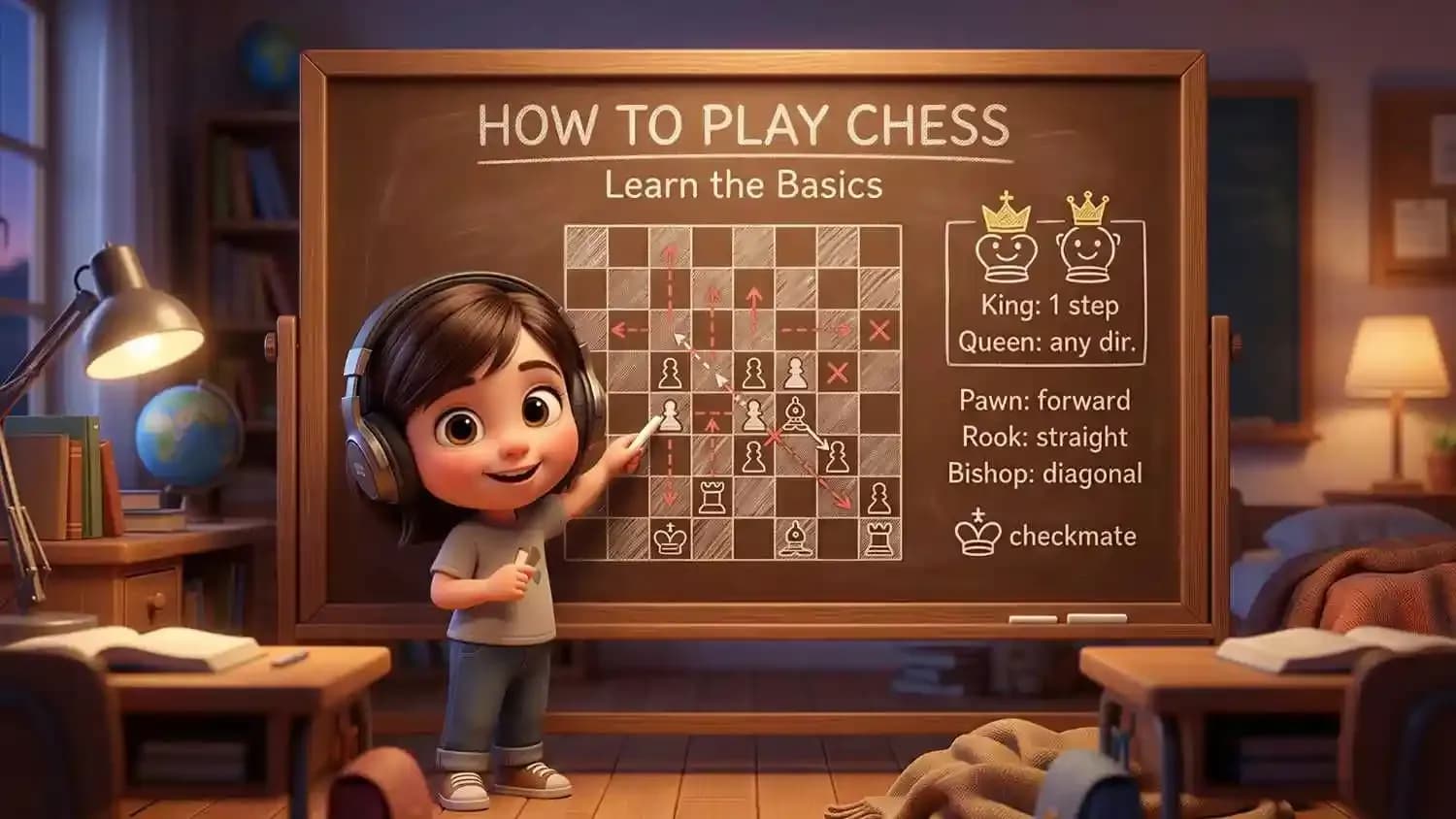
How to Play Chess: Easy Rules & Beginner Tips
How to play chess explained simply with board setup, piece rules, checkmate basics, and beginner strategies. Follow this guide and start playing today.

Youngest Chess World Champion: Top 10 Youngest Champions in History
Only a handful of players have ever claimed the title of youngest chess world champion, and the record keeps getting shattered. From Gukesh Dommaraju's historic 2024 win at just 18 to Kasparov's 40-year reign atop the record books, here's the full ranked list, timeline, and the rising prodigies who could break it next.
Chess Notation Explained: A Complete Guide to Reading and Writing Algebraic Notation
Master chess notation with our complete guide covering algebraic symbols, board coordinates, special moves and annotations. Start reading games today!
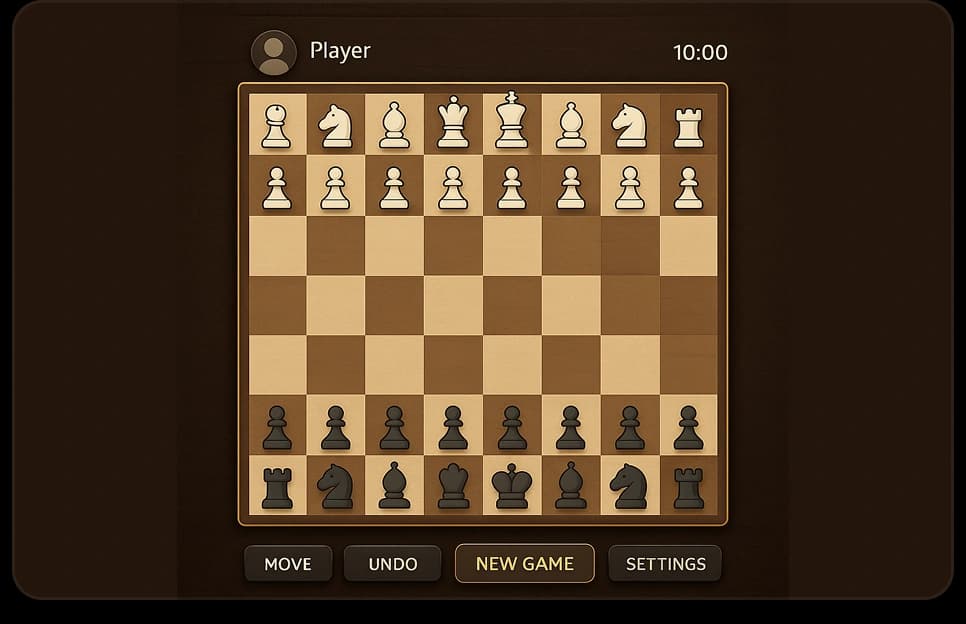
Have you ever sat down with your board but found no one ready to play? It happens to every chess enthusiast. Then the question comes, can you play chess by yourself? You sure can. Chess is a social game that involves 2 active individuals to play, but you can also play by yourself.
This guide shows easy ways to enjoy the game alone. You will train your mind and sharpen your skills fast. There is no age to start learning chess. So grab your pieces and let us dive in together.
Table of contents
- Why Would You Want to Play Chess Alone?
- 6 Easy Ways to Play Chess by Yourself
- Does Playing Chess Against Yourself Actually Help?
- Solo Chess vs Playing Against Yourself
- Benefits of Playing Chess Alone
- How to Practice Chess Alone in 20 Minutes (Simple Routine)
- Best Free Websites to Play Chess by Yourself
- Physical Chess Board
- Start Playing Chess Alone Today
Why Would You Want to Play Chess Alone?
Life moves fast these days. Friends often stay too busy for a full match. Playing alone gives you total control. You set the pace and pick your focus areas. No clock ticks loudly. No impatient sighs come from across the table.
Plus it builds strong focus over time. You see ideas from both sides of the board. Many players notice clearer thinking afterwards. Moreover, it fits any schedule perfectly too.
You can begin at any stage of life. Solo sessions help you grow step by step. They turn quiet moments into real progress. So why not give it a try soon?
6 Easy Ways to Play Chess by Yourself
You have solid options here. Each method hits different skills nicely. Mix them for steady improvement and enjoy your chess match. Here come 6 simple approaches.
1. Set up White Chess Pieces First
Set up your white pieces because in real games also, white always makes the first move. Setting the board with the pieces brings you into the rhythm. If you are a beginner, you can always start with a simple and classic move like moving the king's pawn forward two squares (1. e4). You can always look for a chess strategy for beginners to get started.

2. Play Both Sides (White and Black)
Set up the board first. Place the white pieces carefully. Move them like normal. Then switch seats and think as black. Reply with your best effort every time.
This forces you to see the full picture clearly. You test plans and catch your own flaws fast. Beginners love it because it feels like a real duel. You can use a physical board for that tournament feel. It’s always good to know standard chess board set-up rules.

Take time with each move. Avoid copying moves exactly. Your brain loves symmetry but real games break it. Think like a tough opponent always. Do not favor one side. Play to win from both colors. Grab a clock if you can. It keeps things honest. Write moves down in notation too. Review them later. Compare to grandmaster games in a database if available. You learn so much this way and enjoy the purity of the game.
3. Solve Tactical Puzzles
Tactics decide games quickly. Grab a puzzle book or open an app. Study the position hard. Find the winning line for the attacking side. Then switch and defend as the other color.
You calculate attacks and refutes at once. This will sharpen both your offense and defense. Spend ten minutes daily. You feel sharper in every real game. Beginners gain quick confidence here.
4. Play Against a Computer/Bot
Modern tools make this effortless. Jump into “play chess with computer” mode. Start at an easy level first. Play full games and learn from every mistake.
Bots adjust to your strength well. Hence, they never get tired or complain. You practice openings, middlegames, and endings safely. It feels close to playing chess online yet stays private and calm.

5. Replay and Analyze Famous Games
Pick a classic game from any book or site. Replay each move slowly on your board. Pause and guess the next idea every time.
You can search for chess strategies for beginners and mimic the moves with proper understanding. Your understanding grows move by move. It feels like learning straight from the greats.
6. Play with Proper Chess Notation
When you write down your every move in a notebook or a recorder then you realise how actually you play naturally. These notations will help you in post match analysis. Furthermore, you will now understand how you can overcome your chess move mistakes. Following this process will also help you in mastering chess move notations. In addition, if you are a beginner you can purchase a chess book that can explain beginners moves.
Does Playing Chess Against Yourself Actually Help?
Yes, it really does help a lot. You train your mind with deep calculation and solid planning. Switching sides removes blind spots fast. Over time you cut out blunders nicely that can lift up your chess game.
However, results depend on your honesty. Never favor one color. Review moves afterwards with care. Combine your solo practice with occasional sessions where you play chess online for better balance and a real-game experience.
Many club players rely on it heavily. Their ratings climb quicker than before. You might notice the same gains too.
Solo Chess vs Playing Against Yourself
Playing chess on your own splits into two key styles- solo chess and playing against yourself, also known as regular self-play. They seem alike on the surface. Yet each one targets its own set of skills.
Below are the clear differences between both types:
| Feature | Solo Chess | Playing Against Yourself |
| Time per session | Quick hits of 5 to 10 minutes | Longer runs of 30 minutes or more |
| Purpose | Tactical practice and stronger board sight | Big-picture strategy and complete game runs |
| Skill Focus | Sharp calculation and key forcing sequences | Planning ahead and cutting down on mistakes |
| Format | One-sided moves to crack a puzzle or goal | Handling both colors in a full match |
| Tools | Puzzle books, apps, or the Woodpecker approach | Real board or software like a PGN viewer |
Benefits of Playing Chess Alone
- Playing chess by yourself brings many benefits. Chess builds better focus and skills. It helps beginners and experts the same.
- You control the pace of the game completely. You can spend all the time you need on any spot. Neither a clock presses you nor an opponent gets restless.
- You dig into deep analysis by switching sides to check both views & perspectives. This improves how you pick moves.
- You shape sessions that fit your playing style. You can work on game openings, tactics or endings.
- It is easy to begin. You only need a board, app, website.
- You can build strong mental endurance. Solo chess games boost stamina, focus, and patience. Moreover, you can avoid beginner chess mistakes with regular practice.
How to Practice Chess Alone in 20 Minutes (Simple Routine)
Got a packed day ahead? No problem at all. This quick routine fits anywhere easily. Try it three times each week.
- The first five minutes tackle tactical puzzles. Solve five sharp and fast.
- Next ten minutes play both sides from a random spot. Stick to one clear plan.
- In the last five minutes review your moves closely.
These methods are simple yet very effective. You build strong habits without burnout.
Best Free Websites to Play Chess by Yourself
Need quick digital help? These platforms shine for solo chess fans.
- Lichess.org- This platform is a completely free platform offering unlimited puzzles, game analysis, and practice tools.
- Chess.game- One of the most simple, beginner-friendly platforms for quick games and easy solo practice.
- Chess.com- Another popular chess website with bots, puzzles, lessons, and games for all skill levels.
Each one offers instant access. No downloads needed for basics. Start exploring them today.
Physical Chess Board
The old-school way still beats everything. Use a real board to:
- Mimic real tournament feel
- Train blindfold memory by covering pieces
- Set up spots straight from books
In case you are planning to buy a standard board, you must understand some international rules. Lets see what are FIDE(The International Chess Federation or World Chess Federation) tournament boards rules.
- Squares run five to six centimeters wide.
- That comes to about 2 to 2.4 inches.
- The board stays matte with strong contrast.
- Each square must hold four pawns easily.
- Kings usually stand around ninety-five millimeters tall.
- Piece bases take forty to fifty percent of their height.
| Square size | Play area (8x squares) | Typical king height |
| 5.0 cm (2.0") | 40 cm (15.75") | ~95 mm (±10%) |
| 5.5 cm (2.17") | 44 cm (17.32") | ~95 mm (±10%) |
| 6.0 cm (2.36") | 48 cm (18.90") | ~95 mm (±10%) |
Start Playing Chess Alone Today
You already hold everything you need. A board or app or even paper works fine. Pick one method from above and jump in now. Small steps create big gains. Your next real game will feel stronger and you will be more confident than ever.
So why wait another minute? Open that board or browser. We think now you got your answer for “How to play chess by yourself". Enjoy every step of the journey.
FAQs
- Yes. You take both sides or use handy tools. It works great for solid practice.
- Actually it is an excellent choice. You control pace and fix weak spots. Many players improve faster this way.
- Solo chess means practicing chess without any opponent. You solve puzzles, replay games or play with both colors alone.
- Beginners start with easy puzzles and short self games. Use bots or chess books for beginners. Keep every session fun and short.
Types of Chess: Explore All Variants and How They're Played
Discover the different types of chess, including classical, rapid, blitz, and modern variants. Learn the rules, differences, and pick the best one to play today.
Castling in Chess: Rules, Long Castling & How to Castle
Castling in chess is a special move that allows the king and rook to move at the same time, helping protect the king and activate the rook for better board control.
How to Play Chess: Easy Rules & Beginner Tips
How to play chess explained simply with board setup, piece rules, checkmate basics, and beginner strategies. Follow this guide and start playing today.
Youngest Chess World Champion: Top 10 Youngest Champions in History
Only a handful of players have ever claimed the title of youngest chess world champion, and the record keeps getting shattered. From Gukesh Dommaraju's historic 2024 win at just 18 to Kasparov's 40-year reign atop the record books, here's the full ranked list, timeline, and the rising prodigies who could break it next.
Chess Notation Explained: A Complete Guide to Reading and Writing Algebraic Notation
Master chess notation with our complete guide covering algebraic symbols, board coordinates, special moves and annotations. Start reading games today!