Fianchetto in Chess: What It Means, How to Use It, and Why It Works



Fianchetto in Chess: What It Means, How to Use It, and Why It Works
Discover what Fianchetto Chess means, how to set it up for both colors, and why top openings like the King's Indian and Catalan rely on this powerful bishop strategy.

Chess Tempo Explained: What It Is, Why It Matters, and How to Use It
Learn chess tempo with simple explanations, real-game examples, and proven strategies to gain advantage, avoid mistakes, and win more games—start now.

Chess Board Analysis: How to Analyze Your Chess Games and Actually Improve
Master chess board analysis with easy strategies and practical tips. Improve decision-making, spot tactics faster, and start winning more games today!
How to Win at Chess: Proven Strategies for Faster Improvement
Learn how to win at chess with clear strategies, smart planning, and mistake-free play. Improve faster, outplay opponents, and start winning games today.

Can a Pawn Take a King in Chess? (Full Explanation)
Can a pawn take a king in chess? Discover the real rule behind this common question and learn what happens in check and checkmate. Read the full guide now!

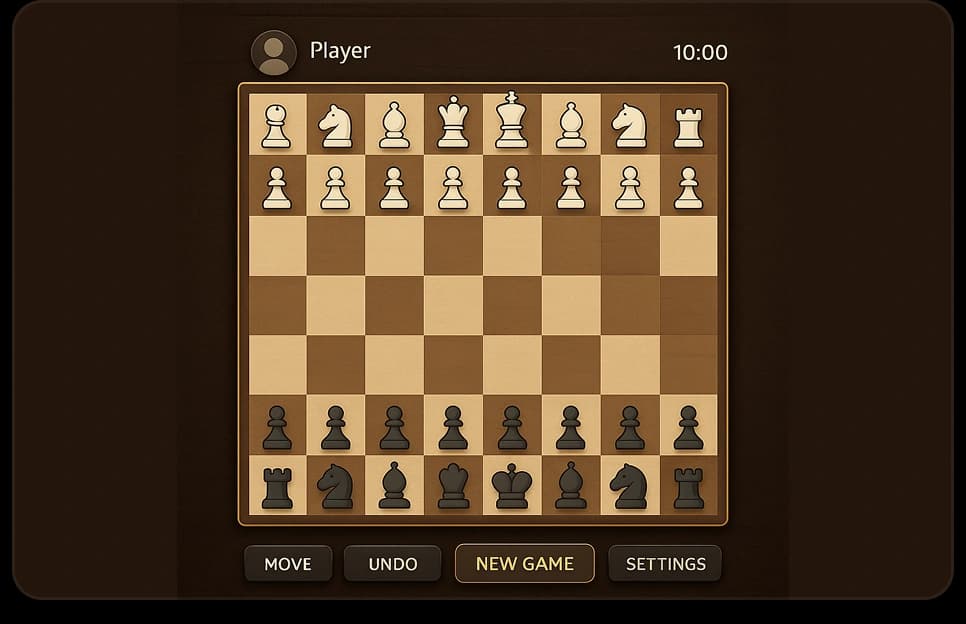
Classic openings in chess follow the rules of the Fianchetto Chess approach, although the traditional method encourages players’ effort to rapidly gain control of the board’s center using pawns and short distances for moving bishops. Nonetheless, the grand masters use a different strategy, based not on confrontation but on a sniper technique. It is all about the Fianchetto Chess idea.
Instead of deploying your bishop to traditional, active central squares, you tuck it safely onto a flank home where it can exert immense, long-range pressure across the longest diagonals on the board. Test this setup out the next time you play chess online to see how effectively it controls space.
Table of contents
What Is a Fianchetto Chess?

As far as you want to get information on fianchetto strategy in chess, you should know that it is a peculiar system of development, which consists in moving of the b or g pawn forward by 1 or 2 squares and then the bishop being placed on the diagonal square, which may be either b2 or g2 in the case of whites or b7 or g7 in the case of blacks.
This strategy makes the fianchettoed bishop control the two longest diagonals of the board, namely a1-h8 and a8-h1. Fianchetto doesn’t provide the bishop to be able to attack immediately from the first rank; it is used as a cannon behind the line of the pawns. Learning how to properly anchor these long-range pieces is an essential part of mastering advanced pawn structure chess strategies.
What Does Fianchetto Mean?
Fianchetto can become clear when we understand its actual meaning in the game of chess. Etymology of the word can provide us with some clarity about the word. Fianchetto means “little flank” in Italian.
The name describes exactly how the strategy functions. Instead of controlling the board through the traditional center, you develop your piece on the small flank of the board to establish control from a distance.
How to Fianchetto: Step-by-Step for Both Colors
Executing a proper flank development requires clean coordination. You cannot simply drop your bishop onto the side of the board; you must systematically prepare the pawn structure to make room for it based on how chess pieces move.
| Side | Type | Move 1 | Move 2 | Resulting Positioning |
|---|---|---|---|---|
| White | Kingside | g3 | Bg2 | Light-squared bishop controls the a8–h1 diagonal |
| White | Queenside | b3 | Bb2 | Dark-squared bishop controls the a1–h8 diagonal |
| Black | Kingside | g6 | Bg7 | Dark-squared bishop controls the a1–h8 diagonal |
| Black | Queenside | b6 | Bb7 | Light-squared bishop controls the a8–h1 diagonal |
The Golden Rule of the Fianchetto
What not to do: You should never exchange the fianchettoed bishop unless you have a compelling reason to do so. Without the fianchettoed bishop on the board, the weaknesses created by the pawn moves like f3 and h3, or f6 and h6 become easy targets for your opponent’s queen and knight.
The King's Fianchetto Opening

The King's Fianchetto Opening is seen where the player White develops his/her opening play based on rapid kingside development, right from the first move 1.g3.
Advantages of this system:
- It offers a reliable, low-risk setup that avoids heavy opening theory.
- It fits perfectly into a beginner's guide to chess strategy beginners by emphasizing safety.
- It creates a rock-solid, highly secure castle defense for your king.
Disadvantages of this system:
- It grants Black complete freedom to choose their preferred central pawn structure.
- It lacks immediate central tension, meaning White must react to Black's plans rather than dictating the early pace of the game. For players looking to surprise their opponents, it provides a quiet alternative to more mainstream aggressive chess openings like the King's Gambit.
The Double Fianchetto

If you want to take this flank strategy to its absolute limit, you can try the double fianchetto. This approach involves developing both of your bishops to the flanks (playing both g3/Bg2 and b3/Bb2 as White).
This setup creates a powerful cross-fire system. Your twin bishops slash across the entire board from opposite corners, locking down both long diagonals and creating a suffocating web of pressure that can easily trap an unprincipled opponent.
Famous Chess Openings That Use the Fianchetto
Many of the most popular, high-scoring modern defense chess openings rely completely on flank development to fight for an advantage.
| Opening | Played By | Fianchetto Square | Diagonal Controlled |
|---|---|---|---|
| King's Indian Defense | Black | g7 (Dark-Squared) | a1–h8 Diagonal |
| Sicilian Defense (Dragon Variation) | Black | g7 (Dark-Squared) | a1–h8 Diagonal |
| Catalan Opening | White | g2 (Light-Squared) | a8–h1 Diagonal |
| King's Indian Attack | White | g2 (Light-Squared) | a8–h1 Diagonal |
| Réti Opening | White | g2 (Light-Squared) | a8–h1 Diagonal |
| Pirc Defense | Black | g7 (Dark-Squared) | a1–h8 Diagonal |
| Modern Defense | Black | g7 (Dark-Squared) | a1–h8 Diagonal |
| Larsen's Opening | White | b2 (Dark-Squared) | a1–h8 Diagonal |
| Bogo-Indian Defense | Black | b7 (Light-Squared) | a8–h1 Diagonal |
When Should You Fianchetto Your Bishop?
You should choose a flank setup when your opponent has locked up the center with heavy pawn structures, closing off the traditional central avenues for your bishops. It is also an excellent choice when you want to avoid highly theoretical, sharp variations and prefer to out-position your opponent in the middle game.
By hiding your sniper bishop in the corner, you create hidden tactical threats that require your opponent to constantly watch their step. Incorporating these ideas into your games is one of those essential chess tips and tricks that will instantly make your middle game harder to crack.
FAQs
- It is a developmental strategy where you move the b-pawn or g-pawn one square forward to clear a path, allowing your bishop to develop onto the long diagonal from the flank.
- The word comes from the Italian term for "little flank," highlighting how the bishop is developed on the edge of the board rather than via the center squares.
- It is a specific White opening starting with 1.g3, intending to place the light-squared bishop on g2 immediately to control the center from a safe kingside distance.
- Popular examples include the King's Indian Defense, Catalan Opening, Sicilian Dragon, Reti Opening, and the King's Indian Attack.
- It takes two moves to develop the bishop instead of one, which can cost you time. Additionally, if the bishop is traded off, it leaves behind permanent structural weaknesses in your pawn shield.
- It is an advanced opening strategy where a player chooses to flank-develop both bishops simultaneously to dominate both long diagonals across the board.
Fianchetto in Chess: What It Means, How to Use It, and Why It Works
Discover what Fianchetto Chess means, how to set it up for both colors, and why top openings like the King's Indian and Catalan rely on this powerful bishop strategy.
Chess Tempo Explained: What It Is, Why It Matters, and How to Use It
Learn chess tempo with simple explanations, real-game examples, and proven strategies to gain advantage, avoid mistakes, and win more games—start now.
Chess Board Analysis: How to Analyze Your Chess Games and Actually Improve
Master chess board analysis with easy strategies and practical tips. Improve decision-making, spot tactics faster, and start winning more games today!
How to Win at Chess: Proven Strategies for Faster Improvement
Learn how to win at chess with clear strategies, smart planning, and mistake-free play. Improve faster, outplay opponents, and start winning games today.
Can a Pawn Take a King in Chess? (Full Explanation)
Can a pawn take a king in chess? Discover the real rule behind this common question and learn what happens in check and checkmate. Read the full guide now!