Chess Tactics for Beginners: The Essential List to Win More Games

Types of Chess: Explore All Variants and How They're Played
Discover the different types of chess, including classical, rapid, blitz, and modern variants. Learn the rules, differences, and pick the best one to play today.
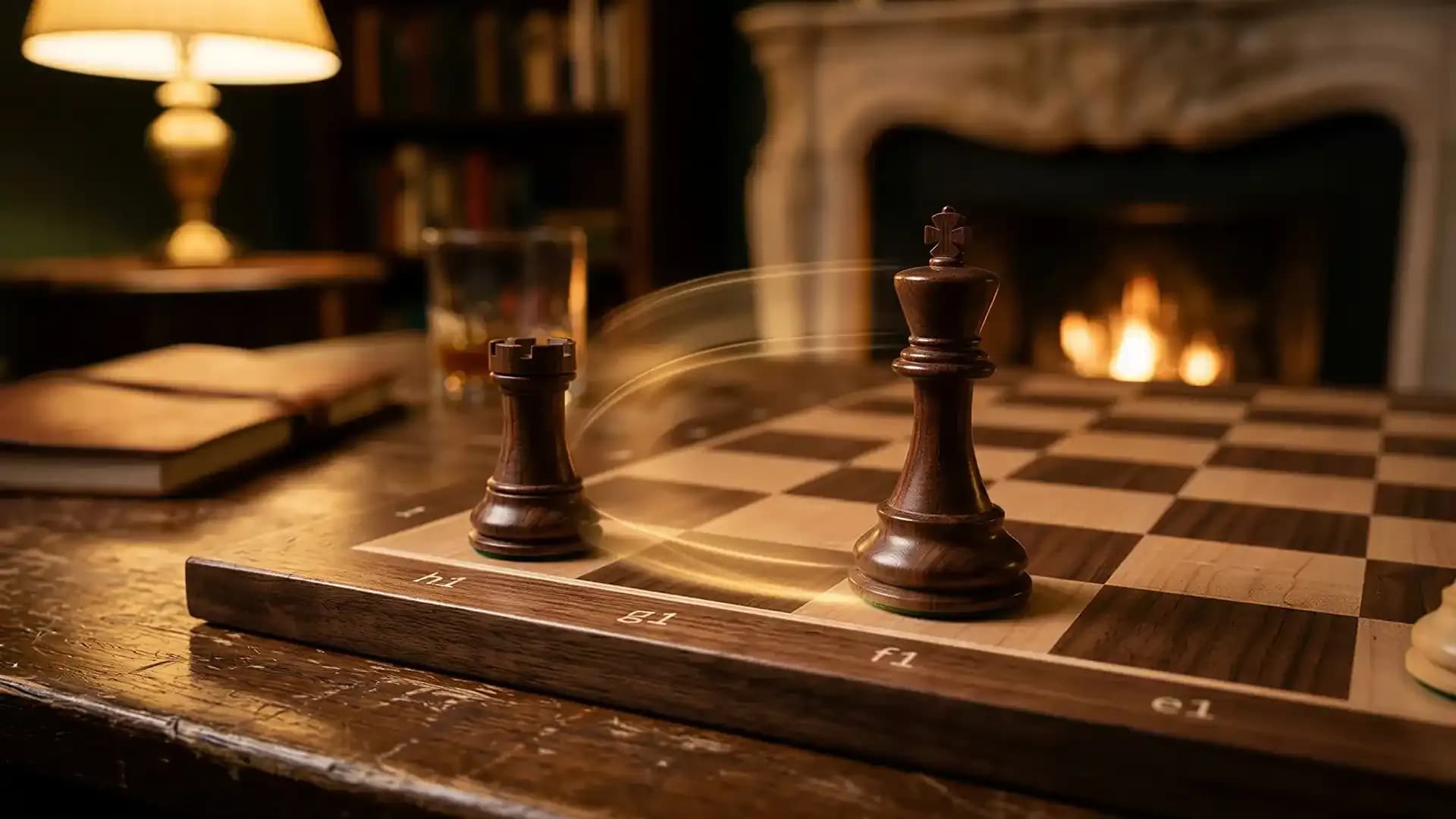
Castling in Chess: Rules, Long Castling & How to Castle
Castling in chess is a special move that allows the king and rook to move at the same time, helping protect the king and activate the rook for better board control.
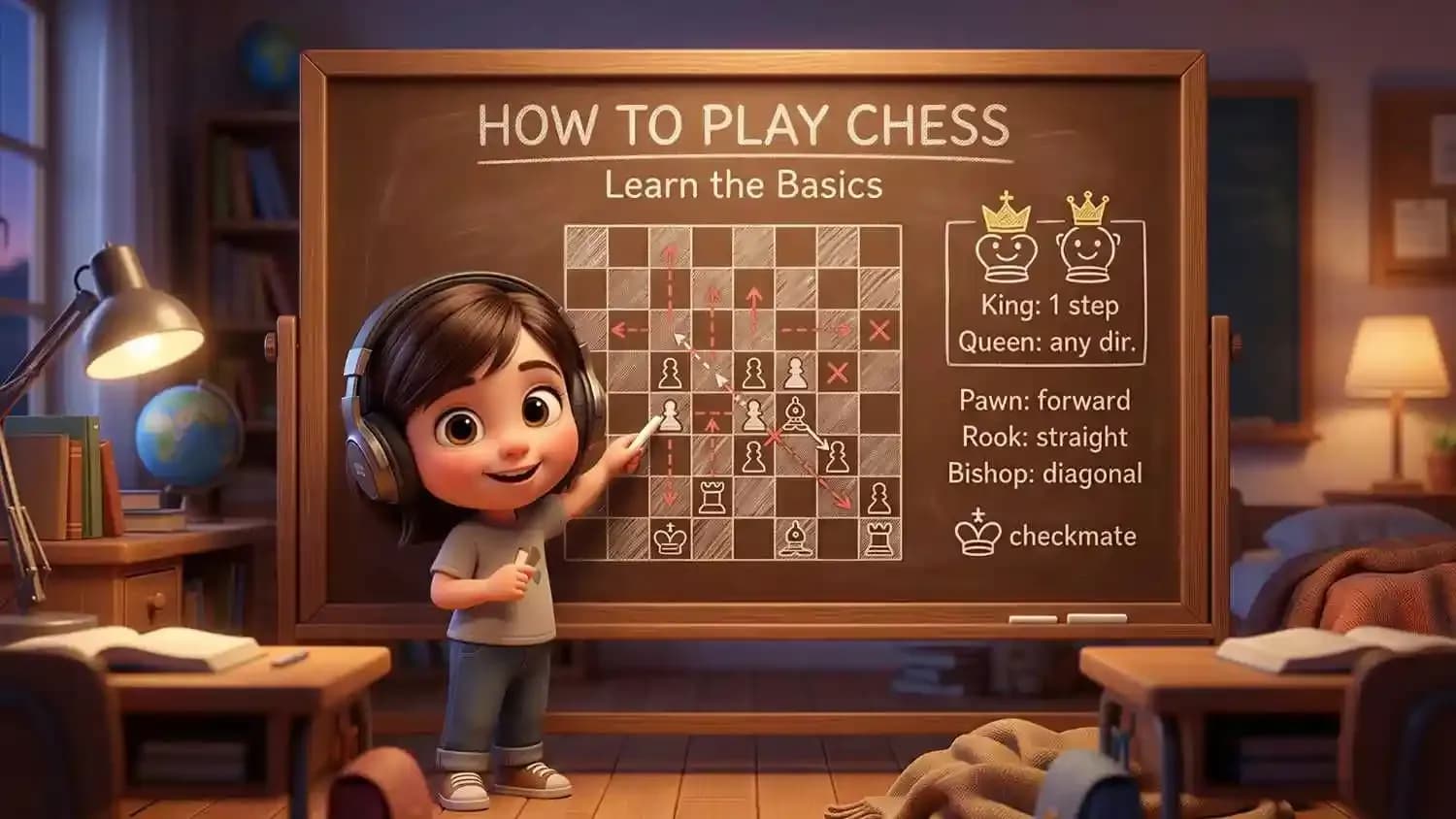
How to Play Chess: Easy Rules & Beginner Tips
How to play chess explained simply with board setup, piece rules, checkmate basics, and beginner strategies. Follow this guide and start playing today.

Youngest Chess World Champion: Top 10 Youngest Champions in History
Only a handful of players have ever claimed the title of youngest chess world champion, and the record keeps getting shattered. From Gukesh Dommaraju's historic 2024 win at just 18 to Kasparov's 40-year reign atop the record books, here's the full ranked list, timeline, and the rising prodigies who could break it next.
Chess Notation Explained: A Complete Guide to Reading and Writing Algebraic Notation
Master chess notation with our complete guide covering algebraic symbols, board coordinates, special moves and annotations. Start reading games today!
You must have heard the old saying: "Chess is 99% tactics and 1% luck." This can seem an utter exaggeration to someone just starting out, particularly when one is struggling to keep track of where everything fits.
Yet the reality is that the vast majority of amateur games are not determined by a master-level strategy or plan. They are determined by being left hanging by a person or by failing to notice an up-and-down trap.
The quickest way to play better is to learn the chess strategies as a beginner. As a strategy is a long-range plan a chess tactic is a short-range plan, or a sequence of short-range plans, that will provide a position of advantage in the game, like a free piece or a checkmate. The best way to practice these concepts is to play chess online, where you can test your tactics against real opponents and see how your strategies hold up in a live match.
Table of contents
What Are Chess Tactics? (And Why They Matter More Than Openings)

Chess tactics, then, what are they? Consider them to be the tools in your toolbox. Where an opening is to get your pieces to the board tactics are where you really do damage with your pieces.
A lot of beginners spend hours studying the first ten moves of a game, only to lose their Queen on move twelve because they didn't see a simple fork. Tactics matter more than openings because they happen in every single game.
Even if you know some of the world-famous chess openings, or you are improvising and making it in the middle of the game, it is really the skill to see a pin or a skewer that will make you a winner.
The Essential List of Chess Tactics for Beginners (8 Patterns)
You must be aware of such patterns immediately, should you aspire to rise up the ladder of the ratings. This is the list of the chess tactics that all players are supposed to know.
1. Fork (The Double Attack)
What it is: A fork is when one of your pieces attacks two (or more) of your opponent’s pieces at the same time.
Why it’s powerful: Your opponent is typically only in a position to move one piece of the game at a time. This is to say that when you attack two, they are obliged to save one, and leave you the other.
Example: A Knight jumps to a square where it checks the King and attacks the Queen at once.
Pro Tip: Knights are the Forks Kings since they move in an L-shape, hence making them extremely difficult to anticipate their attacks. A perfect real-game example of this is the Fried Liver Attack, where a knight jumps to f7, simultaneously hitting the king and rook with no safe escape for Black.
2. Pin (The Paralyzer)
What it is: When you are assaulting something that cannot move, that is guarding a more valuable thing behind it.
Why it’s powerful: It paralyzes the opponent. When they switch the one on the front, you switch the more expensive one on the back.
Example: Your Bishop is looking at a Knight, and right behind that Knight is the opponent's Queen.
Pro Tip: If you pin a piece, try to attack it again with a Pawn. The pinned piece can never get away, so you can always take it for free. Understanding how to exploit a pinned piece is a vital part of how to improve chess skills during the middle game.
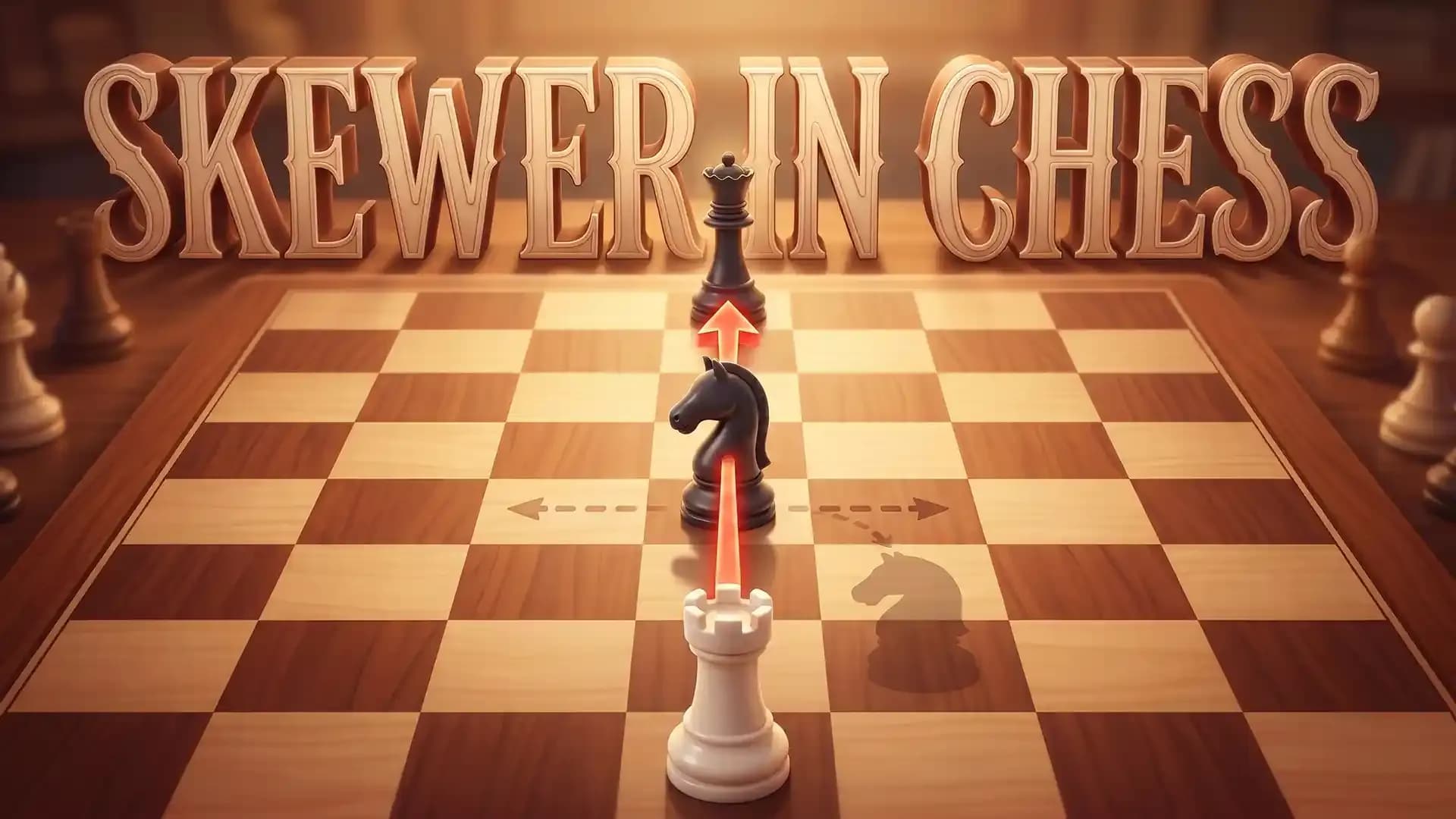
3. Skewer (The Reverse Pin)
What it is: A skewer chess is like a pin, but the pieces are swapped. You capture an important piece (like the King), and once it gets out of the way, you capture the less important piece behind it.
Why it’s powerful: It makes the big piece move, leaving the "trash" behind for you to capture.
Example: Your Rook attacks the King, the King moves, and you capture the Rook that was behind him.
4. Discovered Attack (The Hidden Threat)
What it is: A pin is similar to a skewer, only that the bits have been switched. You strike a valuable piece (as the King), and when it has got off, you strike the less valuable piece behind it.
Why it’s powerful: Your opponent is normally too concentrated on the piece you have just moved that he/she does not see the piece that is hidden and is now attacking him/her.
Example: You have moved your Knight, and this will create an opportunity where you can attack the enemy with your Queen.
5. Back-Rank Mate (The Trap Door)
What it is: This is a checkmate where a King is trapped on the very last row (the back rank) because its own pawns are blocking it from moving forward.
Why it’s powerful: It can win the game within a second, though, when you are losing.
Example: Your Rook slides to the back row, and the King is stuck behind three of its own pawns with nowhere to go.
Pro Tip: To avoid this, you should always push one of the pawns in front of your King to provide "Luft" (air) so he can escape. Learning these patterns is a key step in understanding how to play chess like a pro and avoiding amateur chess blunders.
6. Removing the Defender (The Bodyguard Tactic)
What it is: Sometimes you would like to steal a piece, but it is under protection. In this strategy, the first thing is to eliminate (or distract) that protector.
Why it’s powerful: It makes a safe piece a hanging piece, which one can hold the following move.
Example: You trade your Bishop for a Knight that was protecting the opponent's Queen. Now the Queen is ripe for the taking. To sharpen your vision for these moments, you should regularly evaluate chess position to see which pieces have lost their protection.
7. X-Ray Attack
What it is: This is when your piece "looks through" an opponent’s piece to defend a square or attack a target.
Why it’s powerful: It is a tricky method of protecting your own pieces, which seems impossible to defend at first sight.
Example: Your Rook is on the same file as your Queen, but an enemy piece is in between. Your Rook is still technically supporting your Queen "through" the enemy piece.
8. Zwischenzug (The "Wait a Minute" Move)
What it is: Instead of making the obvious move (like taking back a piece), you make a different, forcing move first, usually a check.
Why it’s powerful: It kills the calculations of your opponent and will also buy you extra material in most cases.
Example: Someone takes your Knight. You do not take their chess piece back all at once; first, you ask their King to move, then take it back.
Tactics vs. Strategy: What's the Difference?
New players often get these mixed up. Here is a simple way to remember:
| Chess Tactic | Chess Strategy |
| The "How" | The "Why" |
| Short-term (1-3 moves) | Long-term (the whole game) |
| Concrete and forced | Positional and flexible |
| "I'm going to win that Rook right now." | "I want to control the center of the board." |
Strategy is choosing where to go on a road trip. Tactics are the steering wheel and brakes that ensure you don't run into a wall. If you feel stuck, looking for a chess study plan that balances both is the most efficient way to climb the rating ladder.
How to Get Better at Tactics (Every Day)
It does not require five hours of study a day to master the best chess tactics. All you have to do is these few things:
- Practice 5 puzzles a day. Do it with free apps such as Lichess or Chess.com, and learn from the Best Chess YouTube Channels to see tactics explained in real games. Puzzles are only tactical mini-games.
- Learn the "Themes": Don't just guess. Try to see if the puzzle is a Fork, a Pin, or a Skewer.
- The "Blunder Check”: Check the board before you move, ask yourself, 'Will my opponent fork me or pin me when I move there?
- Slow Down: The majority of beginners lose because they move too fast. Spend an additional 10 seconds to scan proxy attacks.
The winning chess is all about the heartbeat of tactics. When you master this list, you will no longer wish your opponent to make a mistake and instead compel him to do so. Remember, learning how to win at chess is not about being a genius; it is about seeing patterns before your opponent does.
FAQs
- Start with the Fork. It is the easiest to observe, and it occurs in practically every game.
- Yes. A pawn has the capability of charging two pieces simultaneously (as two Knights or two Rooks). And it is one of the most rewarding chess moves.
- In a Pin, the "little" piece is in front of the "big" piece. When there is a Skewer, the big one is in front of the little one.
- You will see a huge difference in your game in just two weeks if you do a few puzzles every day.
Types of Chess: Explore All Variants and How They're Played
Discover the different types of chess, including classical, rapid, blitz, and modern variants. Learn the rules, differences, and pick the best one to play today.
Castling in Chess: Rules, Long Castling & How to Castle
Castling in chess is a special move that allows the king and rook to move at the same time, helping protect the king and activate the rook for better board control.
How to Play Chess: Easy Rules & Beginner Tips
How to play chess explained simply with board setup, piece rules, checkmate basics, and beginner strategies. Follow this guide and start playing today.
Youngest Chess World Champion: Top 10 Youngest Champions in History
Only a handful of players have ever claimed the title of youngest chess world champion, and the record keeps getting shattered. From Gukesh Dommaraju's historic 2024 win at just 18 to Kasparov's 40-year reign atop the record books, here's the full ranked list, timeline, and the rising prodigies who could break it next.
Chess Notation Explained: A Complete Guide to Reading and Writing Algebraic Notation
Master chess notation with our complete guide covering algebraic symbols, board coordinates, special moves and annotations. Start reading games today!