How Many Squares in a Chess Board? The Answer Is Not 64


Types of Chess: Explore All Variants and How They're Played
Discover the different types of chess, including classical, rapid, blitz, and modern variants. Learn the rules, differences, and pick the best one to play today.
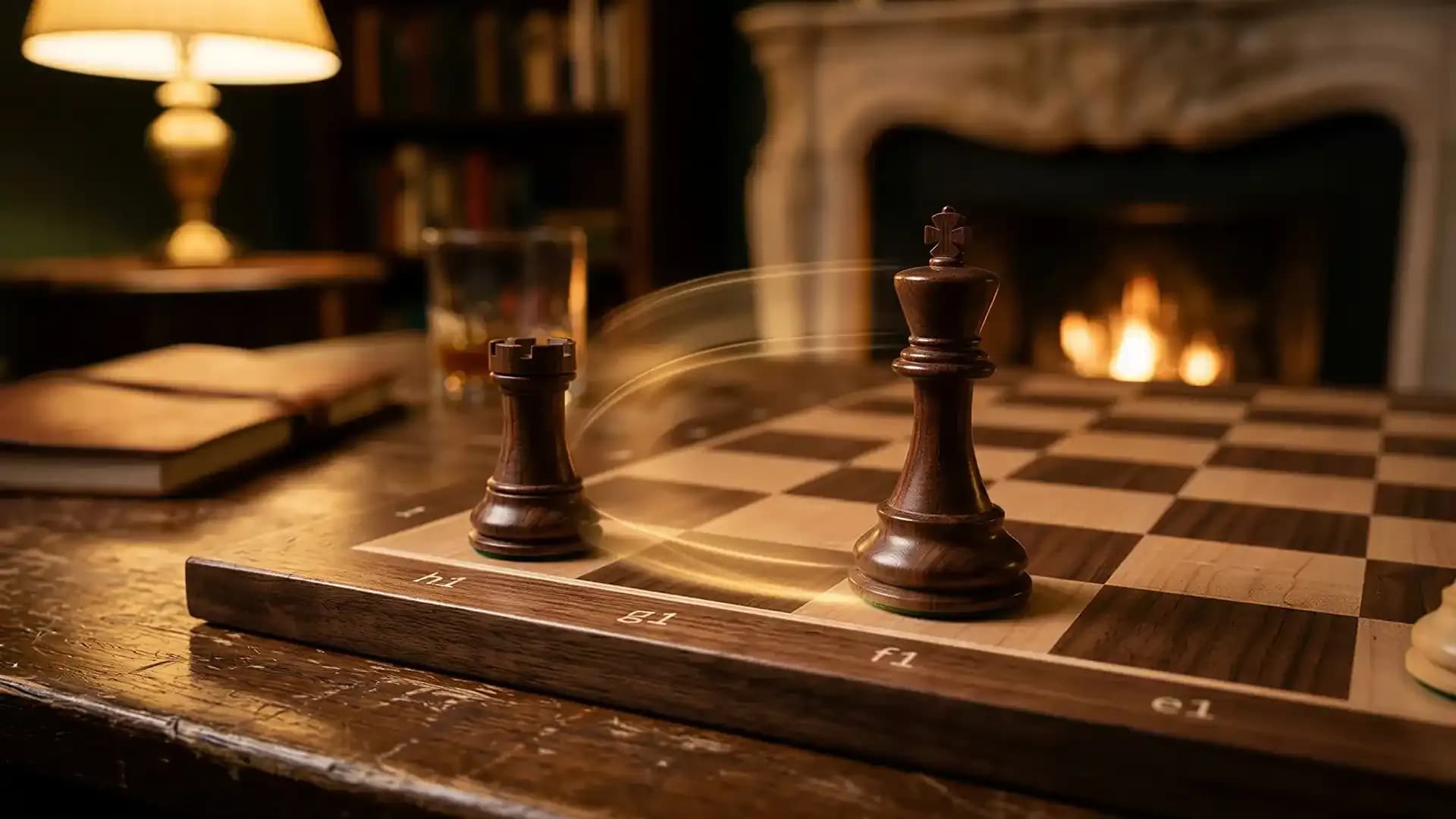
Castling in Chess: Rules, Long Castling & How to Castle
Castling in chess is a special move that allows the king and rook to move at the same time, helping protect the king and activate the rook for better board control.
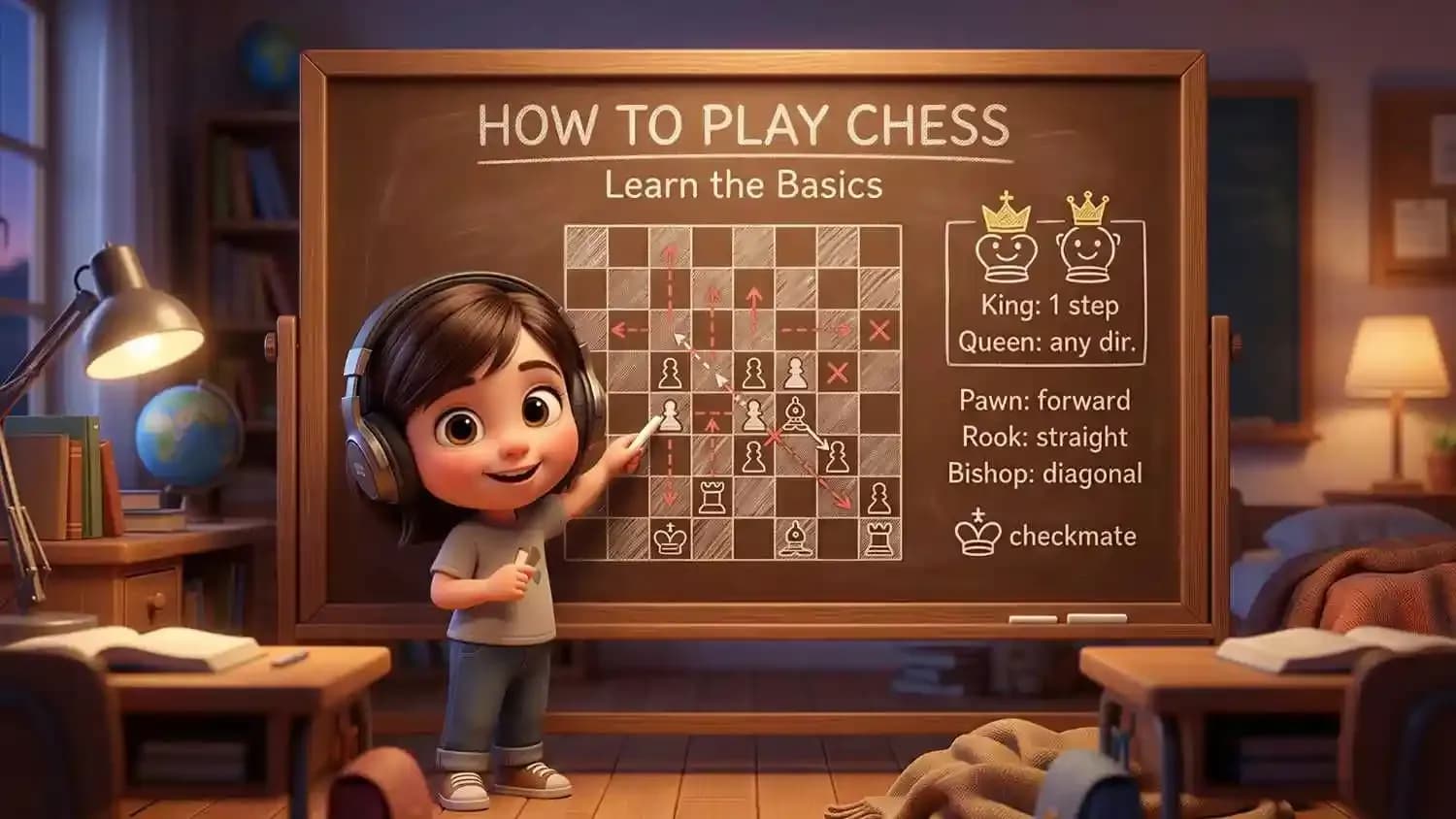
How to Play Chess: Easy Rules & Beginner Tips
How to play chess explained simply with board setup, piece rules, checkmate basics, and beginner strategies. Follow this guide and start playing today.

Youngest Chess World Champion: Top 10 Youngest Champions in History
Only a handful of players have ever claimed the title of youngest chess world champion, and the record keeps getting shattered. From Gukesh Dommaraju's historic 2024 win at just 18 to Kasparov's 40-year reign atop the record books, here's the full ranked list, timeline, and the rising prodigies who could break it next.
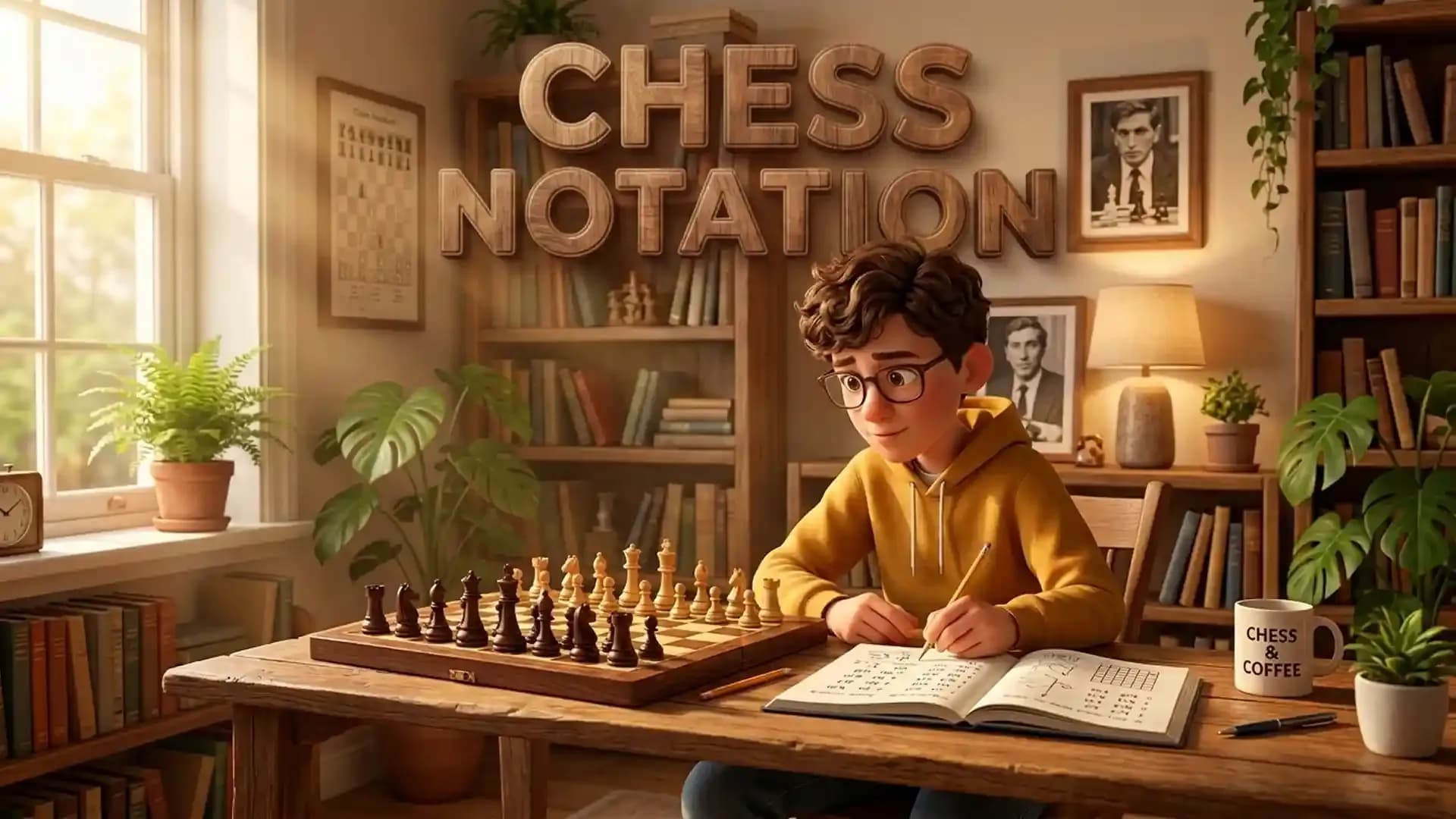
Chess Notation Explained: A Complete Guide to Reading and Writing Algebraic Notation
Master chess notation with our complete guide covering algebraic symbols, board coordinates, special moves and annotations. Start reading games today!
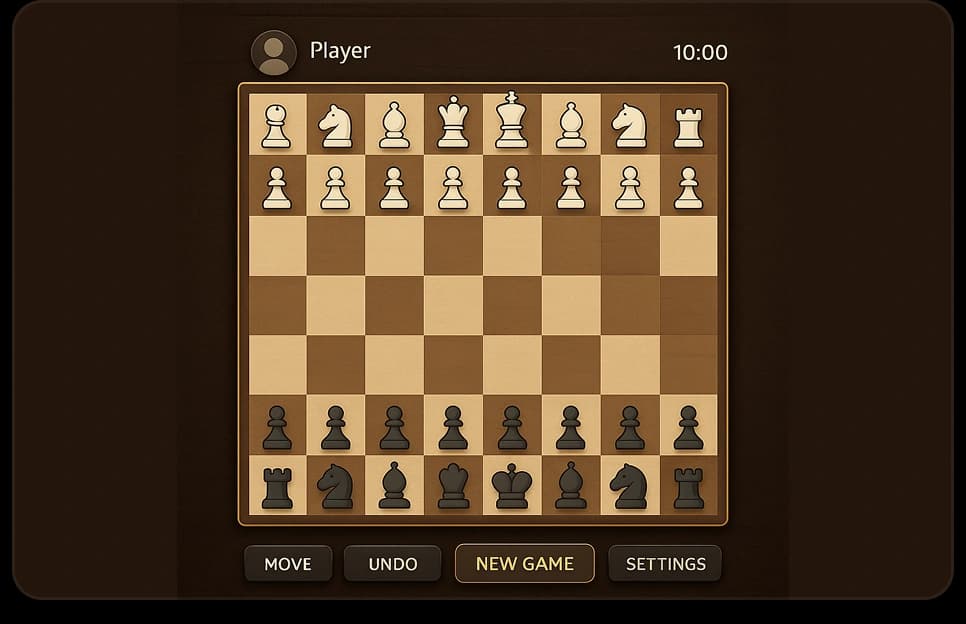
If one asks an average chess player, “How many squares are there in a chess board?” the answer given by him will be, “Of course, there are 64 squares.” This answer might suit his game of chess, but certainly not the geometric properties of the chess board.
In addition to being the platform on which you play chess online and hold your pawns, the chessboard is also an intricate combination of overlapping geometrical figures that form the very nature of the game.
Table of contents
How Many Squares Are There on a Chess Board?
It does not even hold just 64 squares. This number only takes into consideration the small squares, which make up the squares in which the chess pieces reside. But in any grid, there are squares of different sizes, and the sum total of them all gives us 204.
It is not an exercise in deception; it is math. Being able to visualize the full board is a great way to improve at chess and makes you distinct from the casual player.
The Answer Most People Get Wrong
The quick answer is 64. The complete answer is 204. When people count how many squares in a chess board, they usually stop at the 1x1 cells. But the board also contains 2x2, 3x3, and larger squares, all the way up to the full 8x8 board. Each of these counts as a square, too.
If you only see 64, you are missing a vital step as you learn how to play chess and master the geometry of the game. The rest of this article walks you through every size and shows you exactly how the number 204 is reached.
64 Squares on a Chess Board
Before diving into counting, it would be necessary to comprehend the essence of these 64 squares as well as how they are arranged on the chessboard.
What the 64 Squares Actually Represent
A regular chessboard is an 8x8 square board. In other words, there are 8 rows and 8 columns on the board; hence, the total number of squares becomes 64.
These 64 squares are split evenly between two colors. There are 32 light squares and 32 dark squares, arranged in an alternating pattern. Understanding the chess board layout is not just visual. It plays a real role in the game. Bishops, for example, are locked to one color for the entire game.
For casual play and beginner learning, 64 is the right answer. It is the number that matters when you are moving pieces and playing a game.
How the Chess Board Is Laid Out
Every square on the board has a unique coordinate. The board uses a simple grid system:
- Files 8 vertical columns, labeled a through h (left to right)
- Ranks 8 horizontal rows, numbered 1 through 8 (bottom to top)
Each square gets a name by combining its file and rank. The square in the fourth column and fourth row, for example, is d4. The central squares e4 and d5 are famous in chess openings. Identifying these chess positions names is used to record moves, study games, and communicate positions. Learning them is one of the first steps toward serious chess study.
204 Total Squares on a Chess Board
This is the part most people have never thought about. The chessboard contains squares of eight different sizes. Each size fits into the grid a different number of times. Add them all up and the total number of squares in a chess board is 204.
Why You Need to Count More Than Just 1x1 Squares
Take a 2x2 square. It covers four of the small unit squares. Now slide that 2x2 shape across the board. It can sit in 7 horizontal positions and 7 vertical positions. That gives you 7 × 7 = 49 possible 2x2 squares.
A 3x3 square fits in 6 horizontal and 6 vertical positions, so there are 36 of them. This same logic applies to every size. The bigger the square, the fewer places it fits. By the time you reach 8x8, there is only one position on the full board itself.
This is how many squares are there on a chessboard when you count every size? It is a clean, logical pattern that runs throughout.
Full Size-by-Size Breakdown Chess Board Square Count
| Square Size | Possible Positions | Total Squares |
|---|---|---|
| 1×1 | 8×8 | 64 |
| 2×2 | 7×7 | 49 |
| 3×3 | 6×6 | 36 |
| 4×4 | 5×5 | 25 |
| 5×5 | 4×4 | 16 |
| 6×6 | 3×3 | 9 |
| 7×7 | 2×2 | 4 |
| 8×8 | 1×1 | 1 |
| Grand Total | 204 | |
64 + 49 + 36 + 25 + 16 + 9 + 4 + 1 = 204
The Pattern Hidden in the Numbers
Consider the sum of those numbers in the table above: 64, 49, 36, 25, 16, 9, 4, 1. All of them are perfect squares. This is no coincidence; this property of the table is inherent to its design.
As the square size grows, fewer positions are available. The pattern is consistent and predictable. This makes the rules of chess board counting easy to verify and remember. It is a neat piece of mathematics hiding inside a game board.
The Formula Behind the Chess Board Square Count
If you want to go beyond counting by hand, there is a formula that works for any square grid.
Sum of Squares Formula Explained
The formula is: n(n+1)(2n+1) ÷ 6
For a standard 8×8 chess board: 8 × 9 × 17 ÷ 6 = 204
This equation is called the sum-of-squares formula. This equation tells you the total number of squares for any n×n square immediately. You don’t have to use any tables or manually add up.
How the Formula Works on Other Board Sizes
The same formula works on any size board:
- 6×6 board: 6 × 7 × 13 ÷ 6 = 91 squares
- 10×10 board: 10 × 11 × 21 ÷ 6 = 385 squares
This would come in handy when you play different types of chess using non-traditional chessboards. It can also give the number of squares on a chessboard, depending on the board size.
How Many Rectangles Are on a Chess Board?
Some people take this question one step further and ask about rectangles. It is worth a quick answer.
Squares vs Rectangles: What Is the Difference?
All squares are rectangles, but not all rectangles are squares. A rectangle only needs four right angles and equal opposite sides. That includes wide, flat shapes and tall, thin ones.
What differentiates chess vs checkers, geometry, and puzzles? People always consider these riddles on the board while asking such questions. While the question about the number of squares on the chessboard is answered by saying 204 squares, the number of rectangles is something else entirely.
The Rectangle Count on a Standard Chess Board
- The total number of rectangles on an 8×8 board is 1,296.
- The formula is: (n(n+1)/2)² for n=8, that is 36² = 1,296.
- It is a fun number to know, but counting rectangles is mostly a maths puzzle. The 204 square count is what matters for chess thinking.
Why Understanding the Chess Board Layout Matters
Knowing there are 204 squares is not just a trivia answer. It connects to how you see and play the game.
How Board Geometry Connects to Chess Strategy
Pieces do not just control one square; they control zones. Bishops move along diagonals that cut across multiple squares. The queen and rook control the whole file or rank on which they stand. The moment you begin to think in terms of blocks rather than single squares, your chess strategies as a beginner become better.
Spotting weak squares, good outpost squares, and zone of control becomes easy when you learn to recognize the chessboard not just through square numbers, but in bigger chunks.
How Beginners and Advanced Players See the Board Differently
New players start with one square. What square am I on, and which squares can I move to? Advanced players see the board in sections. They think about 3×3 king safety zones, 4×4 central control clusters, and diagonal networks.
This wider view develops with study and practice. Understanding the complex geometry of the board is often the best way to get better at chess, moving beyond a basic 64-square perspective to a 204-square mindset. It trains you to see more, and seeing more leads to better decisions.
Conclusion
There are two correct answers here. 64 for everyday play, the individual squares where pieces sit. 204 for the complete count of every square of every size on the board.
Both answers matter depending on what you need. The 64 gives you the playing field. The 204 gives you the full picture. Together, they show that a chessboard holds more than it appears to at first glance.
FAQs
- There are 64 individual 1x1 squares, but a total of 204 squares of various sizes (ranging from 1x1 to 8x8) are present on the grid.
- While "boxes" usually refers to the 64 playable unit squares, the total count of all square-shaped boxes within the grid is actually 204.
- The "box number" or coordinate (like a1, e4, or h8) is used to identify specific locations for recording moves, discussing strategy, and studying games.
- 64 refers to the unit squares where pieces are physically placed. 204 is the mathematical total of every possible square size that can be formed on the board.
- A standard board has exactly 32 dark squares and 32 light squares, creating the iconic alternating checkerboard pattern we all recognize.
Types of Chess: Explore All Variants and How They're Played
Discover the different types of chess, including classical, rapid, blitz, and modern variants. Learn the rules, differences, and pick the best one to play today.
Castling in Chess: Rules, Long Castling & How to Castle
Castling in chess is a special move that allows the king and rook to move at the same time, helping protect the king and activate the rook for better board control.
How to Play Chess: Easy Rules & Beginner Tips
How to play chess explained simply with board setup, piece rules, checkmate basics, and beginner strategies. Follow this guide and start playing today.
Youngest Chess World Champion: Top 10 Youngest Champions in History
Only a handful of players have ever claimed the title of youngest chess world champion, and the record keeps getting shattered. From Gukesh Dommaraju's historic 2024 win at just 18 to Kasparov's 40-year reign atop the record books, here's the full ranked list, timeline, and the rising prodigies who could break it next.
Chess Notation Explained: A Complete Guide to Reading and Writing Algebraic Notation
Master chess notation with our complete guide covering algebraic symbols, board coordinates, special moves and annotations. Start reading games today!