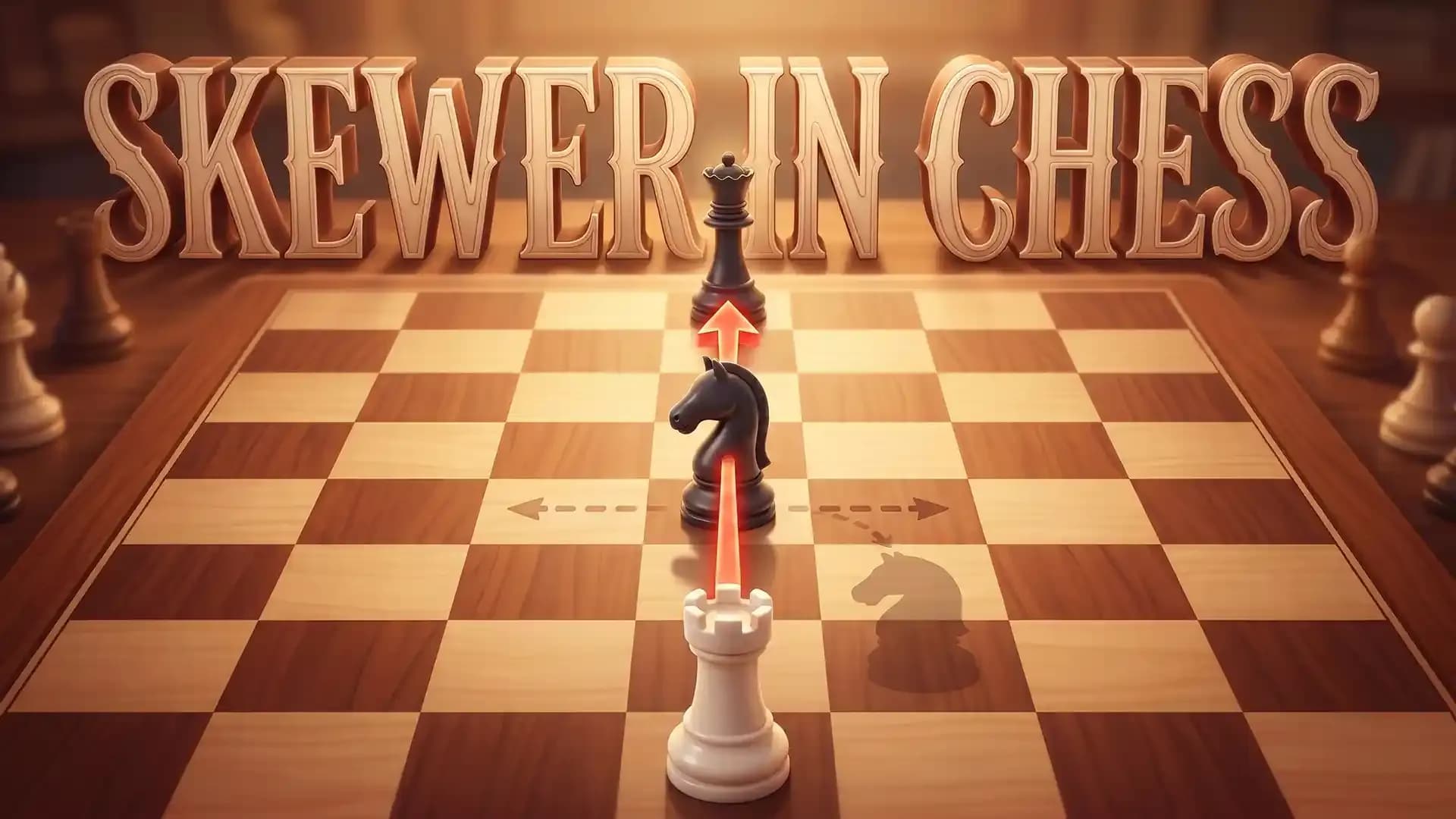
Chess Study Plans – Improve Your Game Step by Step


Types of Chess: Explore All Variants and How They're Played
Discover the different types of chess, including classical, rapid, blitz, and modern variants. Learn the rules, differences, and pick the best one to play today.
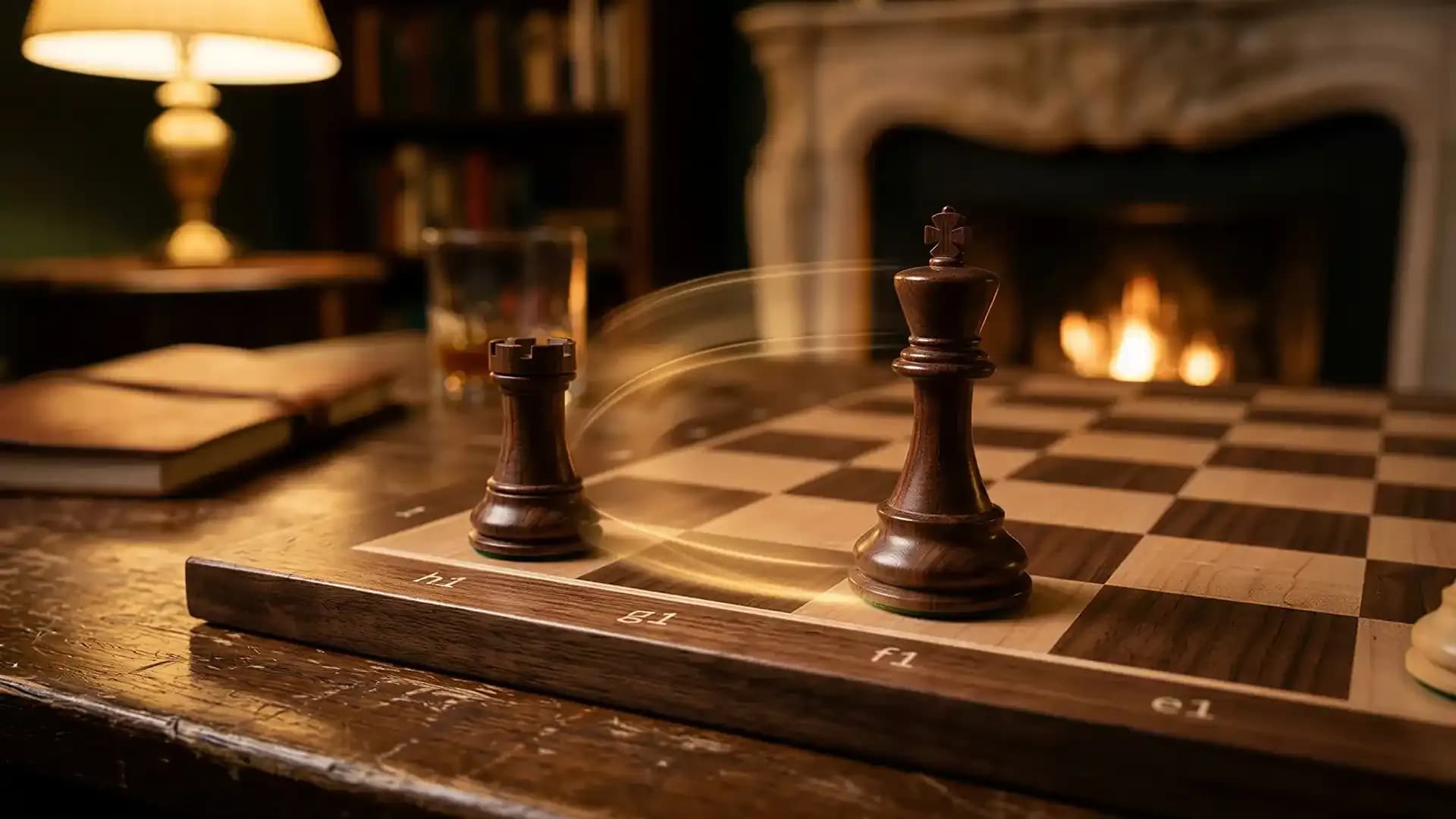
Castling in Chess: Rules, Long Castling & How to Castle
Castling in chess is a special move that allows the king and rook to move at the same time, helping protect the king and activate the rook for better board control.
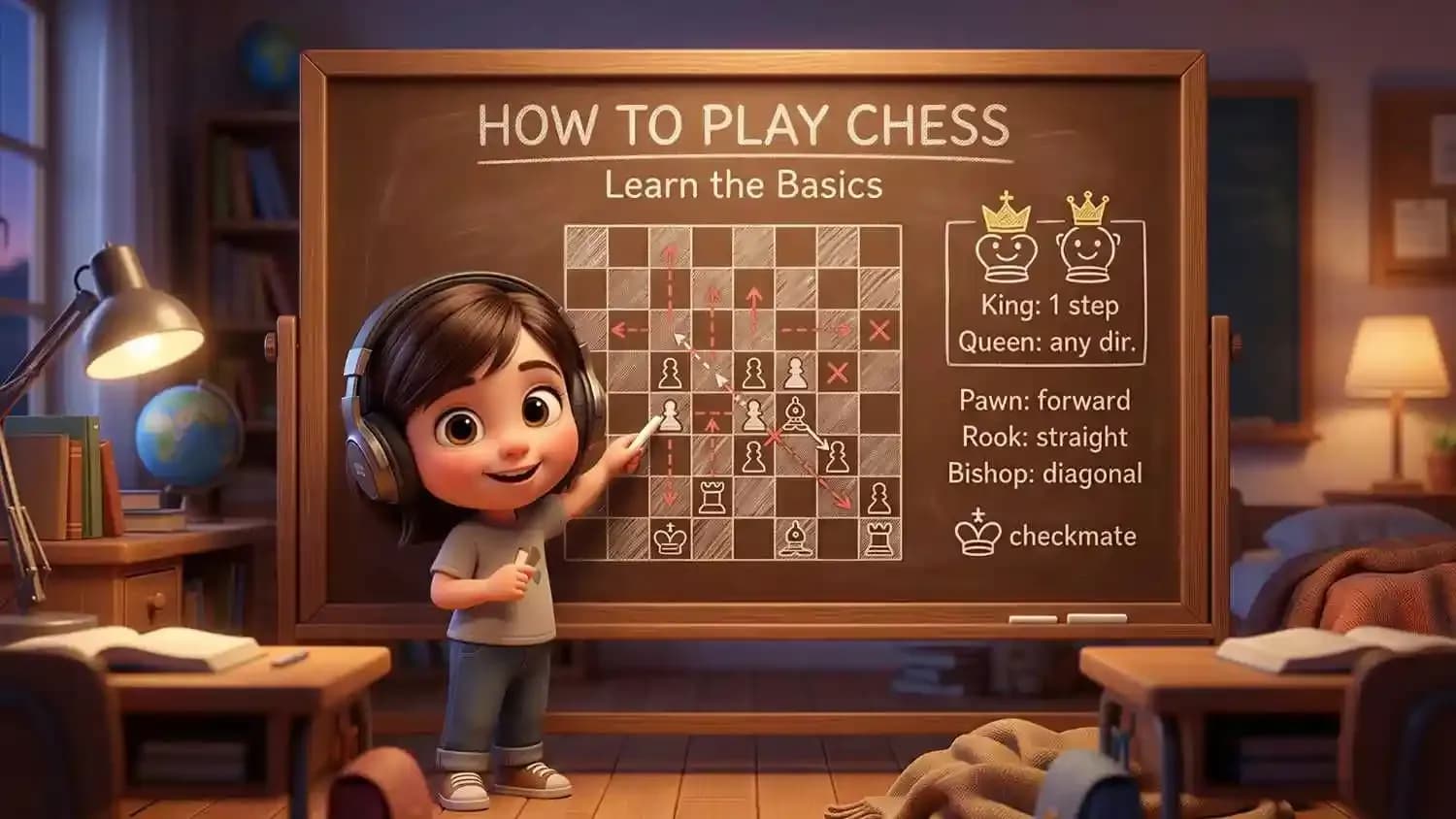
How to Play Chess: Easy Rules & Beginner Tips
How to play chess explained simply with board setup, piece rules, checkmate basics, and beginner strategies. Follow this guide and start playing today.

Youngest Chess World Champion: Top 10 Youngest Champions in History
Only a handful of players have ever claimed the title of youngest chess world champion, and the record keeps getting shattered. From Gukesh Dommaraju's historic 2024 win at just 18 to Kasparov's 40-year reign atop the record books, here's the full ranked list, timeline, and the rising prodigies who could break it next.
Chess Notation Explained: A Complete Guide to Reading and Writing Algebraic Notation
Master chess notation with our complete guide covering algebraic symbols, board coordinates, special moves and annotations. Start reading games today!

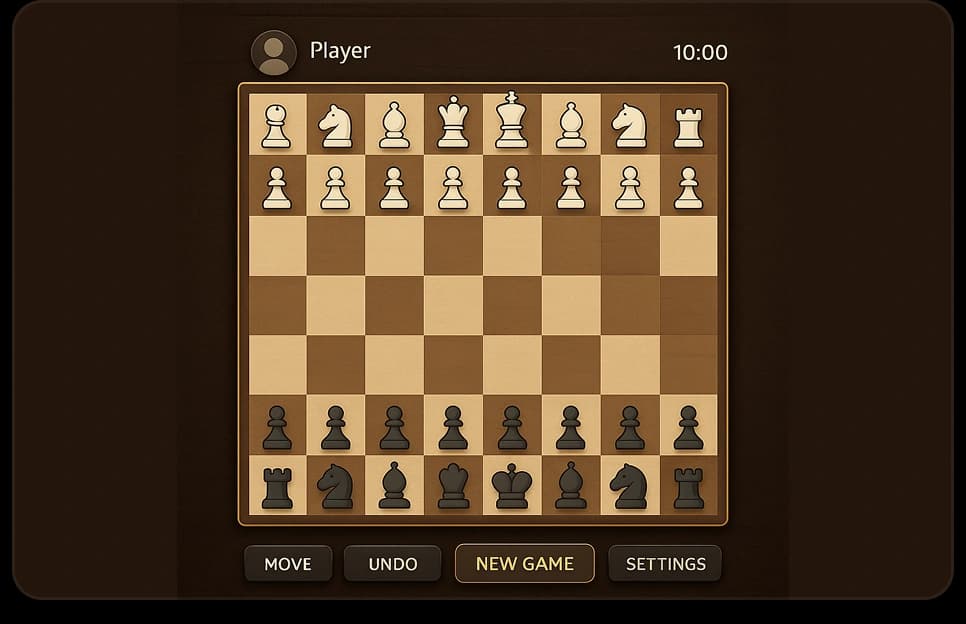
Improving in chess requires more than playing random games. You need a good chess study plan. A plan enables you to learn quicker, prevent repeating errors, and grasp each aspect of the game.
Playing either over the board or online, implementing a step-by-step process can help improve your learning and performance greatly.
Table of contents
What Is a Chess Study Plan?
A chess study schedule is a straightforward plan that informs you what to study and when. It gives your practice organization the means to get better in all areas, such as openings, middlegame, endgame, and different types of chess games. Without a plan, most beginners waste time watching videos or playing randomly.
A good plan helps you:
- Focus on the most important skills
- Fix your weaknesses
- Improve faster, even if you play chess online for free
It’s not about how many hours you study, but how smartly you study.
How to Study Chess Effectively

Studying chess is one of the most important things to do, but you need to study it effectively to get the best results.
Here’s how improvement really happens:
- Play games – Try playing chess online for free and save your games.
- Analyze mistakes – Checking your mistakes in the analysis of the game can help you avoid making the same mistake again.
- Practice tactics – To improve your thinking ability, you need to solve puzzles.
- Learn key strategies – Study chess strategies for beginners to understand basic plans.
- Read and watch – Use videos or the best chess books for beginners to learn new ideas.
You can learn from both AI chess vs human play to understand how modern strategy works. The more you mix learning and playing, the faster you'll grow.
Chess Study Plan for Beginners
For beginners, there is no absolute chess study plan; however, following the plans we discussed here can surely improve player skills.

Focus Areas
- If you are a total beginner at chess, then it is advisable to start from the very basics.
- Learn the chessboard and the moves of the pieces first.
- The Italian Game or the Scotch Game, the two simplest openings for beginners, can be a good source of knowledge for your learning.
- Once completed, proceed to more complex maneuvers, such as forks, pins, and skewers.
- Master the art of one- or two-move checkmating, the classical cases being the Fool's Mate or checkmate with two bishops.
- Concentrate on the most basic endings like king and pawn vs. king, for example.
Recommended Daily Routine
Try this easy 1-hour routine every day:
- 30 minutes: Tactics practice
- 20 minutes: Endgame study
- 10 minutes: Opening practice
You can also play chess every day to test what you learned and implement practical chess tips and tricks. The goal is to think before every move and learn from each game.
Chess Study Plan for Intermediate Players
After grasping the fundamentals, it is the right time to move on and learn additional techniques, with a focus on the importance of a chess opening plan as one of these areas.

Focus Areas
- Build your opening repertoire and learn chess opening strategies for beginners in more depth.
- Study middlegame planning, like pawn structure and piece coordination.
- Improve your endgame technique.
- Analyze your games or grandmaster games.
Sample Weekly Schedule
- Day 1–2: Openings and tactics
- Day 3–4: Middlegame themes
- Day 5–6: Endgame practice
- Day 7: Play and review games
Chess Study Plan for Advanced Players
At the advanced level, your goal is to refine your style and preparation.

Focus Areas
- Study complex chess openings and build your own opening file.
- Improve positional understanding.
- Work on calculation and visualization skills.
- Study classic games from legends like Magnus Carlsen and Gukesh D.
Sample Weekly Routine
- 2 hours: Openings
- 2 hours: Middlegame plans
- 1 hour: Endgames
- 1 hour: Game review
Playing against strong players helps too. Try different time formats and chess time controls like blitz and rapid.
How to Make a Proper Study Plan
A proper chess improvement plan is tailored to each individual. Follow these steps:
- Find your weak areas – Maybe you're bad at openings or time management.
- Set small goals – For example, “I'll improve my tactics this month.”
- Divide your time – Don't only play; study too.
- Use good tools – Try the best chess apps or online chess vs over-the-board chess practice.
- Check your progress – Track your online rating and accuracy on a weekly basis.
Best Way to Study Chess
The best way to study chess is by mixing learning and playing.
Here's a simple formula:
- Play chess online to apply what you learn.
- Review games with a coach or engine.
- Solve puzzles every day.
- Read books and watch lessons to gain a deeper understanding of strategy. Watching top chess movies and documentaries is an underrated part of this mix, they show the mindset, discipline, and competitive pressure behind the game in ways no puzzle app can.
It's not memorization, but proper thinking. Even 30 minutes of systematic study per day trumps 3 hours of haphazard games.
If you're wondering how to get better at chess in a structured and realistic way, this approach helps you improve faster while avoiding common beginner mistakes.
Chess Improvement Plan Template
| Day | Focus | Time |
|---|---|---|
| Monday | Tactics | 30 min |
| Tuesday | Openings | 20 min |
| Wednesday | Endgames | 30 min |
| Thursday | Play chess online for free | 45 min |
| Friday | Analyze games | 30 min |
| Saturday | Watch master games | 40 min |
| Sunday | Rest or free play | — |
If you're using online chess platforms, alternate between AI chess vs human play to train consistency.
Conclusion – Build a Study Plan That Works
A chess study plan gives structure to your improvement. It helps you stay consistent, think deeper, and play smarter.
Whether you're training on the board or prefer to play online chess free, improvement takes patience. Keep a study plan, follow it daily, and every move will bring you closer to becoming a better player.
FAQ
- Beginners can start with 1 hour daily. Intermediate players should study 2–3 hours, divided between tactics, openings, and play.
- Don't memorize every line. Learn the ideas behind moves. Practice the best chess openings for beginners, like the Italian Game and Ruy Lopez.
- It all depends on your chess level. If you are a beginner, then you should focus more on tactics, and then you can decide on a strategy.
Types of Chess: Explore All Variants and How They're Played
Discover the different types of chess, including classical, rapid, blitz, and modern variants. Learn the rules, differences, and pick the best one to play today.
Castling in Chess: Rules, Long Castling & How to Castle
Castling in chess is a special move that allows the king and rook to move at the same time, helping protect the king and activate the rook for better board control.
How to Play Chess: Easy Rules & Beginner Tips
How to play chess explained simply with board setup, piece rules, checkmate basics, and beginner strategies. Follow this guide and start playing today.
Youngest Chess World Champion: Top 10 Youngest Champions in History
Only a handful of players have ever claimed the title of youngest chess world champion, and the record keeps getting shattered. From Gukesh Dommaraju's historic 2024 win at just 18 to Kasparov's 40-year reign atop the record books, here's the full ranked list, timeline, and the rising prodigies who could break it next.
Chess Notation Explained: A Complete Guide to Reading and Writing Algebraic Notation
Master chess notation with our complete guide covering algebraic symbols, board coordinates, special moves and annotations. Start reading games today!