What Is a Blunder in Chess? Definition, Examples, and How to Stop Making Them


Types of Chess: Explore All Variants and How They're Played
Discover the different types of chess, including classical, rapid, blitz, and modern variants. Learn the rules, differences, and pick the best one to play today.
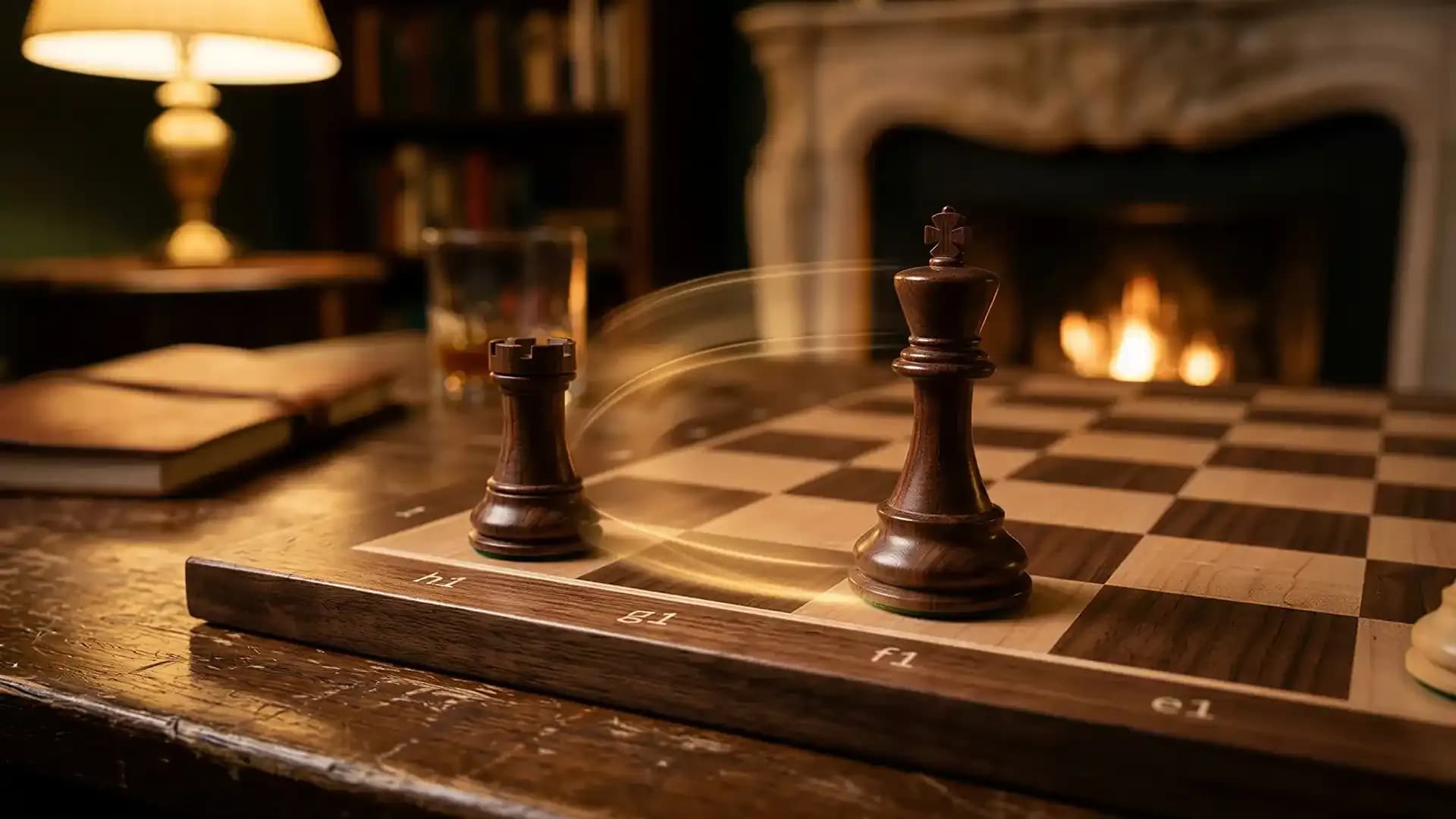
Castling in Chess: Rules, Long Castling & How to Castle
Castling in chess is a special move that allows the king and rook to move at the same time, helping protect the king and activate the rook for better board control.
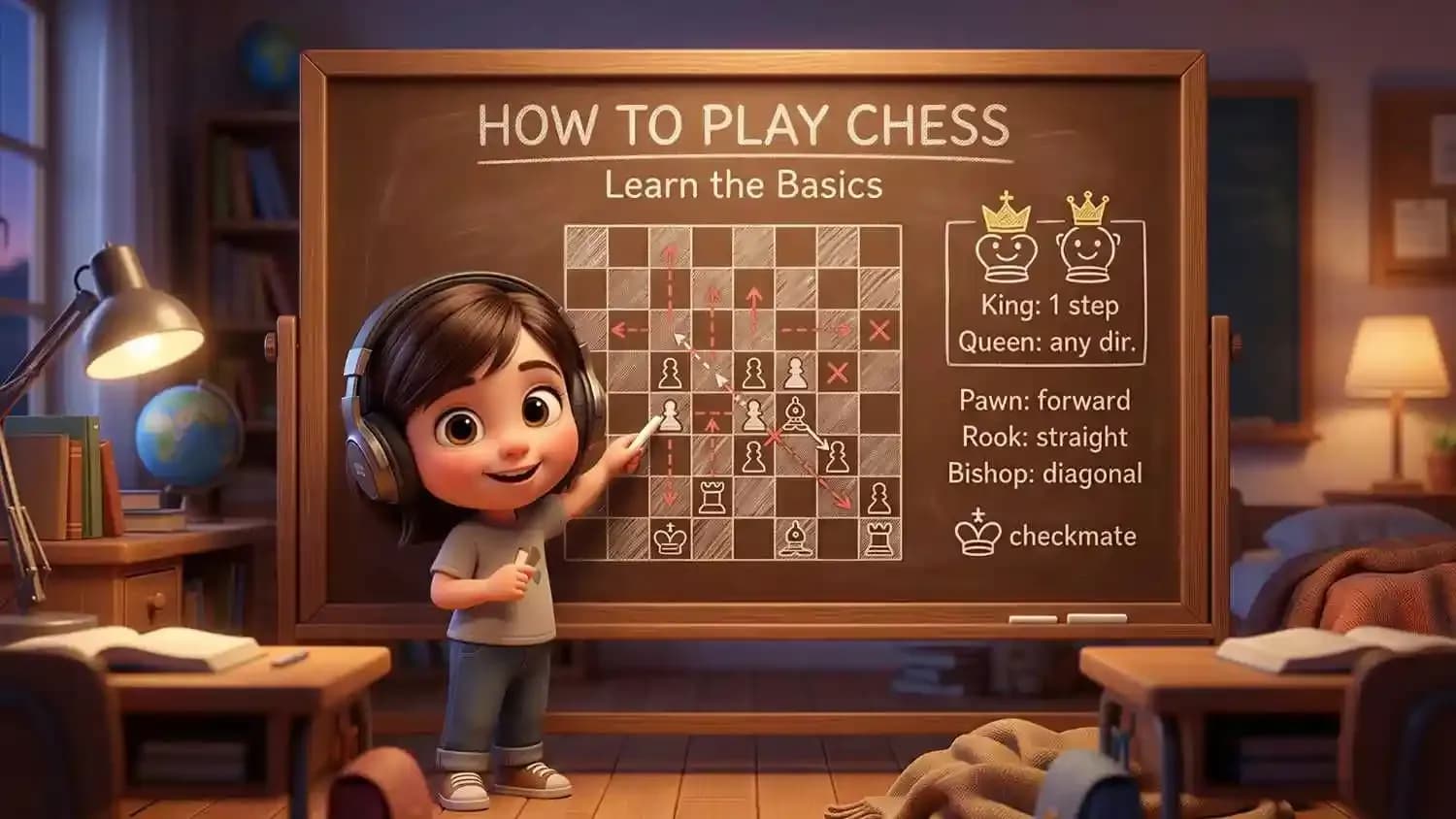
How to Play Chess: Easy Rules & Beginner Tips
How to play chess explained simply with board setup, piece rules, checkmate basics, and beginner strategies. Follow this guide and start playing today.

Youngest Chess World Champion: Top 10 Youngest Champions in History
Only a handful of players have ever claimed the title of youngest chess world champion, and the record keeps getting shattered. From Gukesh Dommaraju's historic 2024 win at just 18 to Kasparov's 40-year reign atop the record books, here's the full ranked list, timeline, and the rising prodigies who could break it next.
Chess Notation Explained: A Complete Guide to Reading and Writing Algebraic Notation
Master chess notation with our complete guide covering algebraic symbols, board coordinates, special moves and annotations. Start reading games today!
In chess, whether you play online chess or play with a physical board not all mistakes are created equal. You just left your rook sitting there with no defenders. That stings. But losing a pawn to a cheap tactic? That's annoying, sure. Losing your queen because you moved without looking? This is like a heartbreak.
That's the difference between a small mistake and a real chess blunder. One costs you a little. The other can cost you the whole game in a single move.
Table of contents
What Is a Blunder in Chess?
A blunder is a move in which you basically hand the game to your opponent on a silver platter. Maybe you moved your queen right into a fork. Maybe you ignored a checkmate threat that will cost you a game. Even World Champions have done it. More than once. So yeah, it happens. The trick is making it happen less often.
Blunder vs Mistake vs Inaccuracy: What's the Difference?
To truly understand what a blunder is in chess, you must see how it compares to other errors. The table below breaks down the hierarchy of chess mistakes.
| Term | What It Means | How Bad? |
|---|---|---|
| Inaccuracy | Slightly suboptimal move | Minor disadvantage |
| Mistake | Clearly wrong move | Noticeable disadvantage |
| Blunder | Severe error, often game-losing | Major or decisive disadvantage |
Most blunders don't need a grandmaster to fix. You just need one second. Literally. One quick pause. One "let me look one more time." That's it. Learn a few basic chess tips and tricks, and you'll stop handing your opponent free wins.
Types of Chess Blunders
Not all blunders look the same. Here are the five most common types you will encounter.
1. Hanging a Piece
This is the most frequent blunder. It occurs when you move a piece to a square where it is undefended and can be captured for free by an opponent’s piece. You simply "hang" the piece.
2. Missing Checkmate
This one stings the most. You're so busy chasing your opponent's king that you don't notice they're about to put you in checkmate. Or even worse when you have a checkmate-in-one sitting right there on the board, and you play something else.
3. Walking Into a Tactic
You see a nice square for your queen. Looks safe. No enemy pieces attacking it. So you move there. Then your opponent smiles, slides a knight over, and forks your queen and king. Now you have to move your king and watch your queen get taken. You see a shiny move and forget that the other guy gets a turn too.
4. Positional Blunder
Not all blunders lose material immediately. A positional blunder creates a fatal weakness, such as breaking your own pawn structure, opening your king’s defenses, or giving up a critical file.
5. Time Pressure Blunder
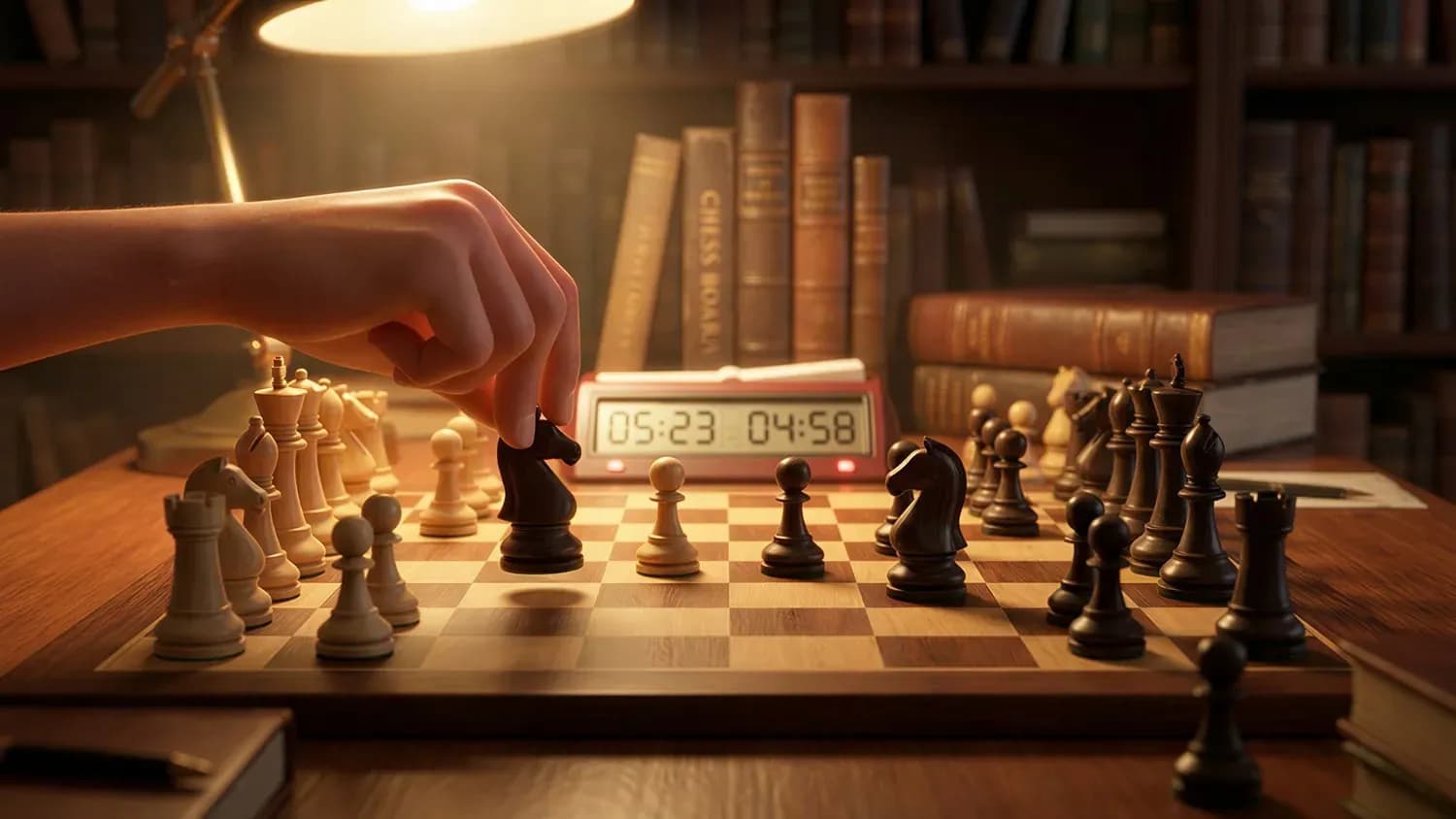
You see this all the time in blitz and rapid. Your clock is down to a few seconds, so you just grab a piece and move it anywhere. Doesn't matter where. You just need to not lose on time. Then oops you walked right into checkmate. Even grandmasters do this. The clock makes everyone stupid.
Famous Grandmaster Blunders
If you've ever felt embarrassed asking "what's a blunder in chess?" don't worry. The best players in history have done the exact same thing.
Take 2006. Vladimir Kramnik was the World Champion. He sat down to play a computer named Deep Fritz. The position was totally fine. Then Kramnik moved his queen, walked straight into a simple fork, and resigned on the spot. People couldn't believe it. He missed a checkmate-in-one.
Go back even further. 1892. Mikhail Chigorin was fighting for the World Championship. Final game. Critical moment. He blundered and handed the title right to Wilhelm Steinitz. One move. Gone.
More recently, Sergey Karjakin played 99 moves of near-perfect chess. Ninety-nine. Then on move 100, under time pressure, he blundered and lost the whole game. So yeah. If they can do it, you can stop beating yourself up over your own mistakes.
Why Do Chess Players Blunder?
You want to stop blundering? First you need to know why it happens.
- Time pressure is the big one. Less time on the clock means less thinking. Less thinking means more garbage moves.
- Tunnel vision hits next. You get so focused on your own attack that you forget the other guy gets a turn. You see your plan and nothing else.
- Overconfidence sneaks up on you. You think "I'm winning anyway" so you stop calculating. That's when the trouble starts.
- Chess blindness is weird. It's when a pattern you know by heart just disappears from your brain.
And finally, fatigue. Long games wear you down. After three hours, your brain isn't working the same as it did in move one. Concentration drops. Blunders follow.
How to Stop Blundering: 5 Practical Methods
Here is how to fix the problem.
1. Scan for Threats Before Every Move
Before you touch a piece, ask two questions: “Can my opponent take anything for free?” and “Is my opponent threatening checkmate?” This simple habit eliminates most tactical blunders. You should evaluate chess position before moving forward.
2. Use the "Candidate Moves" Method
Never play the first move you see. List 2–3 possible moves before deciding. This forces you to slow down and prevents impulsive decisions.
3. Learn Common Tactical Patterns
Knowing forks, pins, skewers, and back-rank mates helps you spot threats automatically. Pattern recognition is much faster than deep calculation. Review our guide on chess tactics for beginners to build this skill.
4. Manage Your Time Wisely
Don't spend five minutes on move three. Save your clock time for critical middlegame moments. A simple 5-second check before every move costs little but prevents huge mistakes.
5. Analyze Your Games After Playing
Use a chess analysis board to review where your blunders occurred. Spot patterns and ask yourself a question: do you always blunder in the endgame? Do you always miss knight forks? Fix the pattern, not just the single move.
Pre-Move Checklist to Avoid Blunders
Before you make a move, run through this checklist. It will dramatically reduce your error rate. You can have chess study plans to improve your game.
- Are any of my pieces hanging or under-defended? Count the attackers and defenders.
- Can my opponent deliver a check after this move? Checks change the rules of the game.
- Does this move create a weakness in my position? Am I opening my king or breaking a pawn chain?
- What is my opponent's best response? Do not assume they will play a bad move.
- Am I moving based on a threat I've actually calculated, or just a feeling? Trust calculation, not intuition.
FAQs
- It's a really bad move that let your opponent win easily just because you made a silly move.
- A mistake puts you in a worse spot. A blunder ends the game on the spot.
- It means you made an error that probably loses the game. You could have avoided it with basic calculation.
- World Champions have hung pieces and missed checkmate-in-one. Usually in stressfull situation
- Run through a quick checklist before every move. Look for threats. Watch your clock.
Types of Chess: Explore All Variants and How They're Played
Discover the different types of chess, including classical, rapid, blitz, and modern variants. Learn the rules, differences, and pick the best one to play today.
Castling in Chess: Rules, Long Castling & How to Castle
Castling in chess is a special move that allows the king and rook to move at the same time, helping protect the king and activate the rook for better board control.
How to Play Chess: Easy Rules & Beginner Tips
How to play chess explained simply with board setup, piece rules, checkmate basics, and beginner strategies. Follow this guide and start playing today.
Youngest Chess World Champion: Top 10 Youngest Champions in History
Only a handful of players have ever claimed the title of youngest chess world champion, and the record keeps getting shattered. From Gukesh Dommaraju's historic 2024 win at just 18 to Kasparov's 40-year reign atop the record books, here's the full ranked list, timeline, and the rising prodigies who could break it next.
Chess Notation Explained: A Complete Guide to Reading and Writing Algebraic Notation
Master chess notation with our complete guide covering algebraic symbols, board coordinates, special moves and annotations. Start reading games today!