The 7 Most Important Factors to Evaluate Chess Position


Chess.Game Growth Explained: The Most Popular New Chess Platform
Discover how Chess.Game reached 1.5M monthly users and became the most popular new chess platform with free learning and smart matchmaking.
What Is a Good Chess Rating? Complete Guide for Beginners to Experts
What is a good chess rating? Learn what 800, 1000, 1200, and 1600 ratings mean, plus average chess ratings and how to improve fast.
Chess Pieces That Can Move Diagonally
Which Chess Pieces Can Move Diagonally? Rules Explained
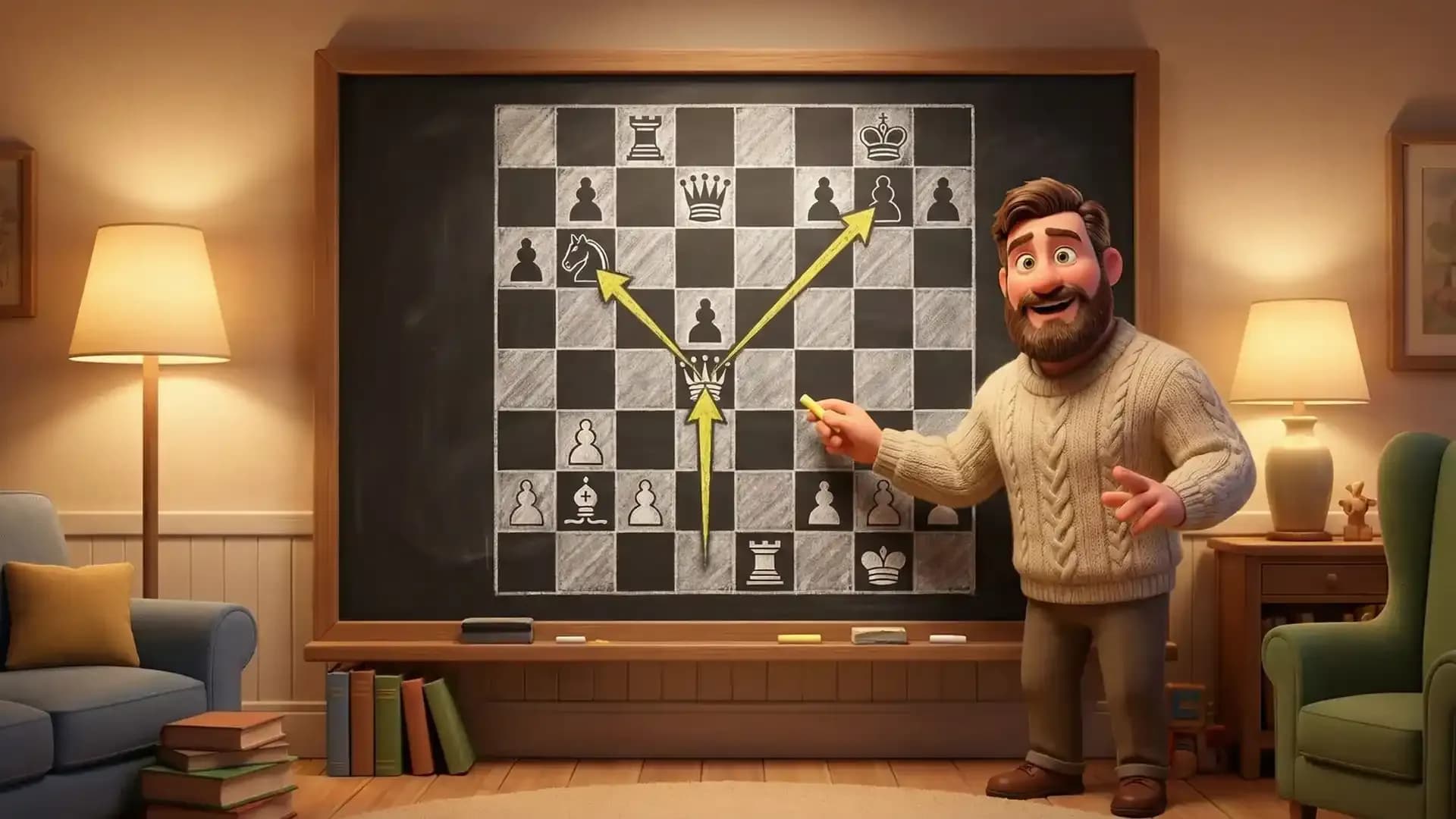
What Is a Fork in Chess? Meaning & Examples
What Is a Fork in Chess and why is it so powerful? Find out how to create deadly double attacks, trap major pieces, and start winning more games today.
10 Greatest Chess Players in History Who Changed the Game
Explore the 10 Greatest Chess Players ever, from classical masters to modern geniuses. Learn their achievements, styles, and lasting impact—start reading now.

To win any game in chess, you need to evaluate chess position of your pieces time to time so you know if you have the advantage or not.
Chess position evaluation is a crucial aspect of middle-game chess strategy, and anyone who intends to excel in their chess playing should have a solid understanding of chess position evaluation. Whether you are playing chess online or casually on a board, learning to judge positions will significantly enhance your play.
Table of contents
- Why Chess Position Evaluation Matters
- 7 Factors To Consider When Evaluating your position in a chess game
- How to Evaluate Your Position on the Chessboard: A Step-by-Step Guide
- Examples: Assessment of Real Chess Positions
- How to make some errors when assessing chess positions
- How to Train Your Evaluation Skill
Why Chess Position Evaluation Matters
Chess position evaluation is the ability to establish who has the advantage and why. Good evaluation takes into account the balance of material, piece activity, pawn structure, king safety, and momentum or initiative.
All these factors, when combined, provide a strategic picture, allowing you to utilize your strengths and address your weaknesses.
7 Factors To Consider When Evaluating your position in a chess game

There are seven key factors to consider when evaluating your position on the chessboard, whether you are ahead of your opponent or you have to catch up to them.
1. Material Balance
On the board, the number of materials, pawns, and pieces in every position. This forms the initial step to know who could have an advantage. But do not forget that material advantage is not all; ill-positioned pieces are less valuable. It is important to know when a sacrifice is worth it or when material results in an endgame advantage.
2. Pieces: Activity and Coordination
Active pieces manipulate key squares, open files, and may cause threats. To the extent that your pieces are in harmony, your stand is better. Neutral or tense pieces are not able to make a difference in the game. When your Queen, Rook, or Bishop is active on open lines, you also create dangerous skewer in chess opportunities that can win material in a single move.
3. King Safety
The security of the king is first. The onslaught of your opponent may attack an open king, though you are ahead in material. Constantly assess the protection and weakness of the king.
4. Pawn Structure
Pawns characterise the game; the targets may be weak formations, including (doubled, isolated, or backward) pawns. The rooks and pawn islands are also open to move, and this is a strategic matter.
5. Space Advantage
More space allows your pieces to move around and limits your opponent's options. Space control offers the chance to construct an assault or enhance the location of pieces. To be a better space, you need to have a better chess openings.
6. Key Squares and Files Control
Control of central squares, good positions of knights, and open/semi-open files of rooks are essential. The tactical and strategic advantage is provided by the control of these.
7. Initiative and Momentum
Initiative implies that you are threatening things that your opponent must counter. It is able to counter material shortage and psychologically strangle your opponent.
A good assessment should be a balance between such fixed components as material and the pawn structure, and dynamic ones, such as initiative and activity of pieces. Do not concentrate on a single aspect. You want to understand the position and have a complete picture of it and then select your plan.
To fully understand these dynamic and static factors together, improving your chess board analysis skills is essential for making accurate and confident decisions in every position.
How to Evaluate Your Position on the Chessboard: A Step-by-Step Guide

Step 1 - Check Your Pieces
Start by counting the pieces and pawns of both sides. Identify any gains or losses. Be familiar with the values of all the pieces (e.g., queen = 9, rook = 5, bishop/knight = 3, pawn = 1), but keep in mind that context is important. An active knight can be used in place of a trapped rook, as an example.
Step 2 - Evaluate King Safety and Piece Action
Have you checked the safety of your king first? Is he well shielded? Does the king of the opponent expose him? A king who is not well defended is a subject to be addressed as soon as possible.
Then compare the piece activity. Place well-working pieces, command key squares, and restrict your opponent. Developing this skill is essential for your chess improvement strategies and middle-game strategy in chess practice.
Step 3 - Space and Pawn Structure
Search for weak pawns like doubled, isolated, or backward pawns. Determine open files and pawn islands. The judge who owns more space has more freedom to attack.
Step 4 - Imbalances and Long-term Plans
Know the imbalances, including material vs. activity, weak squares or kingside vs. queenside attacks, which often arise from dynamic openings such as the Baltic Defense Chess Opening. Someone strategize on how to capitalize on your own strength and take the advantage, or neutralize that of your opponent.
Step 5 - Develop an Informed Decision
A combination of all insights should be made to determine who is superior. Winning, equal or worse? Plan accordingly, attack, defend, simplify, or get better.
Examples: Assessment of Real Chess Positions
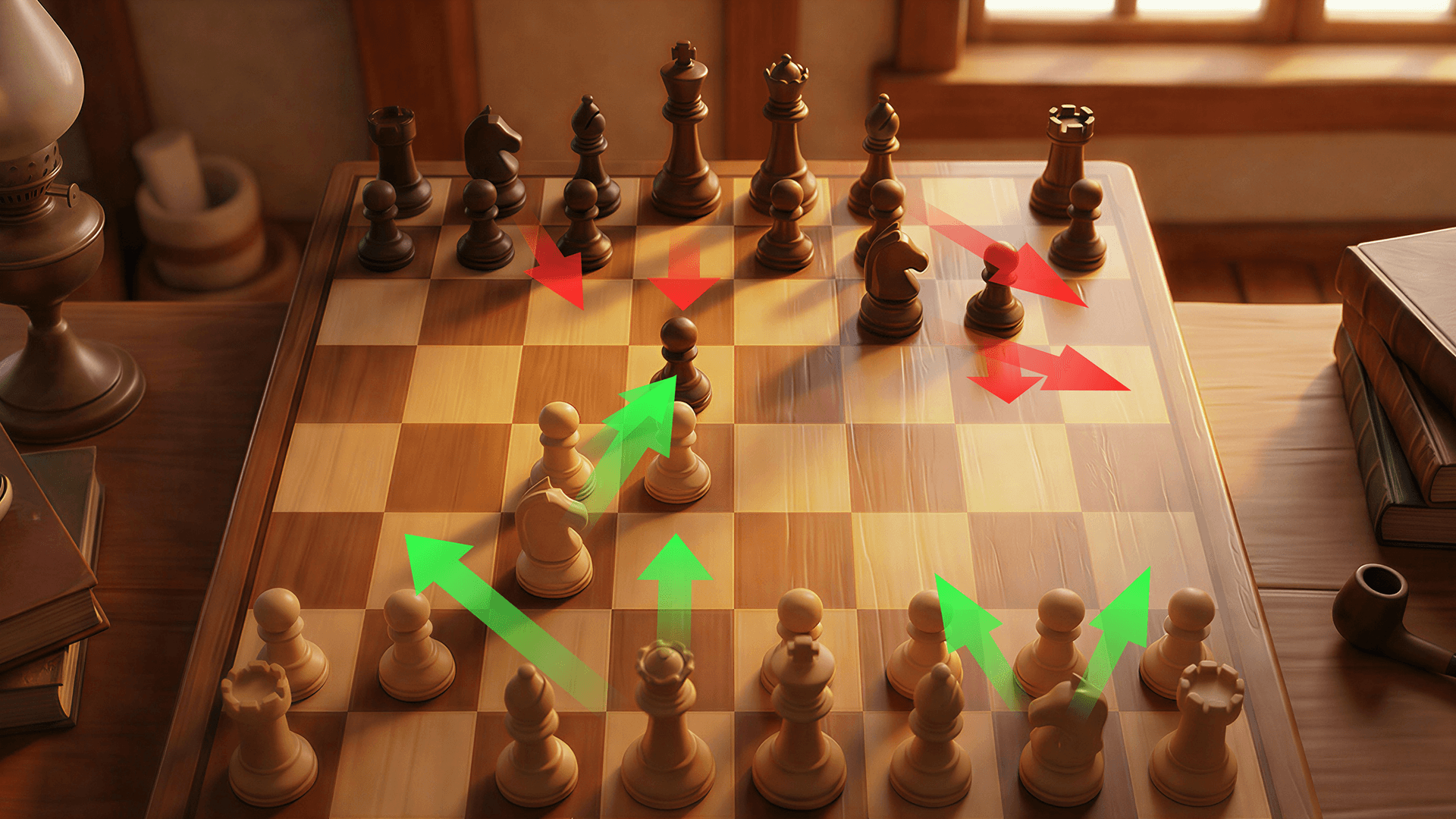
Location in which White has a safer king, activity, and space. White is clearly better.
Black has good chances in a situation in which he has to sacrifice material to launch an initiative and attack on the exposed king of White.
How to make some errors when assessing chess positions
- Concentrating on content and not on dynamics.
- Neglecting the threats or plans of the opponent.
- Lensness on one thing and to forget others.
- Hurrying appraisals without considering the whole picture.
How to Train Your Evaluation Skill
- Drills on the evaluation of positions without moving pieces as a way of improving awareness.
- Compare your analysis to the computer's analysis after playing online.
- Learn grandmaster games in terms of their analysis and strategizing.
- Apply puzzles with attention to positioning, knowledge, and tactical activities.
- Play middle game strategy chess in actual games.
Evaluating your position while playing chess online is easier than on the board because, if you're playing against the computer, you can review your moves to identify where you went wrong and determine the right step.
FAQs
- While all factors matter, king safety and material balance generally have the highest priority, followed closely by piece activity.
- Start with counting material and then add other factors like king safety and piece activity. Practice with simple positions and study annotated games.
- Engines use numerical scoring combining many factors with deep computation, while humans use qualitative judgment supported by pattern recognition and experience.
- Static advantages are long-term and fixed, like material and pawn structure. Dynamic advantages are temporary and depend on active play and initiative.
Chess.Game Growth Explained: The Most Popular New Chess Platform
Discover how Chess.Game reached 1.5M monthly users and became the most popular new chess platform with free learning and smart matchmaking.
What Is a Good Chess Rating? Complete Guide for Beginners to Experts
What is a good chess rating? Learn what 800, 1000, 1200, and 1600 ratings mean, plus average chess ratings and how to improve fast.
Chess Pieces That Can Move Diagonally
Which Chess Pieces Can Move Diagonally? Rules Explained
What Is a Fork in Chess? Meaning & Examples
What Is a Fork in Chess and why is it so powerful? Find out how to create deadly double attacks, trap major pieces, and start winning more games today.
10 Greatest Chess Players in History Who Changed the Game
Explore the 10 Greatest Chess Players ever, from classical masters to modern geniuses. Learn their achievements, styles, and lasting impact—start reading now.