Castling in Chess: Rules, Long Castling & How to Castle



Types of Chess: Explore All Variants and How They're Played
Discover the different types of chess, including classical, rapid, blitz, and modern variants. Learn the rules, differences, and pick the best one to play today.
Castling in Chess: Rules, Long Castling & How to Castle
Castling in chess is a special move that allows the king and rook to move at the same time, helping protect the king and activate the rook for better board control.
How to Play Chess: Easy Rules & Beginner Tips
How to play chess explained simply with board setup, piece rules, checkmate basics, and beginner strategies. Follow this guide and start playing today.

Youngest Chess World Champion: Top 10 Youngest Champions in History
Only a handful of players have ever claimed the title of youngest chess world champion, and the record keeps getting shattered. From Gukesh Dommaraju's historic 2024 win at just 18 to Kasparov's 40-year reign atop the record books, here's the full ranked list, timeline, and the rising prodigies who could break it next.

Chess Notation Explained: A Complete Guide to Reading and Writing Algebraic Notation
Master chess notation with our complete guide covering algebraic symbols, board coordinates, special moves and annotations. Start reading games today!

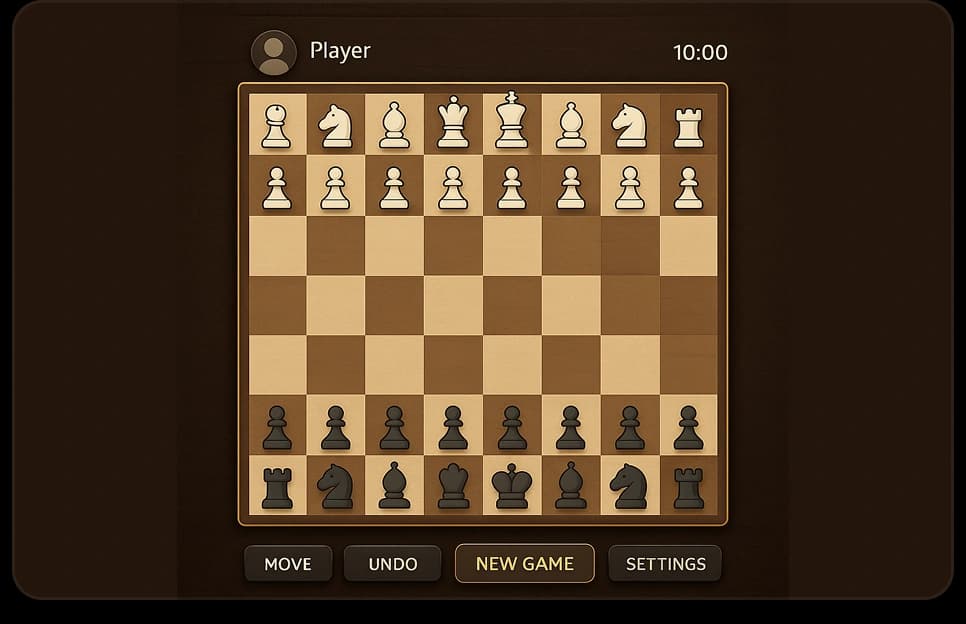
The board is a very unsafe environment at the beginning of a chess game. To a beginner, the center is usually the place of the greatest commotion. This is the reason why studying how to play castling in chess is a game-changer.
The only step in the whole game that can take you two steps at a time, i.e., two strategic purposes in one step. You should use it while playing online chess or offline chess.
Table of contents
What Is Castling in Chess?
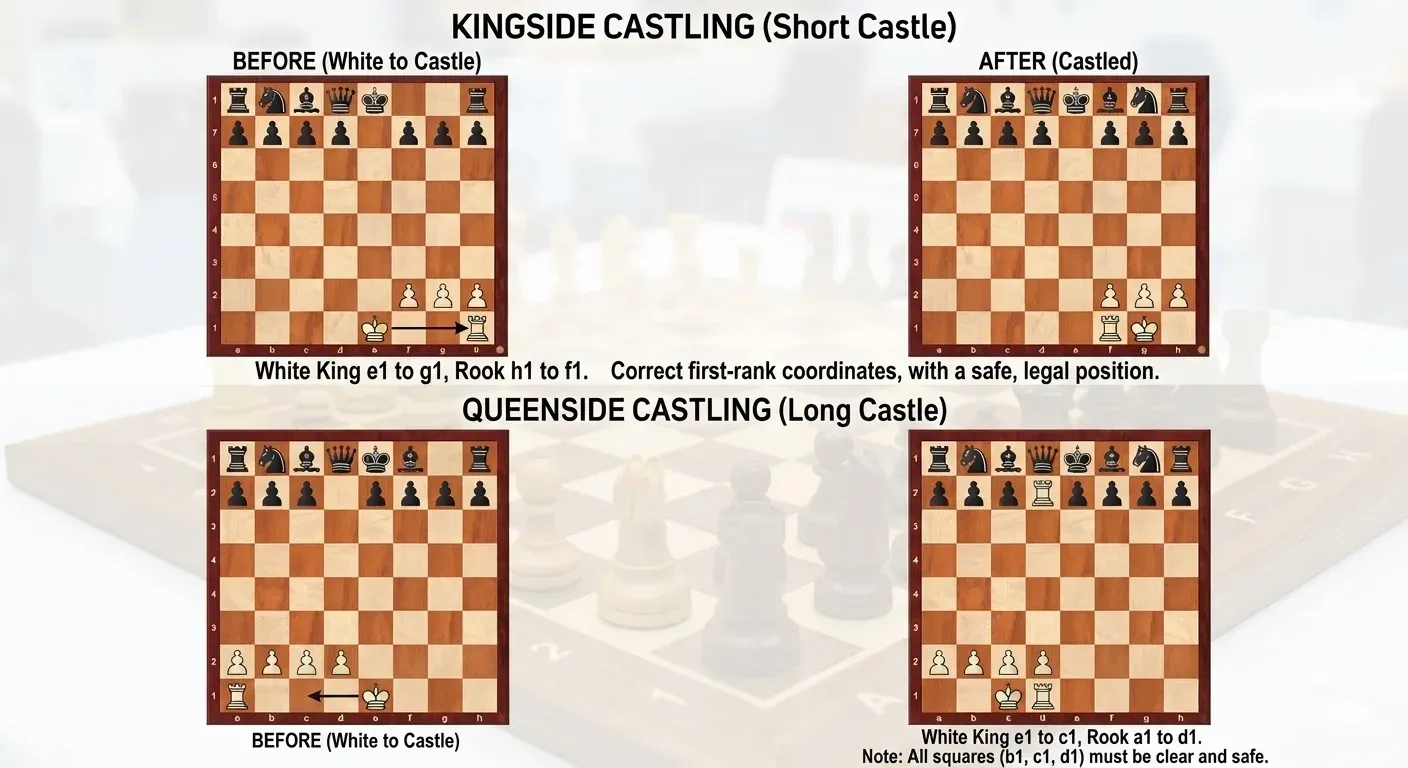
Castling in chess is a special trick of defence and attack, which involves your King and one of your Rooks. It is special in that no other time can the King make more than one square move, and that he is allowed to move two pieces in the same turn.
The castle move in chess is designed to do two things:
- King Safety: It moves the King out of the open squares in the middle to a safe corner.
- Rook Activation: It moves the Rook into the middle of the board, where it is actually able to join the battle.
How to Castle in Chess (Step-by-Step)
When you observe the pattern, it is easy to learn how to castle in chess. Always get the King away! Always get the King away, and you should know how the chessboard setup should be for this.
Step 1: Move the King Two Squares
Take up your King and take him two squares to your Rook (either to the right or to the left).
Step 2: Move the Rook Next to the King
Take your next Rook, whom you are casting to, and put it on the square upon which the King has just leaped.
Example of Castling on the Board
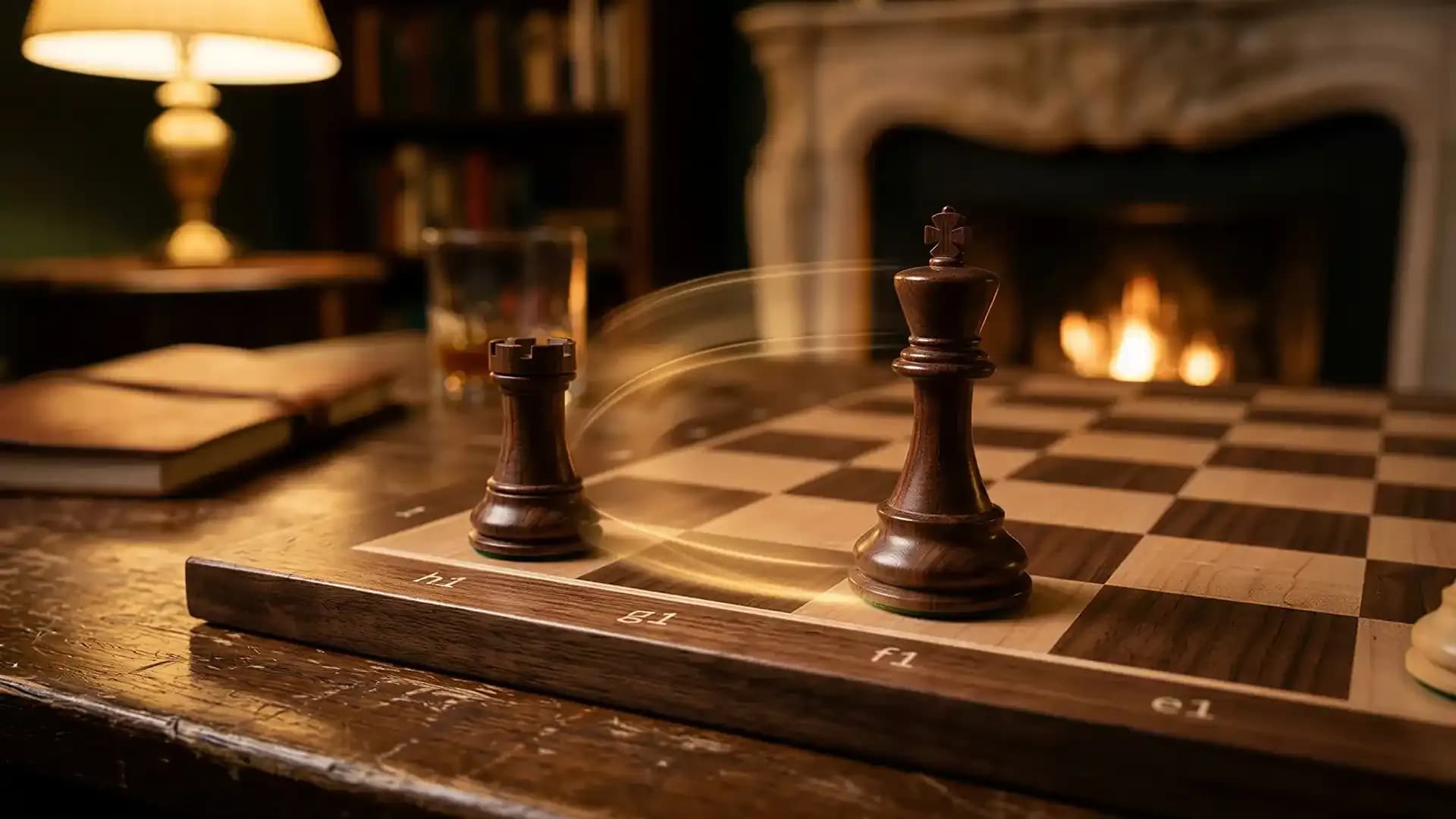
To explain the Kingside castle in a chessboard, the White would appear as follows: the King is moving off the e1 square into the g1 and the Rook is moving off the h1 square into the f1 square. The two works, in a way, constitute an exchange of sides whilst remaining directly adjacent to one another.
Castling Rules in Chess (Official Rules)
Castling is subject to strict rules defined in the official Laws of Chess, published by FIDE. Any violation of these is an illegal move.
Rule 1: King and Rook Must Not Have Moved
It is only possible to castle when the King and the Rook are making the first moves. When you have already moved one or both pieces later in the game, though you have moved them back, then you can no longer castle, using that particular Rook.
Rule 2: No Pieces Between King and Rook
The "lane" between your King and Rook must be empty. You cannot jump over your own Knights, Bishops, or Queens.
Rule 3: King Cannot Be in Check
Castling will not help you to avoid a check. In case your opponent is in the process of assaulting your King, then you need to either intercept the attack or move the King with your fingers. You can use the King's Pawn Opening move to have a better setup.
Rule 4: King Cannot Pass Through Check
This is a very important chess rule in castling. You cannot castle when the square on which your King must make the step towards its destination is besieged by an enemy piece.
Rule 5: King Cannot End in Check
You cannot finish your move on a square that would put the King in check. Your "landing square" must be safe.
Long Castling vs Short Castling
The two castling types differ depending on which side of the board you are on.
| Type | Description | Key Points |
|---|---|---|
| Short Castling (Kingside Castling) | The two castling types vary depending on which side of the board you are on and what chess openings you are using. | Speed: It is very fast to set up. Safety: It keeps the King tucked away behind a solid wall of pawns. |
| Long Castling (Queenside Castling) | Long castling in chess happens on the side where the Queen starts. Since there are three pieces to move out of the way, it takes more time. | Movement: The King still moves two squares, but the Rook has to travel further. Strategy: It can become a little more aggressive as the Rook will be put on a central file (the d-file) at once. |
When Should You Castle in Chess?
Chess Strategy is just as important as the castling rules in chess.
Castle Early for King Safety
You should look at the pieces of your opponent before you move. When they are all pointing at your kingside, you may wish to think of long castling at the opposite end of the chessboard.
Castle Toward a Safer Side
You should not castle when your opponent has already moved his pawns forward on that side. You do not want to put your King in a pounding.
Avoid Castling Into an Attack
Don't castle if your opponent has already pushed their pawns forward on that side. You don't want to move your King into a "pawn storm."
When You Should NOT Castle
At times, it is better to be in the center.
- Opponent attacking the castling side: stay away in the event that the bunker has been fired upon.
- Middle-game king safety: your King may be quite safe where he is, provided that all the centre of the board is completely covered by the pawns.
- Endgame transitions: When the majority of the large pieces (Queens/Rooks) are off the board, your King must, in fact, be in the middle to assist in winning the game.
Why Castling Is Important in Chess
You should know the worth of this, how to win at chess while castling:
- Protects the King: It lays your best part behind a harbour.
- Connects the Rooks: When you castle, your Rooks can see each other. It is known as connecting the rooks, and this renders your back rank almost unassailable.
- Improves Board Control: It brings a powerful Rook into the center.
- Speeds Up Development: It completes your "set-up" so that you can begin your mid-game strategy.
Final Thoughts
The castle movement in chess is a process of how to play chess for beginners. It renders thy king the more secure and puts thy pieces so that they may resist a powerful attack. Such rules of castling in chess can be complicated at first, but once one follows them, they become second nature. Practice, practise, and ever remember to look at your King.
FAQs
- The chess game has an extraordinary move known as castling, in which the king and rook move simultaneously on one turn. The primary objective of this move is to secure the king and draw the rook near the center so it can participate more actively in the game.
- Castling is a movement of the king two squares in the same direction as the rook on the same row, followed by moving the rook to the square immediately adjacent to the king on the opposite side. Movement of both the king and the rook is done in one move.
- To castle in chess, the king and the rook must never have moved before; there must be no pieces in between them, the king is not in check, and the king cannot move into or onto a square which is under attack by an opponent.
- You cannot castle, no, when your king is in check. To start with, you should take a step to eliminate the check, then you may castle, provided that you meet all the other conditions.
- When the king castles on the queen's side of the board, it is called long casting. The king in this move will take two squares to the left, and the rook on the corner will take the square adjacent to the king. It is also referred to as queenside castling.
Types of Chess: Explore All Variants and How They're Played
Discover the different types of chess, including classical, rapid, blitz, and modern variants. Learn the rules, differences, and pick the best one to play today.
Castling in Chess: Rules, Long Castling & How to Castle
Castling in chess is a special move that allows the king and rook to move at the same time, helping protect the king and activate the rook for better board control.
How to Play Chess: Easy Rules & Beginner Tips
How to play chess explained simply with board setup, piece rules, checkmate basics, and beginner strategies. Follow this guide and start playing today.
Youngest Chess World Champion: Top 10 Youngest Champions in History
Only a handful of players have ever claimed the title of youngest chess world champion, and the record keeps getting shattered. From Gukesh Dommaraju's historic 2024 win at just 18 to Kasparov's 40-year reign atop the record books, here's the full ranked list, timeline, and the rising prodigies who could break it next.
Chess Notation Explained: A Complete Guide to Reading and Writing Algebraic Notation
Master chess notation with our complete guide covering algebraic symbols, board coordinates, special moves and annotations. Start reading games today!