Skewer in Chess: What It Is, How It Works, and How to Use It

Types of Chess: Explore All Variants and How They're Played
Discover the different types of chess, including classical, rapid, blitz, and modern variants. Learn the rules, differences, and pick the best one to play today.
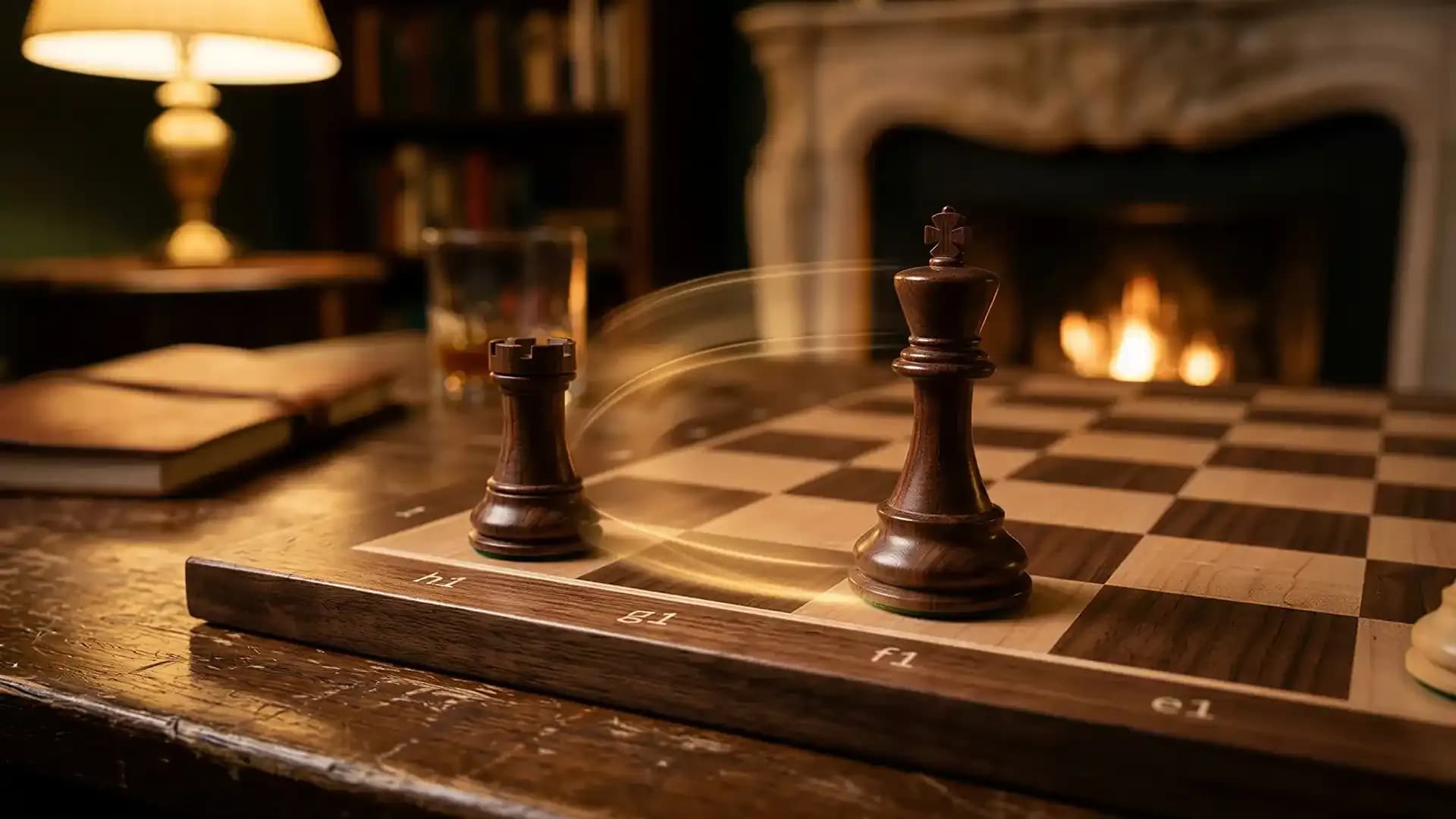
Castling in Chess: Rules, Long Castling & How to Castle
Castling in chess is a special move that allows the king and rook to move at the same time, helping protect the king and activate the rook for better board control.
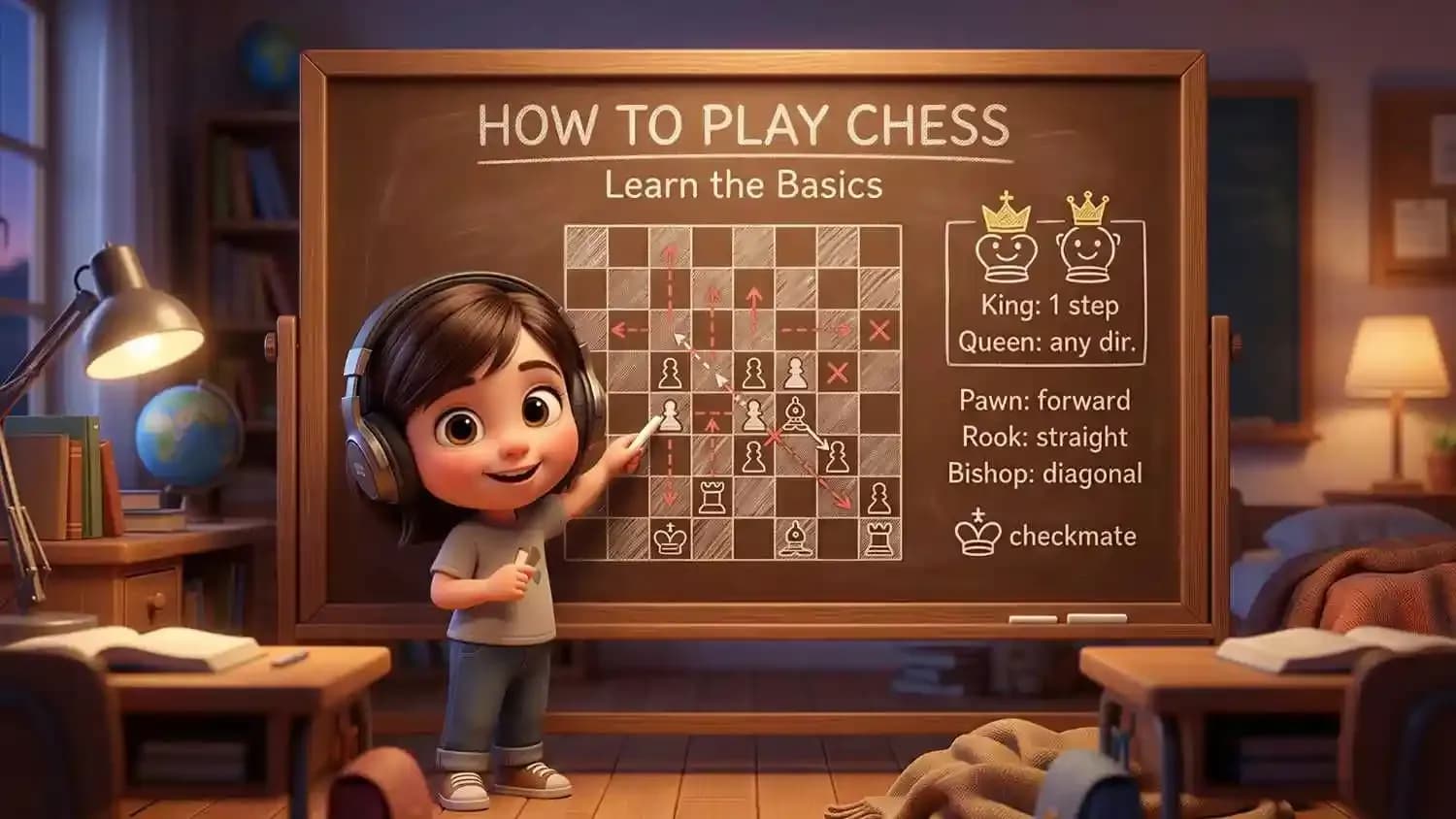
How to Play Chess: Easy Rules & Beginner Tips
How to play chess explained simply with board setup, piece rules, checkmate basics, and beginner strategies. Follow this guide and start playing today.

Youngest Chess World Champion: Top 10 Youngest Champions in History
Only a handful of players have ever claimed the title of youngest chess world champion, and the record keeps getting shattered. From Gukesh Dommaraju's historic 2024 win at just 18 to Kasparov's 40-year reign atop the record books, here's the full ranked list, timeline, and the rising prodigies who could break it next.
Chess Notation Explained: A Complete Guide to Reading and Writing Algebraic Notation
Master chess notation with our complete guide covering algebraic symbols, board coordinates, special moves and annotations. Start reading games today!
Ever had one of those moments in a game where your opponent’s Queen is staring down the board, and suddenly your Rook behind it is hanging? This might feel familiar while you play chess online. That’s the skewer chess tactic in action. It’s a sneaky but incredibly effective chess tactic.
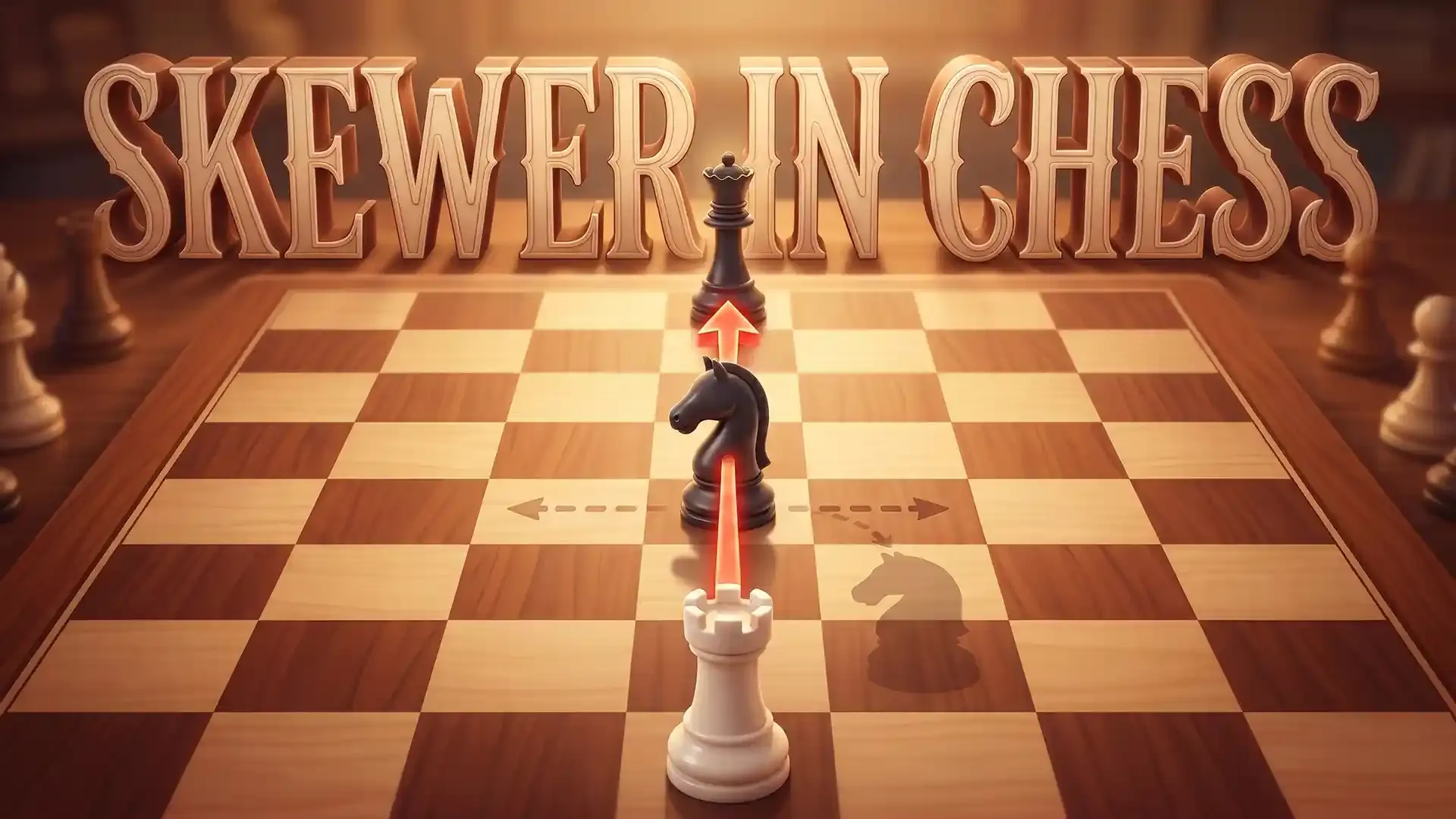
A chess skewer happens when one of your long-range pieces attacks two (or more) of your opponent’s pieces that are lined up on the same rank, file, or diagonal. The more valuable piece is in front, so it has to move and that leaves the piece behind it completely exposed. Many players call it a “reversed pin,” and once you start spotting skewer in chess opportunities, you will learn about how to get better at chess.
In this guide, we’ll break down what is skewer in chess, the different types, how it compares to a pin. In addition, we will also try to find how you can set one up and defend against it. Let’s dive in.
Table of contents
What Is a Skewer in Chess?
Many people have the same question “whats a skewer in chess?” Putting in simple words, a skewer in chess is when a Queen, Rook, or Bishop attacks two enemy pieces sitting on the same straight line. The front piece (usually the more important one) gets hit first. When it steps aside to safety, the piece behind it becomes an easy target.

Skewer chess tactics are fantastic because they force your opponent into tough decisions and often net you extra material. They show up in all stages of the game, but they really shine once the board opens up and connect perfectly with chess tactics for beginners.
Which Pieces Can Create a Skewer?
| Piece | Can Skewer? | Moves Along |
|---|---|---|
| Queen | ✅ Yes | Ranks, files, diagonals |
| Rook | ✅ Yes | Ranks and files |
| Bishop | ✅ Yes | Diagonals |
| Knight | ❌ No | Jumps — not linear |
| King | ❌ No | One square only |
| Pawn | ❌ No | One square diagonal |
Not every piece can pull off a chess skewer. Only the long-range ones have the power to strike across the chessboard like this.
- Queen: Absolutely. She moves in every direction, ranks, files, and diagonals. Hence, she’s the ultimate skewer chess weapon.
- Rook: Yes. Rooks dominate open files and ranks, making them perfect for horizontal and vertical skewers.
- Bishop: Definitely. Bishops love long diagonals and can skewer pieces perfectly aligned on those colors.
The others? No chance:
- Knight: It jumps in that weird L-shape, so it can’t attack along a straight line.
- King: Only moves one square at a time, nowhere near enough range.
- Pawn: Moves slowly forward and captures diagonally just one square. No long-range attacks here.
Bottom line: Keep your Queen, Rooks, and Bishops active if you want to create strong skewers in chess opportunities.
Two Types of Skewers in Chess
1. Absolute Skewer
This is one of the nastiest versions. An absolute skewer hits the King first. Since the King is in check, it must move. That automatically exposes whatever is sitting behind it.
These are brutal because your opponent has zero choice. You’ll often win a Rook or even the Queen this way. Absolute skewers are real game-changers in skewer chess.
2. Relative Skewer
In a relative skewer, you attack a big piece that isn’t the King, usually a Queen or Rook. The front piece can move to safety, but doing so drops the piece behind it.
It’s not quite as forcing as the absolute version, but it still puts huge pressure on your opponent. They might save the more valuable piece, but they’ll lose the other one in return.
Skewer vs Pin: What’s the Difference?
A lot of beginners mix these two up, so here’s a clear comparison:
| Aspect | Pin | Skewer |
|---|---|---|
| Which piece gets attacked first? | The less valuable one | The more valuable one |
| Can the front piece move? | Usually no (it would expose the big piece) | Yes, but then you lose the piece behind |
| How forced is it? | Not always | Absolute = totally forced; Relative = still strong |
| Who usually loses material? | Owner of the pinned piece | Owner of the skewered pieces |
In a pin, the front piece is basically stuck protecting something more important. In a chess skewer, the valuable piece has to run, and something valuable gets taken. Skewers tend to feel more aggressive because the higher-value target is under direct fire.
How to Set Up a Skewer
Setting up a skewer in chess takes some vision. Here’s what to look for:
- Two opponent pieces lined up on the same rank, file, or diagonal.
- The more valuable piece is in front.
- Your attacking piece can safely get onto that line.
Pro tip: Use forcing moves like checks or threats to push their pieces into bad alignment. Sometimes a simple piece trade can lure their Queen or King onto a dangerous line.
Before you commit, always double-check those three conditions. If they’re all yes, then go for it. This skill pairs well with learning fork in chess and avoiding chess mistakes.
How to Escape a Skewer (4 Practical Methods)
Nobody’s perfect. You will get skewered sometimes. Here are your best ways out:
1. Retreat and Defend
Move the front piece somewhere safe that still protects the piece behind it. For example, pull you Queen back to a square where it still guards the Rook.
2. Interpose a Piece
Drop a less important piece or pawn in between to block the line of attack. This can even help you develop a piece at the same time.
3. Counter-Check or Counter-Threat
Use one of your skewered pieces to check the enemy King or create a bigger threat. This buys you time to save the second piece.
4. Capture the Attacking Piece
If the skewering piece is hanging or unprotected, just take it.
Sometimes you can’t save everything. The goal is to limit the damage as much as possible while improving your ability to evaluate chess position.
How to Avoid Being Skewered (Prevention Tips)
The best defense against skewer chess is not getting into that position in the first place.
Try not to leave your valuable pieces lined up on open lines where the opponent’s Queen, Rook, or Bishop can snipe them. Keep your pieces coordinated and your King tucked away safely.
Get into the habit of asking yourself: “Are any of my pieces vulnerable to a skewer on this open file or diagonal?” A little prevention goes a long way and supports better middle game strategy, and chess principles.
Final Thoughts
Skewer chess tactics are one of those skills that separate casual players from sharper ones. Once you train your eye to spot alignments, you’ll start winning pieces you never thought possible.
Keep practicing with puzzles, review your own games for missed chess skewer opportunities, and combine this knowledge with other basics. This will give you an idea about chess mistakes beginners should avoid.
FAQs
- It’s a tactic where a long-range piece attacks two aligned enemy pieces. The more valuable one in front has to move, exposing the one behind.
- In a chess skewer the valuable piece is attacked first and moves away. In a pin, the less valuable piece is attacked first and usually stays put to protect the bigger piece behind it.
- Only the Queen, Rook, and Bishop, the pieces that can attack across long straight lines.
- When the King is the front piece and in check. It has to move, and you win the piece behind it.
- You can retreat while defending, block the line, counterattack, or capture the attacking piece.
Types of Chess: Explore All Variants and How They're Played
Discover the different types of chess, including classical, rapid, blitz, and modern variants. Learn the rules, differences, and pick the best one to play today.
Castling in Chess: Rules, Long Castling & How to Castle
Castling in chess is a special move that allows the king and rook to move at the same time, helping protect the king and activate the rook for better board control.
How to Play Chess: Easy Rules & Beginner Tips
How to play chess explained simply with board setup, piece rules, checkmate basics, and beginner strategies. Follow this guide and start playing today.
Youngest Chess World Champion: Top 10 Youngest Champions in History
Only a handful of players have ever claimed the title of youngest chess world champion, and the record keeps getting shattered. From Gukesh Dommaraju's historic 2024 win at just 18 to Kasparov's 40-year reign atop the record books, here's the full ranked list, timeline, and the rising prodigies who could break it next.
Chess Notation Explained: A Complete Guide to Reading and Writing Algebraic Notation
Master chess notation with our complete guide covering algebraic symbols, board coordinates, special moves and annotations. Start reading games today!