12 Chess Openings for Beginners to Start Strong



Types of Chess: Explore All Variants and How They're Played
Discover the different types of chess, including classical, rapid, blitz, and modern variants. Learn the rules, differences, and pick the best one to play today.

Castling in Chess: Rules, Long Castling & How to Castle
Castling in chess is a special move that allows the king and rook to move at the same time, helping protect the king and activate the rook for better board control.
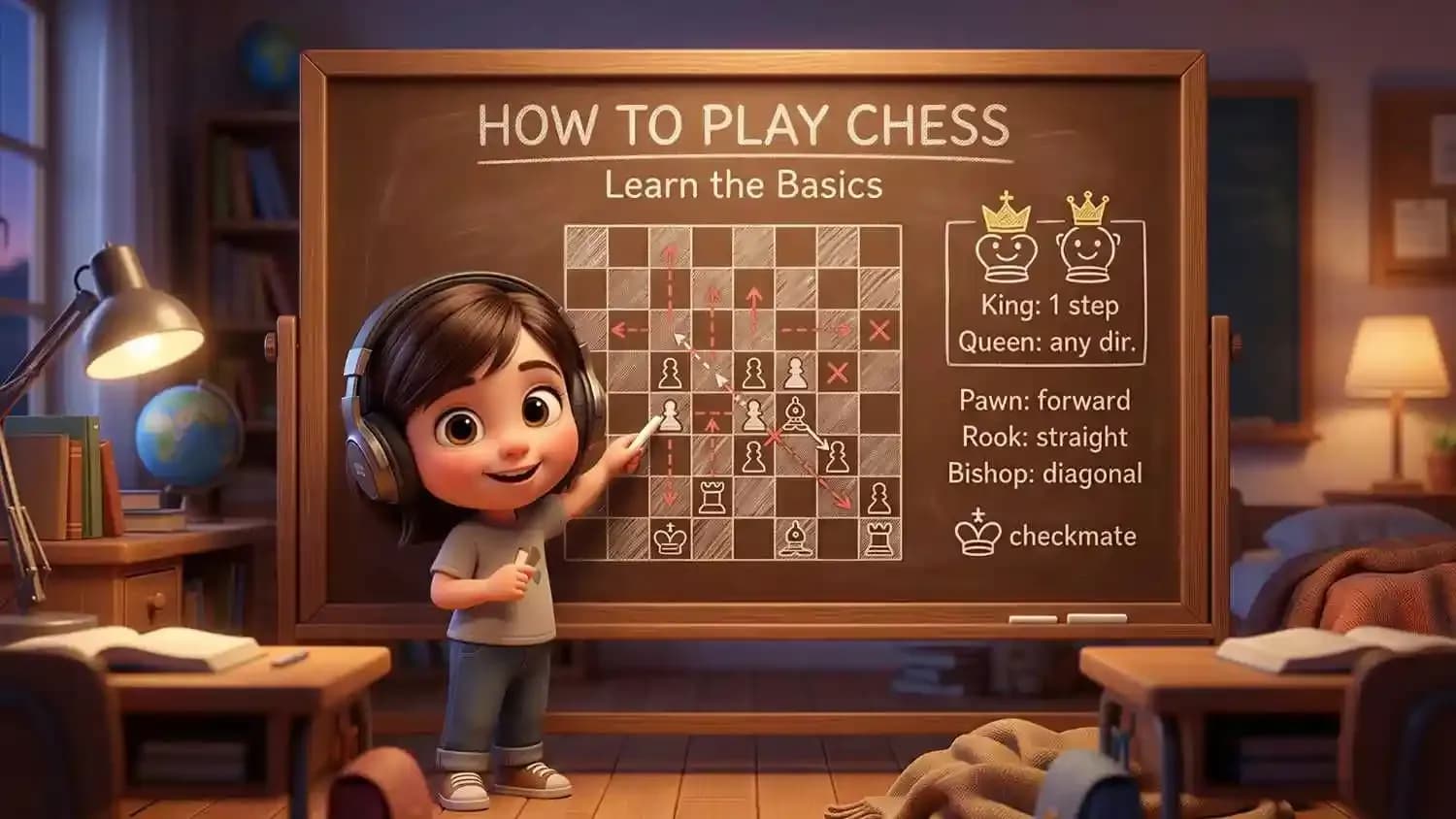
How to Play Chess: Easy Rules & Beginner Tips
How to play chess explained simply with board setup, piece rules, checkmate basics, and beginner strategies. Follow this guide and start playing today.

Youngest Chess World Champion: Top 10 Youngest Champions in History
Only a handful of players have ever claimed the title of youngest chess world champion, and the record keeps getting shattered. From Gukesh Dommaraju's historic 2024 win at just 18 to Kasparov's 40-year reign atop the record books, here's the full ranked list, timeline, and the rising prodigies who could break it next.

Chess Notation Explained: A Complete Guide to Reading and Writing Algebraic Notation
Master chess notation with our complete guide covering algebraic symbols, board coordinates, special moves and annotations. Start reading games today!

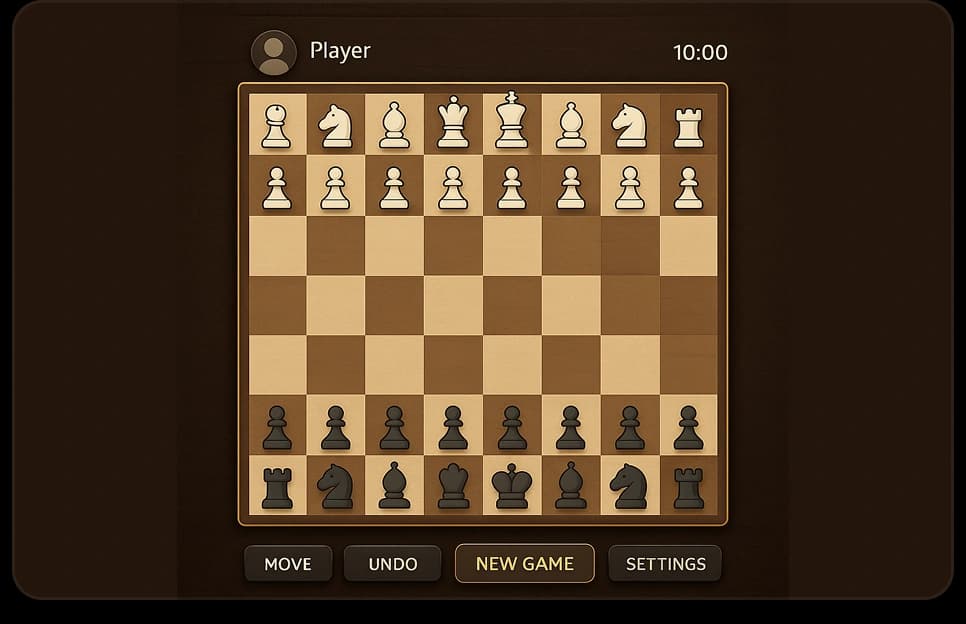
These 12 Chess openings for beginners will surely give you a strong start against your opponent to dominate the rest of the game.
By studying easy chess openings, you gain the knowledge that prevents blunders and common mistakes in chess. Playing simple chess openings is helpful because it builds your confidence, saves you from common errors, and prepares you for mid-game battles which give you an advantage over your opponent if they are not very versed with the chess openings moves.
Table of contents
12 Best Chess Openings for Beginners
| Opening | Difficulty | Style | Best For |
|---|---|---|---|
| Italian Game | Easy | Classical | Learning Fundamentals |
| Ruy Lopez | Medium | Strategic | Long-term Planning |
| Sicilian Defense | Medium | Aggressive | Playing to Win (as Black) |
| French Defense | Easy | Defensive | Solid Pawn Structures |
| Queen's Gambit | Medium | Positional | Controlling the Board |
| Caro-Kann | Easy | Solid | Avoiding Early Traps |
| London System | Very Easy | Solid | Quick Understanding |
| Scandinavian | Easy | Forcing | Controlling the Pace |
| Four Knights | Very Easy | Symmetrical | Balanced Play |
| King's Indian Attack | Easy | Flexible | Defensive Safety |
| Scotch Game | Easy | Open | Quick Action |
| Pirc Defense | Medium | Counter-attack | Creative Play |
Key Moves For Every 12 Best Chess Openings for Beginners
1. Italian Game (Giuoco Piano)
Key Moves: 1.e4 e5 2.Nf3 Nc6 3.Bc4
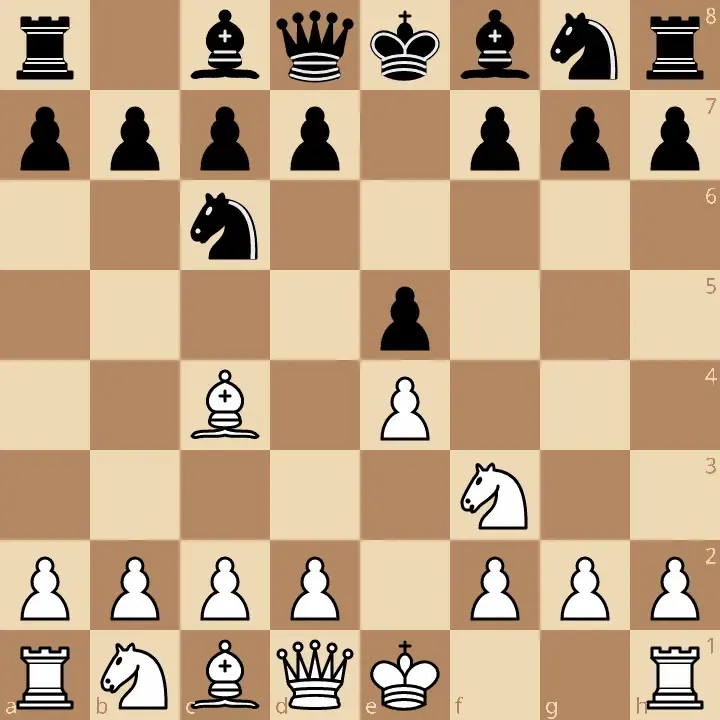
The Italian Game is one of the best chess openings for beginners and a timeless favourite for every beginner. It teaches the core fundamentals of chess, i.e., quick piece development, strong central control, along with early king safety through castling.
With this opening, you get comfortable with open positions along with basic tactics without even needing to memorize complex lines. As one of the simple chess openings for beginners, it introduces crucial chess opening strategies and keeps the structure easy to understand.
If you’re just learning how to play chess openings, then this game is an excellent choice to start.
2. Ruy Lopez (Spanish Opening)
Key Moves: 1.e4 e5 2.Nf3 Nc6 3.Bb5
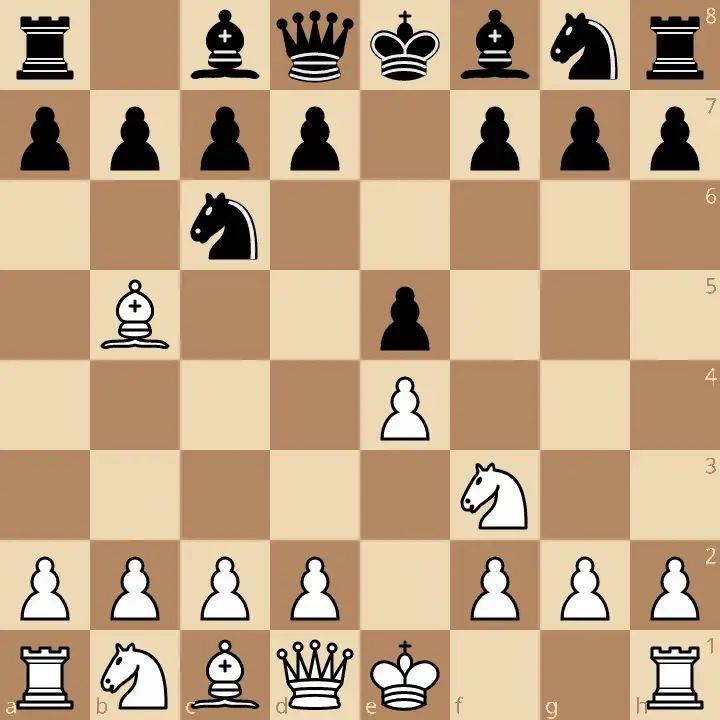
Ruy Lopez is perfect and popular for players ready to explore deeper strategy. It teaches valuable concepts like pressure, tension, as well as long-term planning. It’s one of the most time-tested ways in order to control the center and develop peace harmoniously.
While being popular among top-level players, it can benefit beginners greatly due to its clear structure and logical ideas. By learning this setup, players can improve not just their openings, can also enhance their understanding of overall chess strategy and piece coordination in a practical, step-by-step way.
3. Sicilian Defense (For Black)
Key Moves: 1.e4 c5
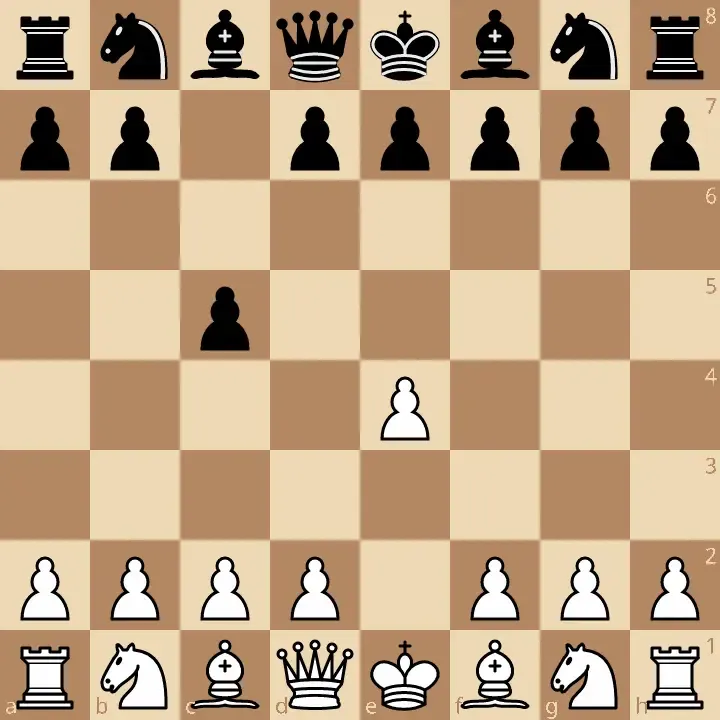
The Sicilian Defense is for those who want to play actively with Black, it opens the door to dynamic counterplay. It challenges White’s central control right from the initial few moves and frequently leads to open, tactical positions where every move counts.
Without even being affected by complexity, beginners can start with the simplified variation that actually focuses on clear development along with strong pawn structure. It’s a practical way to experience sharper positions and learning how to handle them over time. Keep in mind that the full Sicilian is one of the most complicated chess openings in existence, so master the basics first before diving into its advanced lines.
Once you become comfortable with sharper positions, you may also explore more dynamic options like the Marshall Defense, which introduces aggressive counterplay against White’s central setup.
4. French Defense (For Black)
Key Moves: 1.e4 e6
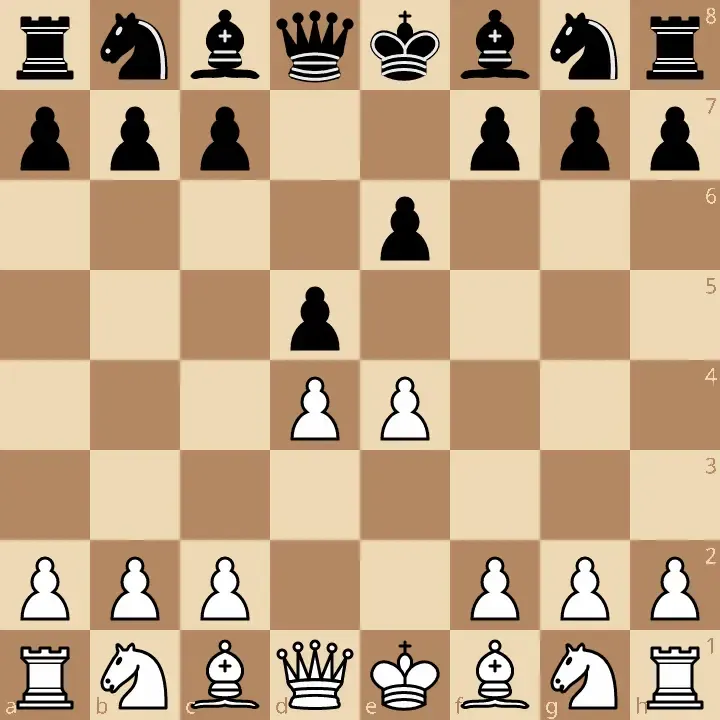
The French Defense allows opening for Black with a solid as well as strategic foundation. It focuses on building a reliable pawn structure and gradually countering White’s center. This appraoch offers a safe learning envinromement for beginngers without constant threats in the opening phase.
Furthermore, it also teaches more room for creativity along with planning that makes it dependable choice for anyone learning to play stronger and more consistent openings.
5. Queen’s Gambit (For White)
Key Moves: 1.d4 d5 2.c4
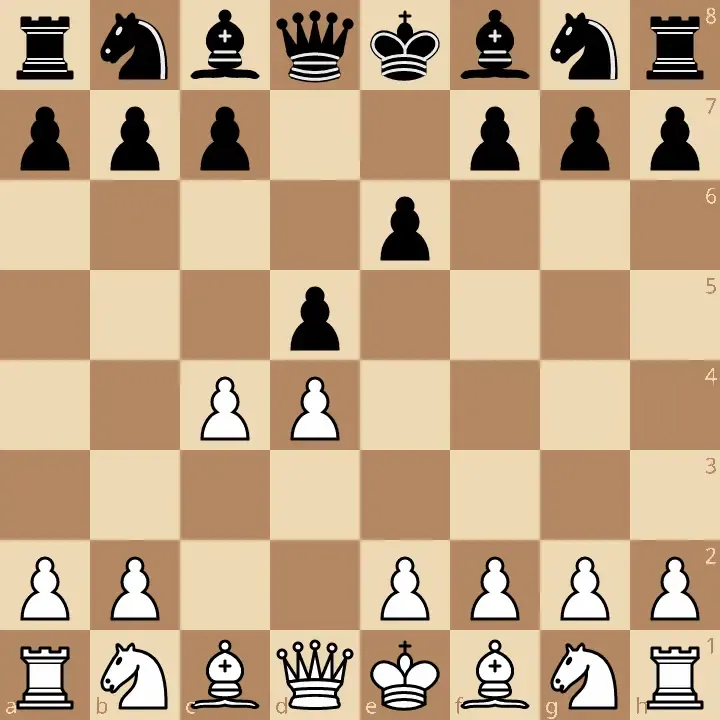
The Queen’s Gambit encourages Black to challenge your central control, yet does so, inducing balanced and considered play. It is a good indicator of how few resources in space and growth can accumulate to create a long-term plan.
The structure is simple, and it inculcates some of the most important chess ideas, including when to trade, how to control important squares, and how to slowly build up generalized pressure throughout the board.
Discover the 10 Best Chess openings for White to challenge black at starting
6. Caro-Kann Defense (For Black)
Key Moves: 1.e4 c6
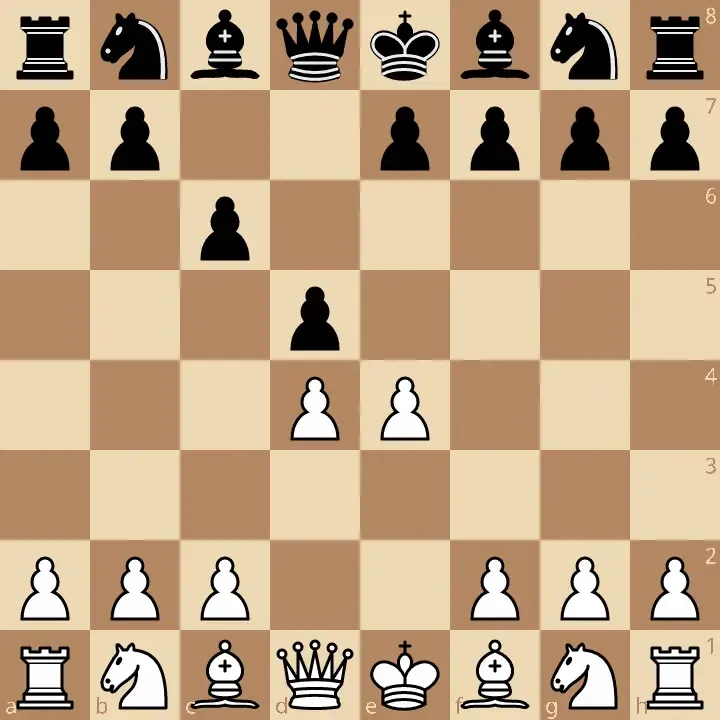
It is a quiet and solid response to 1.e4. Rather than getting into the rat race for complications, it allows Black a time to put together a solid pawn formation and develop his pieces easily. It is particularly useful for novices who would like to avoid early tactical pitfalls and diligently work on slow progress.
This arrangement promotes planning and learning how to plan space. Sometimes, the Caro-Kann develops into a great defensive option, which is very reasonable and surprisingly varied for an amateur.
7. The London System (For White)
Key Moves: 1.d4, 2.Bf4

The London System is a reliable "set and forget" opening because you can use the same setup against almost any defense. Your goal is to build a solid pawn triangle on c3, d4, and e3, creating a stronghold that allows you to develop your pieces with total safety.
The great advantage of this system is that you place your dark-squared Bishop at f4 at an early stage. This eliminates the Bishop being entangled by your own pawns, as is the case in other openings. Simply take care not to act too robotically. Should Black attempt to assault your Bishop, you can merely tuck it back to a safer position so as not to lose it to a less valuable piece. Similar to setups like the bird chess opening, it focuses on structure and plans rather than memorizing long variations.
8. Scandinavian Defense (For Black)
Key Moves: 1.e4 d5

Many amateurs are afraid to play against 1.e4, as it tends to put White in control of the game. The Scandinavian Defense does exactly that by shifting your pawn to d5 in the first move. This forces White to react to you right away. Trading your pawn with theirs makes the board simpler, and the game is no longer going to be a cramped and crowded battle.
This introduction is terrific since it tends to put White players out of their comfort zone. But, should White take your pawn and you recover with your Queen, they will endeavor to kick off your Queen with their Knight. The trick is to place your Queen somewhere she is not threatened, such as the a5 or d8 squares, when she is threatened. This will hold her in the meantime as you work on your other pieces.
9. Four Knights Game (For White or Black)
Key Moves: 1.e4 e5 2.Nf3 Nc6 3.Nc3 Nf6

The Four Knights Game is referred to as the honest opening, since it adheres to the golden rule of chess, bring your Knights to the front of your Bishops. In the fourth move, the Knights have moved to the centerboard. This creates a very balanced, symmetrical position in which both sides have an equal chance to control the middle and keep their Kings safe.
Given the board's balance, there aren't many "scary" traps or tricks to worry about. This makes it a very safe option for beginner players who would rather win through logic than memorize complex moves. Even if it seems a little boring at first, it is the best way to get better at chess because it teaches you how to coordinate your pieces and seek tactical opportunities, pins, and forks in the middle of the game.
10. King’s Indian Attack (For White)
Key Moves: 1.Nf3, 2.g3, 3.Bg2

This King's Indian Attack is a system in which the tendency is to erect a defensive shell around your King, rather than rushing to the center with pawns. You bring up your Bishop to g2, a "fianchetto" it is called. And in this position, your Bishop behaves as a sniper of long range, keeping a watch over the whole board, as your King remains securely behind a wall of sheltered pieces.
Since you are letting Black take control of the center early on, you might feel a little "squeezed" at the start. No need to worry, and this process is included in the plan! Your position is like a coiled spring that is being compressed. When you have developed and castled your King, you will attack in the center and burst out and seize control of the game when your opponent least suspects it. Players who enjoy this setup often experiment with the Mieses Opening as an alternative move order to reach the same KIA structure.
11. Scotch Game (For White)
Key Moves: 1.e4 e5 2.Nf3 Nc6 3.d4

The Scotch Game is an excellent substitute for the Italian Game, which is a bit too slow. Your third move is to push your pawn to d4, and this breaks the center of the board wide open. This compels a game of chess and gets the mess out of the middle, and leaves your Bishops and your Queen with long, clear lines to move and attack.
It is a great introduction to novices since the game does not get congested. It gives you the opportunity to attack Black before they can get their King out of the way with your lead in development. But remember, at the time the center is open, you are vulnerable yourself, too, with your own King. Ensure that you prepare to castle fast to keep off any unexpected attacks.Players who enjoy this early attacking style often graduate to sharper systems like the fried liver attack, where White exploits the same development lead to sacrifice a knight and hunt the Black king from move six.
12. Pirc Defense (For Black)
Key Moves: 1.e4 d6 2.d4 Nf6 3.Nc3 g6

The Pirc Defense is an intelligent defensive system for patient players who like trapping. You begin by making small moves such as d6 and g6, instead of attacking the center at once. You intentionally allowed White to build a large pawn complex, and you completed your development. You want to wait until White gets aggressive enough, and then undermine their pawns until their center falls.
Although it is a very strong opening, it is a bit careless. Otherwise, White will run over you with his big center, which is like a steamroller. You have to be relaxed playing with a bit less space at the start of the game. You can hold back and keep your sniper Bishop on g7 defended until you reach the most opportune moment to make a retaliatory attack and win the game.
Why Learn Chess Openings as a Beginner?
At first, it might feel like beginners in chess shouldn’t care about openings until they are more skilled, but that’s not correct. Actually, practicing and memorizing chess openings early in the game can automatically make you play better.
Why? Even though the first moves are important, the strength of an opening is best understood by its impact on the whole game.
If you know various chess openings, you won’t make mistakes, you’ll move your pieces correctly, and take control of the board from the opening. You can also explore weird Chess Openings to experience different styles of play
This Chess Openings Encyclopedia has covered 500+ such moves, their variations, and their importance. You can go through it!
It’s not necessary to remember a lot of difficult lines word for word.
It’s better to learn some basic openings first, as these teach you the basics of placing your pieces, develop them, and have a strong spot on the board.
Such basic chess strategies serve as a foundation for anyone wanting to make lasting progress in chess.
Tips for Beginners Learning Openings
1. Focus on principles (control center, develop pieces, castle early)
Instead of memorizing moves, focus on core principles: control the center with pawns, develop your knights and bishops quickly while getting your king to safety by castling. With these simple habits, you can seamlessly form a strong foundation for any opening.
2. Don’t memorize too many lines—understand ideas instead:
Trying to memorize endless move sequences can be confusing. Instead, learn the ideas behind each opening—why a move is played and what it aims to achieve. This way, you’ll be better prepared even if your opponent plays something unexpected. This is exactly why plan-based systems like the Grand Prix Attack are so popular with beginners, instead of memorizing long sequences, you simply follow a clear kingside attacking blueprint every game.
If you try to memorize an endless sequence, it can prove confusing. Instead, learn the ideas behind each and every opening: why a move is played, and what it aims to achieve. From this, you’ll be better prepared even if your opponent plays something unexpected.
3. Practice against real opponents or chess engines:
We all know, practice makes a man perfect. The best way to improve is through thorough practice. Play online games against friends, or even use chess engines in order to check different openings. Repetition helps you recognize patterns, sharpen your tactics, and apply opening principles naturally over time.
4. Review master games using these openings:
Always watch or analyze games that are played by strong players who use openings that are beginner-friendly. Observing how they handle the opening, middle game, along with transition gives you valuable insights into strategy, move order as well as common mistakes to avoid.
Benefits of Easy Chess Openings
- Level the Playing Field: These moves help you stay equal with your opponent right from the start.
- Avoid Early Mistakes: Simple setups keep you safe from tricky traps and quick losses.
- Learn the Basics: You can focus on the main goals of the game instead of memorizing long lists of moves.
- Play with Confidence: Using the same solid starts helps you feel ready for the middle of the game.
Common Mistakes to Avoid
1. Moving the same piece multiple times in the opening:

Many beginners often repeat the same move instead of advancing other pieces. For beginners, the main aim in top chess openings is to achieve quick and efficient development. Every repeated move costs you a tempo in chess, letting your opponent develop faster and seize control. Prioritize piece activity over repetition.
2. Not protecting the king’s safety by not castling:

Postponing your move to castle gives your opponent a chance to attack your king. Beginner opening strategies focus a lot on protecting the king. Early castling is always recommended by basic openings, to guard against enemy pins, forks, or sudden checkmates.
3. Overextending pawns without reason:

Moving many pawns in the opening may look adventurous, but more often than not, it creates holes on the board and leaves your pieces scattered. Balanced pawn moves in the center are important in easy chess openings. Do not take on too much unless your plan is very clear, as it may make things worse than better.
4. Ending up in deadly openings (for example, Scholar’s Mate)

Many people new to chess get tricked by Scholar's Mate because they don't understand how chess openings should be played. Knowing a few basic chess openings will let you see and sidestep these tricks. Compete to improve slowly by focusing on developing your game, so you will encounter fewer mistakes.
Conclusion
To feel confident and plan your strategy as a chess player, first, mastering the basic chess openings for beginners is necessary. Simple chess openings like the Cow Opening help you get the hang of the game, occupy the center part of the board, move your pieces successfully, and minimize errors early in the game.
Keep in mind, focusing on the main ideas behind the game is more important than memorizing lots of moves. Get into the habit of playing often, inspect what happened in fights you have won or lost, and try out other openings when your skills progress. By spending time practicing these openings, you’ll build confidence and do well in every game you play.
FAQs
- The London System is easiest for White, as you can do the same to practically anything. The Caro-Kann is quite straightforward for Black, as it offers a clear, repeatable pawn structure.
- The best place to start is the Italian Game. It follows all the simple chess rules, such as controlling the center and developing pieces, making it the ideal teaching game.
- Yes, 1.e4 tends to be more beneficial to learn. It results in open games in which pieces are allowed to move as they please, and it allows you to practice tactics and observe attack patterns more clearly.
- You just need to concentrate on three. Study a single opening of White and two openings of Black (one to deal with 1.e4 and one to deal with 1.d4).
- They should be avoided initially. Advanced openings, such as the Najdorf Sicilian, need you to memorize a lot of complex moves to keep yourself on the safe side, and this can become overwhelming.
- The Caro-Kann Defense is so safe for Black since it does not involve early traps. In the case of White, the Four Knights Game is quite safe, as it is balanced and symmetrical.
- When you are a beginner, you need to devote no more than 10-20% of your time to openings. Better to use your time playing puzzles and learning to complete games.
Types of Chess: Explore All Variants and How They're Played
Discover the different types of chess, including classical, rapid, blitz, and modern variants. Learn the rules, differences, and pick the best one to play today.
Castling in Chess: Rules, Long Castling & How to Castle
Castling in chess is a special move that allows the king and rook to move at the same time, helping protect the king and activate the rook for better board control.
How to Play Chess: Easy Rules & Beginner Tips
How to play chess explained simply with board setup, piece rules, checkmate basics, and beginner strategies. Follow this guide and start playing today.
Youngest Chess World Champion: Top 10 Youngest Champions in History
Only a handful of players have ever claimed the title of youngest chess world champion, and the record keeps getting shattered. From Gukesh Dommaraju's historic 2024 win at just 18 to Kasparov's 40-year reign atop the record books, here's the full ranked list, timeline, and the rising prodigies who could break it next.
Chess Notation Explained: A Complete Guide to Reading and Writing Algebraic Notation
Master chess notation with our complete guide covering algebraic symbols, board coordinates, special moves and annotations. Start reading games today!