Can Chess Pieces Move Backwards? (Full Rules Explained)

Types of Chess: Explore All Variants and How They're Played
Discover the different types of chess, including classical, rapid, blitz, and modern variants. Learn the rules, differences, and pick the best one to play today.
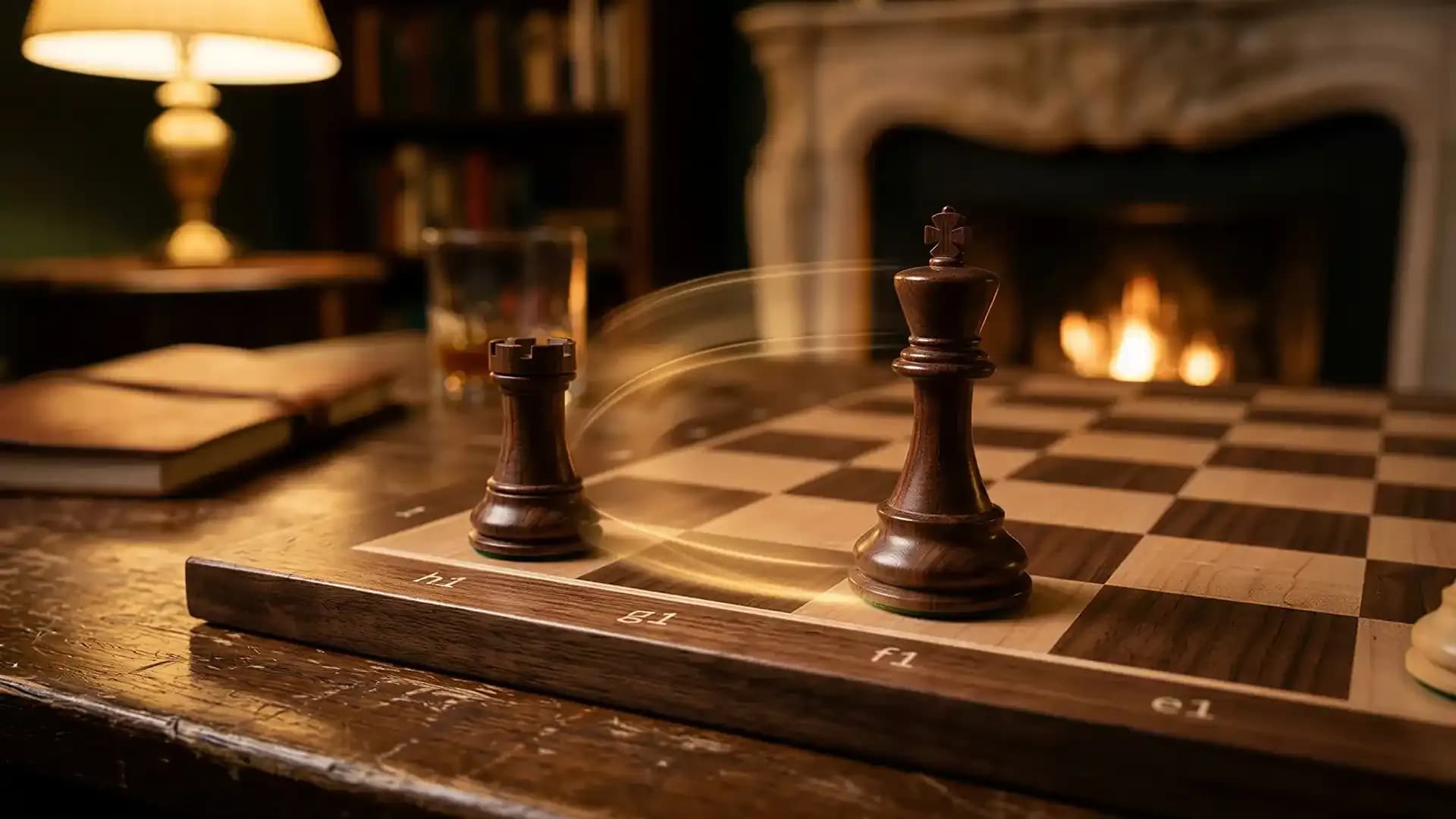
Castling in Chess: Rules, Long Castling & How to Castle
Castling in chess is a special move that allows the king and rook to move at the same time, helping protect the king and activate the rook for better board control.
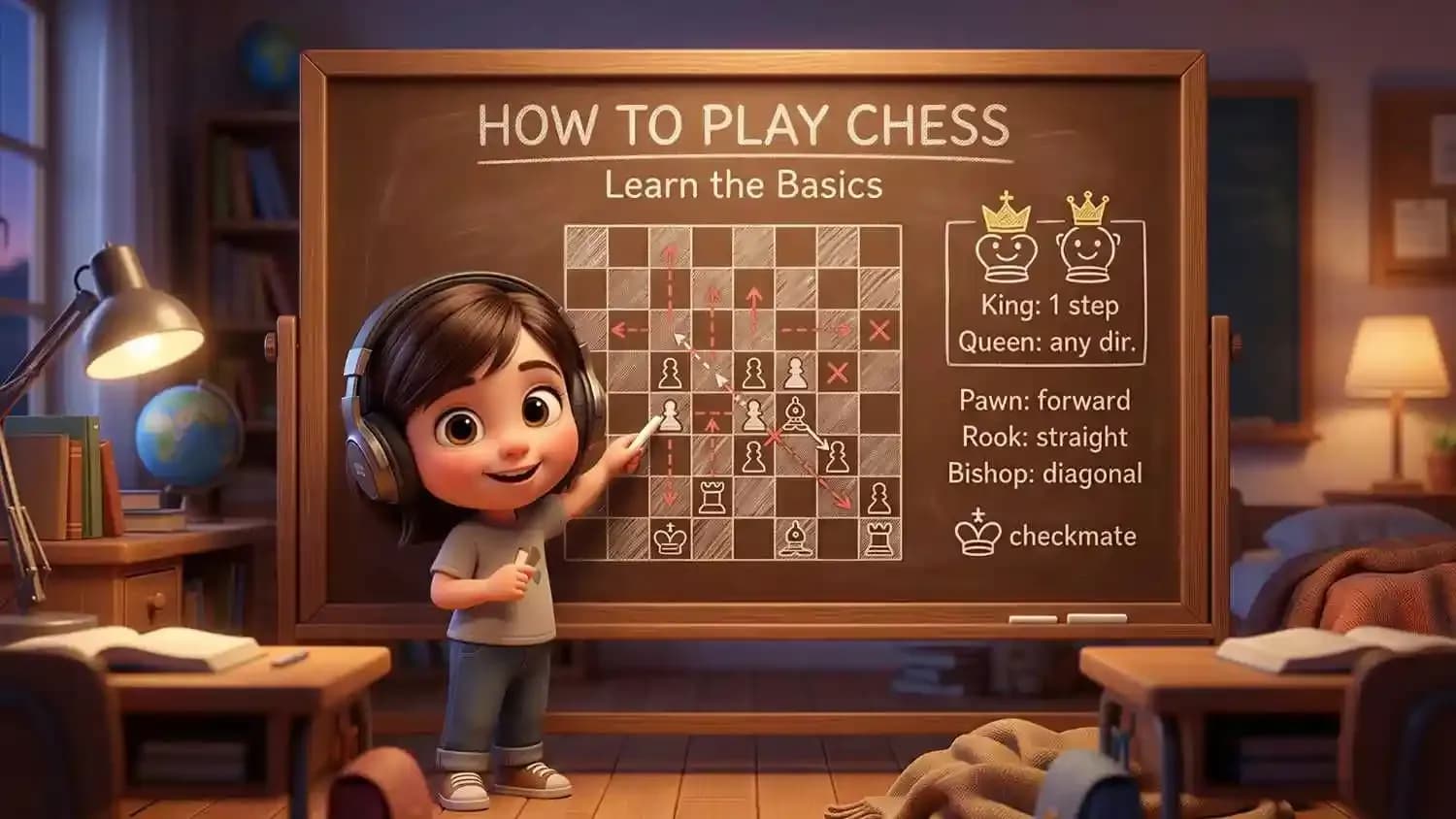
How to Play Chess: Easy Rules & Beginner Tips
How to play chess explained simply with board setup, piece rules, checkmate basics, and beginner strategies. Follow this guide and start playing today.

Youngest Chess World Champion: Top 10 Youngest Champions in History
Only a handful of players have ever claimed the title of youngest chess world champion, and the record keeps getting shattered. From Gukesh Dommaraju's historic 2024 win at just 18 to Kasparov's 40-year reign atop the record books, here's the full ranked list, timeline, and the rising prodigies who could break it next.
Chess Notation Explained: A Complete Guide to Reading and Writing Algebraic Notation
Master chess notation with our complete guide covering algebraic symbols, board coordinates, special moves and annotations. Start reading games today!
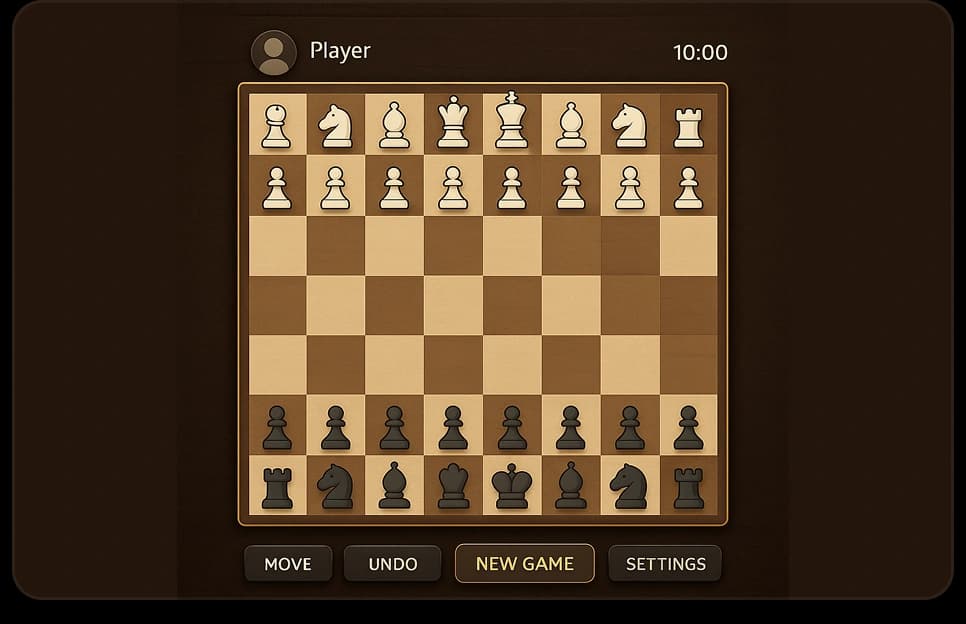
Can chess pieces go backwards? The answer is simple: Yes. Most of the pieces on the board can go backwards, and knowing when to go backwards most often decides whether you win or lose.
Picture a queen moving back to safety and launching a new attack, or a rook moving backwards to defend your king. Not only are moves backwards allowed, but moves backwards are often needed, with pawns being the only exception. Pawns can never move backwards; they can only go forward. Once they step up, there is no going back.
Table of contents
Which Chess Pieces Can Move Backwards?
Before diving into each piece, here’s a quick summary:
| Chess Piece | Can Move Backwards? | How It Moves Backwards |
|---|---|---|
| Rook | ✅ Yes | Straight lines (up & down) |
| Bishop | ✅ Yes | Diagonally in both directions |
| Queen | ✅ Yes | Combines rook & bishop moves |
| King | ✅ Yes | One square backwards |
| Knight | ✅ Yes | L-shaped jumps, including backwards |
| Pawn | ❌ No | Only moves forward (never backwards) |
Rook – Forward and Backward in Straight Lines
Rooks move up and down, left and right. That includes backwards. For example, if your rook is on H5 and you need it to defend your first rank, you can bring it all the way back to H1. It is as simple as sliding it along the same file. So if anyone now asks, can a rook move backwards in chess, your answer will be yes, it can.

Bishop – Diagonals in Both Directions
Bishops travel diagonally, and those diagonals go forward and backward. For example, a bishop on c4 can retreat to b3 or a2 if attacked. Backward moves are just as important as forward moves for bishops because they often reposition to cover key squares. You can also learn many moves with the bishop, like there are two bishop checkmate strategies, which can be great for any player to learn.

Queen – Rook and Bishop Combined
The Queen is the most powerful piece on the chessboard, which can move like a rook and a Bishop, which is why most chess players open with the Queen. It can move diagonally, horizontally, and vertically.
For example, you can make your Queen go back to H4 and maintain board control if your Queen is at H6 while you are facing a pawn. Also, the Queen and Pawn opening can be a game-winning strategy. You can learn from our Queen’s Pawn Opening guide, which lets you know the best ways to use both pieces in combination.

King – One Step Backwards When Needed
Can the king move backwards in chess? Yes, it can, but only one square at a time, and that one square includes backwards moves. For example, a king on e2 can move back to e1 if threatened. These small steps can be lifesavers when avoiding a check. It also explains situations like can a pawn put a king in check, since pawn attacks play a key role in controlling nearby squares.

Knight – Backward Jumps in L-Shapes
The knight is unique. It can jump two squares in one direction, and then move one square to the side. It can also hop backwards. For example, a knight on f5 can retreat to d4 or to h4. Because knights can retreat behind pawns, they often surprise beginner players, who sometimes make mistakes when using knights. Knights are also central in openings like the Four Knights Opening, where their flexibility and ability to move forward or backward create strong early-game positions. However, if you are just starting out, you can check out the Beginners' Guide on our website to make things easier for you.

What Chess Piece Cannot Move Backwards?
Pawn – Only Moves Forward
Pawns are the only chess pieces that cannot move backwards. They go forward one square at a time, or two squares on their very first move. They capture diagonally, but still only forward. Even special moves like promotion or en passant don’t allow them to go back. Once a pawn moves, it can never return. Though Pawn is the first move for 90% of chess players, if you wish to make the best use of your opening move, you should keep checking the best chess openings for beginners.

So, which chess pieces can move backwards? Understanding these chess piece moves shows that rooks, bishops, queens, kings, and knights all can. The only one that cannot is the pawn.
Backward movement is not just a rule in chess, it is a strategy. Retreating a piece often saves it from capture, defends your king, or prepares a new plan. If you are learning, try to notice how often good players pull pieces back. It is just as important as moving forward.
Now, if you wanna test the learning you got from here, then play it at Chess.game where you can play chess for free and also compete with others.
Watch: Can Chess Pieces Move Backward?
If you're still confused about whether chess pieces can move backward, watch this quick video explanation. It clearly shows which pieces can move backward and which cannot, making it perfect for beginners.
FAQs
- Rooks, bishops, queens, kings, and knights are the chess pieces that can move backwards in the game.
- Pawn is the only piece in chess that can’t move backward, unlike every other piece that can move backward.
- No, a pawn can’t ever move backwards in the chess game.
- Yes, all major pieces can move backwards, which includes rooks, bishops, queens, kings, and knights.
- Beginners do ask if pieces can move backwards because they have been instructed that pawns can’t move backwards, which is why they get confused if the other pieces work like that or not.
Types of Chess: Explore All Variants and How They're Played
Discover the different types of chess, including classical, rapid, blitz, and modern variants. Learn the rules, differences, and pick the best one to play today.
Castling in Chess: Rules, Long Castling & How to Castle
Castling in chess is a special move that allows the king and rook to move at the same time, helping protect the king and activate the rook for better board control.
How to Play Chess: Easy Rules & Beginner Tips
How to play chess explained simply with board setup, piece rules, checkmate basics, and beginner strategies. Follow this guide and start playing today.
Youngest Chess World Champion: Top 10 Youngest Champions in History
Only a handful of players have ever claimed the title of youngest chess world champion, and the record keeps getting shattered. From Gukesh Dommaraju's historic 2024 win at just 18 to Kasparov's 40-year reign atop the record books, here's the full ranked list, timeline, and the rising prodigies who could break it next.
Chess Notation Explained: A Complete Guide to Reading and Writing Algebraic Notation
Master chess notation with our complete guide covering algebraic symbols, board coordinates, special moves and annotations. Start reading games today!