Two Bishop Checkmate: How to Win with Perfect Technique

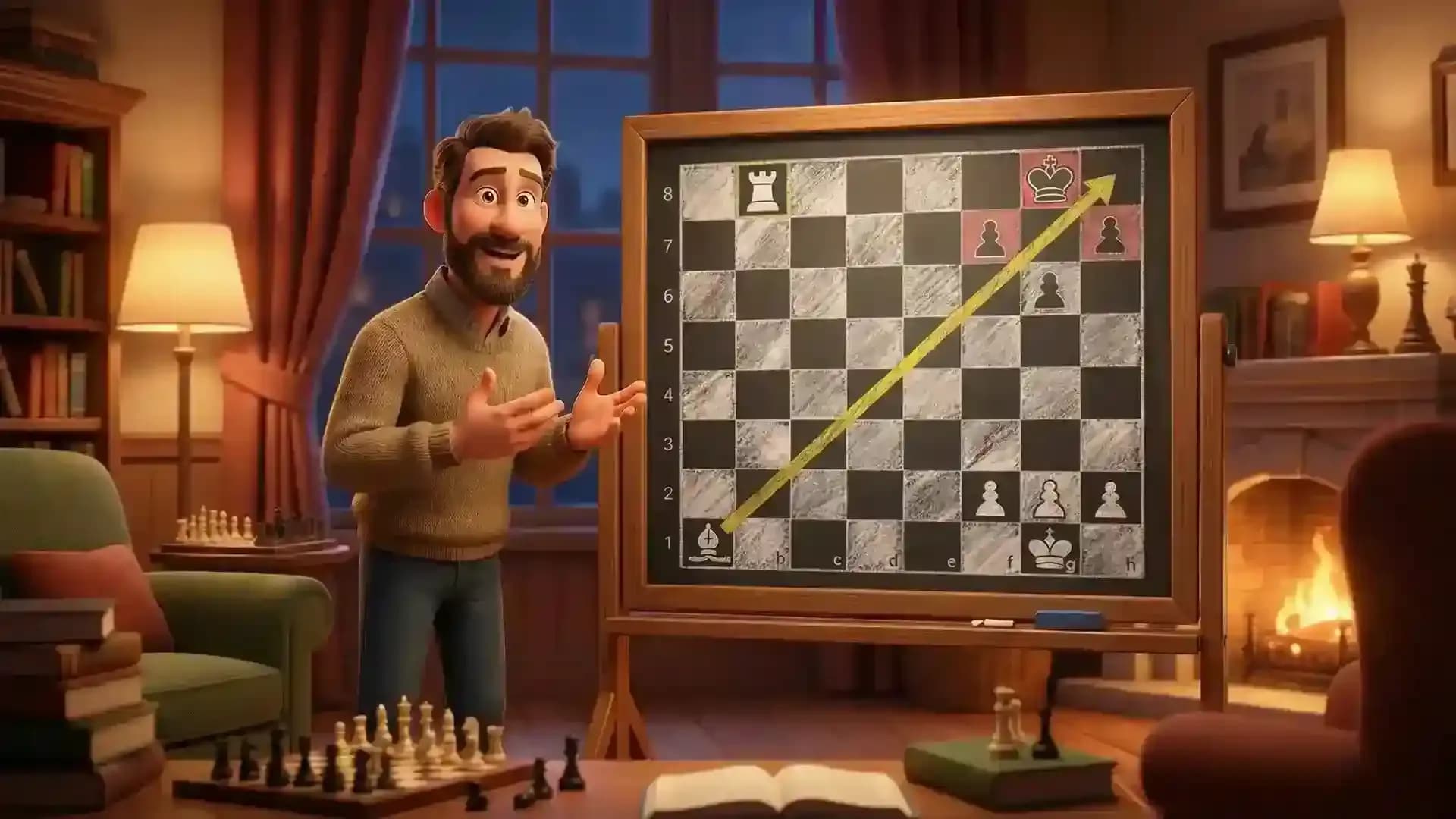
Back Rank Mate: How to Spot and Win Instantly
What is a Back Rank Mate? Learn the key patterns, common traps, and simple strategies to deliver this classic checkmate and win more games today.
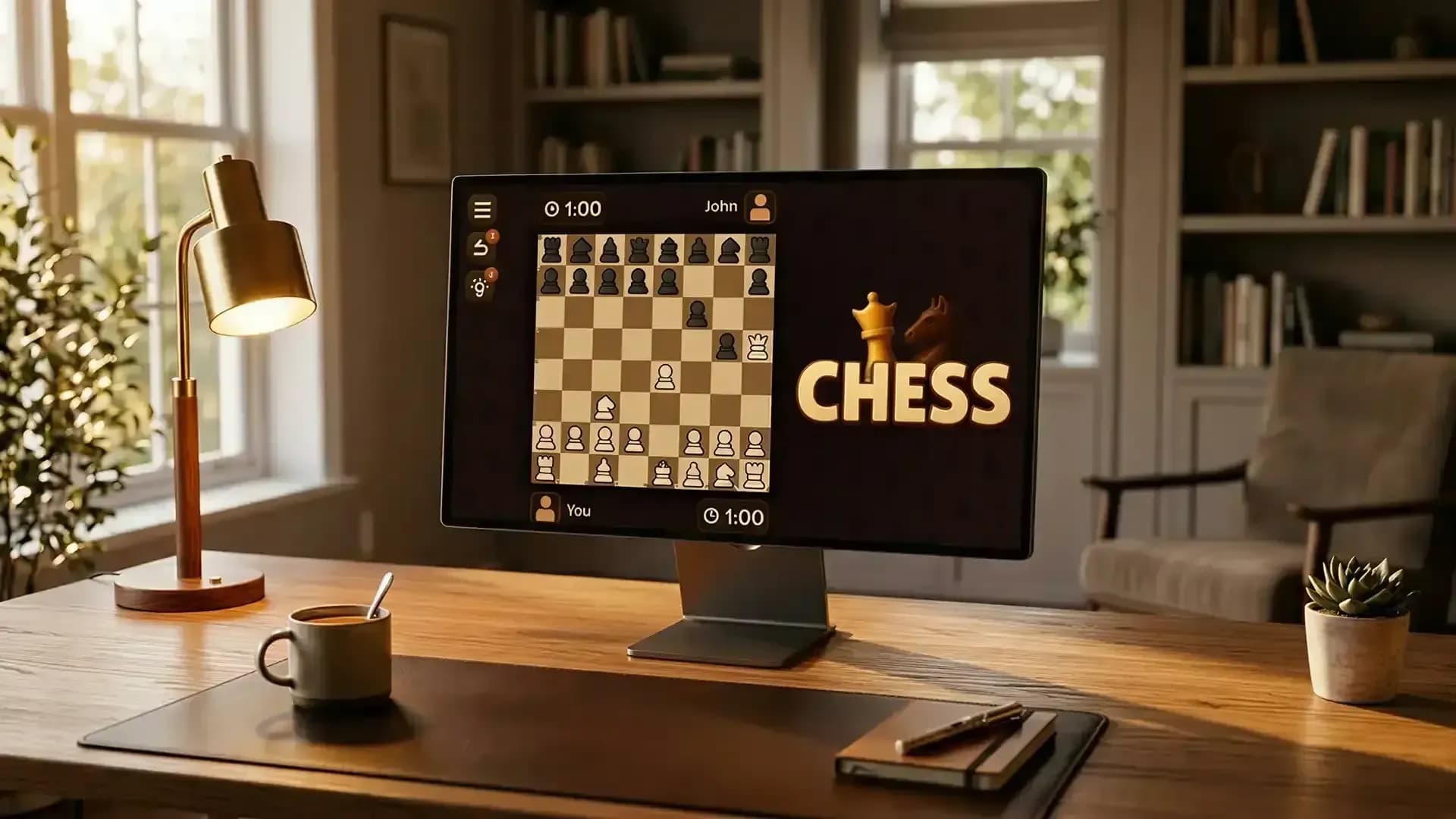
Fool's Mate: Fastest Checkmate in Chess Explained
Fool's Mate is the fastest checkmate in chess. Discover how the 2-move mate works, why it happens, and simple ways to avoid it. Learn the pattern and improve your chess.
What Is Zugzwang in Chess? Meaning, Examples & How to Use It to Win
Ever been forced to make a losing move? That’s zugzwang. Learn how it works, see examples, and use it to dominate your opponent.
Can a King Checkmate a King? (Full Chess Rule Explained)
Can a King checkmate a King in chess? Discover the real rule, expert insights, and examples—click to master this key concept in chess strategy!

The 7 Fastest checkmate Moves Every Beginners must know
Discover the fastest checkmate strategies to win chess games quickly. Master quick tactics and impress your opponents—start learning now!
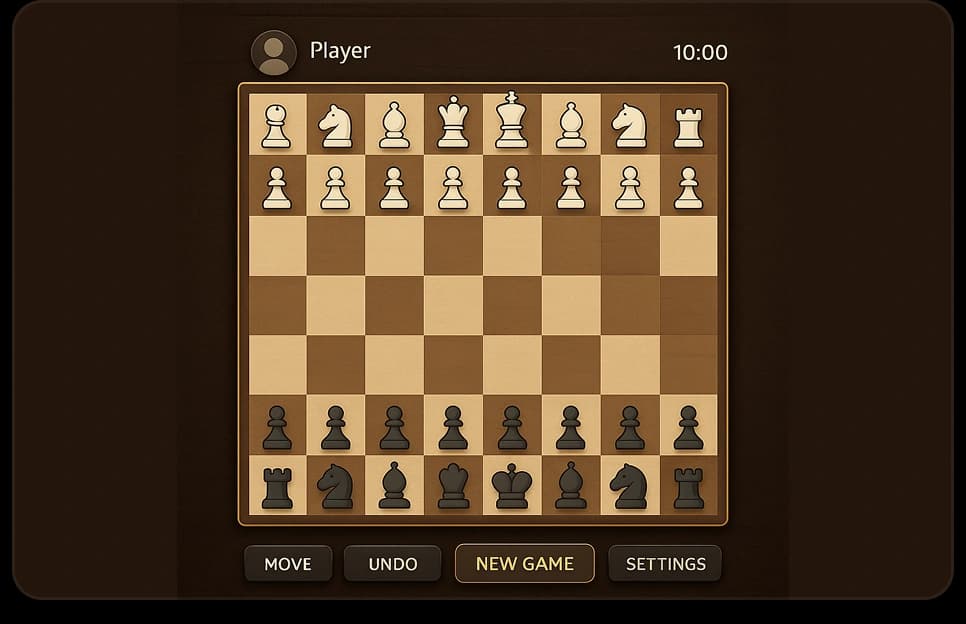
The checkmate with 2 bishops is an essential endgame skill that every chess player should learn. While it doesn’t happen often in real games, it shows that you understand how to control the board with your pieces.
With good teamwork between your two bishops and the king, you can slowly push the enemy king into a corner and provide a checkmate. This method actually is also used in FIDE chess tests and grandmaster training. In this blog, we’ll explore how to do it in simple steps that anyone can easily follow.
Table of contents
Can You Checkmate with Only Two Bishops?

Yes, you can Checkmate with only two bishops, and it’s entirely legal in a chess endgame. Unlike two knights, which can’t force checkmate without help, two bishops and a king can always win against a lone king if the technique is correct. With proper coordination, the checkmate generally happens in less than 30 moves. That’s why this chess pattern is frequently taught in chess lessons and tested in FIDE endgame evaluations—it proves your control and accuracy.
Understanding the Power of Two Bishops
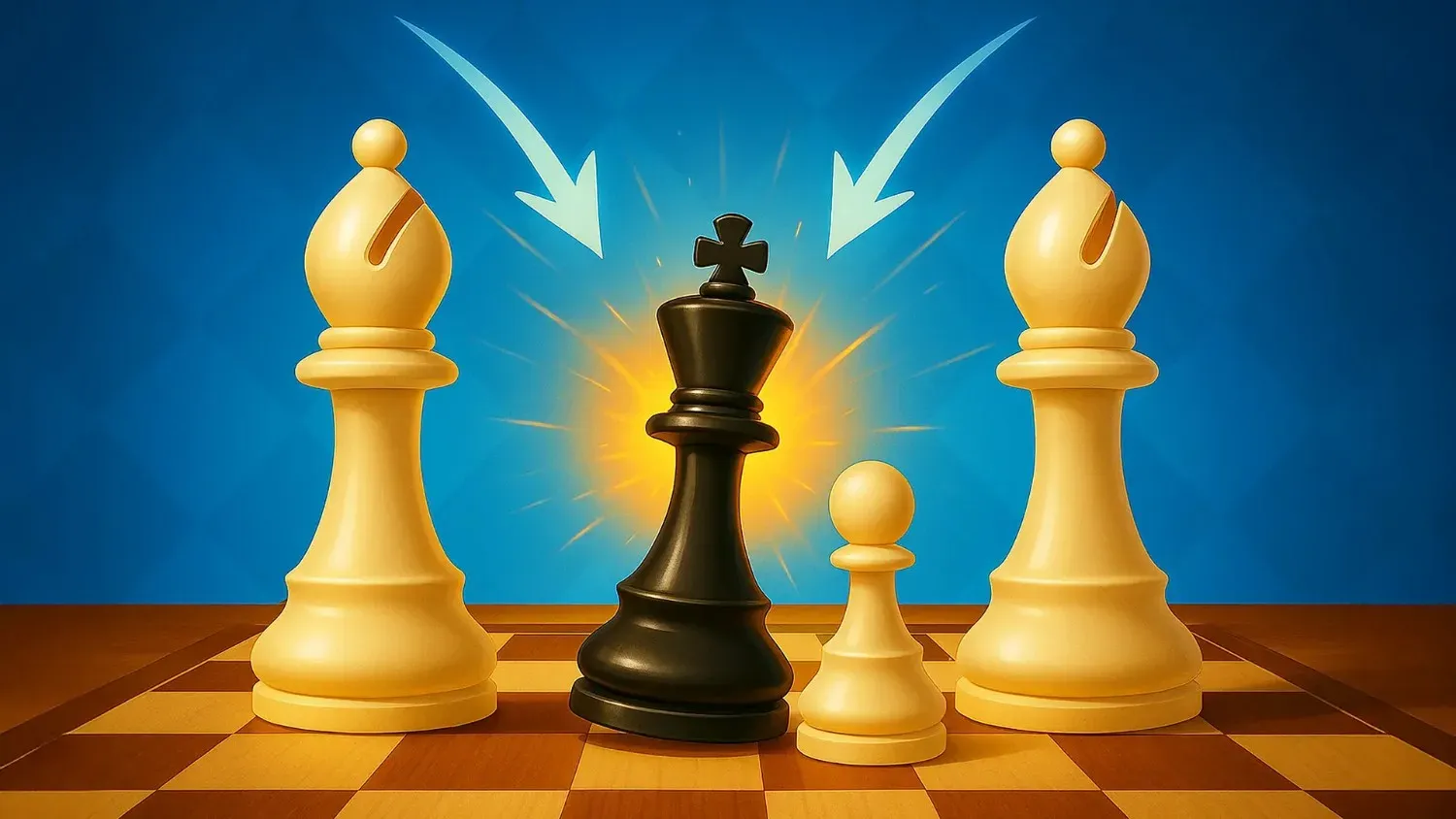
The power of two bishops lies in their ability to work together and control the entire board. When coordinated with the king, they can trap the enemy king and deliver a clean checkmate. Unlike knights or rooks, bishops cover both color complexes and can restrict movement very effectively when placed correctly.
- Diagonal control: Bishops move diagonally and can cover large parts of the board, especially in open positions.
- Coordination of opposite-colored diagonals: One bishop controls light squares, the other dark. Together, they eliminate safe spaces for the enemy king.
- Need for the king’s support: The bishops alone can’t push the enemy king into a corner—your king must help by controlling escape squares.
- Comparison to knight or rook endgames: Unlike knights (short range) or rooks (individual power), bishops rely on precision teamwork and the king's assistance.
Start playing chess online now and test your skills against real players.
Step-by-Step Method: Two Bishops Checkmate
Phase 1: Drive the Opponent’s King to the Edge
Begin by using your bishops to control central diagonals and reduce the opponent king’s options, a principle similar to setups explained in Checkmate in Chess. Coordinate both bishops to limit space while bringing your king forward. Avoid giving unnecessary checks and be patient as you guide the king toward the edge of the board.
Phase 2: Restrict the King to a Corner
Once the enemy king is near the edge, guide it toward a corner. Both bishops must cover diagonals around that corner while your king blocks escape. Choose any corner that matches your bishops' control. Gradually trap the king into a tight square setup where checkmate becomes possible.
Phase 3: Deliver the Final Checkmate
With the enemy king stuck in the corner, place the bishops so that they cover all adjacent escape squares—one on the light squares, the other on the dark. Position your king nearby, but not too close to cause stalemate. Once everything is covered, deliver the final checkmate with precision.
Which Corner to Force the King Into (and Why)?

Any corner can work, but it must match the bishops’ color coverage. This is just as important as knowing the difference in Checkmate vs Stalemate. Since one bishop controls light squares and the other dark, both corners are usable. For clarity during practice, you can push the king into a corner like h1 or a8 (light-colored) if your final check is on a light square. Matching the corner with bishop coverage is essential to ensure no escape routes remain.
Key Concepts to Master This Checkmate
Bishop Coordination
The bishops form an invisible wall by controlling both colors. They must work together, not separately.
King Opposition
Your king must step in front of the opponent’s king to restrict movement and push it toward the corner.
The “W” Method (Sweeping Method)
A pattern where bishops move in a W-like structure across the board to progressively squeeze the king’s space, a technique often compared to quick traps like the 2 Move Checkmate. It’s a beginner-friendly technique used in many online chess trainers.
Common Mistakes to Avoid
- Moving Bishops Without a Plan: Don’t move randomly. Wasted moves (tempo) can delay or ruin the checkmate attempt.
- Neglecting the King’s Role: Without the king, checkmate is impossible. Bring your king into action.
- Pushing the King to the Wrong Corner: If the corner doesn’t match the bishops’ coverage, checkmate can’t be delivered. Choose the correct-colored corner carefully.
Conclusion
Mastering the two bishops checkmate deepens your endgame understanding, much like learning the Checkmate in 3 Moves pattern sharpens early-game awareness.. Although it’s rare in actual play, it teaches essential skills such as coordination, opposition, and spatial awareness. By practicing this pattern and avoiding common mistakes,you’ll sharpen your endgame precision and demonstrate high-level control—an important tool for every serious chess player.
FAQs
- Yes, two bishops and a king can force checkmate against a lone king. It’s even tested in FIDE evaluations to prove endgame mastery.
- With proper technique, it usually takes fewer than 30 moves. Practice is key—you can train this pattern when you play chess online free.
- Any corner works, but it must align with your bishops’ coverage. For example, if your bishops cover light squares, force the king into a light-colored corner.
- It’s a teaching pattern where bishops move in a W-like shape across the board, gradually squeezing the king’s space until it’s forced into a corner.
- Not really. It’s rare in practical play, but mastering it improves your coordination, spatial awareness, and helps when you play chess online.
Back Rank Mate: How to Spot and Win Instantly
What is a Back Rank Mate? Learn the key patterns, common traps, and simple strategies to deliver this classic checkmate and win more games today.
Fool's Mate: Fastest Checkmate in Chess Explained
Fool's Mate is the fastest checkmate in chess. Discover how the 2-move mate works, why it happens, and simple ways to avoid it. Learn the pattern and improve your chess.
What Is Zugzwang in Chess? Meaning, Examples & How to Use It to Win
Ever been forced to make a losing move? That’s zugzwang. Learn how it works, see examples, and use it to dominate your opponent.
Can a King Checkmate a King? (Full Chess Rule Explained)
Can a King checkmate a King in chess? Discover the real rule, expert insights, and examples—click to master this key concept in chess strategy!
The 7 Fastest checkmate Moves Every Beginners must know
Discover the fastest checkmate strategies to win chess games quickly. Master quick tactics and impress your opponents—start learning now!