Queen’s Pawn Opening Strategies Every Chess Player Should Know



Albin Counter Gambit: Sharp Chess Opening Guide
Explore the Albin Counter Gambit in depth with opening theory, positional ideas, critical variations, and practical advice for both White and Black. Learn the plans today.

Dutch Defense: Aggressive Ideas and Winning Plans
Master the Dutch Defense chess opening and learn how to win with 1…f5. Explore attacking plans, structures, and practical strategies now.

Queen’s Indian Defense: Theory, Ideas & Main Lines
Queen’s Indian Defense explained with simple ideas, common variations, and practical tips. Discover how to play this powerful chess opening for Black.

Baltic Defense: Aggressive Chess Opening Explained
Discover the Baltic Defense in chess with clear explanations, key plans, and tactical traps. Improve your opening play and surprise rivals today.

Chigorin Defense: Key Ideas, Theory & Traps
Learn the Chigorin Defense with key ideas, main lines, traps, and strategy tips. Discover how Black creates active play against 1.d4.

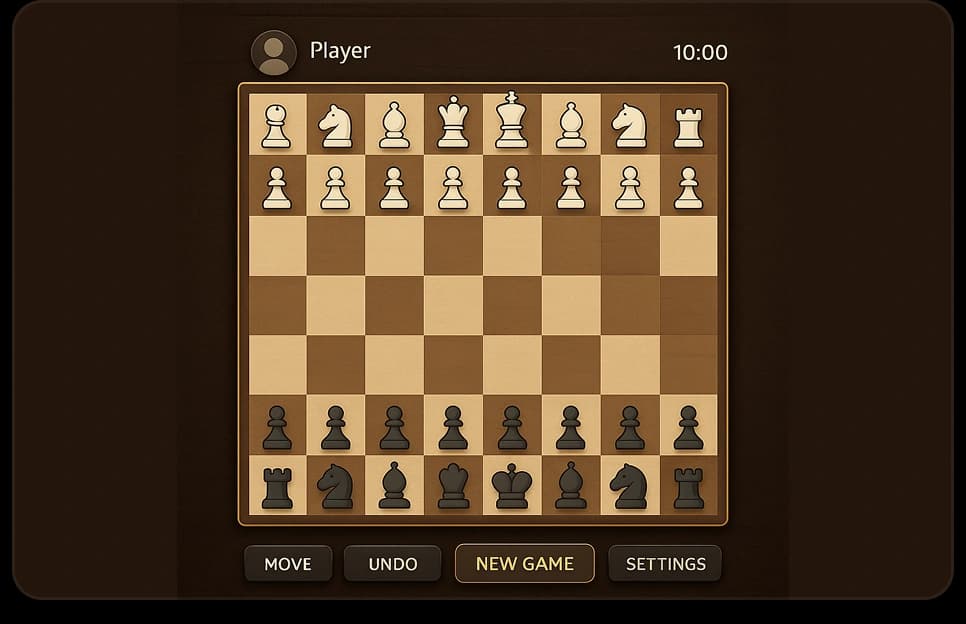
Queen 's Pawn Opening is a strategy in chess beginning with White’s move chess 1.d4 opening, and aims to control the center. They open lines for piece development to achieve a more positional and flexible game.
This strategy is a fundamental beginning for the openers. They build a solid foundation with a strategic focus and less tactical chaos. You can check for some chess books for beginners.
Table of contents
- Why Should You Play the Queen’s Pawn Opening?
- How to Play the Queen’s Pawn Opening
- What are the Common Queen’s Pawn Opening Variations in chess?
- What are the Black’s Most Popular Responses Like?
- What are the Key Strategies for White?
- How Pawns Capture the Queen in the Opening
- Transition to the Middle Game
- Famous Games Featuring the Queen’s Pawn Opening
- Pros and Cons of the Queen’s Pawn Opening
- Conclusion
Why Should You Play the Queen’s Pawn Opening?
The Queen’s Pawn Opening strategies are played mainly to gain central control, open lines for piece development, and establish a solid, positional foundation. Moving the d-pawn to d4 fights for control of the center of the board, which is crucial. The Queen’s Pawn Opening strategies often lead to maneuvering in closed positions.
Unlike 1.e4, 1.d4 offers more flexibility. It allows a broader range of opening systems and greater adaptability, including less common options such as the Vant Kruijs Opening, depending on the opponent’s response. The 1.d4 opening for beginners is based on analysis, and it has a higher level of popularity.

How to Play the Queen’s Pawn Opening
The 1.d4 chess opening is the Queen's pawn opening, where the whites move their d-pawn two squares forward, thereby immediately demanding the centre. They open lines for the dark-squared bishop and queen.
The 2.c4 move's explanation purely depends on the black's response and white’s first move. The white sacrifices a central pawn to gain control of the centre and lures the black to remove pawn away from the central position.
2.Nf3 is an algebraic chess notation that indicates that the whites second move was for their king's knight to the f3 square. This move is flexible and a way of developing a piece without committing to any specific pawn structure and some hard chess openings.
You must be wondering if pawns can take queens; yes, they can if on a square diagonally in front of the pawn. To capture an aney’s piece, the pawn has to move onto that piece’s square. This is a notable move for pawn captures.
What are the Common Queen’s Pawn Opening Variations in chess?
Queen’s Gambit
The queen’s pawn opening variations include moves like the Queen’s Gambit, the London System, the Colle System, and the Trompowsky Attack. The queen’s pawn opening variation leads to more positional and closed games than King’s openings. This is a classic and highly popular opening where White offers a pawn to gain central control.
London System
The London system opening a popular choice for simplicity and a solid setup. White develops the dark-squared bishop to f4 in the early stage.

- Colle System
Colle system is a chess opening for White with the goal of preparing an attack on the enemy of King. This is a straightforward system, making it suitable for beginners. The Chess 1.d4 opening is mainly meant for white controlling the centre of the board, along with lines for the queen and bishop. This leads to more positional and closed games, thereby slowing the Blacks’ development. These are considered difficult chess openings.

What are the Black’s Most Popular Responses Like?
There are some best defenses against the queen's pawn opening, like the Queen’s Gambit declined. This is a solid chess opening for the Black, aiming with moves like 1.d4, d5, where the Black declines to capture the pawn by the White.
This creates strong and defensive structure aimed at controlling the centre. The Slav defense is known as a solid defense against the black in response to the White Queen’s Gambit.
The primary aim is to control a string pawn centre and avoid blocking the light colored bishop. The Nimzo Indian is a popular chess move for the 1.d4 openings for the beginners. These are further characterised by moves like 1.d4Nf6, 2.c4 e6, and Nc3 Bb4.
The Benko Gambit is a chess move for the Black in the Benoni Defense, where the Black sacrifices a pawn in the move 3 after the sequence 1.d4, Nf6, 2.c4 c5, 3.d5. This gambit sacrifices a pawn for a long-term advantage.
What are the Key Strategies for White?
Timing for castling, pawn breaks, and planning in the White opening are essential. In the beginning as the pieces vie for the control of the centre, they begin to develop pieces and pawns for the emergence in every aspect of the game. The pawn structure emerge as every aspect of the game, and determine the central control.
They influence the piece mobility and influence the development schemes. In chess, the timing for castling, pawn breaks, and creating imbalances is the toughest of all skills developed. You can castle early in case your king is unsafe in the centre and you need to connect to the roots as soon as possible.
You would require to understand the Queen’s pawn opening strategies to play defense. The pawn structure in chess determines the skeleton of the pawns that is relatively static and dictates the strategic plans.
How Pawns Capture the Queen in the Opening
Pawns can take queens by moving one square diagonally forward in the square occupied by the queen. Pawns make use of diagonal movement to approach any piece, and that's a standard move. Pawns cannot move backward to the squares they move. Queen’s pawn opening positions are generally established after the move 1.d4.
The capture tactics of queen pawns are done using a Gambit, where the pawn is sacrificed to gain a tactical advantage. You must be thinking, can pawns take queens? Pawns can definitely capture a queen is she is in the diagonally opposite square. Most importantly, while moving a pawn, you must watch that your king does not come at risk.
Transition to the Middle Game
From the 1.d4 opening, common pawn structures emerge:
- Isolated Queen’s Pawn – Leads to dynamic play.
- Carlsbad Structure – A positional setup for launching minority attacks.
These structures shape your middle-game plan, helping identify weak squares, weak pawns, and opportunities for control.
Famous Games Featuring the Queen’s Pawn Opening
There are famous games for queen’s pawn opening that will be ideal for beginners. These are mainly:
The Queens Gambit ( 1.d4 d5, 2.c4)

Indian Defenses ( 1,d4, Nf6)

Slav Defense ( 2,,c6)
You may watch famous moves and learn some defense techniques. 1.d4 openings for beginners are particularly significant. Look out for Magnus Carlsen Chess openings for the best strategy.
Pros and Cons of the Queen’s Pawn Opening
In the queen’s pawn opening, the white player gains an advantage through increased control of the center, leading to long-term strategic pressure and a positional game. They have the ability to choose from London or Torre system for simplifying development.
Disadvantages of White include slower buildup compared to the e4 opening.
Queen’s pawn opening strategies leads to strategic maneuvering and is favorable for players playing positional play. Make use of bird chess opening and gather knowledge of the best defense system.
Conclusion
Learning the Queen’s Pawn Opening is essential for building strong chess fundamentals. It establishes central control, opens lines for your queen and bishops, and leads to strategic, flexible games. Mastering it gives you an edge in both online and over-the-board play.
FAQs
- Queens' opening in chess begins with 1.d4.d5 2.c4. This is more suited towards long-term pressure and has slower positions. You can abide by these rules while you play chess online.
- To play the Queen's pawn opening, White moves the queen's pawn two squares forward to 1. d4, aiming to claim the centre.
- Yes, pawns can capture queens in the queen’s pawn opening like any other chess opening.
- Grandmasters play chess by advancing the d-pawn to the center of the board. They try to take the center position.
Albin Counter Gambit: Sharp Chess Opening Guide
Explore the Albin Counter Gambit in depth with opening theory, positional ideas, critical variations, and practical advice for both White and Black. Learn the plans today.
Dutch Defense: Aggressive Ideas and Winning Plans
Master the Dutch Defense chess opening and learn how to win with 1…f5. Explore attacking plans, structures, and practical strategies now.
Queen’s Indian Defense: Theory, Ideas & Main Lines
Queen’s Indian Defense explained with simple ideas, common variations, and practical tips. Discover how to play this powerful chess opening for Black.
Baltic Defense: Aggressive Chess Opening Explained
Discover the Baltic Defense in chess with clear explanations, key plans, and tactical traps. Improve your opening play and surprise rivals today.
Chigorin Defense: Key Ideas, Theory & Traps
Learn the Chigorin Defense with key ideas, main lines, traps, and strategy tips. Discover how Black creates active play against 1.d4.