Chess Pieces That Can Move Diagonally


Chess.Game Growth Explained: The Most Popular New Chess Platform
Discover how Chess.Game reached 1.5M monthly users and became the most popular new chess platform with free learning and smart matchmaking.

What Is a Good Chess Rating? Complete Guide for Beginners to Experts
What is a good chess rating? Learn what 800, 1000, 1200, and 1600 ratings mean, plus average chess ratings and how to improve fast.
Chess Pieces That Can Move Diagonally
Which Chess Pieces Can Move Diagonally? Rules Explained
What Is a Fork in Chess? Meaning & Examples
What Is a Fork in Chess and why is it so powerful? Find out how to create deadly double attacks, trap major pieces, and start winning more games today.
10 Greatest Chess Players in History Who Changed the Game
Explore the 10 Greatest Chess Players ever, from classical masters to modern geniuses. Learn their achievements, styles, and lasting impact—start reading now.

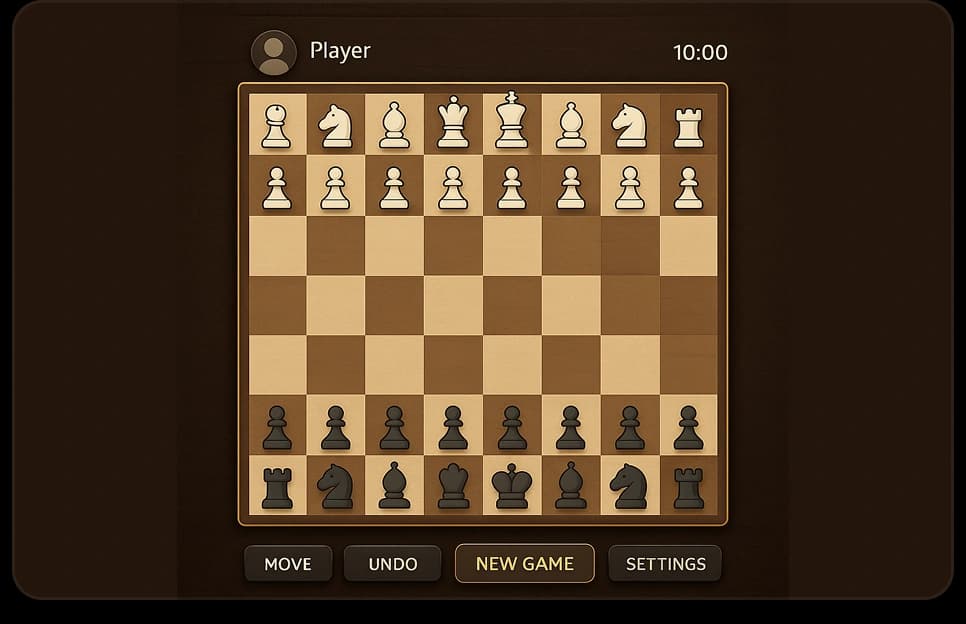
Many beginners in chess become baffled by diagonal moves. There are those that always move diagonally, only special cases, and those that may move diagonally with certain constraints. When you learn these very rules at an early age, your game will come out much better.
As you start playing chess online or offline, you will understand the rules and fundamentals of chess more.
Table of contents
- Which Chess Piece Can Only Move Diagonally?
- How the Bishop Moves on the Chessboard
- Chess Pieces That Move Diagonally But Not Only Diagonally
- Can the King Move Diagonally in Chess?
- Can Pawns Move Diagonally in Chess?
- Pawn Diagonal Capture vs Bishop Diagonal Movement
- Common Diagonal Movement Mistakes Beginners Make
Which Chess Piece Can Only Move Diagonally?
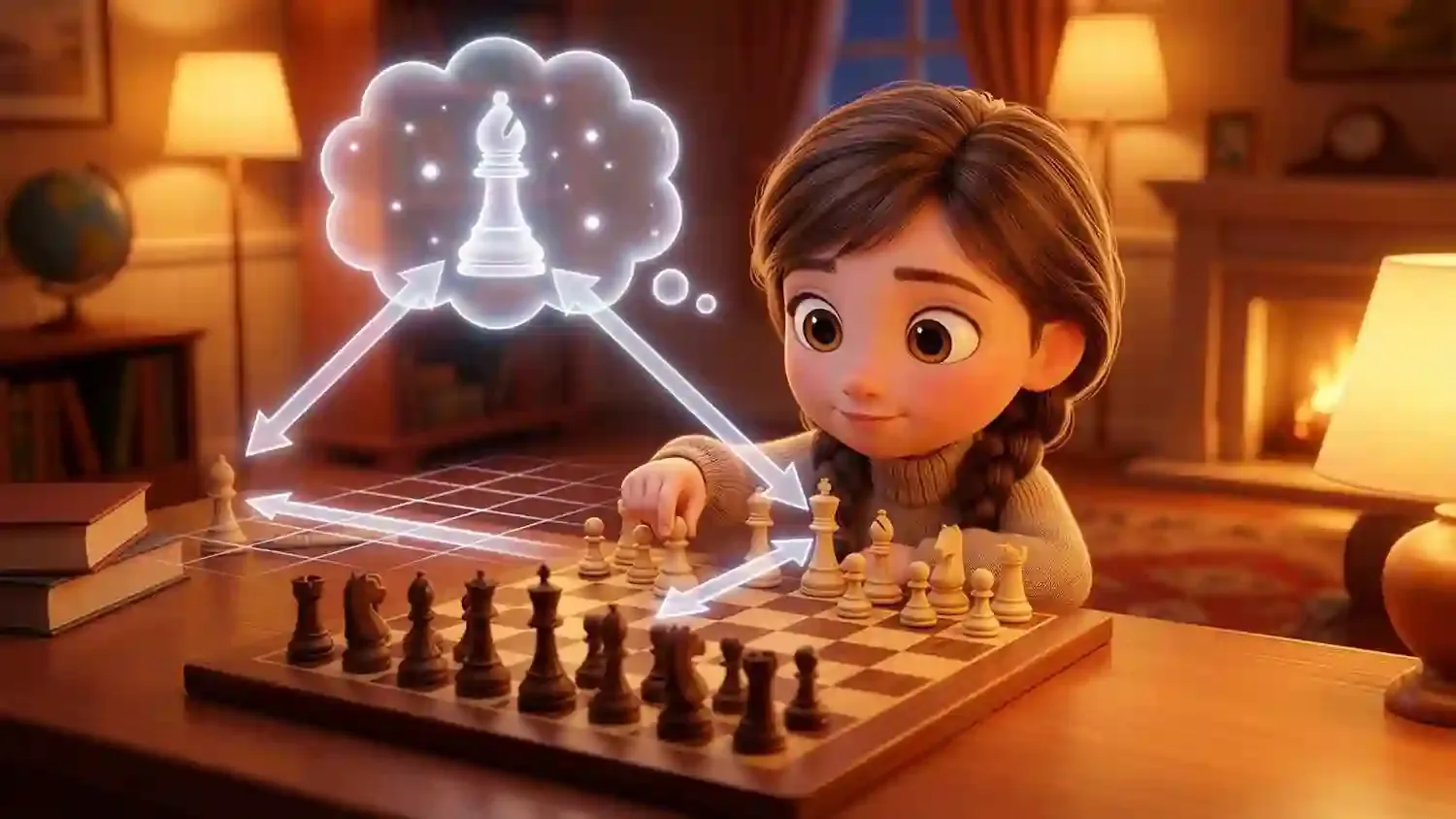
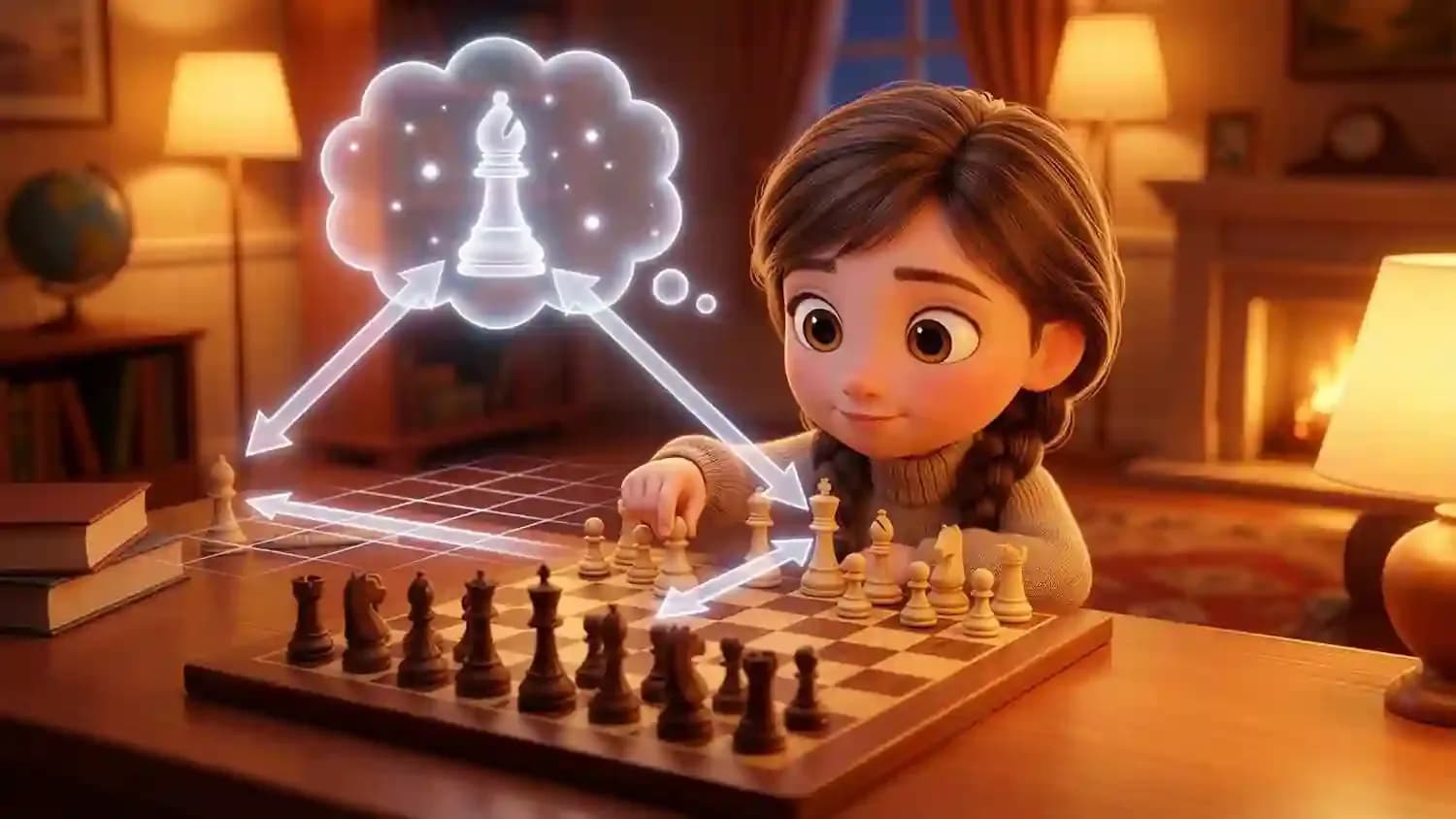
The only moving piece is the bishop, which moves only diagonally. It is unable to move directly, to the sides, forward, or backward. All its actions should be in a diagonal direction. It may move one square or several squares at a single move, provided it is not hampered by anything. Understanding this movement is essential while learning how to play chess.
The other significant rule is that a bishop should remain on the same square of the same color. When it begins on a light square, it will remain on light squares. Once it begins on a dark square, it will remain on dark squares throughout the entire game.
How the Bishop Moves on the Chessboard
A bishop may move one square within the board if it is open. It cannot leap over other objects. Should a different piece get in the diagonal, the bishop has to halt before it or capture it in case it is of the opponent.
It is also this diagonal rule that prevents bishops from switching the color of squares. The diagonal lines never change color, and neither does the bishop. This fixed-square behavior is what makes advanced patterns like the 2 bishop checkmate possible, where both bishops work together to control long diagonals and trap the enemy king. The board they command across those diagonals holds 204 total squares when counted by size, a detail that shows how many squares in a chess board go far beyond the 64 most players think of.
Unlike bishops, the knight in chess moves in an L-shape and can jump over other pieces.
Chess Pieces That Move Diagonally But Not Only Diagonally
All the other pieces can move diagonally; they can also move in other directions, like the bishop. Understanding chess piece movements helps players see how each piece controls different areas of the board.
The Queen
The queen can also move diagonally, like a bishop. It may also move directly forward, backward, and sideways as a rook.
It is not a purely diagonal piece, as the queen also moves in a straight direction. It is the strongest one on the board because there are so many movement options.
The King
The king can also take a diagonal, however, only one square at a time. Other than moving diagonally, it can move forward, backward, or sideways, but only one move at a time. Understanding safe king movement is a major factor in strong middle game chess strategy, as protecting the king is always a top priority.
Can the King Move Diagonally in Chess?
This is a very common question among beginners.
Can a King Move Diagonally During Castling?
No, there is no diagonal movement in castling. When the king castsles, he does not move diagonally; he moves sideways.
Can a King Move Diagonally Into Check?
No, a king can never move into check. This is applicable to any king move, including a diagonal move. In case the diagonal square is attacked, the move is prohibited. This is why questions like can a pawn put a king in check are important, as pawn attacks can directly control key squares around the king.
Can Pawns Move Diagonally in Chess?
Pawns have special rules. They do not move diagonally but move straight forward as they advance. This rule becomes particularly important when understanding pawn structures, because pawn movement determines space and control on the board.
A pawn can be captured diagonally, but in one square only, and only in case of an enemy piece. When the diagonal square is empty, the pawn cannot occupy the diagonal square.
Pawn Diagonal Capture vs Bishop Diagonal Movement
| Feature | Pawn | Bishop |
|---|---|---|
| Moves diagonally | Only when capturing | Always |
| Normal movement | Straight forward | Diagonal only |
| Distance | One square | Any number of squares |
| Can move diagonally without capture | No | Yes |
| Changes square color | Yes | No |
| Main role | Close-range piece | Long-range piece |
Common Diagonal Movement Mistakes Beginners Make
Rookies usually believe that the queen moves in a diagonal manner. That is a common mistake. The queen is able to move in a diagonal and straight line across the board as long as the route is open. Due to this flexibility, the queen is the most powerful chess piece.
Diagonal movement confuses many new players. Pieces are captured on a diagonal square, and move directly forward when advancing. The king is also able to move diagonally but on a square-by-square basis, and only when that square is not in danger of attack.
One should also avoid confusing the bishop and the pawn. The bishop is always diagonally placed and is able to move over various squares in one move when there are no squares on its way. The pawn, however, moves diagonally on only a few occasions when it is capturing an opponent. The fact that you know how to evaluate chess positions is the key to the game.
FAQs
- The only moving piece is the bishop that moves in a diagonal way only. It can move any squares in that direction, but not at right angles, or at right angles, forward or backward.
- The queen does both. She slides diagonally like a bishop and straight in any direction like a rook.
- Yes, the king is able to make a square diagonal movement. That square should be unassailed and not exposed to the fire of an opponent.
- No, pawns cannot. They move straight forward but capture only one square diagonally forward.
- Diagonal paths connect squares of the same color. A bishop starting on a light square stays on light squares forever.
Chess.Game Growth Explained: The Most Popular New Chess Platform
Discover how Chess.Game reached 1.5M monthly users and became the most popular new chess platform with free learning and smart matchmaking.
What Is a Good Chess Rating? Complete Guide for Beginners to Experts
What is a good chess rating? Learn what 800, 1000, 1200, and 1600 ratings mean, plus average chess ratings and how to improve fast.
Chess Pieces That Can Move Diagonally
Which Chess Pieces Can Move Diagonally? Rules Explained
What Is a Fork in Chess? Meaning & Examples
What Is a Fork in Chess and why is it so powerful? Find out how to create deadly double attacks, trap major pieces, and start winning more games today.
10 Greatest Chess Players in History Who Changed the Game
Explore the 10 Greatest Chess Players ever, from classical masters to modern geniuses. Learn their achievements, styles, and lasting impact—start reading now.