What Is a Good Chess Rating? Complete Guide for Beginners to Experts


Chess.Game Growth Explained: The Most Popular New Chess Platform
Discover how Chess.Game reached 1.5M monthly users and became the most popular new chess platform with free learning and smart matchmaking.
What Is a Good Chess Rating? Complete Guide for Beginners to Experts
What is a good chess rating? Learn what 800, 1000, 1200, and 1600 ratings mean, plus average chess ratings and how to improve fast.

Chess Pieces That Can Move Diagonally
Which Chess Pieces Can Move Diagonally? Rules Explained
What Is a Fork in Chess? Meaning & Examples
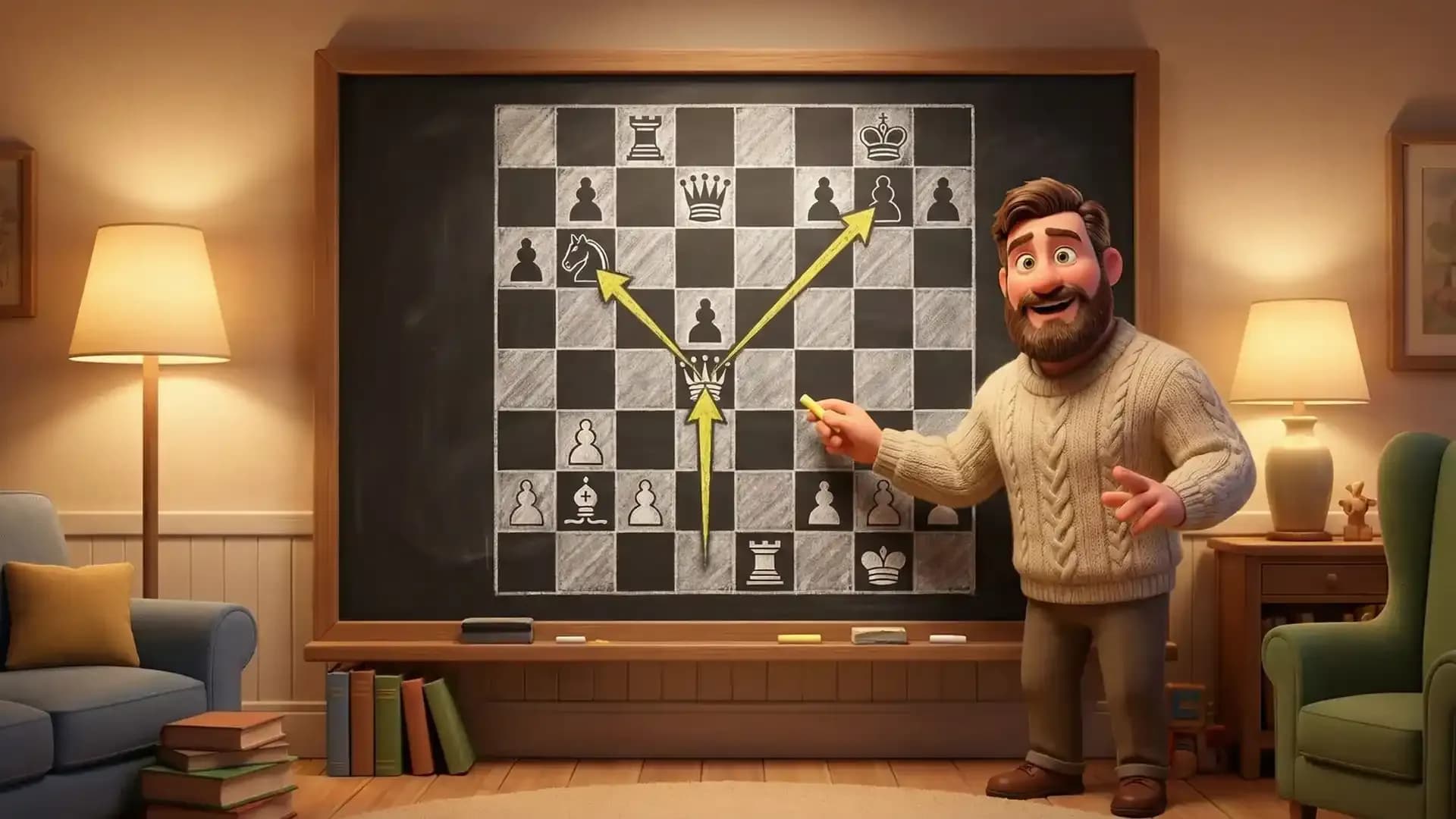
What Is a Fork in Chess and why is it so powerful? Find out how to create deadly double attacks, trap major pieces, and start winning more games today.
10 Greatest Chess Players in History Who Changed the Game
Explore the 10 Greatest Chess Players ever, from classical masters to modern geniuses. Learn their achievements, styles, and lasting impact—start reading now.

What is a good chess rating? This is the question that ultimately confuses any player, a total beginner trying to grasp the specifics of the game in his/her hands or a casual shark who is already pinching his/her friends at the nearby park.
The fact that chess is a game of infinite depth means that the definition of good is all relative. To an amateur, 1000 is a gigantic success. To a long-time tournament veteran, 1600 is the minimum of respect.
This guide will further subdivide the levels from amateur to professional, allowing you to determine your position on the world ladder, and if you keep playing chess online, you might increase your level there, too.
Table of contents
- What Is a Good Chess Rating ?
- Rating Comparison Across Platforms
- Key Takeaways for Each Tier
- What Is an Elo Rating?
- What Is the Average Chess Rating?
- What Is a Good Chess Rating for a Beginner?
- What Is a Decent Chess Rating Overall?
- What Is a Good Chess Ranking Compared to Others?
- Rating Comparison Table (1000–2000+)
- How to Improve Your Chess Rating
- What Rating Should You Aim For?
What Is a Good Chess Rating ?

If you're new to chess, hitting 1000 rating is a great first win; it means you're getting the basics down. Around 1200-1400? You're clearly improving and grasping the game nicely, and you have a chess player IQ for sure. Push past 1600, and you're club-ready, holding your own with confidence. Crack 2000+, and you're an expert, ready for serious competition.
A good chess rating is entirely relative to your experience level and goals. While a 1000 rating is a massive achievement for a beginner, a seasoned tournament veteran may view 1600 as the baseline for competitive play.
Because different platforms use different mathematical models (like Elo or Glicko-2) and have different player pools, a "1200" on one site isn't the same as a "1200" elsewhere. The table below breaks down these levels across the most common organizations and platforms to help you identify where you stand.
Rating Comparison Across Platforms
| Skill Level | FIDE (Global) | USCF (USA) | Chess.com (Rapid) | Lichess (Rapid) |
|---|---|---|---|---|
| Beginner | < 800 | < 800 | < 800 | < 1000 |
| Casual / Novice | 800–1200 | 800–1200 | 800–1200 | 1000–1400 |
| Solid Club Player | 1200–1600 | 1200–1600 | 1200–1600 | 1400–1800 |
| Advanced | 1600–2000 | 1600–2000 | 1600–2000 | 1800–2200 |
| Expert | 2000–2200 | 2000–2200 | 2000–2300 | 2200–2400 |
| CM / Master | 2200–2400 | 2200–2400 | 2300–2500 | 2400–2600 |
| IM / GM | 2400–2500+ | 2400–2500+ | 2500–2800+ | 2600–2900+ |
Key Takeaways for Each Tier

- Beginner (Under 800):- Being under 800 is great if you are a beginner and not very serious about it, but if you want to climb the point ladder, then surely you need to focus on learning how chess pieces move and avoiding hanging (leaving unprotected) pieces. At this stage, most games are decided by simple tactical blunders.
- Casual (800–1200):- You have moved past basic traps like the Scholar's Mate. You are starting to recognize patterns like forks and pins, and you likely have a basic opening you prefer for White and Black.
- Solid Club Player (1200–1600):- This is often considered a respectable level for an amateur. You can calculate several moves ahead and have a basic understanding of positional concepts, such as pawn structure and piece activity.
- Advanced (1600–2000):- You are now in the top 5–10% of players globally on most sites. You rarely make simple blunders and have begun studying deep endgame theory and specific opening lines.
- Expert & Grandmasters (2000+):- These players represent the elite. At this level, chess is often a primary pursuit involving relentless study. You can play blindfolded and analyze complex positions without a board. Almost all of them who play with this rating are grandmasters who are the top-tier players.
How Chess Ratings Work
Before comparing numbers, you need to understand the "yardstick" being used to measure your whats a good chess rating journey.
What Is an Elo Rating?
The Elo rating system, named after its creator Arpad Elo, estimates the relative skill of players. In case you lose to a lower-rated player, it goes down. It is a self-correcting system that is used to predict the outcome of a game.
Online Ratings vs. FIDE Ratings
Not all 1200s are created equal.
chess.com: online ratings run higher due to "rating inflation." A 1200, there is more like 800-900 in actual in-person games.
FIDE (International Chess Federation): You earn these in actual tournaments, and they're way tougher to hold onto. Per FIDE's handbook, they're what count for big titles like Grandmaster.
What Is the Average Chess Rating?

To understand your skill level, you have to look at the avg chess rating on the specific chess platform you use. Every site has its own "starting line," which changes the average.
Global Average
The average for regular club players is usually between 1200 and 1600. However, if you include every casual player in the world, the true average is much lower, likely around 600–800.
Online vs. Official Ratings
Ratings on websites are usually higher than official tournament scores:
- Chess.com: The average Rapid rating is around 700–800.
- Lichess: This site starts everyone at 1500, so averages stay near that mark.
- FIDE (Official): The global chess body. As of 2024, they bumped the minimum official rating to 1400.
Beginner Average Rating
The average rating of the beginners on the internet is generally between 400 and 800. When you fall within this range, then there is nothing to worry about, since that is where the majority of the people begin. You will go uphill as you can learn how to get better at chess, keep your pieces safe, and identify simple patterns.
What Is a Good Chess Rating for a Beginner?

A good chess rating for a beginner is between 800 and 1000. You are now beyond the traps of a scholar mate and begin to realize the development of pieces and simple strategies. The milestone of 1000 is the first milestone in the career of a player.
Is 1000 a Good Chess Rating?
Yes, to an amateur or a beginner. You can have a 1000 rating, which implies that you are superior to most people who know how to play chess but do not study it. You have already attained the stage of not very often leaving pieces hanging (without any defences) and being able to identify simple forks and skewers.Also, you need to start knowing most of the chess opening moves.
Is 1200 a Good Chess Rating?
A 1200 rating is the "gatekeeper" to the intermediate level. At 1200, you are no longer a beginner. You likely have a preferred opening repertoire and can calculate 2-3 moves ahead consistently. This is often considered a decent chess rating for a hobbyist.
Is 1250 or 1300 a Good Chess Rating?
These ratings represent a solid intermediate player. At 1300, you are starting to understand positional concepts, like when to trade a Bishop for a Knight or how to control an open file. You are likely in the top 20-25% of players on most online platforms.
Is 1600 a Good Chess Rating?
1600 is objectively strong. At this level, you are a "Class B" player in many federations.
- Tactical Discipline: You are not very often off your easy tricks.
- Calculation: You can visualize complex sequences.
- Endgame: You know how to make something little an advantage, you should endgame checkmate moves and strategies.
It takes 1600 to be in the top 5-10 percent of all players online.
What Is a Decent Chess Rating Overall?
A decent chess rating depends on your objectives. As a rule, 1200-1400 is a decent game of chess to an average non-professional player. What you consider decent will be determined by factors such as age (it may be more difficult to achieve the status of being rated as a decent person as an adult) and time spent studying.
What Is a Good Chess Ranking Compared to Others?
It is sometimes clearer to ask what a good chess ranking is in percentiles. Based on Chess.com's global leaderboards:
- 1000 Rating: Better than 60% of players.
- 1300 Rating: Better than 85% of players.
- 1600 Rating: Better than 95% of players.
- 2000 Rating: Better than 99%+ of players.
Rating Comparison Table (1000–2000+)
| Rating | Skill Level | Description |
|---|---|---|
| 800 | Beginner | Learning basic chess openings and piece safety. |
| 1000 | Novice | Stops "hanging" pieces; knows basic checkmate patterns. |
| 1200 | Improving | Developing tactical awareness and opening prep. |
| 1400 | Intermediate | Understands positional play and pawn structures. |
| 1600 | Strong Club | Solid calculation; rarely blunders in simple positions. |
| 2000+ | Expert | Advanced strategy; understands deep endgame theory. |
How to Improve Your Chess Rating

If you're stuck at a certain number, focus on these four pillars found on many chess website Study Plans:
- Fix Blunders First: Until you reach 1200, most games are lost by simply giving away pieces. Before every move, ask: "Is my piece safe? Does my opponent have a check?"
- Study Tactics Daily: Use "Puzzle Rush" or tactical trainers. At the amateur level, chess is 90% tactics. Recognizing patterns like pins and discovered attacks will skyrocket your rating and after.
- Analyze Your Games: Never finish a game without looking at the engine analysis. Identify the "turning point" at which the evaluation shifted in your opponent's favor.
- Learn Basic Endgames: You learn openings, and when playing King and Pawn, you cannot win a King and Pawn endgame. The most convenient method of stealing in drawn positions is to learn how to promote a pawn.
- Play with AI: AI in chess is another revolution in the 21st century, where many chess platforms including the AI system to give real human thinking to play against.
What Rating Should You Aim For?
Finally, we guess you got the answer to what's a good chess rating question. A good rating in chess is just one that is not lower than your earlier rating. Grasping at the quantity of Grandmasters. Have milestone goals, achieve 1000, then 1100, then 1200.
Chess development is slow, but not a race, and your chess rating will be the logical development of what you can do.
FAQs
- Numerical rating (the number) is more accurate in tracking personal progress, whereas rating (your percentile) is used to determine how well you are doing in comparison with the existing pool of players.
- The general opinion is that 1200 is a good rating for a club player who happens to be a hobby player.
- Yes, but only the absolute top players do. Online in blitz or bullet, GMs like Magnus Carlsen and Hikaru Nakamura have topped 3000.
- In classical chess, Magnus's peak is 2882, the all-time record. He hasn't reached 2900 in his official FIDE classical rating yet.
Chess.Game Growth Explained: The Most Popular New Chess Platform
Discover how Chess.Game reached 1.5M monthly users and became the most popular new chess platform with free learning and smart matchmaking.
What Is a Good Chess Rating? Complete Guide for Beginners to Experts
What is a good chess rating? Learn what 800, 1000, 1200, and 1600 ratings mean, plus average chess ratings and how to improve fast.
Chess Pieces That Can Move Diagonally
Which Chess Pieces Can Move Diagonally? Rules Explained
What Is a Fork in Chess? Meaning & Examples
What Is a Fork in Chess and why is it so powerful? Find out how to create deadly double attacks, trap major pieces, and start winning more games today.
10 Greatest Chess Players in History Who Changed the Game
Explore the 10 Greatest Chess Players ever, from classical masters to modern geniuses. Learn their achievements, styles, and lasting impact—start reading now.