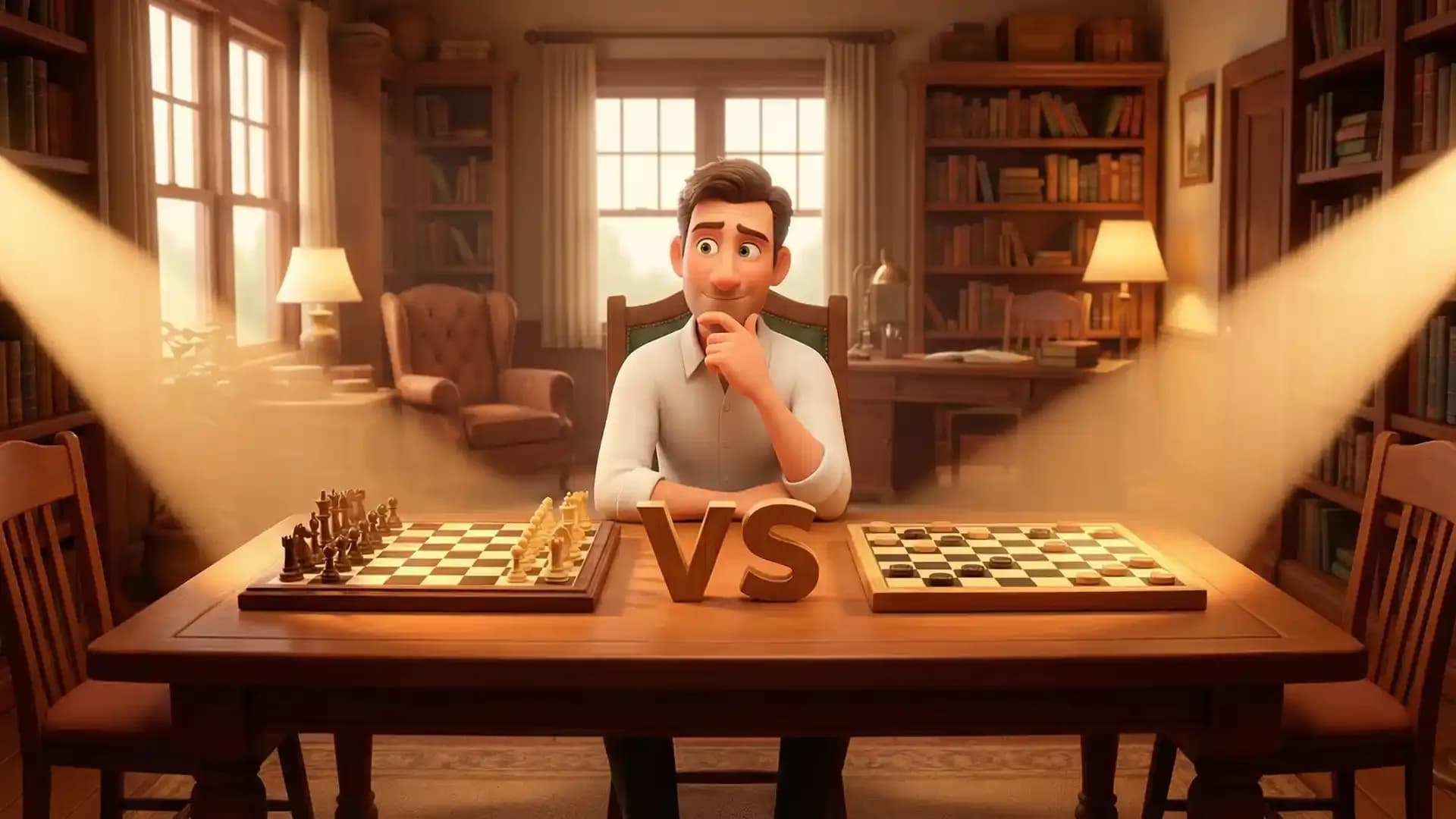
What Is a Fork in Chess? Meaning & Examples

Chess.Game Growth Explained: The Most Popular New Chess Platform
Discover how Chess.Game reached 1.5M monthly users and became the most popular new chess platform with free learning and smart matchmaking.
What Is a Good Chess Rating? Complete Guide for Beginners to Experts
What is a good chess rating? Learn what 800, 1000, 1200, and 1600 ratings mean, plus average chess ratings and how to improve fast.
Chess Pieces That Can Move Diagonally
Which Chess Pieces Can Move Diagonally? Rules Explained
What Is a Fork in Chess? Meaning & Examples
What Is a Fork in Chess and why is it so powerful? Find out how to create deadly double attacks, trap major pieces, and start winning more games today.
10 Greatest Chess Players in History Who Changed the Game
Explore the 10 Greatest Chess Players ever, from classical masters to modern geniuses. Learn their achievements, styles, and lasting impact—start reading now.

You have seen how a chess fork can sink the heart of anyone who has ever been attacked on the same side by a foe Knight and found himself between your King and Queen. This is a complete game changer to any player.
Do you ask yourself what a fork is in chess and how to use it to eliminate more pieces that will make you win more games? This guide will take you through the process of using the move in easy steps. Also, you can learn about it while playing chess online.
Table of contents
- What Is a Fork in Chess?
- How a Chess Fork Works
- Most Common Types of Forks in Chess
- Why Knight Forks Are So Dangerous
- How to Use Fork in Chess (Step-by-Step)
- Common Fork Patterns You Should Know
- How to Avoid Getting Forked
- Fork vs Other Chess Tactics
- Why Forks Are Important for Beginners
- Conclusion: Mastering the Chess Fork
What Is a Fork in Chess?

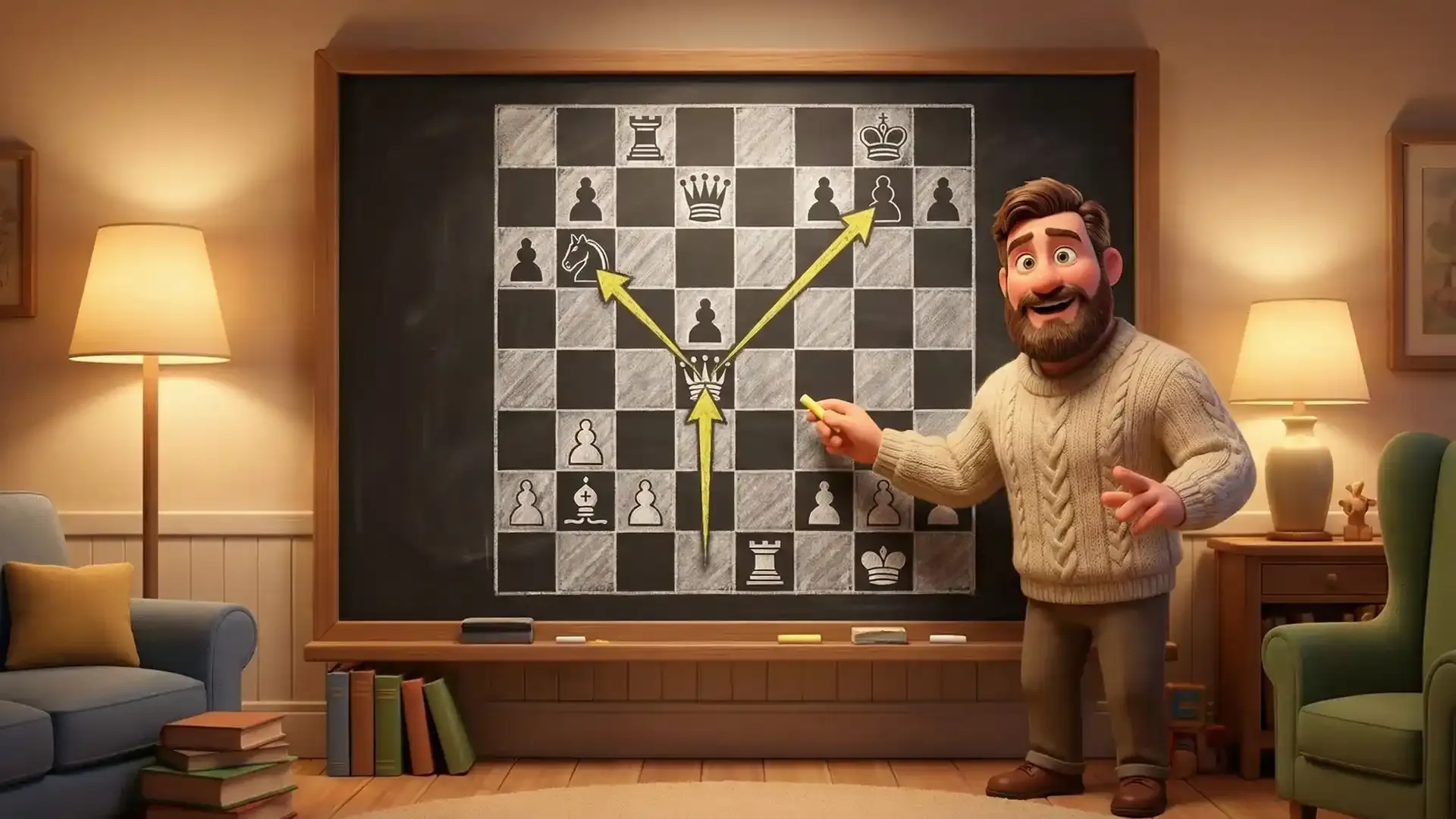
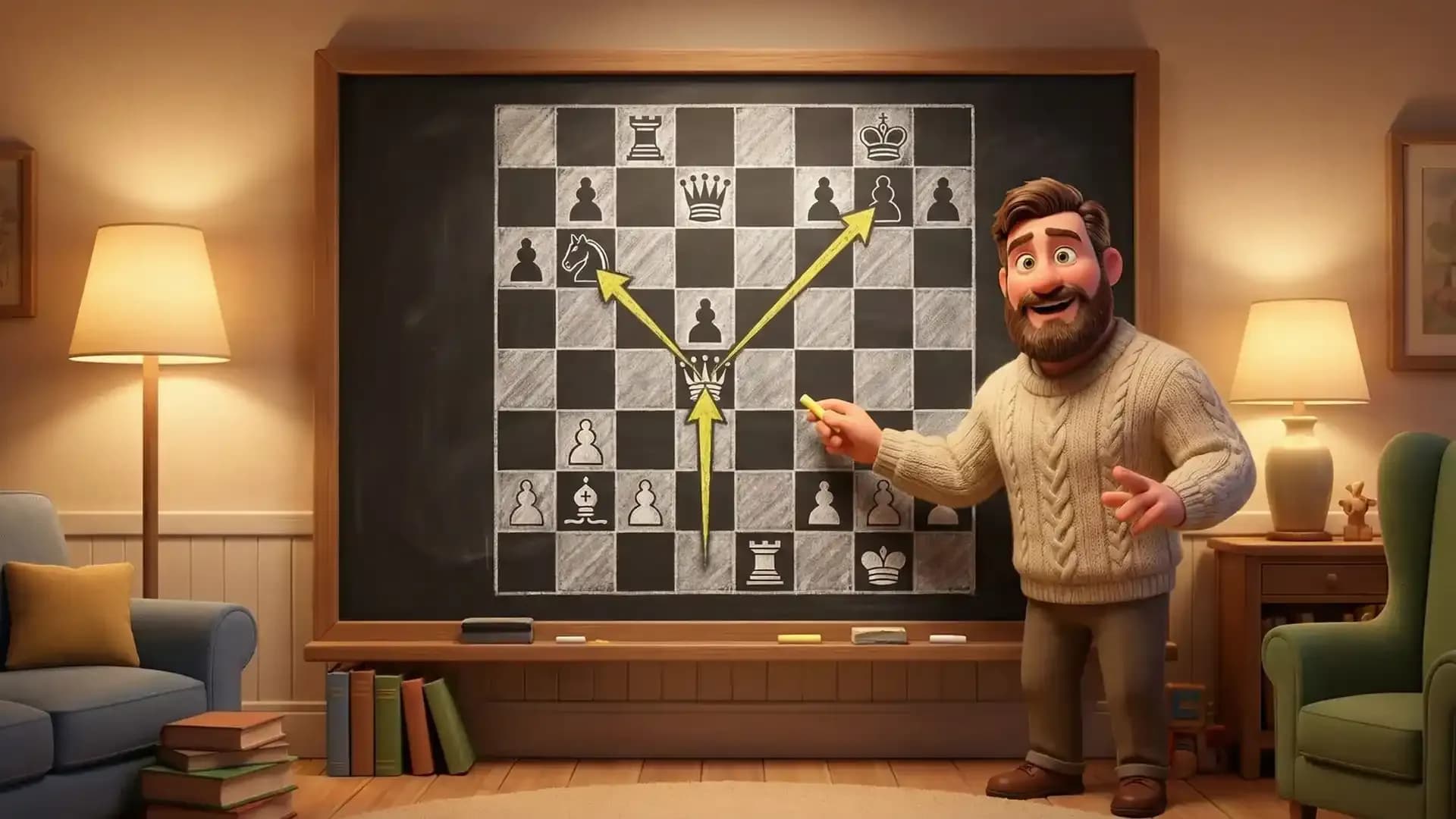
In chess, a fork is a chess strategy in which one player attacks two or more opponents. Since the opponent can only move one piece at a time, the opponent still needs to choose which piece to save, which implies that he or she tends to lose the other piece.
This is an essential technique of material winning. Although any item on the board can be used to deliver a fork, the Knights are the most recognisable due to their L-shaped movement, which lets them assault several objects and remain untroubled as a result.
The fork is one of the most common tactical themes in competitive play, frequently seen in tournaments governed by FIDE.
How a Chess Fork Works
The mechanics behind a fork in chess are simple, but executing it requires keen board vision. In a standard move, you attack one target. Your opponent defends it, and the game continues. However, a fork creates a double threat that is much harder to handle.
A fork in chess forces your opponent into a dilemma: He or she could save one piece (such as his/her Queen), but you take the other one (such as his/her Rook). They are unable to safeguard them simultaneously, and hence, there is a loss of material. Legal's Mate exploits this exact dilemma. Black captures the queen thinking it is free, but the two knights are already positioned to deliver an unstoppable checkmate.
Step-by-Step Fork Example
- The Attacker Moves: You identify a square where your piece can see two high-value targets. You move your piece to that square.
- The Double Attack: Your piece now sits on a square that creates a direct line of attack against two enemy pieces.
- The Forced Choice: Your opponent has to decide between the pieces and which one is more valuable. If one of the targets is the King, it must relocate the King, leaving the other piece entirely unguarded.
- The Capture: This time, on the next turn, you capture your remaining target.
Most Common Types of Forks in Chess

Depending on which piece you use, the tactic's style changes. Understanding what a fork means in chess across different pieces will make you a much more dangerous player.
Knight Fork (The Most Powerful)
The Knight is the king of the fork. Because Knights move in an L shape and jump over other pieces, their attacks are difficult to see coming. A Knight can attack a Queen and a Rook at once without being in the line of fire of either. This is the most feared middle game chess strategy.
The knight in chess is known for its unique L-shaped movement and powerful tactical abilities.
Queen Fork
The Queen is the most powerful piece on the board, so she is a frequent forker. Because she moves in every direction, she can strike targets across the entire board. A common pattern is to check the King while eyeing an unprotected Rook in a far corner.
Pawn Fork
A pawn fork will usually take place when a pawn is going towards an attack, and it attacks two minor pieces that are of the same rank and are placed adjacent to each other as Knights. The worth of the pawns is so diminutive that your opponent is forced to lose a better piece.
King Fork
Even the King can fork. While rare in the early game, the King becomes a powerful attacker in the endgame. A king fork often occurs when the King moves to attack two enemy pawns at the same time, ensuring one will be captured.
Why Knight Forks Are So Dangerous

If you ask a professional writer what a fork in chess is, they will always highlight the Knight. There are three reasons why:
- Unpredictability: The Knight's movement is counterintuitive and often lands in blind spots that beginners miss. As many wonders can knights move backwards or not?
- No Blocking: You can block a Queen's check by putting a piece in the way. You cannot block a Knight. The opponent must move or capture.
- The Royal Fork: This is the nightmare scenario where a Knight attacks the King and Queen. Since the King must move out of check, the Queen is lost every time.
How to Use Fork in Chess (Step-by-Step)
Learning how to fork in chess is about training your eyes to see patterns.
- Look for Unprotected Pieces: Search the board to find any of the pieces of your opponent that are not under guard.
- Identify Connectivity: As soon as you have two loose pieces, find a square that joins them through the movement of your piece.
- Force the Position: A check may be used to push the opponent's King to a desired square, exposing it to a fork on the following player's move.
- Solve Puzzles: You must be able to solve tactical puzzles, and consistent practice will ensure that you are able to distinguish these shapes as soon as you play a real game.
Common Fork Patterns You Should Know

- The King and Queen Fork: Also known as the Royal Fork. Look for squares like c7 or f7 where a Knight can end the game in one jump.
- The Rook and Minor Piece Fork: This is common in the endgame checkmate move. A Knight, a Rook, and a Bishop being on the same-coloured squares, the Knight may then often strike either.
- Back-Rank Fork: A Queen or Rook attacking a King behind his own pawns and at the same time a hanging piece.
How to Avoid Getting Forked
- Protect Loose Pieces: If your pieces protect each other, the fork is not very useful, since you cannot regain your attacker.
- Watch Knight Squares: You have to be careful when your King and Queen are on the same color squares, as this is the best place for a Knight to attack them.
- Calculate Before Moving: Before you move, always consider whether the move you are about to make exposes a square and two of your pieces to attack by an enemy piece.
Fork vs Other Chess Tactics

Fork vs Pin: A fork attacks two pieces that are apart. A pin attacks two pieces in a straight line, restricting the front piece from moving.
Fork vs Skewer: A skewer in chess is a reverse pin. You attack a valuable piece, forcing it to move so you can capture the piece behind it.
Fork vs Discovered Attack: A discovered attack happens when you move one piece to reveal an attack from another piece sitting behind it.
Why Forks Are Important for Beginners
The chess fork is the most important tactic for a beginner because it provides an immediate advantage. It does not require deep calculation or looking ten moves ahead.
It simply requires board awareness. By mastering the fork, you learn how to coordinate your pieces and exploit the weaknesses in your opponent's setup. You need to learn chess opening moves and the fork move to improve your game.
Conclusion: Mastering the Chess Fork
Understanding what a fork in chess is a major step in your development. It moves you away from making random moves and toward a tactical mindset. Having practised, you will begin making forks that leave your opponents in a state of frustration, and your rating will go upwards.
FAQs
- A fork is a strategic maneuver in which a single piece attacks two or more pieces of the opponent. This leaves the opponent with the decision of which piece to conserve, and it might also lead to a material loss.
- The most useful piece played by a fork is the Knight, owing to its exclusive motion, with which one cannot easily foresee its direction. It can leap barriers to attack multiple targets without being easily reclaimed.
- You execute a fork by moving a piece to a square that creates a direct threat against two targets at once. This move is based on locating the exact crossroads that your unit can attack both opponents.
- fork should be a winning move, and its success is dependent on the board position. In some cases, the opponent may be able to move one piece to protect the other or escape by means of a counter check.
- The most frequent pattern is the Knight fork on the f7 or c7 squares, targeting the King and Rook. This occurs often in beginner games when the back rank or opening defenses are weak.
Chess.Game Growth Explained: The Most Popular New Chess Platform
Discover how Chess.Game reached 1.5M monthly users and became the most popular new chess platform with free learning and smart matchmaking.
What Is a Good Chess Rating? Complete Guide for Beginners to Experts
What is a good chess rating? Learn what 800, 1000, 1200, and 1600 ratings mean, plus average chess ratings and how to improve fast.
Chess Pieces That Can Move Diagonally
Which Chess Pieces Can Move Diagonally? Rules Explained
What Is a Fork in Chess? Meaning & Examples
What Is a Fork in Chess and why is it so powerful? Find out how to create deadly double attacks, trap major pieces, and start winning more games today.
10 Greatest Chess Players in History Who Changed the Game
Explore the 10 Greatest Chess Players ever, from classical masters to modern geniuses. Learn their achievements, styles, and lasting impact—start reading now.