Chess vs Checkers: Key Differences Explained
Chess.Game Growth Explained: The Most Popular New Chess Platform
Discover how Chess.Game reached 1.5M monthly users and became the most popular new chess platform with free learning and smart matchmaking.
What Is a Good Chess Rating? Complete Guide for Beginners to Experts
What is a good chess rating? Learn what 800, 1000, 1200, and 1600 ratings mean, plus average chess ratings and how to improve fast.
Chess Pieces That Can Move Diagonally
Which Chess Pieces Can Move Diagonally? Rules Explained
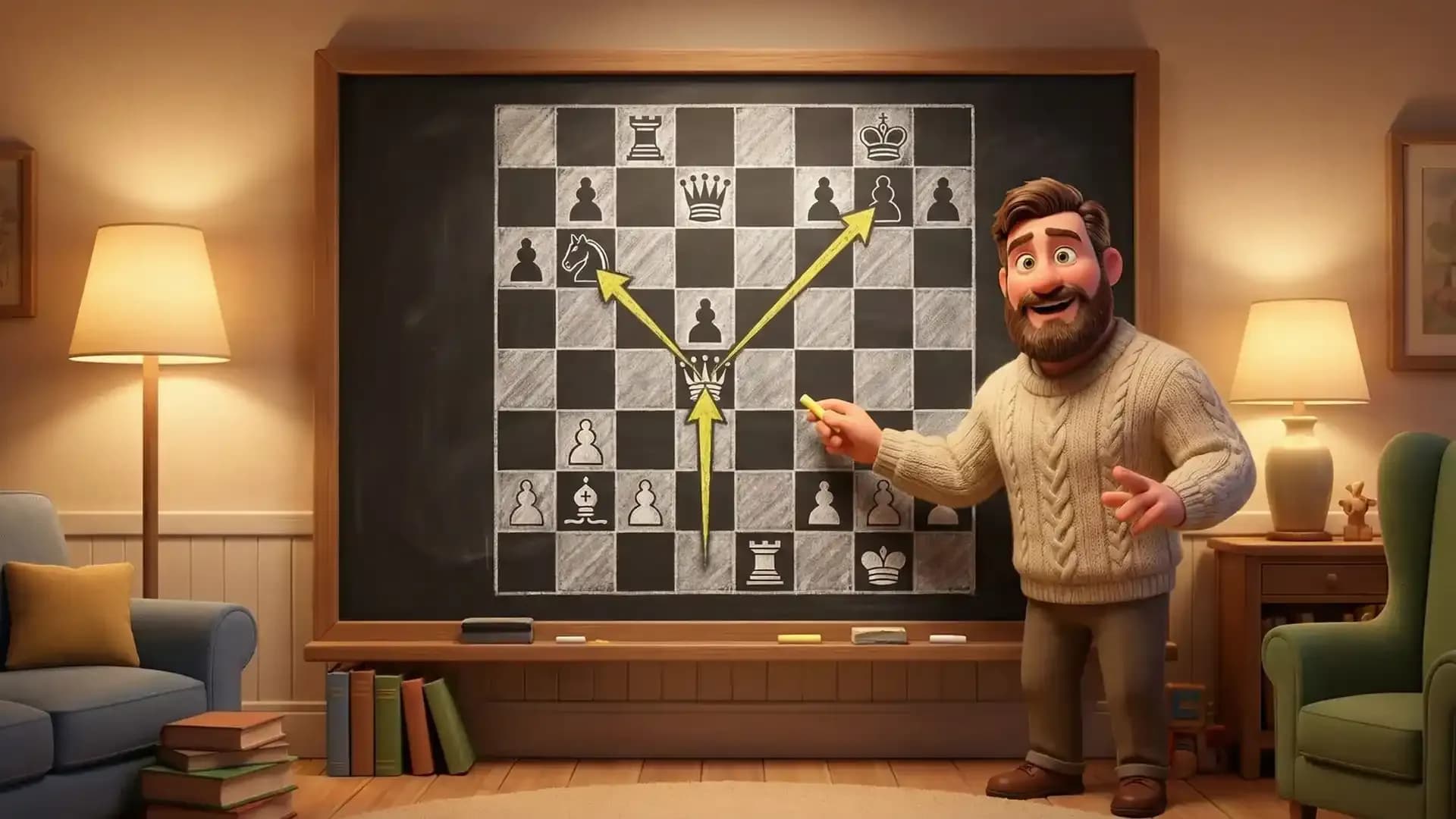
What Is a Fork in Chess? Meaning & Examples
What Is a Fork in Chess and why is it so powerful? Find out how to create deadly double attacks, trap major pieces, and start winning more games today.
10 Greatest Chess Players in History Who Changed the Game
Explore the 10 Greatest Chess Players ever, from classical masters to modern geniuses. Learn their achievements, styles, and lasting impact—start reading now.
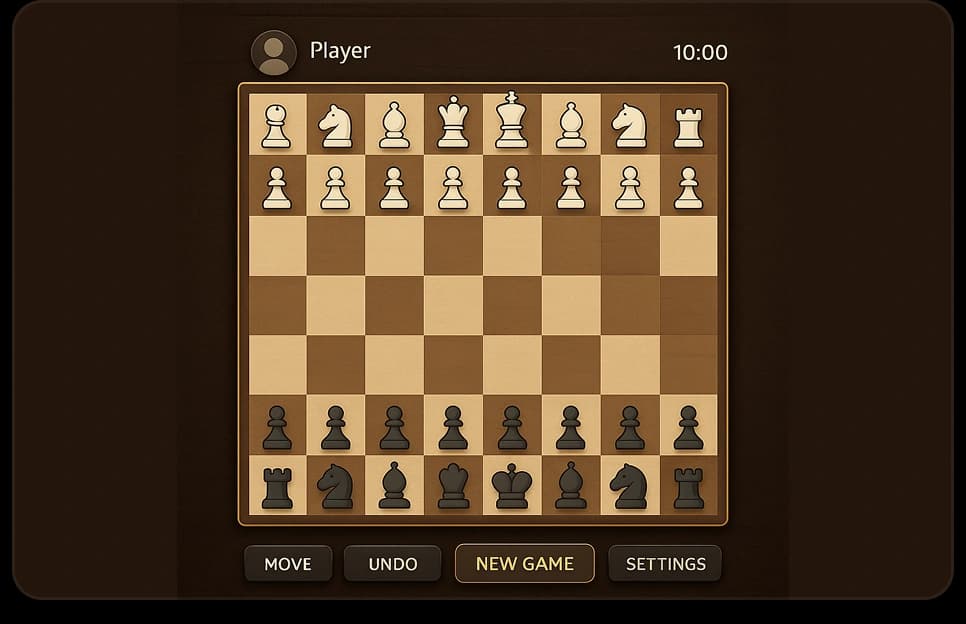
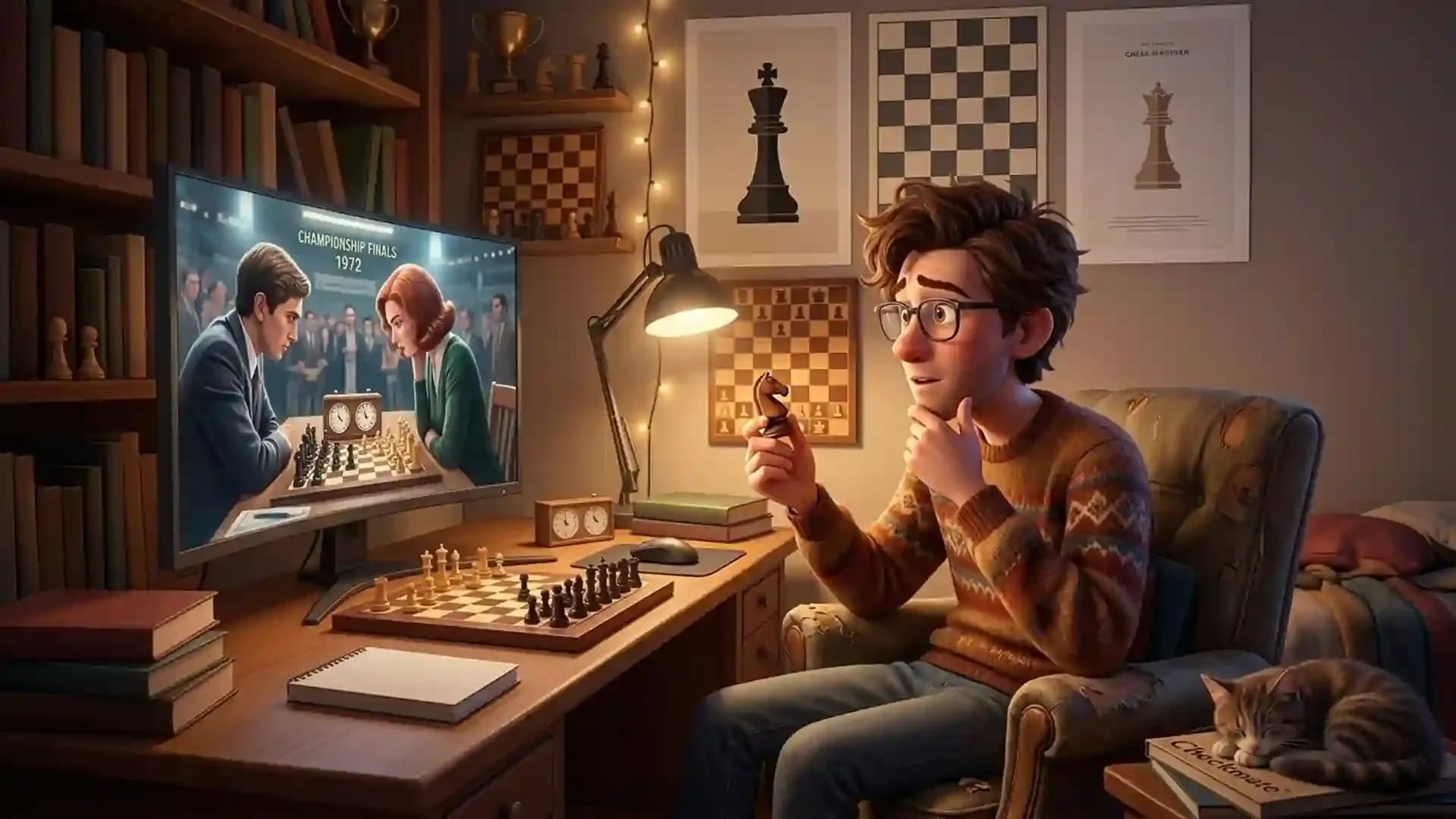
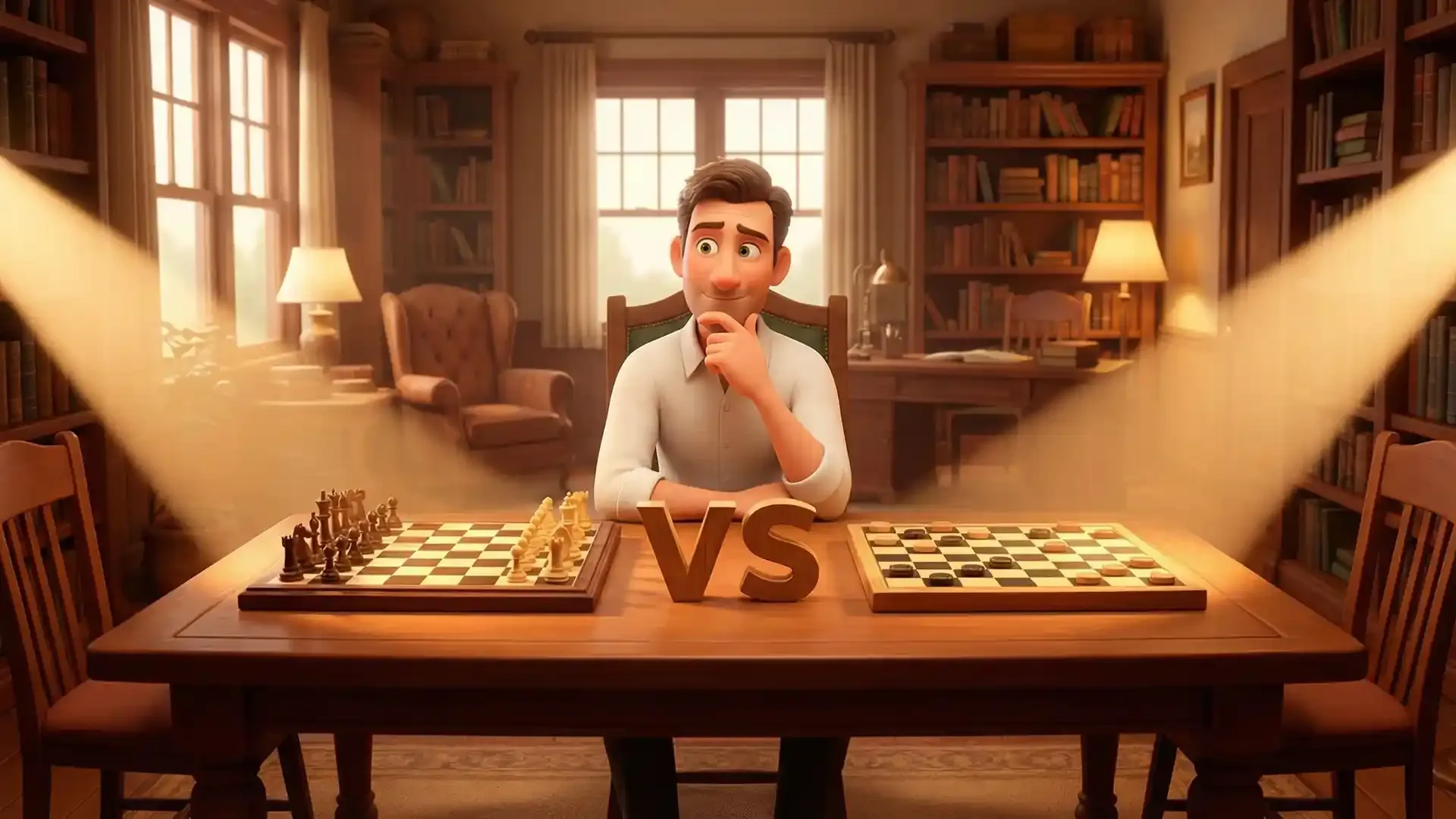
Chess vs checkers is not a debate over a matter of preference in the world of classic strategy, but rather a debate over two different mental philosophies. Although they share a common 8x8 stage, the depth of their respective worlds varies greatly.
You feel like a quick battle skirmish or a long-term strategic planning game, then the first step towards becoming a master player of chess is to learn the distinction between chess and checkers. Play chess or checkers online to see which is better?
Table of contents
Chess vs Checkers: What's the Main Difference?

In Chess, you have a diverse army. You get 16 pieces, split into six types (like the Queen, Knight, and Bishop). Each type has its own special "power" or way of moving. To win, you have to be like a general and trap the opponent’s King, and you should have a chess study plan.
In Checkers, all 12 pieces are identical discs that move only diagonally on dark squares. Your goal isn't to trap a King, but to jump over and capture every enemy piece. You win by clearing the board or blocking your opponent so they can't move.
What Is Chess?
Chess is referred to as a board game. The history of chess began in India in the 6th century as Chaturanga, and later became a representation of four army units: infantry, cavalry, elephants, and chariots.
Chess has a variety of rules that determine the game in a typical checkers vs chess game. Each player starts with:
- King: the most valuable one; in case it is in a trap, you win or lose.
- Queen: the strongest; it is able to travel any number of squares in any direction.
- 2 rooks, two bishops, two knights: each of them moves in a certain pattern (the knight moves in the shape of L).
- 8 pawns: they diagonally capture. This is to checkmate, to expose the enemy king to attack without a legal move being possible.
The final objective is to deliver a checkmate in chess, placing the opponent’s King in check with no legal escape. and place your pieces in such a way that the opponent's King is in trouble(in check) and has no legal move to escape.
What Is Checkers?
Checkers, also known as Draughts in the UK, is a fast-paced game that requires tactical decision-making. Although most people assume that checkers is a new game, it is much older than chess, with the earliest versions being played in the city of Ur in 3000 BC, and now you can play checkers online.
Checkers have identical discs. They step forward in a diagonal line. One can only rank up by reaching the back row of the opponent, and one of the pieces should be Kinged, which will enable it to move both forward and back. The mission is straightforward, kill the opponent or immobilize him.
Difference Between Chess and Checkers

To really see the comparisons between these games, we need to go under the hood and see how they play.
Board Setup
Both games are played on the same 8x8 grid (64 squares), but they are set up differently.
Chess: The 64 squares (light and dark) are used. The square in the bottom-right corner has to be white, which is a basic rule of proper chessboard setup.
Checkers: Eastern uses only the dark 32 squares. Squares of light are never in contact with pieces.
Pieces
Chess: Involves the use of 16 pieces and six roles. This forms a hierarchy in which certain pieces have a higher objective value than others.
Checkers: Uses 12 identical pieces. Until someone makes a King, it is an even playing field.
Movement Rules
Chess: There is a language for each piece. Knights are able to jump over other pieces; Rooks go in straight lines; Bishops go in diagonal lines.
Checkers: Traffic is purely diagonal. The pieces move a square at a time unless they are in the process of capturing.
Capturing
This is perhaps the most critical mechanical difference.
Chess: Capturing is optional. You land on a square occupied by an opponent to take it.
Checkers: Capturing is mandatory. If a "jump" is available, you must take it. Skilled players use this rule to "force" their opponent into making a move they don't want to make.
Winning Condition
Chess: Checkmate (trapping the King) or Stalemate (a draw where no legal moves exist). Understanding checkmate vs stalemate is essential for every player.
Checkers: Elimination (taking all pieces) or Immobilization (blocking the opponent).
Is Chess or Checkers Harder?

When asking what's harder, chess or checkers, the answer depends on your definition of "hard."
Why Chess Is Considered Harder
Most people consider chess the more difficult game to master for several reasons:
- Chess has roughly possible move combinations, making it much more complex than checkers.
- Theoretical Knowledge: Professional chess players memorize thousands of "openings" and "endgame" patterns.
- Complexity: Managing six different piece types requires a much higher cognitive load than managing one or two.
Why Checkers Can Still Be Challenging
Checkers has been "solved" by computers (perfect play leads to a draw), but for humans, it is far from easy.
- No Margin for Error: Because of the mandatory capture rule, one slight mistake in checkers often leads to a "double" or "triple" jump that loses the game instantly.
- Tactical Precision: Checkers is about seeing the "chain reaction" of moves. It requires a different type of short-term calculation that can be just as taxing as chess strategy.
What's Harder, Chess or Checkers for Beginners?
For a complete novice, chess is harder for beginners.
- Learning the Rules: You can learn to play checkers in under five minutes. Learning how the Knight moves, how to castle, and what "en passant" means in chess can take an entire afternoon.
- Game Pace: A beginner's checkers game is fast and reactive. A beginner chess game can be overwhelming because there are "too many choices," often leading to "analysis paralysis".
Strategy Comparison: Chess vs Checkers Game
Long-Term Planning in Chess
Chess is about positional strategy. You might weaken your own pawn structure on move 10 because you know it will give you an open lane for your Rook on move 35. It requires a "global" vision of the board.
Tactical Precision in Checkers
Playing checkers is about forced tactics. Because you must jump, you can use a single piece as "bait" to pull your opponent's King into a trap. It is a game of "if I do this, they must do that".
Psychological Differences
Chess is like a heavy intellectual duel, a slow-burning psychological battle. Checkers reminds me of a fast break tactic. In chess, there is always pressure; in checkers, it is dynamite.
History of Chess and Checkers

History of Checkers
Checkers has a history spanning 5,000 years, back to Ancient Sumeria and Egypt, where it was known as Alquerque.
History of Chess
Chess originated in the 6th-century Gupta Empire in India as Chaturanga, then spread to Persia (where the modern usage of the word checkmate derives, translating as Shah Mat, meaning the king is dead), and finally to Europe.
Cultural Effects
Chess was associated with high social and military status, while checkers was associated with everyone in society because it is easy to play.
Which Game Should You Play?
Choose Chess If You Like:
- Limitless Diversity: Never the same game.
- Long-Term Planning: You like the grind of a slow strategy.
- Prestige: You would do it to join a huge international society of grandmasters and theory.
Choose Checkers If You Prefer:
- Action to be taken: You would like a game that can be completed in 15 minutes.
- Tactical Traps: You like to drive your opponent into making irrevocable errors.
- Easy: You would desire a game that is easy to play with anybody, a young child, and even a grandparent.
The difference between chess and checkers is not too great, as both require strategy, have a history, and involve their own planning to win.
FAQs
- No, the rules, pieces, and goals are completely different, though they have the same board. A game of chess cannot be played with checker pieces.
- Chess generally requires more long-term strategy, while checkers focuses on short-term tactical "jumps" and traps.
- Yes, and children mostly can learn the elements of checkers much sooner than they can learn the peculiar motions of all six pieces on a chessboard.
- Checkers is much earlier in date (3000 BC), but the oldest example of chess is found in 600 AD.
Chess.Game Growth Explained: The Most Popular New Chess Platform
Discover how Chess.Game reached 1.5M monthly users and became the most popular new chess platform with free learning and smart matchmaking.
What Is a Good Chess Rating? Complete Guide for Beginners to Experts
What is a good chess rating? Learn what 800, 1000, 1200, and 1600 ratings mean, plus average chess ratings and how to improve fast.
Chess Pieces That Can Move Diagonally
Which Chess Pieces Can Move Diagonally? Rules Explained
What Is a Fork in Chess? Meaning & Examples
What Is a Fork in Chess and why is it so powerful? Find out how to create deadly double attacks, trap major pieces, and start winning more games today.
10 Greatest Chess Players in History Who Changed the Game
Explore the 10 Greatest Chess Players ever, from classical masters to modern geniuses. Learn their achievements, styles, and lasting impact—start reading now.