What are the Most Complicated Chess Openings?



Albin Counter Gambit: Sharp Chess Opening Guide
Explore the Albin Counter Gambit in depth with opening theory, positional ideas, critical variations, and practical advice for both White and Black. Learn the plans today.

Dutch Defense: Aggressive Ideas and Winning Plans
Master the Dutch Defense chess opening and learn how to win with 1…f5. Explore attacking plans, structures, and practical strategies now.
Queen’s Indian Defense: Theory, Ideas & Main Lines
Queen’s Indian Defense explained with simple ideas, common variations, and practical tips. Discover how to play this powerful chess opening for Black.

Baltic Defense: Aggressive Chess Opening Explained
Discover the Baltic Defense in chess with clear explanations, key plans, and tactical traps. Improve your opening play and surprise rivals today.

Chigorin Defense: Key Ideas, Theory & Traps
Learn the Chigorin Defense with key ideas, main lines, traps, and strategy tips. Discover how Black creates active play against 1.d4.

In chess, the opening phase can truly decide the fate of the entire game. A complicated chess opening is one that demands deep calculation, openings memorization of the theory along with the decision-making from the very first move.
These moves aren’t just challenging, but they’re also packed with tactical traps, sharp lines as well as intricate strategies that actually confuse even experienced players.
In this blog, we’ll explore some of the most complicated openings that push your skills to the limit and help you grow as a serious competitor, whether you’re an intermediate or even an advanced player.
Table of contents
What Makes a Chess Opening Truly Complicated?
A complicated chess opening is defined by the depth of knowledge, precision, and understanding it demands from the player. It’s not always just about how many moves you memorize. Over and above that, it’s about how well you grasp the underlying concepts and strategies.
These openings often lead to unclear positions with high tactical risks, or even long-term positional battles, and this makes them tough to handle without serious preparation and further leads to some common mistakes in chess
Here’s what makes an opening one of the hardest chess openings to master:
- High theoretical depth and memory load
- Tactically sharp or strategically complex positions
- Multiple viable and tricky continuations
- Unforgiving nature, one misstep can be decisive
So if you are a Beginner or Intermediate Chess player, then you have be very carful before applying these openings in the game as it can also lead to blunders. If you want to know some of the best chess openings for beginners you can read our guide on it.
So, lets start with the guide.
Top 5 Most Complicated Chess Openings (with Examples)
Sicilian Defense: Najdorf variation
One of the most thoroughly calculated and sharp openings in the game of chess is the Najdorf (1. e4 c5 2. Nf3 d6 3. d4 cxd4 4. Nxd4 Nf6 5. Nc3 a6). Focus on unbalanced positions such as 6.Bg5 e6 7.f4 Qb6 forms the more militant, tactical position. It suits the rough games of aggressive players who enjoy the high-risk, high-reward tussles and long-range mind combat. It suits the rough games of aggressive players who enjoy the high-risk, high-reward tussles and long-range mind combat. If this level of complexity feels overwhelming, a simpler yet powerful alternative is the King's Indian Attack, which delivers attacking chances without the heavy theory.

Grünfeld Defense
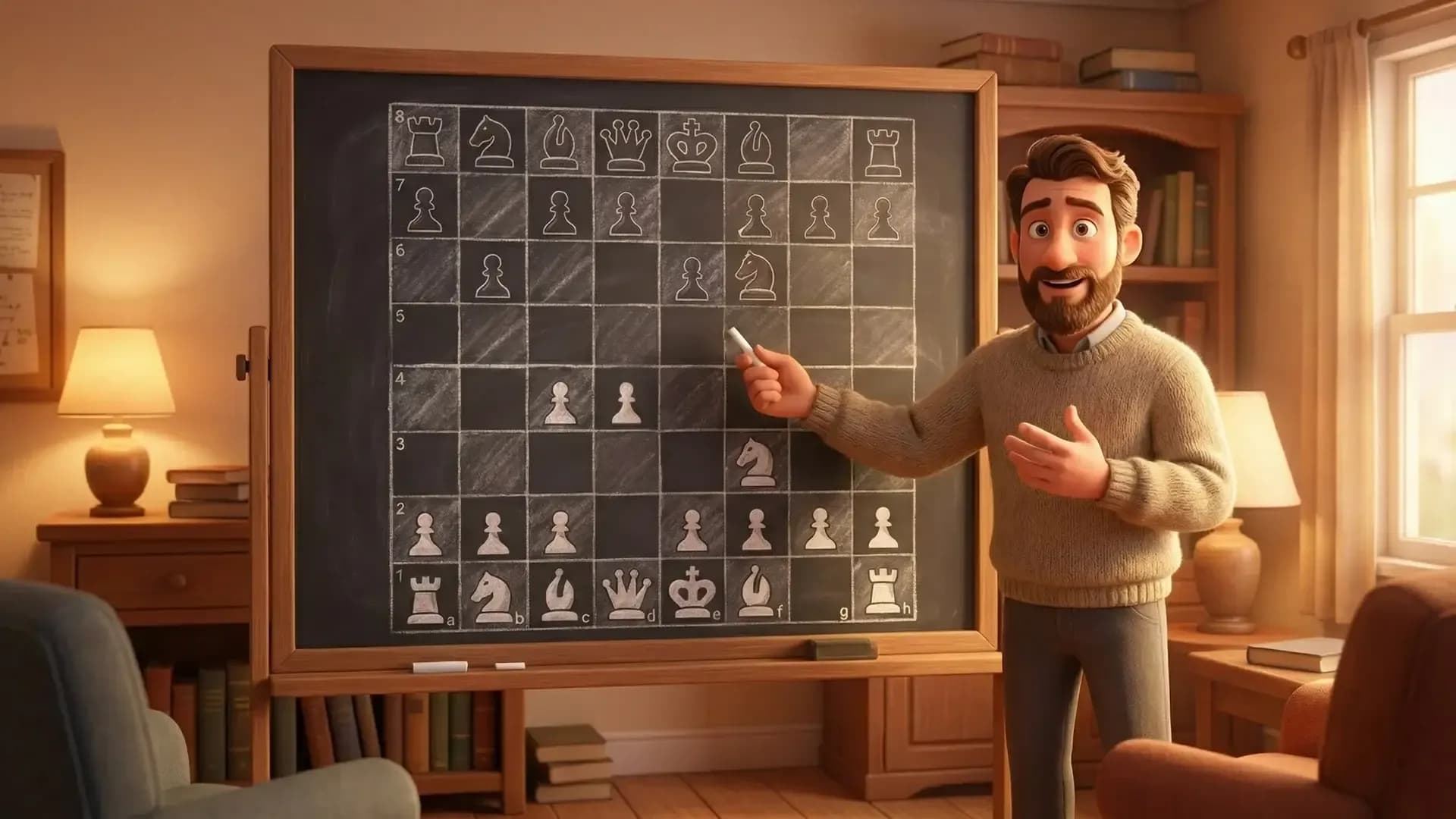
The Grnfeld (1.d4 Nf6 2.c4 g6 3.Nc3 d5) leaves White with a formidable center that the black tries to crack by means of accurate counterplay. This introduction is quite tactical and strategic in its subthemes. Learning it demands mastering both sides' version of the ideas, and is, therefore, one of the most difficult chess openings to study unprepared.

Ruy Lopez: Marshall attack
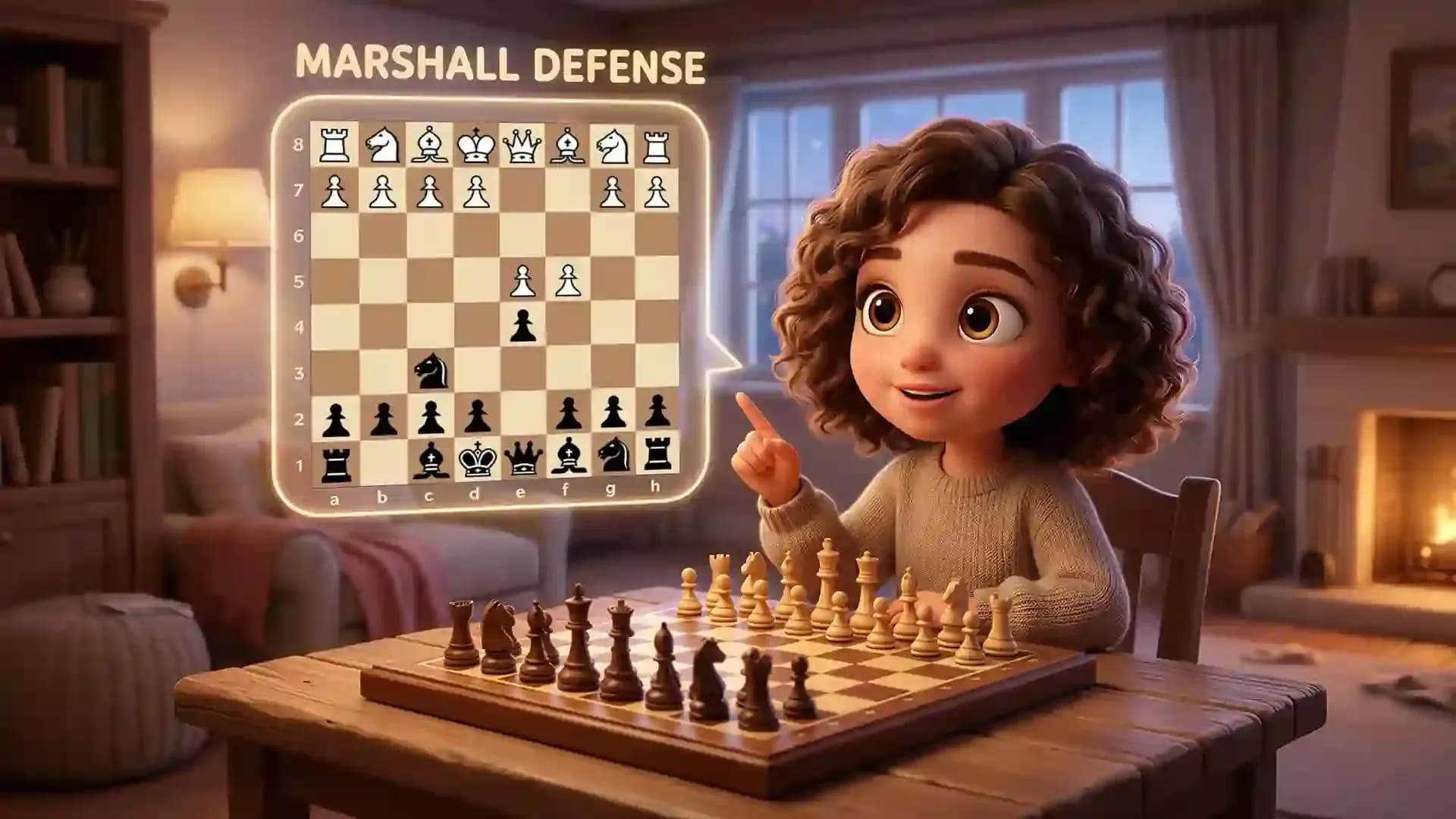
Starting with 1.e4 e5 2. Nf3 Nc6 3.Bb5 and resulting in the Marshall Attack on 8... d5, this variation sacrifices a pawn to generate dynamic piece play. Although it begins with classical development, it becomes razor-sharp in no time. It is perfect to play advanced and it likes deep complex positions with long-term attacking opportunities.
Some players also explore weird Chess Openings to add variety to their play. At the elite level, magnus carlsen most played openings include the Ruy López, which he steers deliberately away from the Marshall Attack — choosing lines where positional understanding rather than memorized theory decides the outcome.
Winawer Variation of the French Defense
Imbalanced pawn structures and strategic tension over the long term is the creation of the Winawer (1.e4 e6 2.d4 d5 3.Nc3 Bb4). Through concepts such as ...c5 and ...Qa5, Black pressurizes the center of White at the expense of their own weaknesses. It is a very complex chess opening, and is an opening of choice for positional players who like to move off the beaten path.

Benoni Defense
Asymmetric pawn structure and venomous counter-attacks are characteristic to the Benoni Defense (the Benoni is 1.d4 Nf6 2.c4 c5 3.d5 e6). Black sacrifices space to gain piece action and attacking pressure. It requires timing and tactics, and can be quite difficult to play successfully because of the long-term strategy needed to master it.

How to Choose the Right Complicated Chess Opening for Your Style?
Positional vs. Tactical Players
If you like playing slowly and calculating your moves and outplaying your opponent, use openings such as Ruy Lopez or French Winawer. Tactical experts who love sharp moves and incessant threats are advised to study the Sicilian Najdorf or the Marshall Attack.
There is also a quieter middle ground for players who like probing rather than forcing, and the nimzowitsch defense fits that description well, since it avoids early commitments while still carrying real strategic weight later in the game.
Aggressive vs. Counter-Attacking Styles
Bold players who enjoy taking the initiative at an early stage will be attracted to such lines as the Benoni or the Grunfeld, whereas a counter-attacker might adopt a complicated defence in order to tempt the opponent forward, before hitting back. On the White side, aggressive players who face the Sicilian regularly often rely on the Grand Prix Attack as a direct and structured way to seize the initiative without entering Black's heavily prepared territory.
Know Your Strengths
Pick an opening which fits your instincts—do you enjoy deep calculation under time pressure, or would you rather play low-theory systems like the Cow Opening that focus on setup and flexibility?
Sample Personas
The Positional Grinder is a natural in a slowly-developing opening such as the Winawer, whereas the Tactical Brawler adores a line based on chaos, such as the Najdorf or Marshall, where acuity in calculation decides matches. Start with learing the best chess openings for the white and black both.
Study Tips to Master These Hardest Chess Openings

One-At-A-Time Opening
Do not attempt to learn too many things all together. Choose one complex chess opening and learn it well--not just know the variations and the moves, but also learn the concepts.
Apply Modern Study Tools
Chessable, Lichess, and other platforms will provide you with the tool-based studying, spaced repetition, and base-level to play as a master.
Play and Learn
Watch the best and put these openings to test. Study games of GM and observe how the ideas are applied in real situations and how errors are penalized.
Traps and Key Themes:
Obtain your preferred opening and become familiar with some tactical traps, strategic plans of action, and middlegame positions to prevent mistakes and become more practical in this chess game.
Conclusion
One of the smartest ways to improve your game is to pick a complex chess opening and learn it. These are the starting positions to check your knowledge of tactics, strategy and precision. You may prefer attacking, fast-paced lines or positional plays played out over time, but having the appropriate match to your style will bear fruit.
By practicing and having some patience, you can master the most difficult and complicated chess openings and even gain an advantage in competitive games. If you want to explore other unique openings beyond the classics, you can also check out the Bird Opening, a rare but tricky weapon that can confuse unprepared opponents.
FAQs
- challenging chess opening requires strong strategic understanding, tactical accuracy, and in-depth theoretical knowledge. Even a single mistake can drastically alter the outcome of the game.
- The Sicilian Defense: Najdorf Variation is widely regarded as the most difficult opening to master. It demands sharp calculation, deep theoretical knowledge, and is also one of the most aggressive chess openings played at the highest levels.
- Not at all. Since complex openings often lead to mistakes without sufficient practice and experience, beginners should first focus on the best chess openings for beginners before attempting these.
- It depends on your playing style: Tactical players often choose the Najdorf or Marshall Attack.Strategic players usually prefer the French Winawer or Ruy Lopez.
- Focus on one opening at a time, use study tools like Lichess or Chessable, analyze Grandmaster games, and concentrate on understanding the underlying concepts rather than just memorizing moves.
Albin Counter Gambit: Sharp Chess Opening Guide
Explore the Albin Counter Gambit in depth with opening theory, positional ideas, critical variations, and practical advice for both White and Black. Learn the plans today.
Dutch Defense: Aggressive Ideas and Winning Plans
Master the Dutch Defense chess opening and learn how to win with 1…f5. Explore attacking plans, structures, and practical strategies now.
Queen’s Indian Defense: Theory, Ideas & Main Lines
Queen’s Indian Defense explained with simple ideas, common variations, and practical tips. Discover how to play this powerful chess opening for Black.
Baltic Defense: Aggressive Chess Opening Explained
Discover the Baltic Defense in chess with clear explanations, key plans, and tactical traps. Improve your opening play and surprise rivals today.
Chigorin Defense: Key Ideas, Theory & Traps
Learn the Chigorin Defense with key ideas, main lines, traps, and strategy tips. Discover how Black creates active play against 1.d4.