Nimzowitsch Defense: Complete Chess Opening Guide (Ideas, Variations & Strategy)



Albin Counter Gambit: Sharp Chess Opening Guide
Explore the Albin Counter Gambit in depth with opening theory, positional ideas, critical variations, and practical advice for both White and Black. Learn the plans today.

Dutch Defense: Aggressive Ideas and Winning Plans
Master the Dutch Defense chess opening and learn how to win with 1…f5. Explore attacking plans, structures, and practical strategies now.

Queen’s Indian Defense: Theory, Ideas & Main Lines
Queen’s Indian Defense explained with simple ideas, common variations, and practical tips. Discover how to play this powerful chess opening for Black.

Baltic Defense: Aggressive Chess Opening Explained
Discover the Baltic Defense in chess with clear explanations, key plans, and tactical traps. Improve your opening play and surprise rivals today.

Chigorin Defense: Key Ideas, Theory & Traps
Learn the Chigorin Defense with key ideas, main lines, traps, and strategy tips. Discover how Black creates active play against 1.d4.

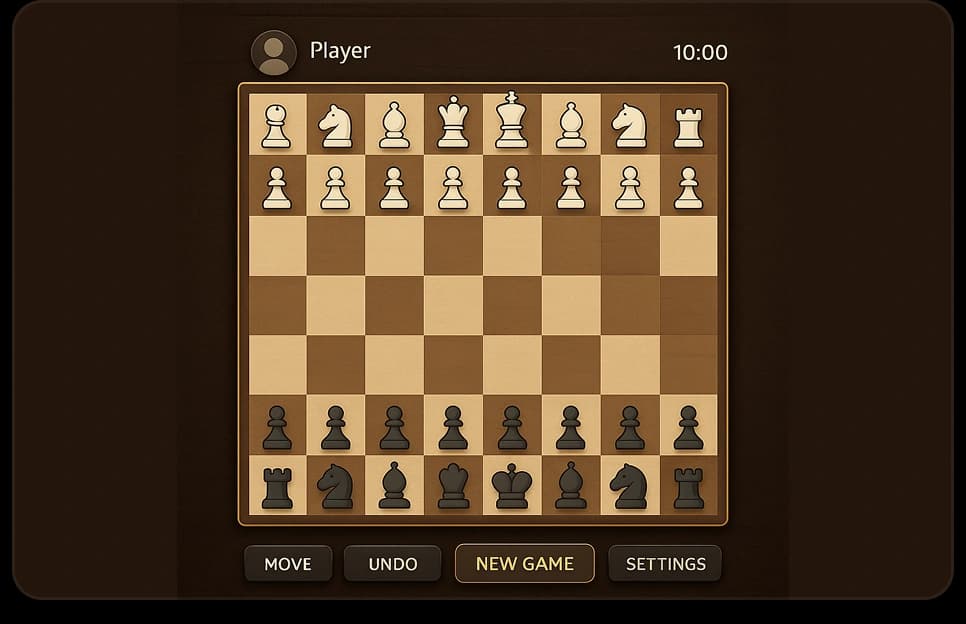
The Nimzowitsch Defense is the best way to avoid memorizing countless moves and to play outside the lines of popular theory.
For players looking to inject raw creativity into their games, developing an unconventional opening repertoire is the fastest way to get better at chess. The unusual nature of the position that comes with it breaks any set strategy by encouraging White to create a large pawn center that will be broken down from the sides.
Table of contents
- What Is the Nimzowitsch Defense?
- Nimzowitsch Defense Move Order
- Key Opening Ideas
- Why Play the Nimzowitsch Defense?
- How to Play the Nimzowitsch Defense
- Main Variations of the Nimzowitsch Defense
- Best Plans for Black
- How White Should Respond
- Common Tactical Ideas
- Common Mistakes to Avoid
- Is the Nimzowitsch Defense Good?
- Nimzowitsch Defense vs Scandinavian Defense
- Conclusion
What Is the Nimzowitsch Defense?

The Nimzowitsch Defense is one of the hypermodern openings in chess for Black, in which Black begins with 1...Nc6 following white’s 1.e4 move. Unlike other classical opening systems that deploy pawns for occupying the center from the outset, this particular opening system relies on employing a minor piece for attack the center.
- Opening Moves: 1.e4 Nc6
- ECO Code: B00
- Hypermodern Concept: Controlling the center with pieces rather than occupying it with pawns.
- Named After: Aron Nimzowitsch, the legendary grandmaster, theoretician, and author of My System.
Many players who regularly play chess online utilize this line as an effective surprise weapon to bypass deeply analyzed mainstream theory.
Nimzowitsch Defense Move Order
Getting this opening on the board requires a straightforward sequence, yet it instantly changes the typical landscape of an open game.
Starting Position
The game begins with a direct challenge to standard opening principles:
- 1.e4: White occupies the center and opens lines for the light-squared bishop and queen.
- 1...Nc6: The foundational move of the opening. Black develops the queen's knight to a natural square, taking aim at the critical d4 and e5 central squares.
Understanding these initial knight jumps is essential when you learn how to play chess from a hypermodern perspective.
Key Opening Ideas
When you choose this unique knight jump, you are steering the game toward three main dynamic goals:
- Provocation: By keeping the d4 square completely open, Black provokes White into occupying the center by playing 2.d4. White readily falls for it, assuming that this move would permanently ensure an advantage for them.
- Targeting the d4 Pawn: As soon as the White pawns are moved up, the whole play of Black becomes one of attack on these advanced pawns.
- Piece Activity: Black aims for very active piece play, with the bishops used to pin down White's knights defending the pawns.
Why Play the Nimzowitsch Defense?
This line functions as a highly effective psychological surprise weapon when you sit down for a match, forcing your opponent into a stressful tactical battle.
- Surprise Weapon: Most club players spend hours studying the Sicilian Defense or the Ruy Lopez. Facing 1...Nc6 disrupts their preparation on move one.
- Flexible Setup: Black can choose between sharp tactical play or quiet, solid positional frameworks depending on how White responds.
- Hypermodern Strategy: It teaches you the profound concept of letting your opponent create a massive pawn center just so you can dismantle it with piece pressure.
- Transposition Possibilities: It is highly deceptive. With the right pawn breaks, Black can easily transpose into comfortable variations of the French Defense, King's Indian Defense, or Alekhine’s Defense.
How to Play the Nimzowitsch Defense
To execute this opening successfully, you must prioritize dynamic positional advantages over traditional, passive development. Use this four-step strategy to control the game:
1. Develop Your Pieces
Get your minor pieces out actively. Your queen's knight is already developed, so focus next on bringing out your kingside knight and choosing active diagonals for your bishops.
2. Challenge White's Center
Do not let White enjoy their space advantage for free. Use your pieces to create immediate targets, forcing White to spend valuable time defending their central pawns.
3. Choose the Right Pawn Break
Depending on White’s configuration, strike back with a timely ...e5 or ...d5. These pawn breaks shatter White’s central wedge and open up lanes for your rooks and queen.
4. Transition into the Middlegame
Once your king is castled safely, coordinate your forces to launch counterattacks. Focus your attention on White’s overextended pawns or exploit any structural weaknesses they created while pushing forward early.
Main Variations of the Nimzowitsch Defense
White has several ways to handle Black's provocative first move. The main battle lines are drawn based on how White chooses to structure their center.
Scandinavian Variation

The Scandinavian Variation occurs when White takes the full center, and Black strikes back immediately:
- 1.e4 Nc6
- 2.d4 d5
Mostly White answers with 3.e5, and there is created a closed center when Black tries to make an attack on the square that supports the pawn formation via ... Bf5 and then ... f6. When White plays 3.exd5 Qxd5, there is a Black queen in the center pressuring d4.
Kennedy Variation

The Kennedy Variation is one of the most critical theoretical tests of this opening:
- 1.e4 Nc6
- 2.d4 e5
Black strikes at the e4 pawn immediately. In case of 3.d5 by White, the knight is taken back to Nce7 and redirected to g6 for setting up kingside defenses and preparing ...f5. If White goes for 3.dxe5 Nxe5, Black manages to get his knight very actively placed in the center of the board.
Williams Variation

The Williams Variation is a slower, more classical approach from White:
- 1.e4 Nc6
- 2.d4 f5
White declines to rush the d4 pawn forward, choosing standard development instead. This line remains highly flexible, allowing Black to transition smoothly into structures reminiscent of the Pirc Defense or launch an aggressive counter-push later.
Nimzowitsch Defense Declined
The Nimzowitsch Defense Declined arises when White avoids the main lines entirely by playing a passive development move on move two, such as 2.Nc3.
By refusing to push d4, White tries to take the sting out of Black’s counterattacking plans. Black can comfortably respond with 2...e5, transposing into a standard Four Knights Game or Vienna Game where they have already secured an equal share of the center without any opening difficulties.
Best Plans for Black
When hunting for a win as Black, your middlegame blueprint should always center on these core strategic goals:
- Chess Piece Placement: Place your light-squared bishop on f5 or g4 to exert pressure before locking your pawn structure. Your knights should seek out active outposts on g6, f6, or c6.
- Pawn Breaks: Master the timing of your ...f6 or ...c5 breaks. These pawn strikes are essential for opening lines for your rooks and dismantling White's space advantage.
- Kingside Development: Bring your kingside knight to f6, develop the dark-squared bishop, and castle early to ensure your king stays safe from sudden tactical surges.
- Counterplay: Focus your tactical threats directly against White's advanced pawns. If White overdefends the center, pivot your pieces to launch sharp counterattacks on the queenside using your open files.
How White Should Respond
If you are playing White and find yourself facing this setup, a calm approach based on a space advantage is your best path to victory.
- Classical Setup: Play 2.d4 and seize the full center immediately. Do not be intimidated by Black’s provocative knight move.
- Maintain Space Advantage: If Black plays 2...d5, push your pawn to 3.e5. This locks down a permanent space advantage, restricting Black's minor pieces.
- Common Plans: Develop your knights naturally to f3 and c3, castle kingside safely, and use your extra space to slowly build an attack while keeping Black's pieces cramped on the back rows.
Common Tactical Ideas
The asymmetrical nature of this opening creates unique tactical patterns that you must watch out for:
Central Counterplay
When White’s d4 pawn becomes isolated or overextended, Black can often unleash a tactical sequence to win the pawn outright or force structural weaknesses.
Pinning the Knight
Black frequently plays ...Bg4, pinning White's f3 knight. This removes the main defender of White's d4 pawn, causing immediate problems in White's central defense.
Counterattacking White's Center
In case White moves its pawns too fast on both sides of the chessboard, one should expect piece sacrifices aimed at opening up the center in the absence of castling by White's king. This highly dynamic approach requires accurate calculation, a skill players often hone by looking up deep tactical lines or studying a pawn structure chess blueprint to recognize structural vulnerabilities. It is quite different from the rigid structures typical for the Scandinavian defense.
Common Mistakes to Avoid
Because the margin for error is thin in hypermodern systems, avoiding these critical blunders is vital for both sides:
Mistakes for Black
- Blocking the c-Pawn Prematurely: Moving the knight to c6 blocks the c7 pawn. If you fail to get active piece play, this can leave your queenside permanently cramped.
- Delaying Kingside Castling: Spending too many moves shuffling your queen's knight around can leave your king stuck in the center during a sudden breakthrough.
Mistakes for White
- Panicking and Overextending: Pushing your central pawns too far forward too fast creates permanent weak squares behind them that Black will gladly occupy.
- Giving Up the Bishop Pair Easily: Trading your valuable light-squared bishop for Black's knight on c6 often relieves all the pressure on Black's position.
Is the Nimzowitsch Defense Good?
The answer depends heavily on the game's format and your style of play.
From a strictly engine-evaluation perspective, computers view the opening with slight skepticism, giving White a small but persistent edge (+0.4 to +0.6) due to their extra space. However, in practical club chess, rapid, and blitz formats, the opening is exceptionally dangerous.
The lack of standard theoretical knowledge among everyday players means Black often gains a massive time and psychological advantage right from the opening moves. Incorporating a few foundational chess tips for beginners regarding piece activity can help you pilot this complex system successfully.
Nimzowitsch Defense vs Scandinavian Defense
While both openings involve early counterattacks against White's e4 pawn, their execution is completely different:
| Feature | Nimzowitsch Defense | Scandinavian Defense |
|---|---|---|
| First Move | 1...Nc6 | 1...d5 |
| Style | Hypermodern | Classical |
| Theory | Moderate | Heavy |
| Surprise Value | High | Medium |
Conclusion
The Nimzowitsch Defense is not only a creative opening move but also a deep strategic approach that teaches you how to sacrifice spatial advantage to achieve effective development of your pieces. Once you learn how to execute its key pawn breaks and exploit the weaknesses of the opponent's center, you will have a weapon ready to use against your opponents.
FAQs
- It is a hypermodern chess opening for Black starting with 1.e4 Nc6, aimed at controlling the center with pieces rather than pawns.
- Yes, it is an excellent practical weapon for club and online players due to its high surprise value and flexible strategic lines.
- It can be challenging because it requires a solid understanding of piece activity over space, but it is an excellent teaching tool for hypermodern concepts.
- It occurs when White avoids pushing 2.d4 and instead plays a developmental move like 2.Nf3 or 2.Nc3 to maintain a symmetrical game.
- The most challenging response for White is to play 2.d4, claiming the full center immediately and accepting Black's strategic challenge.
- While rare in classical world championship matches, it is used frequently by top grandmasters in rapid and blitz tournaments as a potent surprise weapon.
Albin Counter Gambit: Sharp Chess Opening Guide
Explore the Albin Counter Gambit in depth with opening theory, positional ideas, critical variations, and practical advice for both White and Black. Learn the plans today.
Dutch Defense: Aggressive Ideas and Winning Plans
Master the Dutch Defense chess opening and learn how to win with 1…f5. Explore attacking plans, structures, and practical strategies now.
Queen’s Indian Defense: Theory, Ideas & Main Lines
Queen’s Indian Defense explained with simple ideas, common variations, and practical tips. Discover how to play this powerful chess opening for Black.
Baltic Defense: Aggressive Chess Opening Explained
Discover the Baltic Defense in chess with clear explanations, key plans, and tactical traps. Improve your opening play and surprise rivals today.
Chigorin Defense: Key Ideas, Theory & Traps
Learn the Chigorin Defense with key ideas, main lines, traps, and strategy tips. Discover how Black creates active play against 1.d4.