Marshall Defense: Theory, Traps & How to Play


Albin Counter Gambit: Sharp Chess Opening Guide
Explore the Albin Counter Gambit in depth with opening theory, positional ideas, critical variations, and practical advice for both White and Black. Learn the plans today.

Dutch Defense: Aggressive Ideas and Winning Plans
Master the Dutch Defense chess opening and learn how to win with 1…f5. Explore attacking plans, structures, and practical strategies now.

Queen’s Indian Defense: Theory, Ideas & Main Lines
Queen’s Indian Defense explained with simple ideas, common variations, and practical tips. Discover how to play this powerful chess opening for Black.

Baltic Defense: Aggressive Chess Opening Explained
Discover the Baltic Defense in chess with clear explanations, key plans, and tactical traps. Improve your opening play and surprise rivals today.

Chigorin Defense: Key Ideas, Theory & Traps
Learn the Chigorin Defense with key ideas, main lines, traps, and strategy tips. Discover how Black creates active play against 1.d4.

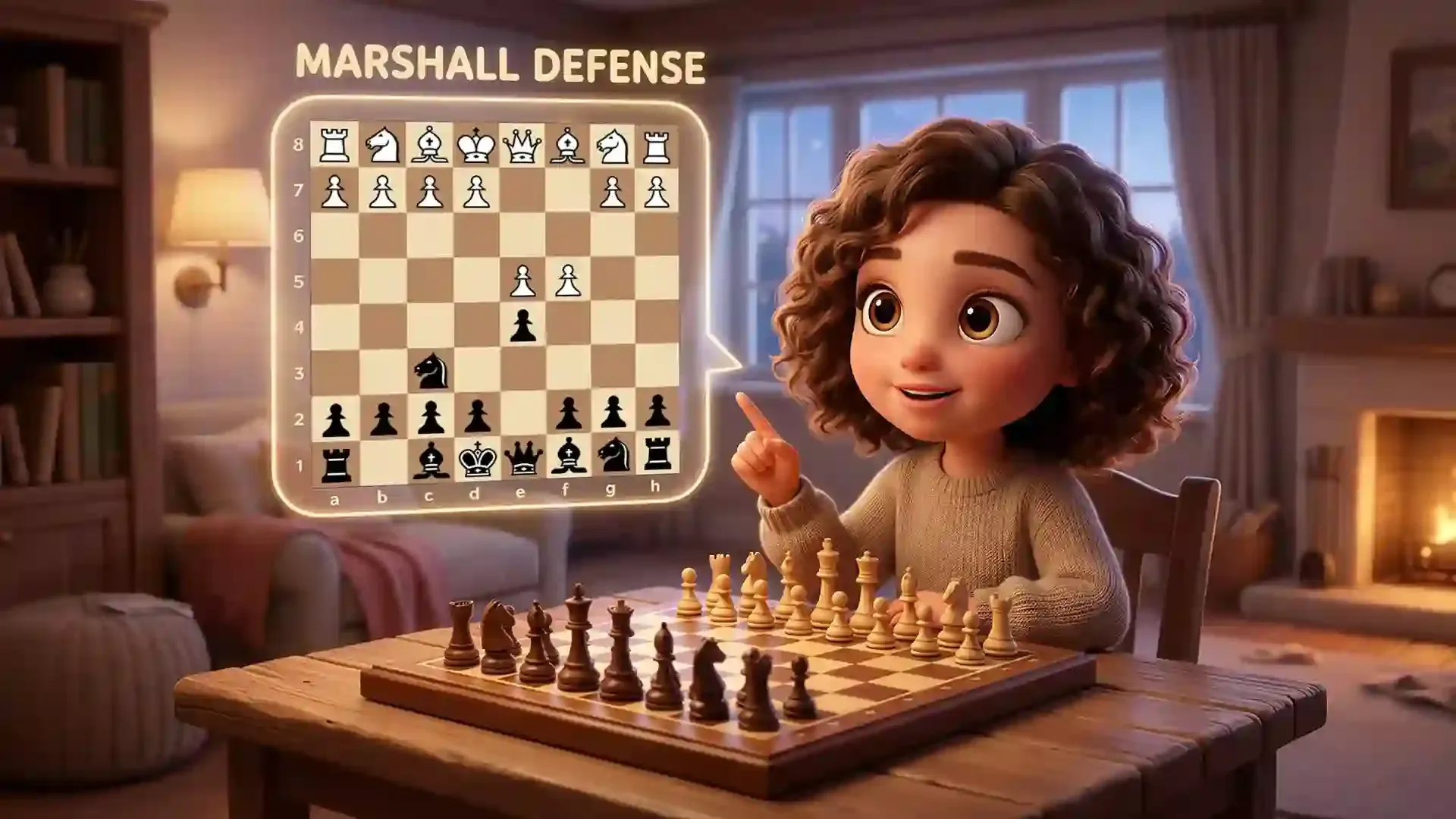
Marshall Defense plays like it means, which is strong and aggressive, creating pressure on the opponent with quick moves from the center. Its start with 1.d4 d5 2.c4 Nf6.
Marshall is easy to learn for new players, but not for elite players, and has many grandmaster moves. popular amongst club players who prefer attacking opportunities to positional play.
When you prefer the open lines, tactical thoughts, and active positions, the Marshall Defense may be a good decision to play chess online or offline.
Table of contents
- What Is the Marshall Defense in Chess?
- Marshall Defense Move Order Explained
- Core Ideas and Strategy of the Marshall Defense
- Main Lines in the Marshall Defense
- Marshall Defense Traps and Tactical Themes
- French Defense Marshall Variation Explained
- Sample Game Breakdown: Marshall Defense in Action
- How to Start Playing the Marshall Defense
What Is the Marshall Defense in Chess?

The Marshall Defense (1.d4 d5 2.c4 Nf6.) is one of the best chess openings for Black, challenging White's central control and aiming to develop rapidly. It typically starts following typical opening positions in which the Black side does not want to be passive and seeks to counterattack.
The initial one is a standard opening code, commonly observed in both classical and online games. It is named after the well-known attacking player Frank Marshall, who played boldly and creatively.
Why It Is Called the Marshall Defense
This opening is named after Frank Marshall because he played and advanced similar violent concepts in most of his games. His style was aimed at action and initiative, which suited the spirit of this defense.
Marshall Defense vs Marshall Attack
Distinct openings include the Marshall Defense and the Marshall Attack. The Marshall Attack is also an infamous Ruy Lopez opening gambit. The Marshall Defense discussed here is a general defensive setup and should not be confused with that attacking gambit.
Marshall Defense Move Order Explained
The Marshall Defense often begins after standard king-pawn openings. Black develops pieces quickly and prepares to challenge White's central pawns.
The exact move order can vary depending on White's choices, making the opening flexible. Black usually aims for quick piece activity rather than holding onto pawns at all costs.
How Black Challenges White Center
Black looks to strike at White center using pawn breaks and active pieces. Moves that attack central pawns force White to make early decisions, which can lead to mistakes if played carelessly.
- Flexible Transpositions: This means Black can change plans easily and choose different setups based on how the opponent plays.
- Typical Early Piece Development: Black usually develops knights and bishops to simple, natural squares. These pieces help control the center and prepare attacks on either side of the board.
- Pawn Structure Overview: The pawn structure is flexible and can change during the game. Black may accept weak pawns if it allows active pieces and open lines for better play.
Core Ideas and Strategy of the Marshall Defense
Central Counterplay for Black: The general concept of the Marshall Defense is to counterplay in the center. Black does not sit back and counterattack; rather, they seek to attack early.
Piece Activity vs Pawn Structure: In this opening, an important part is activity than a perfect pawn structure. Black can permit minor frailties should it result in energetic rooks, bishops, and knights.
King Safety Considerations: Both sides must ensure the king's safety. Castling at the right time is important. Delaying the king's safety can quickly lead to trouble, as the position opens quickly.
Main Lines in the Marshall Defense
Solid Main Line Setup
In solid lines, Black keeps the position balanced and focuses on development. These lines are good for players who want activity without too much risk.
Aggressive Black Continuations
Some variations allow Black to sacrifice a pawn for rapid development and attacking chances. These lines require confidence and good calculation. It is one of the most aggressive chess openings for black.
Quiet Positional Options for White
White can choose calmer setups to reduce the need for tactics. In these cases, Black should stay patient and slowly improve piece placement.
Marshall Defense Traps and Tactical Themes
Early Development Traps: One common trap happens when White ignores development and grabs material too early. Black can respond with strong piece activity and threats to the king.
Center Pawn Break Tactics: Pawn breaks in the center often suddenly open lines. If the White pieces are not ready, this can lead to quick losses.
Common Mistakes White Makes: White often underestimates Black pressure and delays castling. Another chess mistake beginners make is holding onto central pawns for too long.
Typical Tactical Motifs: Pins discovered attacks and sacrifices on central squares appear often. These tactics are the heart of the Marshall Defense.
How to Avoid Traps as Black: Black should focus on development and avoid rushing sacrifices without support. Sound piece placement prevents most counter-traps.
French Defense Marshall Variation Explained
How the Marshall Variation Arises in the French Defense
The French Defense Marshal Variation is the situation in which Black decisively opts for an active position rather than the more closed French positions. It results in faster play and open lines.
Strategic Differences from Standard French Lines
This variation prefers piece activity over pawn chains, as is the case with traditional French arrangements. The game is made more tactical and less cramped.
When to Choose the Marshall Variation
Choose this variation if you enjoy active play and dislike passive defense. It suits players who want initiative.
Sample Game Breakdown: Marshall Defense in Action
Opening Phase Overview
In the opening, Black develops quickly and challenges the center. White tries to keep space and avoid early tactics.
Critical Middlegame Moment
The middlegame often starts early due to open files. One central break usually defines the direction of the game, which is why you should have a middle-game chess strategy.
Key Tactical Turning Point
A single mistake, such as missing a pin or fork, can decide the game. Most wins come from active piece play rather than slow plans.
How to Start Playing the Marshall Defense
Marshall Defense Chess Opening is easy to start with because it follows the same 1.d4 d5 gameplay, just like many other chess openings.
Simple Move Order for Beginners
Beginners should focus on developing pieces and controlling the center. Avoid complicated lines at first and choose solid setups.
Key Positions to Memorize
Remember common piece placements and typical pawn breaks. Understanding ideas matters more than exact moves.
Practice Tips
Play online games and review them afterward. Focus on learning from mistakes and spotting tactical chances.
The Marshall Defense rewards active play and a good understanding of tactics. It is best learned by focusing on ideas rather than memorizing moves. With practice, this opening can become a powerful weapon in your chess games.
FAQs
- The Marshall Defense is aggressive by nature, but can be played in a solid way. It depends on how much risk Black is willing to take.
- It is an active variation of the French Defense that focuses on piece play instead of closed pawn structures.
- It can be good for beginners who enjoy tactics. However, learning basic opening principles first is important.
- Most traps involve early center breaks and fast development. Ignoring the king's safety is the biggest danger.
Albin Counter Gambit: Sharp Chess Opening Guide
Explore the Albin Counter Gambit in depth with opening theory, positional ideas, critical variations, and practical advice for both White and Black. Learn the plans today.
Dutch Defense: Aggressive Ideas and Winning Plans
Master the Dutch Defense chess opening and learn how to win with 1…f5. Explore attacking plans, structures, and practical strategies now.
Queen’s Indian Defense: Theory, Ideas & Main Lines
Queen’s Indian Defense explained with simple ideas, common variations, and practical tips. Discover how to play this powerful chess opening for Black.
Baltic Defense: Aggressive Chess Opening Explained
Discover the Baltic Defense in chess with clear explanations, key plans, and tactical traps. Improve your opening play and surprise rivals today.
Chigorin Defense: Key Ideas, Theory & Traps
Learn the Chigorin Defense with key ideas, main lines, traps, and strategy tips. Discover how Black creates active play against 1.d4.