Fool's Mate: Fastest Checkmate in Chess Explained

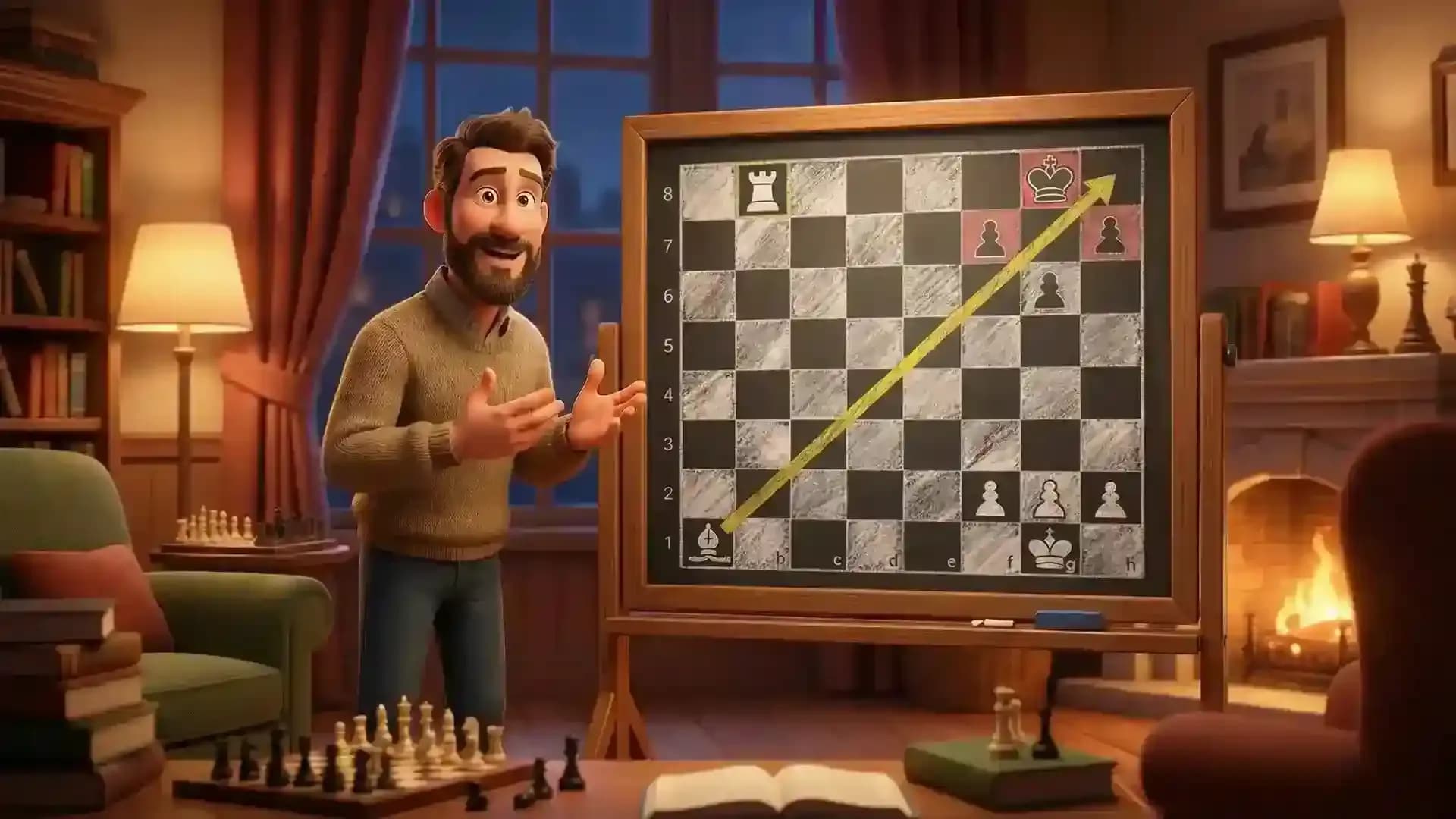
Back Rank Mate: How to Spot and Win Instantly
What is a Back Rank Mate? Learn the key patterns, common traps, and simple strategies to deliver this classic checkmate and win more games today.
Fool's Mate: Fastest Checkmate in Chess Explained
Fool's Mate is the fastest checkmate in chess. Discover how the 2-move mate works, why it happens, and simple ways to avoid it. Learn the pattern and improve your chess.
What Is Zugzwang in Chess? Meaning, Examples & How to Use It to Win
Ever been forced to make a losing move? That’s zugzwang. Learn how it works, see examples, and use it to dominate your opponent.
Can a King Checkmate a King? (Full Chess Rule Explained)
Can a King checkmate a King in chess? Discover the real rule, expert insights, and examples—click to master this key concept in chess strategy!

The 7 Fastest checkmate Moves Every Beginners must know
Discover the fastest checkmate strategies to win chess games quickly. Master quick tactics and impress your opponents—start learning now!

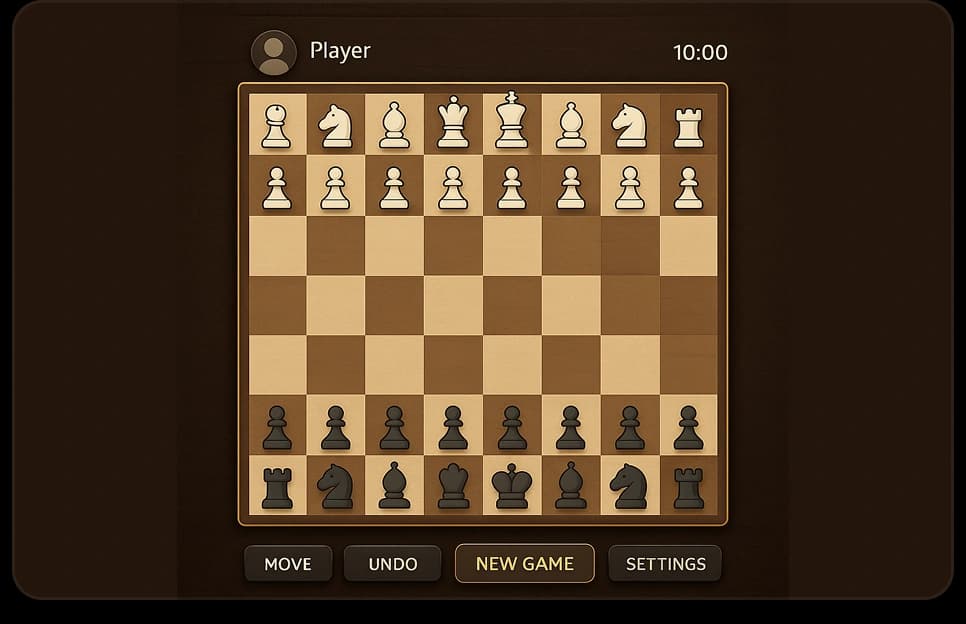
Most chess games take a while to finish. But did you know some games can end in just two moves? So that is precisely what the Fool's Mate is, and unless you have heard of it before, you are soon about to acquire what every beginner in chess must know at an early age.
It serves as a stark reminder that even the smallest oversight in the opening can lead to a sudden "Game Over." If you want to see this trap in action or practice defending your King from such a quick defeat, you can play chess online and test your skills against players from around the world.
Table of contents
What Is Fool's Mate in Chess?

The chessboard provides the quickest possible checkmate, called Fools Mate. The game takes Black only two moves to win, though this is only because the White player who starts the game makes some pretty bad moves that leave the king totally vulnerable.
The name is easy to understand. It would require a foolish individual to make the moves that enable this to occur. The white king is left fully naked on a diagonal, and the queen of Black flies in to complete the game even before it begins.
It is the fastest method and best way to win chess game, and though you will often see it being played in novice games, it is one of the patterns that every player must know instantly.
How the 2 Move Checkmate Works
The entire process occurs due to the fact that White moves pawns, which are not supposed to be moved at the beginning of the game. Such moves of the pawns provide an open diagonal, which directly reaches the white king.
Once that diagonal is open, Black sends the queen to h4, and the game is over. The king has nowhere to go.
Simple as that. Two moves, game finished.
Fool's Mate Moves Step by Step

Step 1: White Plays f3
This is already a poor move. The f3 pawn does nothing useful for piece development. Worse, it weakens the squares around the white king and cracks open the diagonal that Black needs to deliver checkmate.
Step 2: Black Plays e5
A solid, natural response. Black grabs central space and quietly opens the diagonal for the queen. Nothing looks dangerous yet, which is part of why White often does not see what is coming.
Step 3: White Plays g4
This is the move that seals White's fate. The advancement of the g-pawn makes the king even more vulnerable, and the diagonal is fully unprotected. The two pawns have now been placed off their ground in defence of the king.
Step 4: Black Plays Qh4 — Checkmate
Black plays the queen to h4, and it is all over. The queen attacks the king directly. Every escape square is either blocked or covered. White cannot block the check and cannot move the king. That is a checkmate in two moves, which is the fastest checkmate move.
Why Does Fool's Mate Actually Work?
A few things come together to make this possible. The f2 square is naturally one of the weakest points on the board at the start of the game because only the king protects it. When White pushes the f and g pawns forward, that already fragile area becomes completely exposed.
Those two pawn moves together open a long diagonal from h4 straight to the white king. Black does not need anything fancy, just the queen and an open line.
White also breaks every basic opening rule in the book. No pieces are developed, the center is ignored, and the king is left without any cover. Against even a slightly aware opponent, that combination is fatal.
Why You Almost Never See It in Real Games

Fool's Mate is famous, but serious players essentially never fall for it.
Everybody who has ever taken even the slightest chance to learn chess knows that there is no need to push those pawns without any reason. Simple rules of opening build your fragments, manage the board, do not risk your king, and make Fools Mate practically inimitable against a professional.
It manifests in beginner games when participants have yet to understand which moves are threatening and which are not. When one has been taught the right habits in chess opening, this checkmate will never be a threat.
How to Make Sure It Never Happens to You
Avoiding Fool's Mate is straightforward. Just follow these basic habits.
Leave the f-pawn alone early: There is almost no good reason to push it in the opening. It weakens your king more than it helps anything else.
Do not move the pawns in front of your king carelessly: Those pawns are your king's shield. Pushing them away without a plan invites exactly this kind of quick attack.
Focus on developing your pieces: Bring out your knights and bishops. Control the center. Think about castling to tuck your king away safely. These habits will protect you not just from Fool's Mate but from most early attacks in general.
Why It Is Still Worth Learning

Even though Fool's Mate almost never appears in competitive chess, it is genuinely useful to study.
It teaches you early on just how quickly the game can end if you ignore king safety. It shows beginners what happens when opening principles are thrown out the window. And it builds the habit of looking for diagonal threats, which come up constantly in real games. The same lesson applies to Legal's Mate, a seemingly free queen turns into a mating trap the moment you stop watching your king's safety
To become aware of the pattern also implies that you will never stumble into it yourself, and that you will see right away when an opponent tries to do the same. If you want to learn more moves, there are some of the best chess app through which you can learn them.
Other Quick Checkmates Worth Knowing
The quickest checkmate is Fools Mate, but it is not the only one beginners should learn. Another weak spot at the start of the game is the f7 square, and it is attacked by the Scholar Mate four-move checkmate. It is much more widespread than Fool's Mate, and can be frequently seen in novice games.
Another three move checkmate can also be used to surprise careless defenders at the beginning stage. By studying all three, you have a good base upon which to identify tactical threats early enough and counter-measure them before they grow out of proportion.
Conclusion
The fastest method to end a game of chess is the Fool's Mate, which occurs due to bad choices in the opening. Two poor moves of the pawns and one open diagonal, and the game is over before most people have even got their seats.
It is not an occurrence in serious play, but that is no reason not to understand it. Read the pattern, find out why it is a winning one, and you will be a more attentive and watchful player even on your first step.
FAQs
- Fool's Mate is the fastest checkmate in chess. Black is only able to win with two moves, as White commits critical mistakes during the initial moves and positions the king on a diagonal without any defense.
- It involves two moves on the part of the Black, and as such, there are four moves in all that are played before the checkmate is made.
- The only scenario in which this can occur is when one of the parties makes very irresponsible initial moves. In effect, you must play like a fool to permit it.
- It can, but almost exclusively in beginner games. Any player with basic opening knowledge will never make the moves that allow it.
- There are no good reasons to push the f or g pawns early, do not leave your king exposed, and you need to develop your pieces in the opening.
Back Rank Mate: How to Spot and Win Instantly
What is a Back Rank Mate? Learn the key patterns, common traps, and simple strategies to deliver this classic checkmate and win more games today.
Fool's Mate: Fastest Checkmate in Chess Explained
Fool's Mate is the fastest checkmate in chess. Discover how the 2-move mate works, why it happens, and simple ways to avoid it. Learn the pattern and improve your chess.
What Is Zugzwang in Chess? Meaning, Examples & How to Use It to Win
Ever been forced to make a losing move? That’s zugzwang. Learn how it works, see examples, and use it to dominate your opponent.
Can a King Checkmate a King? (Full Chess Rule Explained)
Can a King checkmate a King in chess? Discover the real rule, expert insights, and examples—click to master this key concept in chess strategy!
The 7 Fastest checkmate Moves Every Beginners must know
Discover the fastest checkmate strategies to win chess games quickly. Master quick tactics and impress your opponents—start learning now!