Back Rank Mate: How to Spot and Win Instantly

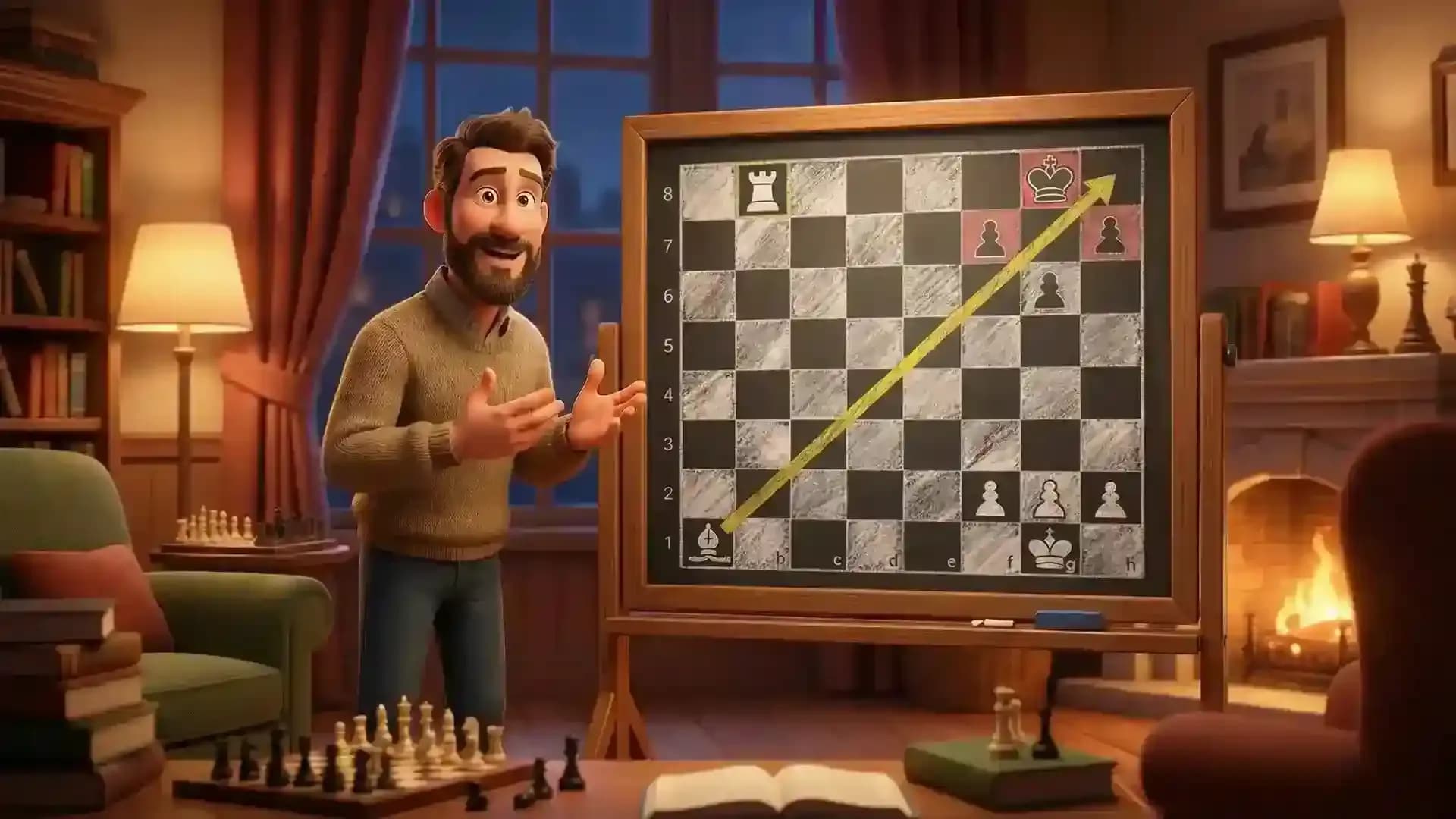
Back Rank Mate: How to Spot and Win Instantly
What is a Back Rank Mate? Learn the key patterns, common traps, and simple strategies to deliver this classic checkmate and win more games today.
Fool's Mate: Fastest Checkmate in Chess Explained
Fool's Mate is the fastest checkmate in chess. Discover how the 2-move mate works, why it happens, and simple ways to avoid it. Learn the pattern and improve your chess.
What Is Zugzwang in Chess? Meaning, Examples & How to Use It to Win
Ever been forced to make a losing move? That’s zugzwang. Learn how it works, see examples, and use it to dominate your opponent.
Can a King Checkmate a King? (Full Chess Rule Explained)
Can a King checkmate a King in chess? Discover the real rule, expert insights, and examples—click to master this key concept in chess strategy!

The 7 Fastest checkmate Moves Every Beginners must know
Discover the fastest checkmate strategies to win chess games quickly. Master quick tactics and impress your opponents—start learning now!
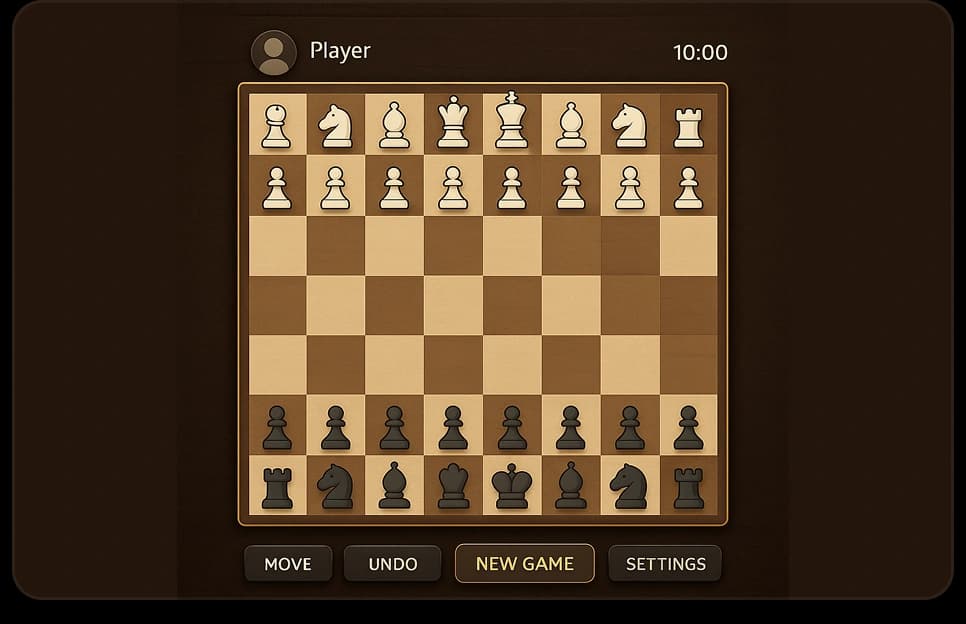
Imagine being a rook and a queen. You are putting pressure on your opponent's center as you cruise to an easy victory. However, your opponent suddenly shifts a rook to your home rank. You look for an escape square on the board, but your own pawns are imprisoning you. The game is over.
One of the most common and annoying ways to lose a chess game is to be mated on the back rank. The back rank checkmate is a must to know, whether you are experienced or not. And it is a mathematical truth on a chessboard, not some sort of trick that you can check while playing chess online or offline.
Table of contents
- What Is a Back Rank Mate in Chess?
- Why It Dominates Beginner and Intermediate Play
- What Makes a Position Vulnerable to Back Rank Checkmate?
- How Back Rank Mate Actually Works (Pattern Anatomy)
- Common Patterns to Memorize
- Typical Back Rank Mate Setups
- How to Prevent Back Rank Mate
- Back Rank Mate vs Other Tactical Checkmates
- At What Rating Do Back Rank Mates Commonly Occur?
- Why Players Miss Back Rank Threats
- Conclusion
What Is a Back Rank Mate in Chess?
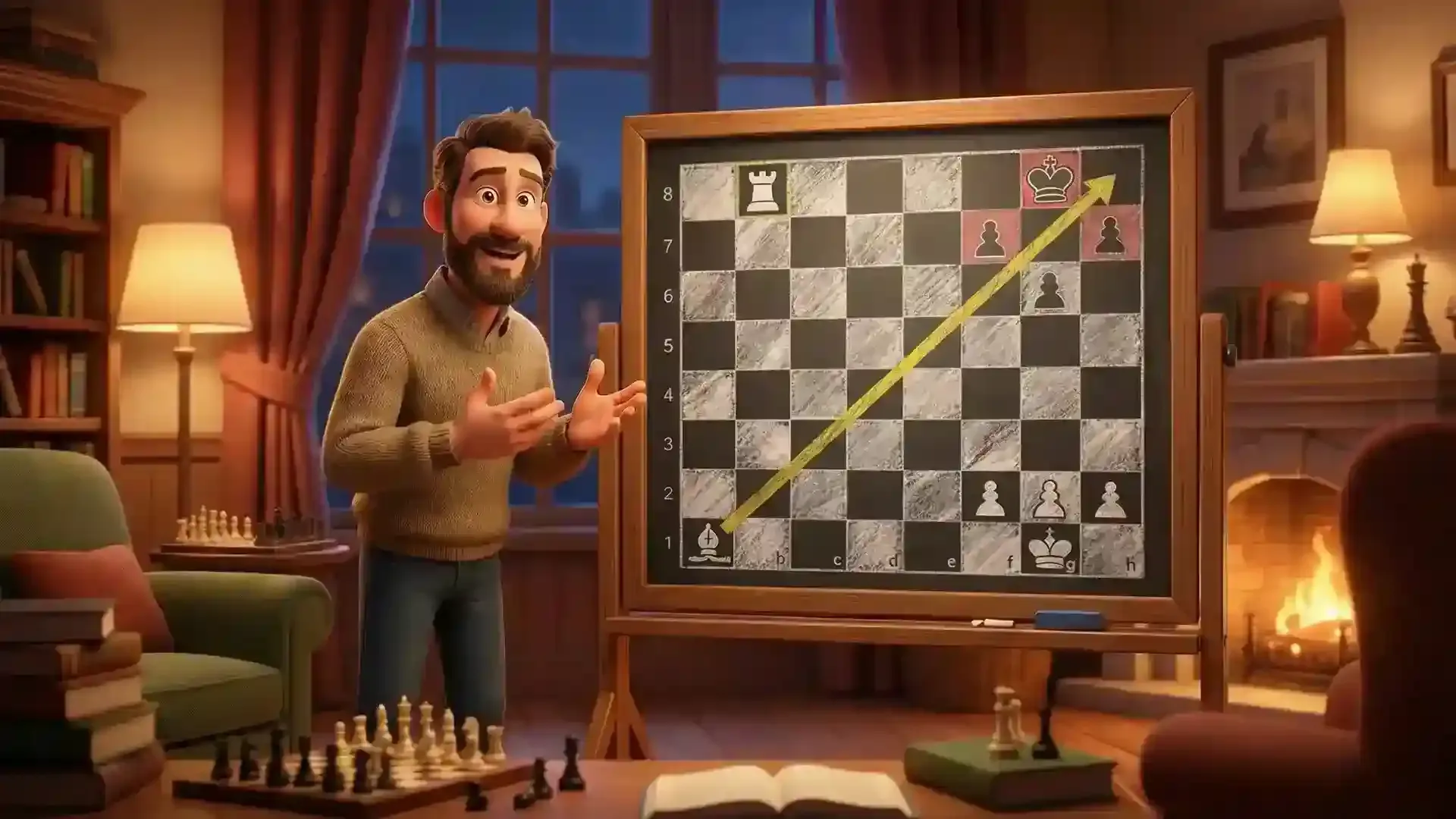
Formally, a back rank mate is a checkmate where a king is left on its own home rank (the 1st or 8th) and its own pieces cannot allow it to move upward. This is quite different from the initial chessboard setup, where the king is safely surrounded. On the back rank, mate, that same army becomes a wall preventing escape.
The Structural "Pawn Cage"
This mate happens when a king's own pawn shield becomes its prison. After castling, the king sits behind three pawns that offer protection but leave no room to escape. When an enemy rook or queen reaches the back rank, the king is trapped. While some focus on a chess players IQ, winning usually comes down to recognizing these shapes rather than raw calculation.
Why It Dominates Beginner and Intermediate Play
Beginners focus only on their own attack and forget to protect their back rank. At the intermediate level, the mate becomes more planned, and players may even sacrifice pieces to open the path to mate.
To improve in chess, do not just look forward at your attack. Also, look back and check your king's safety.
The Delivery Method
A rook or queen usually gives back rank mate because they can move across the whole row in one move. They can move back, then suddenly attack from a distance.
The key point is this: the king is trapped by its own pawns, not just by the opponent’s pieces. Because this pattern happens so often, learning to spot it is very important.
What Makes a Position Vulnerable to Back Rank Checkmate?
To avoid being a victim, you should be aware of the warning signs. Consistent chess study will help you identify these five major factors before they become fatal:
- Locked Pawn Shield: The f, g, and h pawns haven't moved, creating a potential trap.
- Inactive King: A king with no "luft" (air) is a sitting duck.
- Open File Control: An open file acts as a direct highway to your back rank.
- Overloaded Defender: A single piece tasked with guarding the entire row can be displaced or traded.
- Poor Coordination: Pieces stuck on the attack cannot return in time to block a check.
How Back Rank Mate Actually Works (Pattern Anatomy)
A successful back rank mate is rarely a one-move fluke. It typically has a three-step logical sequence that transforms the board. It is much more sophisticated than a fool's checkmate, which relies on a massive blunder in the first two moves. Instead, it is the result of a coordinated squeeze.
Step 1: Restrict King Mobility
The king must be confined. This is normally done by the player's pawns. In the event that they already made a move with a pawn (such as h6), then you may require a minor piece (such as a bishop) to occupy that particular escape square.
Step 2: Remove or Distract the Defender
In case the back rank has a rook, it should be dealt with. This is where the beauty of backrank chess shines. You may give up a queen to so much as to drag that defending rook off his post.
Step 3: Deliver the Final Blow
After the rank becomes obvious and the king is caught, the rook or queen will come in to kill him.
Common Patterns to Memorize
The Rook Pattern: A single rook is also sliding to the 8th rank against a king who is surrounded by three pawns. Such is the pure form of the mate.
The Queen Pattern: This is the same as the rook's except that the queen is usually used to cover a diagonal escape route.
Double Rook Battery: Two rooks stacked on a file. The first rook gives up itself, even in the presence of a defender by the opponent, to make a mate by the second rook.
Typical Back Rank Mate Setups
Advanced players create setups that force the issue. Learning how to win at chess consistently means making sure your own king is safe before you launch a final assault.
The Trade Sacrifice: You trade major pieces on the back row. When the opponent takes back, their piece moves to a spot that no longer guards the entry point, letting your next piece swoop in.
Rook on the 7th Rank: A rook on the 7th row is a monster. It gobbles up pawns and acts as a wall, blocking the king from stepping forward even if you move a pawn for air.
Queen Infiltration: The queen cuts through the defense to reach the back rank, usually with help from a hidden bishop or knight to distract the enemy.
How to Prevent Back Rank Mate
Back rank mate happens when your king is trapped behind its own pawns and gets checkmated by a rook or queen. Here is how to stop it.
Create "Luft" (The h3/h6 Concept)
Luft means giving your king air. Move the pawn in front of your king one square, usually h3 or h6. This creates an escape square so your king is not trapped.
Do not do it too early. Wait until the center is opened and rooks and queens are still on the board.
Activate the King Early
In the chess endgame, move your king toward the center. A king in the center cannot be back-rank checkmated.
Avoid Passive Rook Defense
Do not keep your rook on the first rank only to block mate. Instead, create an escape square for your king so your rook can play actively.
Back Rank Mate vs Other Tactical Checkmates
| Mate Type | Defining Characteristic |
|---|---|
| Back Rank Mate | King trapped by its own pawns on the home rank. |
| Smothered Mate | King trapped on all sides by its own pieces (delivered by a knight). |
| Anastasia's Mate | A knight and a rook work together to trap the king on the edge of the board. |
| Corridor Mate | A broader term for any mate where the king is trapped in a narrow lane (could be a file or a rank). |
At What Rating Do Back Rank Mates Commonly Occur?
Beginner (400–800): Mates happen because players literally forget the back rank exists. It is usually a "one-move blunder."
Intermediate (1000–1400): This is the "danger zone." Players know about the mate, so they set traps. This is where you see the back-rank checkmate delivered via deflection or overloading.
Advanced/Master (1800+): Masters rarely blunder a direct mate. However, the threat of a back rank mate is used as a strategic weapon to force the opponent into passive positions.
As you improve your game, concepts like what is elo in chess become an important part of tracking your progress and overall skill level.
Why Players Miss Back Rank Threats
The main problem is tunnel vision. When you are winning, you focus only on attack and forget to check your opponent’s threat.
Before you make an attacking move, pause and do a quick back rank check. Ask yourself, "Is my back rank safe if I move this piece?"
Conclusion
The back rank mate serves as a caution to the fact that your own pieces may be the worst of foes in chess. With awareness of the structure of the pawn cage, the identification of the overloaded defenders, and the understanding of how to form the luft, you can convert this weakness into a weapon of power.
FAQs
- It is a checkmate delivered by a queen or rook on the opponent's home rank, where the king is trapped by its own pawns.
- This normally occurs due to the fact that the King has been surrounded by its wall of pawns. The King does not have any breathing space to move on and avoid attack by a Rook or a Queen since the pawns are in the way.
- In chess, the horizontal rows are called ranks. The "back rank" is the very last row where your King usually hangs out (the 1st rank for White or the 8th rank for Black). The mate is named after the place where the King gets stuck.
- To give your king a square to retreat to, move a pawn (h3 or g3); or to hold onto a piece (rook or knight) to protect the back rank.
- No. A knight is allowed to engage in a smothered mate; however, a back rank mate must have a long-range piece, such as a rook or queen, to position it over the entire rank.
- Definitely, it is one of the first big traps beginners fall into. Even experienced players sometimes forget to move a pawn to create an "escape hatch" for their King before it is too late.
Back Rank Mate: How to Spot and Win Instantly
What is a Back Rank Mate? Learn the key patterns, common traps, and simple strategies to deliver this classic checkmate and win more games today.
Fool's Mate: Fastest Checkmate in Chess Explained
Fool's Mate is the fastest checkmate in chess. Discover how the 2-move mate works, why it happens, and simple ways to avoid it. Learn the pattern and improve your chess.
What Is Zugzwang in Chess? Meaning, Examples & How to Use It to Win
Ever been forced to make a losing move? That’s zugzwang. Learn how it works, see examples, and use it to dominate your opponent.
Can a King Checkmate a King? (Full Chess Rule Explained)
Can a King checkmate a King in chess? Discover the real rule, expert insights, and examples—click to master this key concept in chess strategy!
The 7 Fastest checkmate Moves Every Beginners must know
Discover the fastest checkmate strategies to win chess games quickly. Master quick tactics and impress your opponents—start learning now!