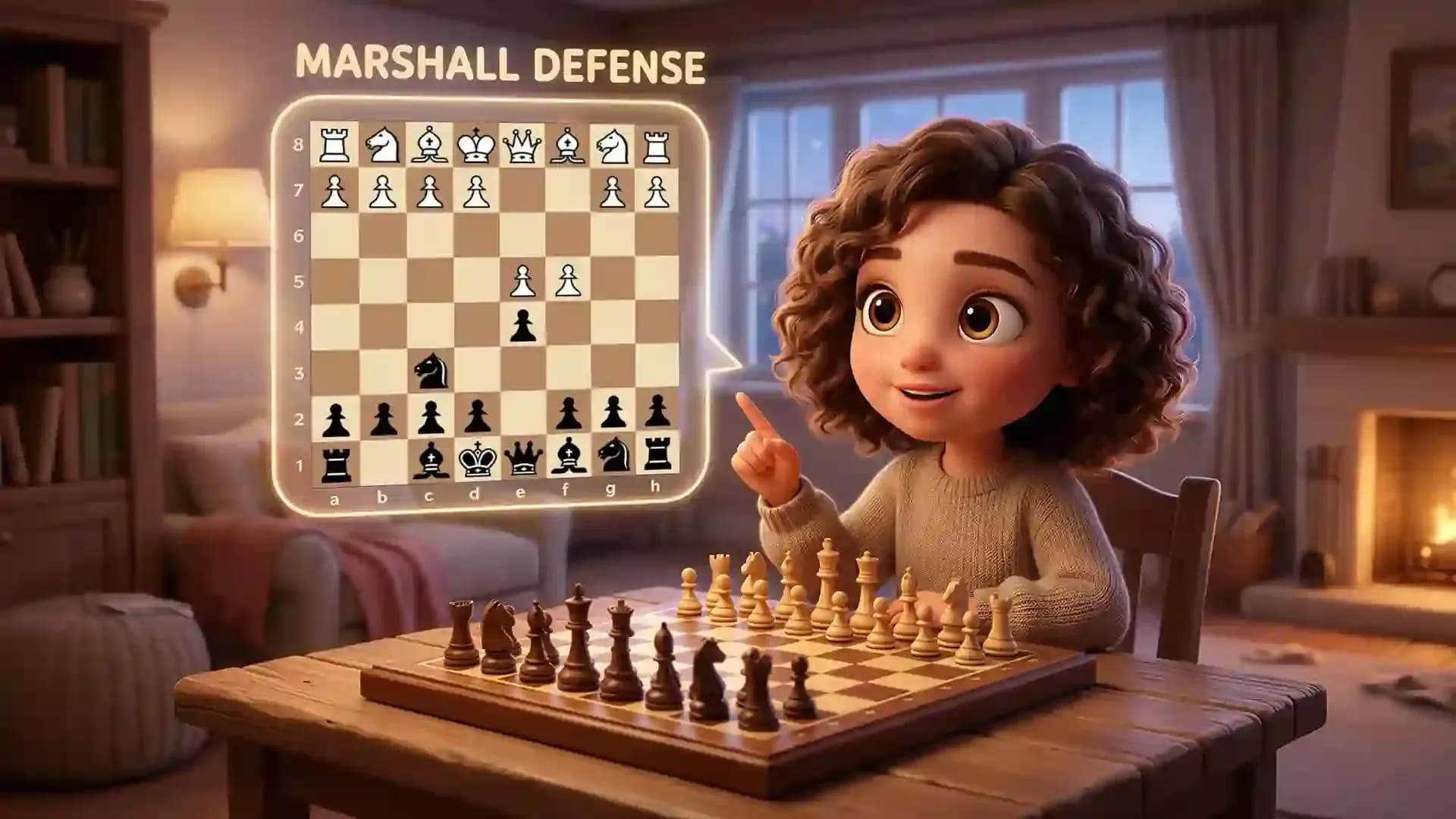
Legal's Mate: The Queen Sacrifice That Wins in 8 Moves


Albin Counter Gambit: Sharp Chess Opening Guide
Explore the Albin Counter Gambit in depth with opening theory, positional ideas, critical variations, and practical advice for both White and Black. Learn the plans today.

Dutch Defense: Aggressive Ideas and Winning Plans
Master the Dutch Defense chess opening and learn how to win with 1…f5. Explore attacking plans, structures, and practical strategies now.
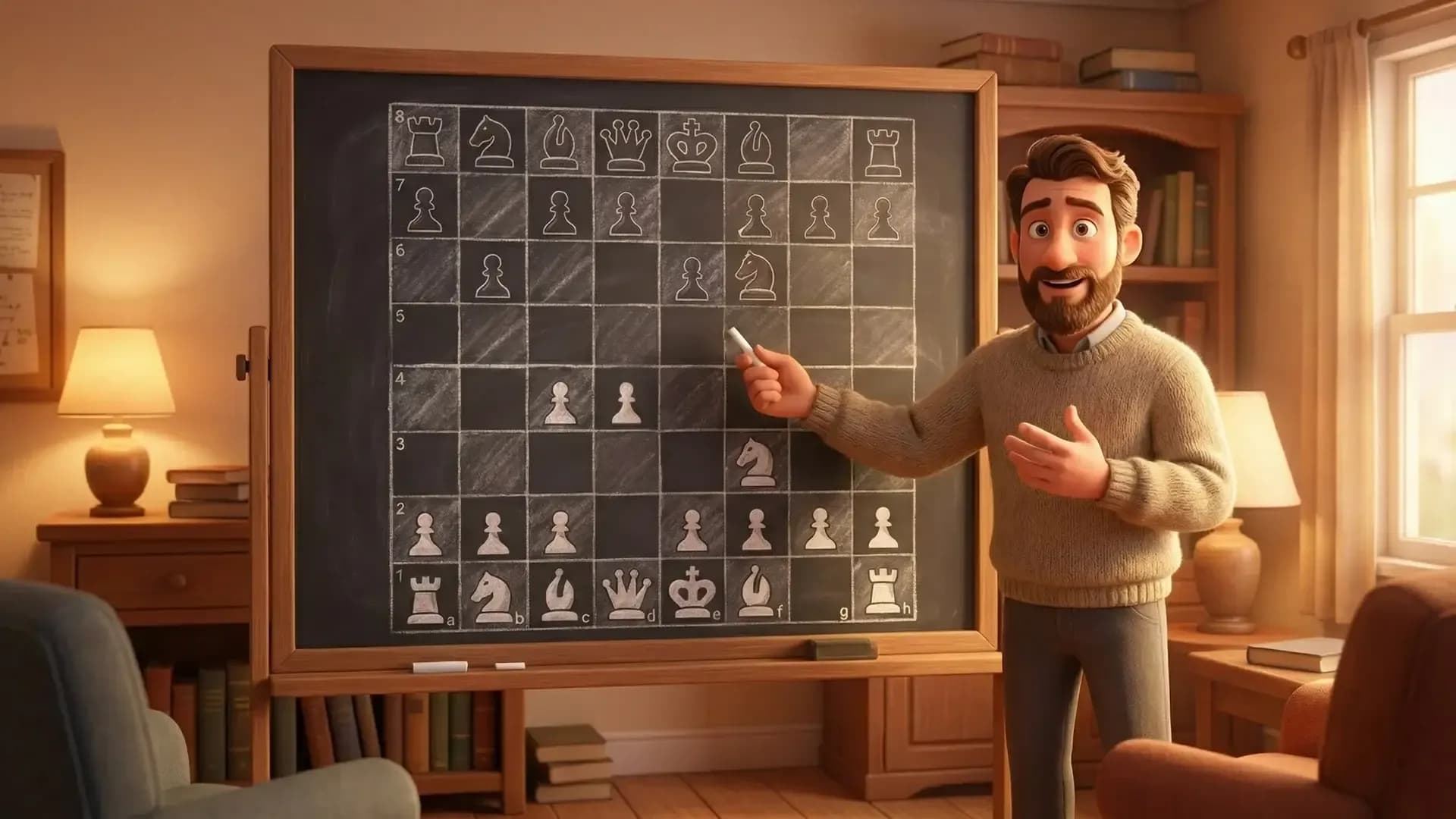
Queen’s Indian Defense: Theory, Ideas & Main Lines
Queen’s Indian Defense explained with simple ideas, common variations, and practical tips. Discover how to play this powerful chess opening for Black.

Baltic Defense: Aggressive Chess Opening Explained
Discover the Baltic Defense in chess with clear explanations, key plans, and tactical traps. Improve your opening play and surprise rivals today.

Chigorin Defense: Key Ideas, Theory & Traps
Learn the Chigorin Defense with key ideas, main lines, traps, and strategy tips. Discover how Black creates active play against 1.d4.

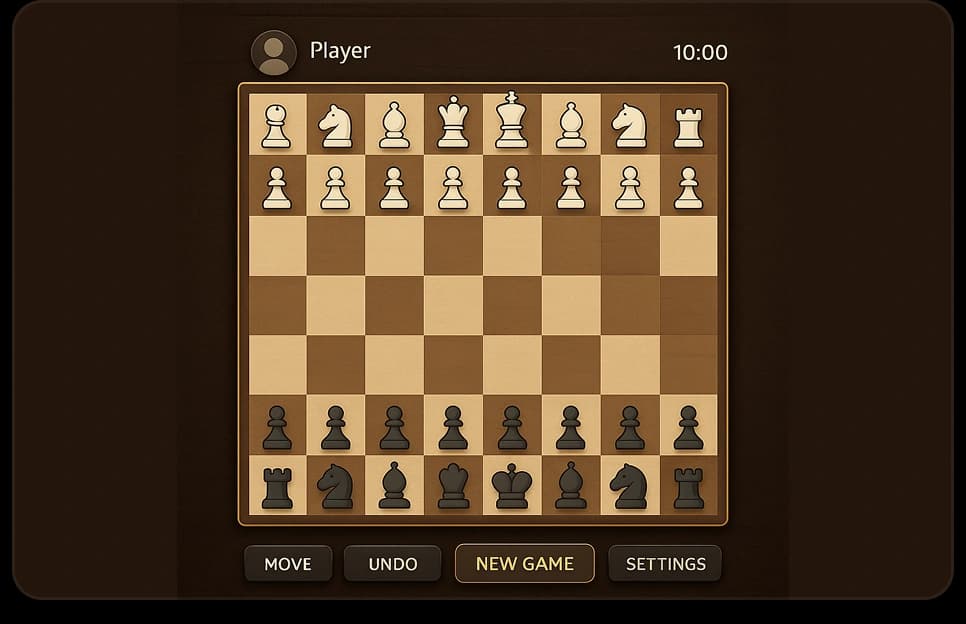
Think about the shocked face of your adversary once you have made your queen totally undefended. He picks up the best chess pawn and feels that he has won the game even before it starts. But within two moves, he finds himself being checkmated. This is no fantasy but a real chess tactic called the Legal’s mate.
If you are a beginner chess player and want to avoid falling into legal traps while playing online chess, then becoming familiar with the strategy behind this tactic is essential.
Table of contents
What Is Legal's Mate?
Legal's Mate is an opening trap that involves a bold queen sacrifice to force a checkmate using only three minor pieces: two knights and a bishop. It is a masterclass in piece coordination and a reminder that a piece's value is defined by its position on the board, not just its point value. Knowing these patterns is a great way to improve chess skills and recognize tactical opportunities early in the game.
The Opening Trick That Sacrifices a Queen for Checkmate
This trap, which occurs in the Philidor Defense, uses psychological tactics. The technique involves White allowing their knight to be fixed to their queen to create the illusion of paralysis. But when White moves the knight in spite of it being fixed, the enemy captures the queen, and the latter gets mated.
While it is often called the Legal’s Mate, it is also known as a classic chess trap or the Blackburne Trap. At its heart, the trap exploits Black's greed and their misunderstanding of "absolute" versus "relative" pins.
The History Behind Legal's Mate
This trap isn't a modern invention; it's embarrassed players for over 250 years.
Who Was Sire de Legal?
The trap is named after the French master Kermur Sire de Légal (1702–1792). Legal was the mentor of the legendary Philidor and was considered the world's strongest player during the mid-18th century. He famously unleashed this combination at the Café de la Régence in Paris. He published his analysis in 1773, cementing the pattern in chess history forever.
Why Is It Also Called Blackburne's Trap?
In the 19th century, the British master Joseph Henry Blackburne, known as "The Black Death," frequently used this pattern in simultaneous exhibitions. As he was the one who laid the trap repeatedly, this opening is called “The Blackburne Trap” in many old books. Be that as it may, the geometry of the move doesn’t change.
Legal's Mate Move Order Step by Step
To execute Legal’s Mate successfully, you must follow a specific sequence of moves that encourages Black to feel overconfident.
Setting Up the Trap: The First Five Moves
- 1. e4 e5: A standard King's Pawn opening.
- 2. Nf3 d6: Black opts for the Philidor Defense.
- 3. Bc4: White develops the bishop to an active square, eyeing the weak f7-pawn.
- 4. Nc3 Bg4: Black develops the bishop and pins White’s knight to the queen. This is the "hook."
- 5. h3: A critical "probing" move. White asks the bishop, "What are you doing?"
- Note: Skipping h3 is a common mistake. Without h3, if Black refuses the queen and takes the knight on e5, White cannot recapture the bishop on g4 with the queen.
- If Black plays 5... Bh5, the trap is set.
Executing the Trap The Queen Sacrifice
- 6. Nxe5!!: White ignores the pin and captures the e5 pawn.
- 6... Bxd1?: If Black takes the queen, the game ends immediately.
- 7. Bxf7+: The bishop checks the king. The only legal move for Black is 7... Ke7.
- 8. Nd5#: Checkmate.
What If Black Refuses the Queen?
If Black knows what is waiting for him and decides to reply 6… dxe5, White would counter this with 7. Qxg4. This allows White to be one pawn ahead and leave Black without his best-placed piece. If Black moves 7… Nxc4, White can reply with 8. Qb5+ to fork King and Knight, regain a piece, and keep the material advantage. This is a primary reason why mastering this sequence is considered one of the best ways to win chess quickly against an unprepared opponent.
When Legal's Mate Fails The "Knight on c6" Problem
Do not play Nxe5 if Black has a knight on c6. If Black has a knight on c6, they will not take your queen. Instead, they will play 6... Nxe5. Because the c6-knight protects the g4-bishop, White cannot recapture the bishop. In this scenario, White simply loses a knight for a pawn. Always verify the c6 square is empty before leaping!
How to Defend Against Legal's Mate
If you are playing Black, here is how to sidestep the danger:
- Avoid the early pin: Develop the bishop to e7 or play Nc6 first.
- Trade it off: If White plays h3, consider 5... Bxf3.
- Take the knight: If White plays 6. Nxe5, take the knight, not the queen!
- The c6 Safety: Only pin the knight if you have a knight on c6 to recapture.
Learning these defensive maneuvers is an essential part of how to get better at chess and avoid common tactical pitfalls.
Why Every Chess Player Should Know Legal’s Mate
It teaches you that physical activity often outweighs material value. Three minor pieces working in harmony are more powerful than a queen sitting in a corner.
Usage in Modern Play
This move is not something you see every day in chess, but it can be really bad news for your opponent in blitz and rapid chess. If you look at the information from Lichess from the year 2026, you will see that around 30,000 chess games have ended with a checkmate. The thing about this move is that it has even caught some good players off guard, like David Paravyan.
Legal's Mate is a classic reminder that in chess, the most dangerous move is often the one that looks like a mistake. By mastering the move order and the "Knight on c6" rule, you gain a powerful chess tactic for your opening repertoire.
FAQs
- An 8-move checkmate sequence where White sacrifices a queen to deliver mate using two knights and a bishop.
- It should be written as 'Legal's Mate,' with both capital letters because it got its name after the great French player of the eighteenth century, Kermur Sire de Légal.
- Scholar's Mate (4 moves) targets f7 with the queen and bishop directly. Legal’s Mate (8 moves) involves a knight sacrifice to draw the king into a mating net.
- While most common under 1200 ELO, the tactical patterns of the Legal Trap are essential for all levels to recognize pins that aren't actually pins.
Albin Counter Gambit: Sharp Chess Opening Guide
Explore the Albin Counter Gambit in depth with opening theory, positional ideas, critical variations, and practical advice for both White and Black. Learn the plans today.
Dutch Defense: Aggressive Ideas and Winning Plans
Master the Dutch Defense chess opening and learn how to win with 1…f5. Explore attacking plans, structures, and practical strategies now.
Queen’s Indian Defense: Theory, Ideas & Main Lines
Queen’s Indian Defense explained with simple ideas, common variations, and practical tips. Discover how to play this powerful chess opening for Black.
Baltic Defense: Aggressive Chess Opening Explained
Discover the Baltic Defense in chess with clear explanations, key plans, and tactical traps. Improve your opening play and surprise rivals today.
Chigorin Defense: Key Ideas, Theory & Traps
Learn the Chigorin Defense with key ideas, main lines, traps, and strategy tips. Discover how Black creates active play against 1.d4.