The 7 Fastest checkmate Moves Every Beginners must know

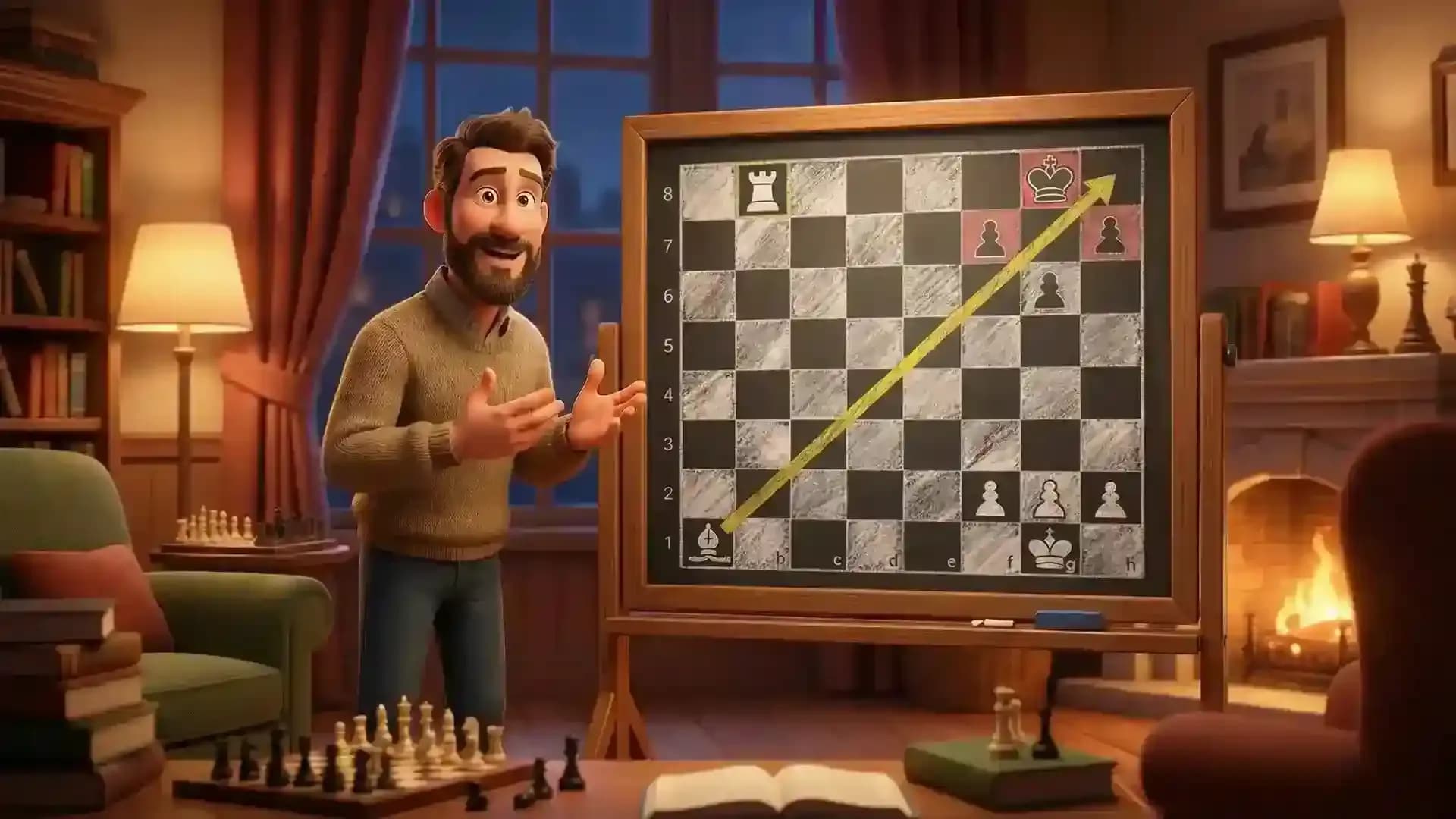
Back Rank Mate: How to Spot and Win Instantly
What is a Back Rank Mate? Learn the key patterns, common traps, and simple strategies to deliver this classic checkmate and win more games today.
Fool's Mate: Fastest Checkmate in Chess Explained
Fool's Mate is the fastest checkmate in chess. Discover how the 2-move mate works, why it happens, and simple ways to avoid it. Learn the pattern and improve your chess.
What Is Zugzwang in Chess? Meaning, Examples & How to Use It to Win
Ever been forced to make a losing move? That’s zugzwang. Learn how it works, see examples, and use it to dominate your opponent.
Can a King Checkmate a King? (Full Chess Rule Explained)
Can a King checkmate a King in chess? Discover the real rule, expert insights, and examples—click to master this key concept in chess strategy!

The 7 Fastest checkmate Moves Every Beginners must know
Discover the fastest checkmate strategies to win chess games quickly. Master quick tactics and impress your opponents—start learning now!

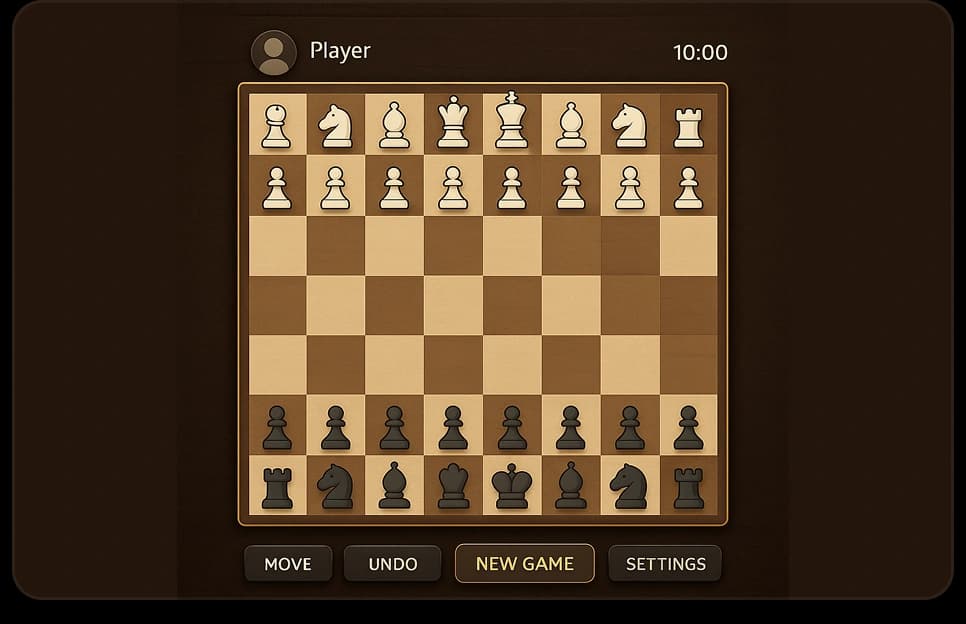
You are not alone if you have lost a chess game within five moves. Beginners, particularly those who play chess online for free, often fall into pitfalls at the very beginning that put the game closer to its end than its beginning.
These instantaneous finishes are known as checkmate, and some of them may take two or three moves. It is not merely about winning quickly, but about learning how to identify dangers and approach chess more effectively as an amateur.
Table of contents
7 Fastest Checkmate Moves For Beginners
Everyone wants to checkmate the opposition as soon as they can, and if you are a beginner, then you should learn these 7 fastest checkmate moves for beginners.
1. Fool Mate - The Fastest Checkmate on the Chess Board

All chess players will get to learn about the Fool's Mate, the quickest checkmate in the history of chess. It is an initial amateur error, and it occurs in two moves.
The sequence goes: 1. f3 e5 2. g4 Qh4#. That's Checkmate in two. The f- and g-pawns have been shifted, and the king of White is in the open to be knocked out by the black queen.
That is why we have a Fool's Mate; and it exists exactly when the White plays carelessly with his/her pawns and leaves pieces undeveloped. This would most likely have happened if you played free chess online in a casual blitz game, where you are under time pressure to make your first moves.
2. Scholar's Mate - The Beginners Favorite

Then there is the Scholar mate, which is the most used quick checkmate by new players. The move order is simple: 1. e4 e5 2. Qh5 Nc6 3. Bc4 Nf6 4. Qxf7#.
It is a beautiful pattern and it is aimed at the weakest square on the board, f7 (f2 on the Black side). Your bishop and queen agree on how to give the early knockout.
It may seem cunning, but it can be easily justified. It does not take long before good players understand that the queen is not very safe to bring out too early. Numerous opponents play chess online, and it is clever to be alert when playing.
3. Legal’s Mate - The Classic Queen Sacrifice

The Legal’s Mate is a gorgeous old trap, which demonstrates how sacrifices may result in beautiful checkmates. It begins with an ordinary position, featuring knights, bishops, and pawns in their standard positions. Then all at once, one of the queens' sacrifices is on the board.
e4 e5 2. Nf3 Nc6 3. Bc4 d6 4. Nc3 Bg4 5. h3 Bxf3 6. Qxf3 Nd4 7. Qxf7#
White sacrifices the queen but gets a checkmate with minor pieces. This is an ideal tactical awareness.
It is not merely a ruse; it teaches you to see patterns in chess eventually, instead of making individual moves. When playing chess online in unrated games, you can use this to become more creative.
4. Smothered Mate - The Unspoken Trap

The Smothered Mate is one of the best finishes to play. It occurs when your knight gives a checkmate and the opponent's king is "smothered" by its pieces. Suppose the king is hiding behind pieces, and the knight flies to him; he cannot escape.
Smothered mates are featured in tricky chess openings or as tactics in a battle; therefore, they are an essential piece of knowledge for enhancing players.
5. The Mate of Blackburne - A Bishop and Queen Combo

This mate is also known as the English master Joseph Blackburne, and occurs when your queen and bishop coordinate to entrap the enemy king. The common conception is to place the bishop on the diagonal (c4 or b3) and the queen on h5 or f3, which puts a strain on f7/h7.
Checkmate occurs easily when the opponent does not castle. Mate by Blackburne is a perfect example of the simplest strategy in playing chess to attack, not singly, but to coordinate.
6. Two-Bishop Checkmate - A Control Lesson

The Two-Bishop Checkmate is an endgame position, yet it is worth a place on this list because it is not only teachable but also easy to comprehend. And in with two bishops and your king, you drive the enemy king off to a corner.
When they are trapped, one of the bishops will give the final blow. It offers lessons on control, patience, and working with pieces, which are essential for novices to learn about chess tactics.
7. Anastasia Mate - The Elegant Side Checkmate

The Mate of Anastasia resembles a chess puzzle. It is chased by a rook and a knight, operating side by side on the board. In a situation where the king is trapped with the edge, the rook serves the check, and the knight occupies all the open squares.
It is quick, attractive, and very frequent in attacking games. This pattern has been employed in tactical finishes by many of the world's top players, including Magnus Carlsen. Learning the Mate of Anastasia will enhance your understanding of side attacks and corner defenses, which are fundamental chess strategies for beginners.
How to Avoid Falling for Quick Checkmates
Most fast checkmates happen because of one thing: poor development. Beginners often move pawns too much, ignore the center, or bring out the queen too early.
To stay safe, remember these rules:
- Develop your knights and bishops first.
- Don’t move too many pawns in front of your king.
- Castle early to protect your king.
- Learn easy chess openings for beginners, like the Italian Game or Ruy Lopez.
When you play regularly on sites like Lichess or Chess.com, you'll quickly spot patterns and stop falling for these early traps.
When to Try These Checkmates
When you are still in the beginning of playing chess or trying out, it is entertaining to give these checkmates a go when you play free online chess. They excel in blitz games, where your opponent can miss a threat.
In longer games, experienced players will provide an easy defense. These patterns can be used as learning materials, helping you understand your weaknesses and make more informed calculations.
Final Thoughts
The 7 fastest checkmate moves aren't just flashy ways to win; they're lessons in awareness, structure, and timing.
When you understand these patterns, you not only learn how to win quickly but also how to avoid embarrassing losses. They teach you balance, between aggression and defense, between creativity and caution.
FAQs
- The quickest checkmate is referred to as Fool's Mate. It occurs in only two moves, where one player opens the defense of the king too early. It is not common, but simple to master, and it can be used to guide beginners on safety in the early game.
- One is not fixed on the age to play chess. Many children start learning when they are between 5 and 6 years old; however, adults can also pick it up at any age. Chess is best learned at an age when you are interested in it and willing to practice regularly.
- Learn to play some simple chess rules to be a beginner, such as building your pieces and guarding your king. Play online chess for free, read easy chess books, and solve puzzles.
Back Rank Mate: How to Spot and Win Instantly
What is a Back Rank Mate? Learn the key patterns, common traps, and simple strategies to deliver this classic checkmate and win more games today.
Fool's Mate: Fastest Checkmate in Chess Explained
Fool's Mate is the fastest checkmate in chess. Discover how the 2-move mate works, why it happens, and simple ways to avoid it. Learn the pattern and improve your chess.
What Is Zugzwang in Chess? Meaning, Examples & How to Use It to Win
Ever been forced to make a losing move? That’s zugzwang. Learn how it works, see examples, and use it to dominate your opponent.
Can a King Checkmate a King? (Full Chess Rule Explained)
Can a King checkmate a King in chess? Discover the real rule, expert insights, and examples—click to master this key concept in chess strategy!
The 7 Fastest checkmate Moves Every Beginners must know
Discover the fastest checkmate strategies to win chess games quickly. Master quick tactics and impress your opponents—start learning now!