Bishop and Knight Checkmate - Master Ultimate Endgame Skill

Back Rank Mate: How to Spot and Win Instantly
What is a Back Rank Mate? Learn the key patterns, common traps, and simple strategies to deliver this classic checkmate and win more games today.
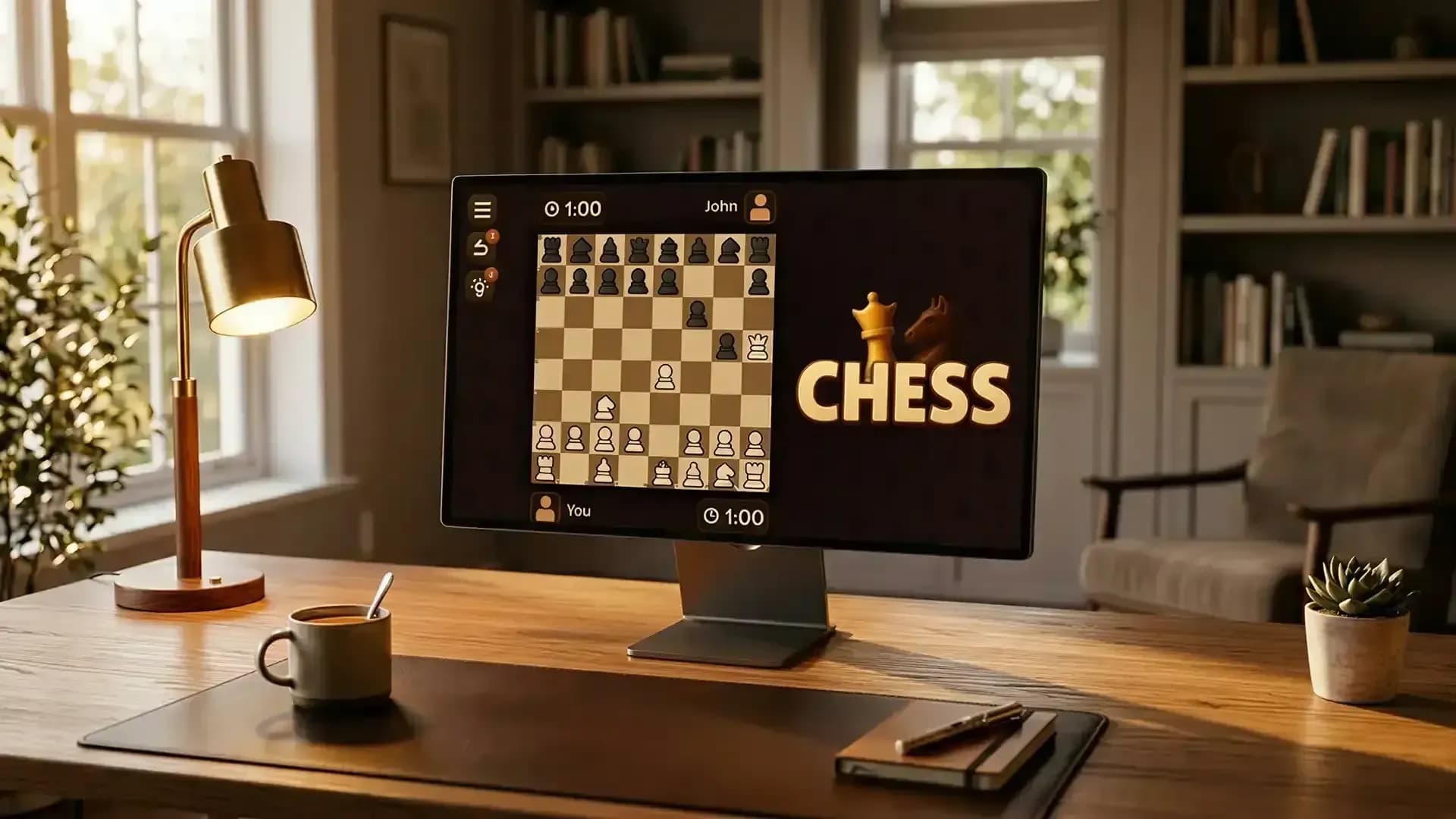
Fool's Mate: Fastest Checkmate in Chess Explained
Fool's Mate is the fastest checkmate in chess. Discover how the 2-move mate works, why it happens, and simple ways to avoid it. Learn the pattern and improve your chess.
What Is Zugzwang in Chess? Meaning, Examples & How to Use It to Win
Ever been forced to make a losing move? That’s zugzwang. Learn how it works, see examples, and use it to dominate your opponent.
Can a King Checkmate a King? (Full Chess Rule Explained)
Can a King checkmate a King in chess? Discover the real rule, expert insights, and examples—click to master this key concept in chess strategy!

The 7 Fastest checkmate Moves Every Beginners must know
Discover the fastest checkmate strategies to win chess games quickly. Master quick tactics and impress your opponents—start learning now!
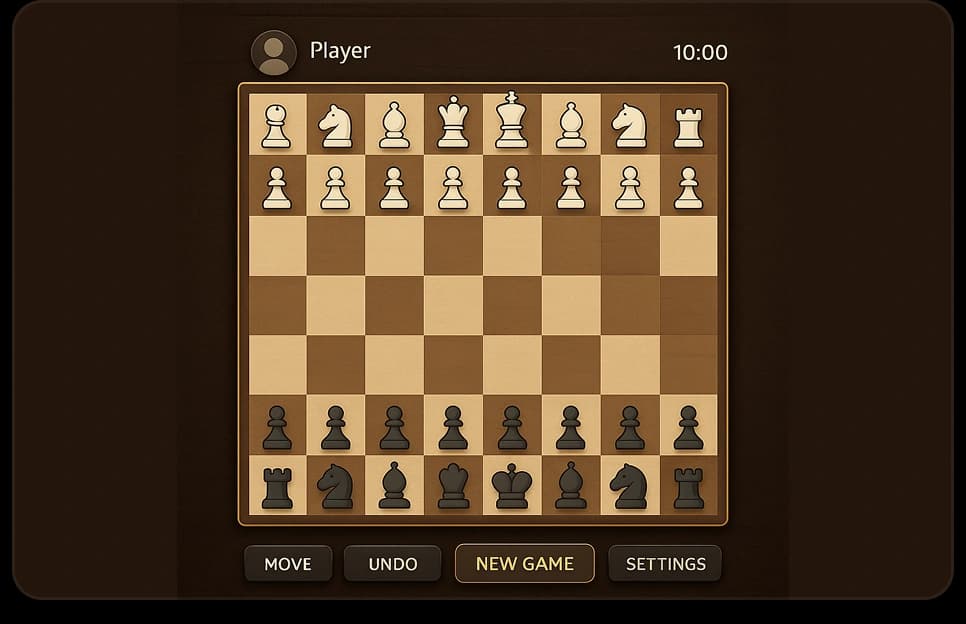
The bishop and knight checkmate is one of the most difficult and most rewarding chess endgames. It consists of an exact combined action of your king, bishop, and knight, to flatter your opponent, the one king, into a corner, and to checkmate him.
This is not a daily occurrence, but when you know it, it not only increases your end-game skill but also your understanding of how to coordinate pieces. To practice it, you can play chess online repeatedly.
Table of contents
What Is the Bishop and Knight Checkmate?

It is like an obligatory checkmate in which the one player has a king, bishop, and knight, and the other has only a king. The aim is to push the enemy king to the corner corresponding to the square colour of your bishop and strike him finally.
This endgame involves more complicated maneuvering, in contrast to the two-bishop checkmate, which is less complex as both bishops command opposite-colored squares.
What Makes Bishop and Knight Checkmate One of the Toughest Checkmates to Learn
This chess game requires patience and accuracy. Even the veteran players find it difficult to remember the right maneuvering steps- particularly when time is running out. This is the reason why effective command of it is regarded as an indication of profound endgame knowledge.
Although the 2 move checkmate or the 4 move checkmate are quick tactics that depend on the errors of the opponent, this endgame is a systematic technique.
Learning the Bishop and Knight Checkmate
There is a maximum of 33 moves needed to checkmate on average, using Bishop and Knight checkmate. This is much more complicated than learning how to checkmate using the king and queen, which usually involves fewer moves to perform and is easier to perform.
The Rarity and Importance of This Checkmate
It appears only after every few thousand games, but it is also a basic checkmate pattern. It makes it impossible to miss any wins in endgames and shows a perfect mastery of the fundamental theory of endgames. This endgame is similar to learning popular chess openings, such as the Scotch Game or Italian Opening, to enhance overall chess knowledge.
Typical Situations in Which it Occurs
This situation tends to arise in cases of trades in complex games or when an adversary intentionally trades down to show technique. It is popular with instructors due to its teaching capabilities, such as the Sicilian Defense, which trains players on the concept of counterattacking.
Step-by-Step Guide to Play Checkmate with Knight and Bishop

The three major steps to play checkmate in an endgame with a Knight and a Bishop are.
Step 1 - Push the King to the Brink.
The initial aim is to restrain the movement of the enemy king. The king must be at the forefront and slowly drive the opponent to the edge of the board. Bring in your bishop and knight and make yourself a wall:
- The bishop owns squares of one color.
- The knight makes up the other color.
- The king is on the side of occupying central territory and removing escape squares.
It is a step where the bishop and knight usually switch between dominating; you "herd" the king together as a team. Knowledge of pawn structure and the strategic positioning of pawns can be used to create the appropriate setup that leads to this endgame.
Step 2 - Get the King into the Right Corner
When the enemy king gets to the edge, you are to direct it into the proper corner--the one which corresponds to the square colour of your bishop. To illustrate, when your bishop is on light squares and you need to push the opponent's king to a light corner (h1 or a8), then you should do this.
One of the more popular tricks in this is the W maneuver, where the knight runs in a zig-zag motion, creating a W as it serves to push the opposing king off the wrong side to the right side. This is a systematic approach compared to quick wins, such as how to checkmate in 4 moves, which uses tactical shots rather than positional tricks.
Action 3 - Present the Final Checkmate
The opponent has his king confined in the right corner. Your bishop usually checks along the diagonal, your knight blocks escape squares, and your king does not allow the enemy to escape.
The following is an illustration of one of the end mating positions:
White King on c6
White Bishop on d7
White Knight on e7
Black King trapped on a8
The bishop guards b8 and a7, the knight c8 and b6, the white king b7--checkmate! This is more complicated than the two bishops checkmate as the bishops collaborate on different-colored diagonals.
Tips to Bishop and Knight Checkmate
Using Online Chess Trainers

The interactive drills for this very checkmate can be found on sites such as Chess.com and Lichess.org. These tools will enable you to train the movement until you have mastered the major patterns. Training is also available on various platforms, including Faster Checkmate, which covers five-move checkmate patterns; however, this endgame must be studied in detail.
Chess Engines: Practicing
Prepare a state, the three being bishop, knight, and king; and the other a single king. Compete to play in 33 moves. This is in contrast to the study of chess openings, such as the Modern Defense or Pirc Defense, where pattern recognition occurs during the opening phase.
Problems with Time-Based Training
Add a clock for pressure. Attempt to play a checkmate in under 3 minutes, which will recreate the endgame tension and develop muscle memory. This endgame must be practiced just like the players practice opening moves in chess until they become automatic.
Mastering the bishop and knight checkmate shows you’re serious about improving. Remember the three steps:
Push the enemy king to the board's edge.
Force it into the right-colored corner.
Use your pieces together to finish with checkmate.
While flashy wins like how to win chess in 5 moves may seem exciting, mastering this technique proves you understand deeper chess strategy. Real strength comes from control, precision, and patience, skills that define all great players.
FAQs
- Can always be pushed in 33 moves with perfect play.
- Since the bishop has the possibility of only controlling one color of squares, the checkmate can only be made in the corner of the same color.
- Yes. The 50-move rule is not too restrictive; this checkmate does not have more than 50 moves.
- Have endgame trainers, engines, or Lichess study modules: practice repeatedly forcing the king off the center to the appropriate corner.
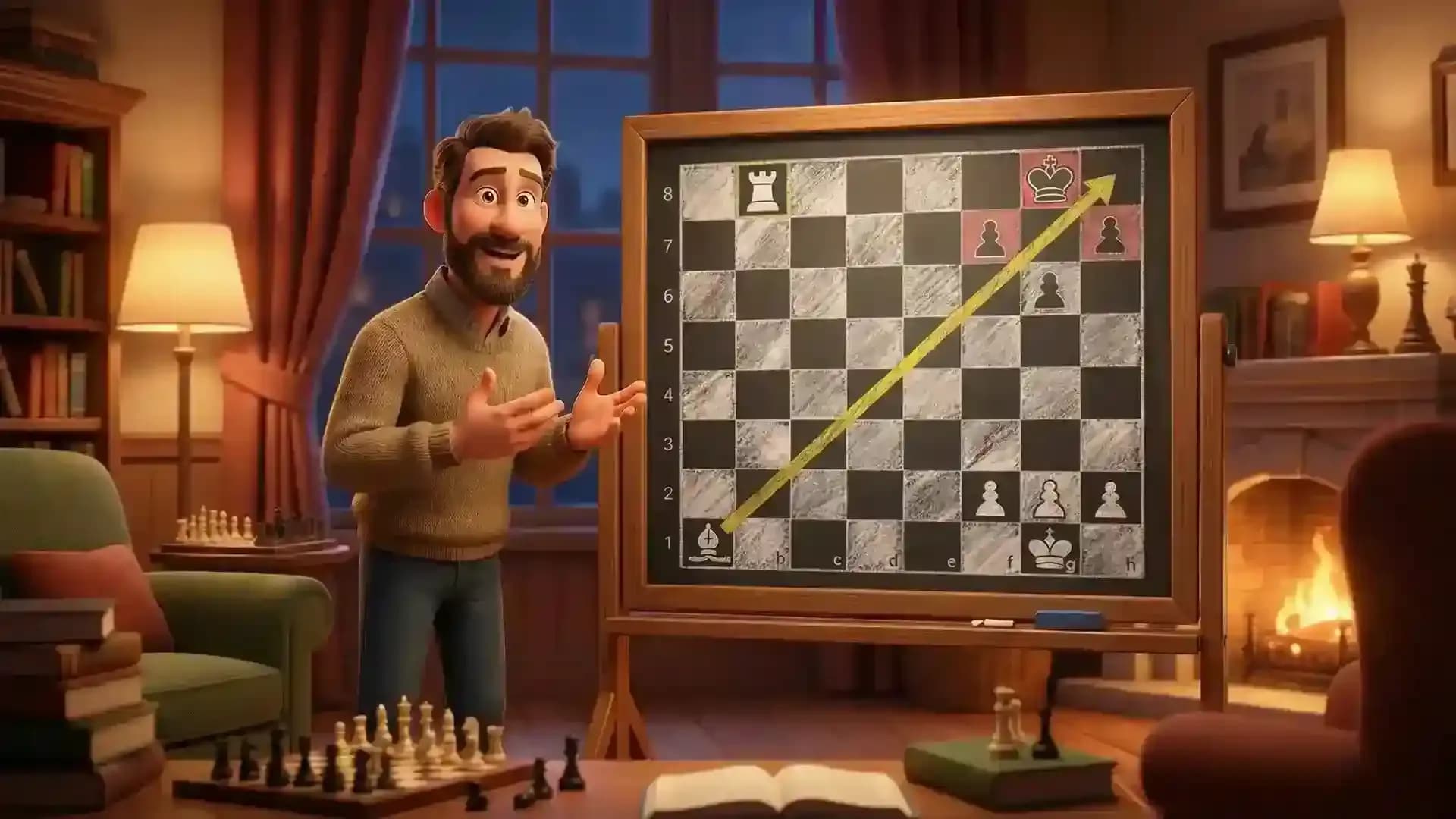
Back Rank Mate: How to Spot and Win Instantly
What is a Back Rank Mate? Learn the key patterns, common traps, and simple strategies to deliver this classic checkmate and win more games today.
Fool's Mate: Fastest Checkmate in Chess Explained
Fool's Mate is the fastest checkmate in chess. Discover how the 2-move mate works, why it happens, and simple ways to avoid it. Learn the pattern and improve your chess.
What Is Zugzwang in Chess? Meaning, Examples & How to Use It to Win
Ever been forced to make a losing move? That’s zugzwang. Learn how it works, see examples, and use it to dominate your opponent.
Can a King Checkmate a King? (Full Chess Rule Explained)
Can a King checkmate a King in chess? Discover the real rule, expert insights, and examples—click to master this key concept in chess strategy!
The 7 Fastest checkmate Moves Every Beginners must know
Discover the fastest checkmate strategies to win chess games quickly. Master quick tactics and impress your opponents—start learning now!