What Is Zugzwang in Chess? Meaning, Examples & How to Use It to Win


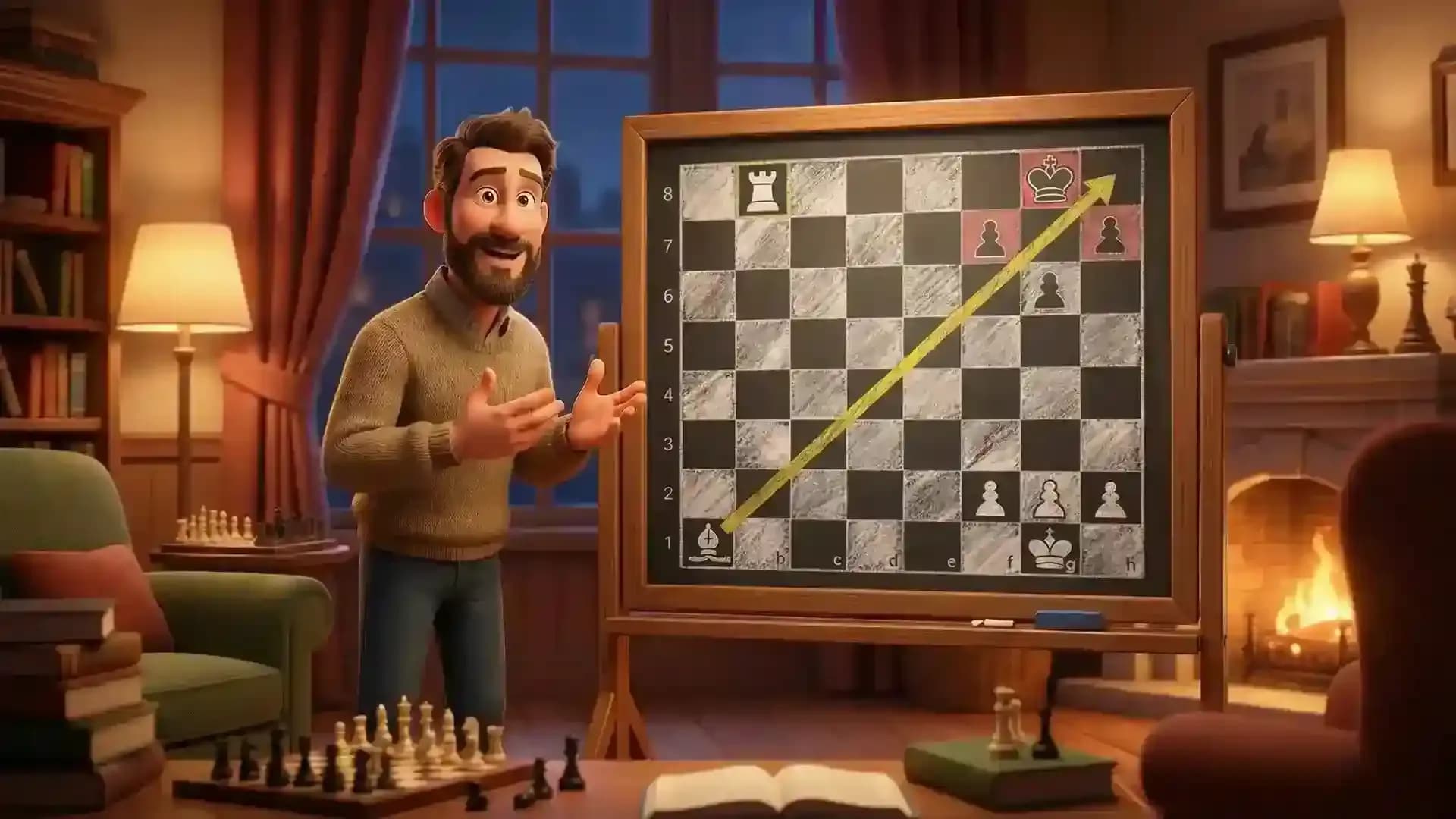
Back Rank Mate: How to Spot and Win Instantly
What is a Back Rank Mate? Learn the key patterns, common traps, and simple strategies to deliver this classic checkmate and win more games today.
Fool's Mate: Fastest Checkmate in Chess Explained
Fool's Mate is the fastest checkmate in chess. Discover how the 2-move mate works, why it happens, and simple ways to avoid it. Learn the pattern and improve your chess.
What Is Zugzwang in Chess? Meaning, Examples & How to Use It to Win
Ever been forced to make a losing move? That’s zugzwang. Learn how it works, see examples, and use it to dominate your opponent.
Can a King Checkmate a King? (Full Chess Rule Explained)
Can a King checkmate a King in chess? Discover the real rule, expert insights, and examples—click to master this key concept in chess strategy!

The 7 Fastest checkmate Moves Every Beginners must know
Discover the fastest checkmate strategies to win chess games quickly. Master quick tactics and impress your opponents—start learning now!
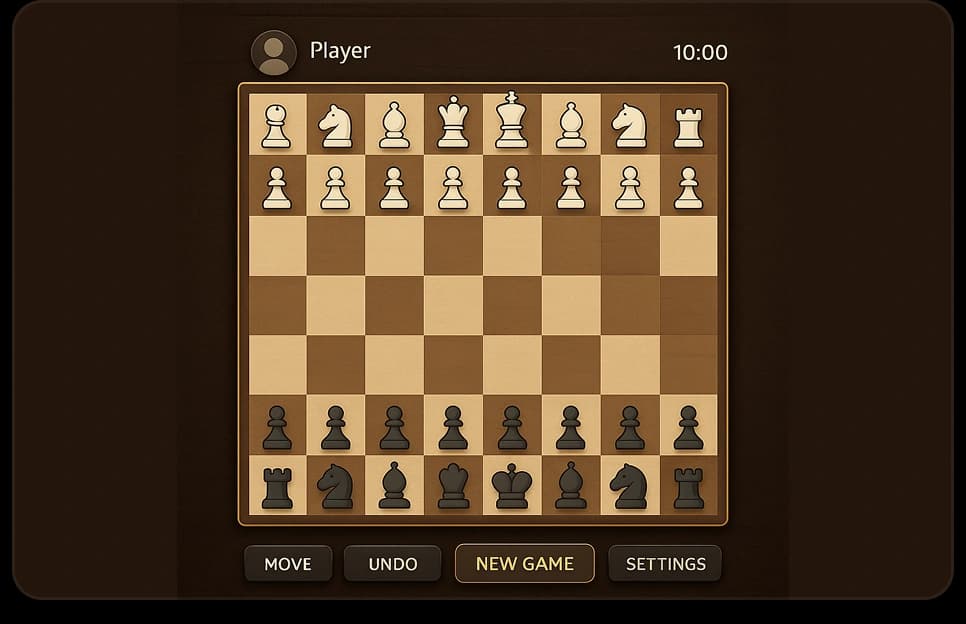
Suppose you are playing a game in which all the moves you can make are disastrous. You give a glance at the board and, first of all, you would wish to be in a position to pass your turn and leave your opponent to move. But in chess, the rules are quite evident: you have to move.
This painful position is known as Zugzwang. It is among the most compelling and poetic elements of chess strategy. What follows in this guide is an analysis of what it is, how to use it, and how to use it to strangle your adversary's position. If you are interested in practicing the technique, there is nothing stopping you from playing chess online for free.
Table of contents
What Is Zugzwang in Chess?
Zugzwang (soog-ts-vang) is a German term that literally means compulsion to move. In chess, it is an example of being put at a massive disadvantage: one is obliged to move, and every available move is legal but weakens the player. Had they been permitted to turn aside their turn, they would be well off, but as they must go, they get into a chess traps, or lose material.
How to Pronounce Zugzwang (and How to Write it)
Since the term is German, the "Z" sounds like a "TS."
- Phonetic: TSOOG-ts-vang
- In Notation: In professional chess analysis, the symbol used to denote a zugzwang position is a circle with a cross inside ($\odot$).
How Zugzwang Works: The Core Rule
The whole idea of zugzwang is due to one basic principle: There is no such thing as passing in chess.
It is a valid strategy to skip a turn in most other board games. The necessity to make a move is a two-edged sword in chess. In the majority of cases, mobility is a privilege as it enables you to uplift your status. But at the endgame, motion is a liability.
Zugzwang vs. Stalemate (The Beginner's Trap)
Beginners often mix up the two terms, although the distinction is the outcome of the game:
- Stalemate: You are not in check, you have no legal moves. The game is a draw. Understanding this drawing resource is an essential part of basic chess tactics for beginners.
- Zugzwang: You can take legal moves, all of which lead to a loss or a poor position. Game proceeds (typically to your loss).
Zugzwang Examples: See It in Action
Example 1: King and Pawn Endgame (Beginner)

It is the most common form of zugzwang. Suppose that White is on e6 with a King and a Pawn on e5. Black has a King on e7.
They are in zugzwang if it is Black's move. They need to take their King out of e7 as well, so the White King can get to f7 or d7 and promote the pawn. Suppose that Black could just remain at e7 indefinitely, then White could never win. This tactical requirement to move is a fundamental part of the chess rules, and because they are forced to move, Black is forced to lose.
Example 2: King and Rook vs. King (Intermediate)

Zugzwang is the weapon you use when you are giving a checkmate with a Rook and King against a single King. You use your Rook to "shrink the box" and your King to take away escape squares. At some point, you get to a point where the enemy King must step in front of your King (opposition) to get the final checkmate.
The Immortal Zugzwang Game (1923) is an example.

During one of the most famous games in history, Friedrich Sämisch vs. Aron Nimzowitsch, the board was such that Sämisch (White) had nearly all his pieces still on the board, but was in complete zugzwang. This masterpiece remains a classic study for any player looking for the best way to get better at chess.
All his actions would either cost him a piece or place him in a checkmate. He was seated there with a complete army and could not in the slightest stir a man, without losing the battle. He resigned later on out of sheer helplessness.
Types of Zugzwang
1. Mutual (Reciprocal) Zugzwang
This is the purest and the most deadly kind. In zugzwang, the first one to move loses. White loses when White plays White, Black loses when Black plays Black. This often happens in pawn endings where both Kings are locked against each other, frequently seen in deep theoretical battles like the Nimzo-Indian Defense.
2. What is a Trébuchet?
A trébuchet is some sort of mutual zugzwang in a pawn endgame. Each player threatens their opponent's King, and their King protects. The player who has to relocate must clear his pawn, and the other player may take it to win the game.
Where and When Does Zugzwang Occur?
- The Endgame: the most common. There are fewer squares on the board, and it is much easier to run out of safe squares.
- Rare: The Middlegame. It requires great positional pressure to place an opponent in zugzwang when the board is full. When it occurs, it is normally due to their pieces being totally cramped.
- Rarely: The Opening. The number of pieces and the space are too many to force a player into a losing move within the first ten moves in a game, such as the King's Gambit.
How to Use Zugzwang to Win (Practical Tips)
To learn zugzwang, you have to learn three other concepts that complement zugzwang:
- Opposition: Having your King two squares off the enemy King (one square between you). This drives the enemy King out of the way and you are ahead.
- Triangulation: This is a maneuver (usually with the King) where you move in a small triangle ($e2 → d2 → e1 → e2$) to effectively "waste" a tempo. This forces the turn back to your opponent, putting them in zugzwang.
- Restricting Piece Mobility: Use your pawns and minor pieces to take away "breathing room." The smaller your opponent is, the nearer he is to zugzwang.
How to Avoid Being Put in Zugzwang
How chess pieces move: Do not have your pieces boxed in or chained to a single pawn.
Calculate pawn breaks: In the endgame, make sure you don't push all your pawns too early. Reserve move of the pawn is sometimes precisely what you need, not to be the one who has to move his King.
FAQs
- No, but it is most common there. As seen in the "Immortal Zugzwang Game," it can happen in the middlegame if one player's pieces are completely paralyzed.
- Yes. This is referred to as Mutual Zugzwang. It is the player whose turn it is to move who suffers.
- It is a German word. Chess is also known by German terms (such as Zwischenzug or Zeitnot) because of the tremendous impact of German and Central European masters in the 19th and 20th centuries.
- Your King is directly attacked in check, and you have to respond. Zugzwang may make you by no means at all be in check, but you may be quite safe except that you are obliged by law to make a move and destroy your own safety.
- It is pronounced, "tsoog-ts-vang." And remember to make the 'Z' a sound like a 'TS'!
Back Rank Mate: How to Spot and Win Instantly
What is a Back Rank Mate? Learn the key patterns, common traps, and simple strategies to deliver this classic checkmate and win more games today.
Fool's Mate: Fastest Checkmate in Chess Explained
Fool's Mate is the fastest checkmate in chess. Discover how the 2-move mate works, why it happens, and simple ways to avoid it. Learn the pattern and improve your chess.
What Is Zugzwang in Chess? Meaning, Examples & How to Use It to Win
Ever been forced to make a losing move? That’s zugzwang. Learn how it works, see examples, and use it to dominate your opponent.
Can a King Checkmate a King? (Full Chess Rule Explained)
Can a King checkmate a King in chess? Discover the real rule, expert insights, and examples—click to master this key concept in chess strategy!
The 7 Fastest checkmate Moves Every Beginners must know
Discover the fastest checkmate strategies to win chess games quickly. Master quick tactics and impress your opponents—start learning now!