Philidor defense: The Ultimate Guide to this Solid Opening in Chess as a Black Player


Albin Counter Gambit: Sharp Chess Opening Guide
Explore the Albin Counter Gambit in depth with opening theory, positional ideas, critical variations, and practical advice for both White and Black. Learn the plans today.

Dutch Defense: Aggressive Ideas and Winning Plans
Master the Dutch Defense chess opening and learn how to win with 1…f5. Explore attacking plans, structures, and practical strategies now.

Queen’s Indian Defense: Theory, Ideas & Main Lines
Queen’s Indian Defense explained with simple ideas, common variations, and practical tips. Discover how to play this powerful chess opening for Black.

Baltic Defense: Aggressive Chess Opening Explained
Discover the Baltic Defense in chess with clear explanations, key plans, and tactical traps. Improve your opening play and surprise rivals today.

Chigorin Defense: Key Ideas, Theory & Traps
Learn the Chigorin Defense with key ideas, main lines, traps, and strategy tips. Discover how Black creates active play against 1.d4.

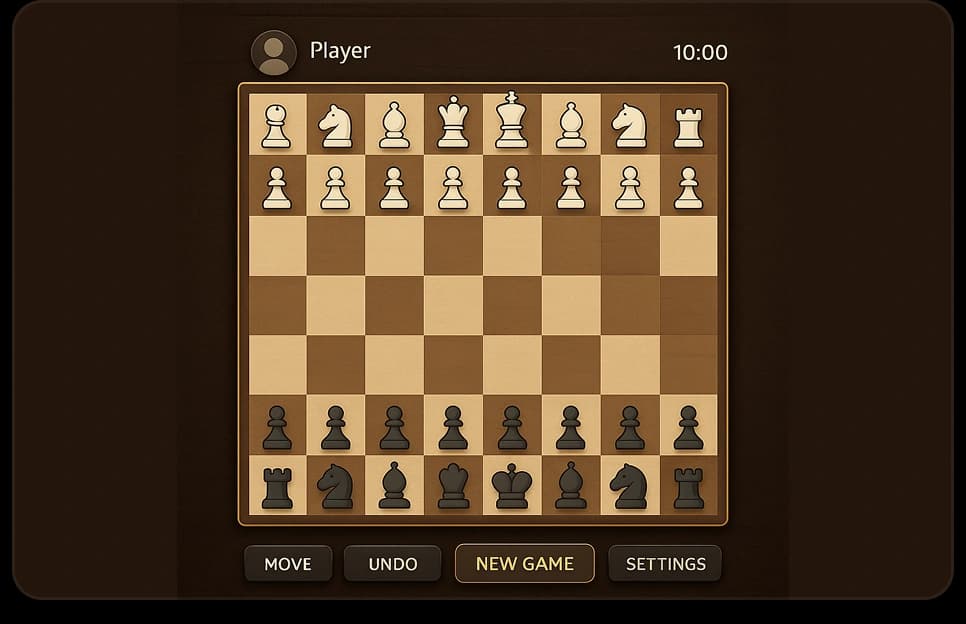
Philidor defense is one of the strongest and oldest chess openings for Black. It provides a sound, systematic manner of dealing with White 1.e4 without engaging in acute tactical combats.
This defense is named after a French chess master, François-André Danican Philidor, who aimed for control, stability, and precision in the pawn formations, rather than attacking the opponent. The Philidor defense is an ideal learning environment for players who need to solidify their knowledge of chess opening plays and positions.
Table of contents
- What is The Philidor Defense of Chess?
- Philidor Defense Strategy and Ideas
- Main Variations of the Philidor Defense
- Advantages and Disadvantages of the Philidor Defense
- Common Mistakes People Make in Philidor Defense
- Famous Moves Based on the Philidor Defense
- How to Play the Philidor Defense Step-by-Step
What is The Philidor Defense of Chess?
Philidor defence starts with the moves: 1.e4 e5 2.Nf3 d6

This series establishes a good framework that protects the e5 pawn and anticipates flexible growth.
The Philidor opening highlights the tight formation where Black is only able to go on the offensive when it is a necessity. It is more defensive than offensive, adopting balance and patience instead of speed and risk, unlike aggressive systems such as the trompowsky attack.
Philidor Defense Strategy and Ideas
The Philidor defense of chess is a lesson in the art of strategy: attack the center, build up, and wait until the proper time to attack. It is not that we have to play fast checkmates such as the 2 move checkmate, 4 move checkmate, or 5 move checkmate, but create a strong position that restricts the attacking opportunities of White.
Main Plans for Black
- Develop both knights early to protect the e5 pawn and central squares.
- Castle kingside quickly for safety.
- Prepare the ...c6 and ...d5 pawn breaks to challenge the center.
These ideas create strong pawn formations that are difficult for White to break through.
White’s Typical Plans

- Control the center with pawns on e4 and d4.
- Develop quickly with Nc3, Bc4, and sometimes f4, similar to the Italian Game strategy.
- Expand with c4 or f4 to increase pressure on Black’s setup.
While White’s position may look more active, Black’s setup is ready for counterattack once the time is right.
Main Variations of the Philidor Defense
Three main variations of the Philidor Defence are the most common and most used by players.
The Classical Variation
This is the old sequence: 1.e4 e5 2.Nf3 d6 3.d4 exd4 4.Nxd4 Nf6 5.Nc3 Be7.

Here, the Defense of the Philidor is to be stable. Black holds a strong pawn formation, and frequently alternates with ...O-O (Castling), ...c6, and ...Re8, and then attacks.
It is a patient yet potent style that should suit the players who do not emphasize speed, much like the structured approach seen in the Alekhine Defense: Complete Guide and Know How To Use Knight and Pawn, where precision matters more than fast tactics.
The Hanham Variation

The Hanham position is given following e4 e5 2.Nf3 d6 3.d4 Nf6 4.Nc3 Nbd7. This version is focused on flexibility and harmony. Black does not engage in any premature interactions; he gradually develops a strong defense.
The plan typically involves ...Be7, ...c6, ...Qc7, and ultimately, ...d5. It is a good specimen of a coordinated pawn formation.
The Exchange Variation

In the given version, White plays exd5, which forms open lines and symmetrical pawn structures. There is a greater element of tactics in the game, and it requires either side to think. Black has to work effectively in order not to be behind in the piece activity.
Advantages and Disadvantages of the Philidor Defense

Every chess opening has its advantages and disadvantages; let's check out this for the Philidor Defense.
Advantages
Philidor's defense in the best black chess opening provides great defensive formations and decreases the possibility of premature tactical errors. It is easy to master and adheres to logical chess opening moves, making it an excellent choice for players who want to solidify their basics. The jobs that it produces are permanent, which suits those studying to handle closed centers and long-term planning.
Disadvantages
Their greatest disadvantage is that the Philidor Defense in chess may become a tad passive if Black does not attack the center early. White can acquire space and still have active pieces. To prevent this, Black needs to seek the appropriate time to push ...c6 or ...d5 and escape.
Common Mistakes People Make in Philidor Defense
Most amateurs commit the error of being too defensive in the Philidor chess formation. Delay in creating or attacking may allow White a tremendous advantage in space. One of the most well-known dangers Black faces inside this opening is Legal's Mate, an 8-move checkmate where White sacrifices the queen to deliver a forced mate using two knights and a bishop.
The other type of mistake is to develop the queen prematurely or failure to watch the kingside safety. Get the development done first — first knights, then bishops, and then castling. There is also the problem of over-defending; the greatest defense is usually the active defense.
Famous Moves Based on the Philidor Defense
Some of the leading players have used the Philidor Defense to counter powerful opponents.
It was effectively used by Anatoly Karpov, who played in the positional style, and José Capablanca, the master of the endgame.
Nowadays, interest in the opening has returned to elite levels by such grandmasters as Hikaru Nakamura and Teimour Radjabov. How Black can transform an ostensibly silent Philidor defense format of chess into dynamic counterplay is demonstrated in their games, and its strategic ideas are often compared to other solid openings, such as the Caro-Kann Defense, as detailed in the Complete Guide to Mastering This Solid Chess Opening.
How to Play the Philidor Defense Step-by-Step

Through these four steps, you will be able to use the Philidor Defense.
Step 1 – Control the Center with e5 and d6: Start with ...e5 and ...d6 to build a stable foundation. These moves guard central squares and prevent White from gaining too much space early.
Step 2 – Develop Knights Before Bishops: Play ...Nf6 and ...Nbd7 before moving your bishops. This ensures you protect the e5 pawn and maintain flexibility.
Step 3 – Castle Early for Safety: Castling kingside keeps your king safe and connects your rooks, which is essential for future counterplay.
Step 4 – Prepare ...c6 and ...d5 for Counterplay: Once your development is complete, look for the right moment to challenge White’s center with ...c6 and ...d5. This is how you shift from defense to offense in the Philidor opening.
The Philidor Defense is a superb, realistic, and informative introduction to the Black side of the game. It imparts the fundamental principles such as the structure, patience, and counterplay — all of which benefit players at all levels.
In mastering this Defense , it is not only that you get a good answer to 1.e4, but you are also able to reinforce your comprehension of chess opening tactics, pawn patterns, and general positioning.
You want to play chess in real-life games or just want to learn how to play chess free online to practice, the Philidor Defense is the best option to sharpen your talent, have control, and balance between Defense and opportunity. Use this strategy in your next game and feel how easy-going is transformed into power by this old-fashioned strategy.
FAQs
- Yes, it is plain, straight, and educates the most important rules of the chess architecture. Players are able to learn how to deal with slow, tactical roles as well as increase their awareness on the defensive side.
- The primary objective is to keep a high pawn formation, dominate the center, and counterplay when the situation permits.
- White can also respond with 3.d4, and seize space and seek an early initiative.
- It was called in honor of the French 18th-century chess master Francois-Andre Danican Philidor, who emphasized the value of pawns in chess.
- The Philidor Defence is concentrated on the pawn formation and gradual accumulation, whereas the Petrov Defense is concentrated on immediate action and symmetry by playing the pieces.
Albin Counter Gambit: Sharp Chess Opening Guide
Explore the Albin Counter Gambit in depth with opening theory, positional ideas, critical variations, and practical advice for both White and Black. Learn the plans today.
Dutch Defense: Aggressive Ideas and Winning Plans
Master the Dutch Defense chess opening and learn how to win with 1…f5. Explore attacking plans, structures, and practical strategies now.
Queen’s Indian Defense: Theory, Ideas & Main Lines
Queen’s Indian Defense explained with simple ideas, common variations, and practical tips. Discover how to play this powerful chess opening for Black.
Baltic Defense: Aggressive Chess Opening Explained
Discover the Baltic Defense in chess with clear explanations, key plans, and tactical traps. Improve your opening play and surprise rivals today.
Chigorin Defense: Key Ideas, Theory & Traps
Learn the Chigorin Defense with key ideas, main lines, traps, and strategy tips. Discover how Black creates active play against 1.d4.