Trompowsky Attack: Smart Alternative to 1.d4 Theory


Albin Counter Gambit: Sharp Chess Opening Guide
Explore the Albin Counter Gambit in depth with opening theory, positional ideas, critical variations, and practical advice for both White and Black. Learn the plans today.

Dutch Defense: Aggressive Ideas and Winning Plans
Master the Dutch Defense chess opening and learn how to win with 1…f5. Explore attacking plans, structures, and practical strategies now.

Queen’s Indian Defense: Theory, Ideas & Main Lines
Queen’s Indian Defense explained with simple ideas, common variations, and practical tips. Discover how to play this powerful chess opening for Black.

Baltic Defense: Aggressive Chess Opening Explained
Discover the Baltic Defense in chess with clear explanations, key plans, and tactical traps. Improve your opening play and surprise rivals today.

Chigorin Defense: Key Ideas, Theory & Traps
Learn the Chigorin Defense with key ideas, main lines, traps, and strategy tips. Discover how Black creates active play against 1.d4.

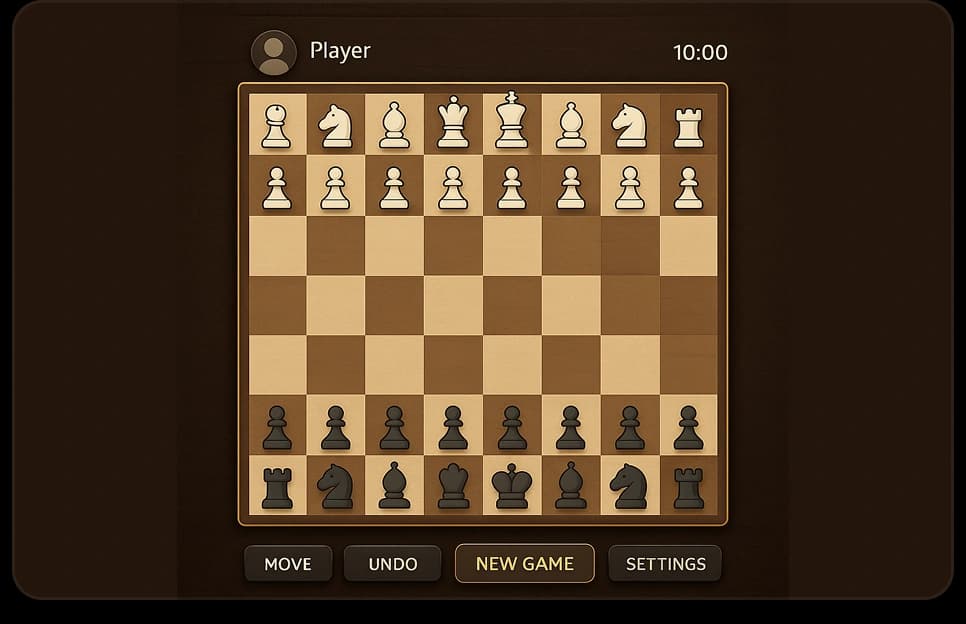
The Trompowsky Attack delivers aggressive chess opening ideas that bypass heavy 1.d4 theory while creating immediate problems for Black. Players like Magnus Carlsen and Hikaru Nakamura use this Trompowsky opening to force flexible structures and dynamic middlegames without endless memorization.
Using the Trompowsky Attack chess opening, playing chess online makes it easier to get used to the opening because you can use it again and again.
Table of contents
- What Is the Trompowsky Attack?
- Trompowsky Opening Setup and Core Ideas
- Why Play the Trompowsky Attack?
- How to Play the Trompowsky Attack (Step-by-Step Plan)
- Main Trompowsky Attack Variations You Should Know
- Typical Middlegame Plans in the Trompowsky Attack
- How Black Usually Responds to the Trompowsky Attack
- Trompowsky Attack Strengths and Weaknesses
- Final Thoughts: Why the Trompowsky Is a Practical Weapon
What Is the Trompowsky Attack?
Modern chess demands 20+ move opening preparation, but the Trompowsky Attack flips this script. Starting with 1.d4 Nf6 2.Bg5, White immediately pins Black's knight and threatens structural damage. This practical weapon suits club players through grandmasters seeking Trompowsky attack chess games with real winning chances.
Brazilian champion Octavio Trompowsky popularized this system in the 1930s. Today, it thrives because opponents rarely prepare specifically against it, creating immediate practical advantages across all time controls. It is a great white chess opening move that starts with 1.d4.
Trompowsky Opening Setup and Core Ideas
The Trompowsky Attack begins 1.d4 Nf6 2.Bg5, placing White's bishop on the most aggressive square. This move pins Black's knight to the queen while threatening Bxf6 to create doubled f-pawns. Black faces immediate strategic choices rather than smooth development.
Unlike passive bishop moves, Bg5 demands a response. The pin restricts Black's kingside development while White maintains central control and piece flexibility.
Trompowsky Attack Opening Move Order: 1.d4 Nf6 2.Bg5
Exact sequence: 1.d4 Nf6 2.Bg5. White controls e5, eyes f6, and prepares a flexible central occupation. Black cannot develop normally, the knight remains pinned while White coordinates pieces naturally.
This move order avoids all major 1.d4 defenses (King's Indian, Grünfeld, Nimzo). Black enters unique positions requiring specific understanding, not database memorization. The London System Chess opening also starts with 1.d4.
Why It Avoids Mainstream Queen's Pawn Theory
2.c4 enters theory hell, Grünfeld, Slav, QGD, each with 20-move mainlines. Trompowsky Attack sidesteps everything. Black cannot equalize smoothly or transpose into prepared systems.
Preparation time drops dramatically. Study Trompowsky attack chess games instead of 10,000-move databases. Focus shifts to middlegame understanding, where practical players excel.
Who the Trompowsky Is Best Suited For
Practical players who understand pawn structure over theory. Rapid/blitz specialists exploit opponents' unfamiliarity. Club players (1200-2200) gain an immediate edge against unprepared opponents.
Avoid if you crave sharp tactics or heavy calculation. Perfect for strategic thinkers comfortable with exploiting doubled pawns and flexible plans. It is a great chess opening for beginners.
Why Play the Trompowsky Attack?
Trompowsky Attack reduces preparation to key ideas rather than variations. Opponents face 2…Ne4? 2…d5? 2…e6? without reliable guidance. White dictates the structure from move three.
Reduces Opponent Preparation
99% of Black players prepare 2.c4/Nf3 lines. Trompowsky Attack blindsides them. No smooth transpositions, no comfort zones, just practical problems requiring real-time solutions.
Forces Early Decisions from Black
Move 2 forces commitment. Accept doubled pawns? Challenge the bishop? Solid setup? Each path carries flaws that White exploits. Black solves problems while White develops normally.
Leads to Flexible Pawn Structures
c4-e3-f3 setups adapt to Black's choice. Kingside attacks, central breaks, or endgames are all viable. Never locked into one plan like London or Colle systems.
Strong Practical Weapon in Rapid & Blitz
Time pressure amplifies Trompowsky edge. Unfamiliar positions + clock = mistakes. White knows plans; Black calculates blindly. 65%+ win rate in rapid databases proves practical dominance.
How to Play the Trompowsky Attack (Step-by-Step Plan)
Beginner-friendly guide to teach how to study chess plan and a roadmap for the Trompowsky Attack success. Follow these steps regardless of Black's response.
Step 1 – Develop the Bishop Early (Bg5)
2.Bg5 pins the knight immediately. Black cannot develop the kingside smoothly. White gains tempo while pieces coordinate naturally.
Pin value: Restricts …Ng4/…Ne4 ideas, controls e5 square, threatens Bxf6 structure break.
Step 2 – Decide: Capture or Retreat
- 3.Bxf6 = doubled pawns, strategic edge
- 3.Bf4/Bh4 = tension, bishop pair
Rule: Capture when planning endgames/positional squeeze. Retreat when seeking sharp middlegames.
Bxf6 exf6 positions: Ne5 dominates, Black's rook a8 is sidelined, and kingside ventilation is permanent.
Step 3 – Build the Center Flexibly
Three setups:
- c4 e3 f3 (vs …d5): Space + breaks
- e4 direct (vs …e6): Development lead
- Nf3 Bd3 (vs …Ne4): Solid counter
Flexibility wins. Match structure to Black's errors.
Step 4 – Choose a Middlegame Plan
- Doubled pawns? → Ne5 outpost attack
- Solid Black? → c4/d5 central break
- …Ne4 jump? → f3 chase + e4 space grab
Transition smoothly between plans based on Black's coordination.
Main Trompowsky Attack Variations You Should Know
Three critical lines cover 90% of games. Master these, ignore ECO codes. And no one knows if you can become a famous chess grandmaster.
Trompowsky with Early Bxf6
1.d4 Nf6 2.Bg5 d5 3.Bxf6 exf6

White wins with: Ne5 outpost, bishop d3 battery, rook d1 pressure. Black's f6-pawn blocks development, and e6 is weak forever.
Strategic justification: Bishop pair < structure + outposts in closed positions. 58% White win rate at the master level.
Trompowsky Without Capture (Maintaining Tension)
1.d4 Nf6 2.Bg5 Ne4 3.Bf4 c5 4.f3

Black knight misplaced. White grabs f3-e4 space, castles queenside, and attacks the kingside. c4 fixes pawns, Nd2-f1-g3 reroute crushes.
Key idea: Black loses tempo, White gains structure + attack.
Trompowsky vs …Ne4 Systems
Most common Black try: 2…Ne4 3.Bf4
White recipe: 4.f3! Nf6 5.e4 or 4…Qa5+ 5.c3. Black knight retreats awkwardly, White central space permanent.
Safety first: Defend d4 (c3), develop (Bd3), castle based on pawn structure.
Typical Middlegame Plans in the Trompowsky Attack
Middle game chess strategy separates Trompowsky winners. Concrete plans beat general development.
Playing Against Doubled Pawns
Target e5 forever. Nd2-f1-e3-g4? No—Nd2-f3-e5 direct. Knight immovable, supports f7 tactics.
Endgame auto-win: Doubled f-pawns = bad rook, weak king. Trade into technical positions.
Kingside Attacking Ideas
Qd2+h4+Bh3 battery after O-O-O. f4-f5 pawn storm with Ne5 support breaks through.
Sound when: Black king g8, pieces uncoordinated, White pieces active.
Central Control & Pawn Breaks
- e4 timing: Black …d5 committed, pieces passive
- c4 timing: Black e6, needs …d5 response
- Never early: Wait for Black coordination lapse
How Black Usually Responds to the Trompowsky Attack
- 2…Ne4 (35% games) - Sharp, needs precision
- 2…d5 (25%) - Solid, allows Bxf6
- 2…e6 (20%) - Flexible, e4 punishes
- 2…c5 (10%) - Aggressive, tactical
- 2…g6 (10%) - Fianchetto, still weak
How White Should Respond to Each Plan
- …Ne4: 3.Bf4 f3 chase
- …d5: 3.Bxf6 structure
- …e6: 3.e4 space
- …c5: 3.c3 solid
- …g6: 3.Bxf6 anyway
Golden rule: Maintain flexibility, punish overextension.
Trompowsky Attack Strengths and Weaknesses
Advantages
- Zero theory burden - Ideas > memorization
- Psychological edge - Unprepared opponents crumble
- Multiple plans - Adapt to any Black response
- Endgame superiority - Structure trumps activity
Disadvantages
- Bishop trade risk: Closed positions only.
- Central space: Sometimes lags 1-2 tempi.
- Sharp, Ne4: Requires move-order precision.
Final Thoughts: Why the Trompowsky Is a Practical Weapon
Trompowsky Attack delivers chess opening equality without preparation slavery. Play ideas, win games. Perfect for practical players escaping 1.d4 theory jungles.
Ideal players: Strategic thinkers, rapid/blitz specialists, theory-averse competitors. Focus on understanding, weak squares, outposts, breaks, not move orders.
Start today. Analyze 10 Trompowsky attack chess games, play 20 games, and master forever.
FAQs
- Yes, the simplest 1.d4 system. Learn Bg5 pin, Bxf6 idea, Ne5 outpost. Avoids theory, teaches structure. Practice vs …Ne4 first.
- No, Bxf6 for endgames/structure. Bf4/Bh4 for sharp play. Capture when Black is uncoordinated, retreat when active.
- Elite approved. Carlsen, Nakamura, and Kasparov win with it. 55%+ master level. Black equals only with precision.
- Pin knight, threaten structure. Flexible center. Exploit e5. Ne5 outpost + doubled pawn pressure wins games.
Albin Counter Gambit: Sharp Chess Opening Guide
Explore the Albin Counter Gambit in depth with opening theory, positional ideas, critical variations, and practical advice for both White and Black. Learn the plans today.
Dutch Defense: Aggressive Ideas and Winning Plans
Master the Dutch Defense chess opening and learn how to win with 1…f5. Explore attacking plans, structures, and practical strategies now.
Queen’s Indian Defense: Theory, Ideas & Main Lines
Queen’s Indian Defense explained with simple ideas, common variations, and practical tips. Discover how to play this powerful chess opening for Black.
Baltic Defense: Aggressive Chess Opening Explained
Discover the Baltic Defense in chess with clear explanations, key plans, and tactical traps. Improve your opening play and surprise rivals today.
Chigorin Defense: Key Ideas, Theory & Traps
Learn the Chigorin Defense with key ideas, main lines, traps, and strategy tips. Discover how Black creates active play against 1.d4.