Alekhine Defense: Complete Guide And Know How To Use Knight And Pawn



Albin Counter Gambit: Sharp Chess Opening Guide
Explore the Albin Counter Gambit in depth with opening theory, positional ideas, critical variations, and practical advice for both White and Black. Learn the plans today.

Dutch Defense: Aggressive Ideas and Winning Plans
Master the Dutch Defense chess opening and learn how to win with 1…f5. Explore attacking plans, structures, and practical strategies now.

Queen’s Indian Defense: Theory, Ideas & Main Lines
Queen’s Indian Defense explained with simple ideas, common variations, and practical tips. Discover how to play this powerful chess opening for Black.

Baltic Defense: Aggressive Chess Opening Explained
Discover the Baltic Defense in chess with clear explanations, key plans, and tactical traps. Improve your opening play and surprise rivals today.

Chigorin Defense: Key Ideas, Theory & Traps
Learn the Chigorin Defense with key ideas, main lines, traps, and strategy tips. Discover how Black creates active play against 1.d4.

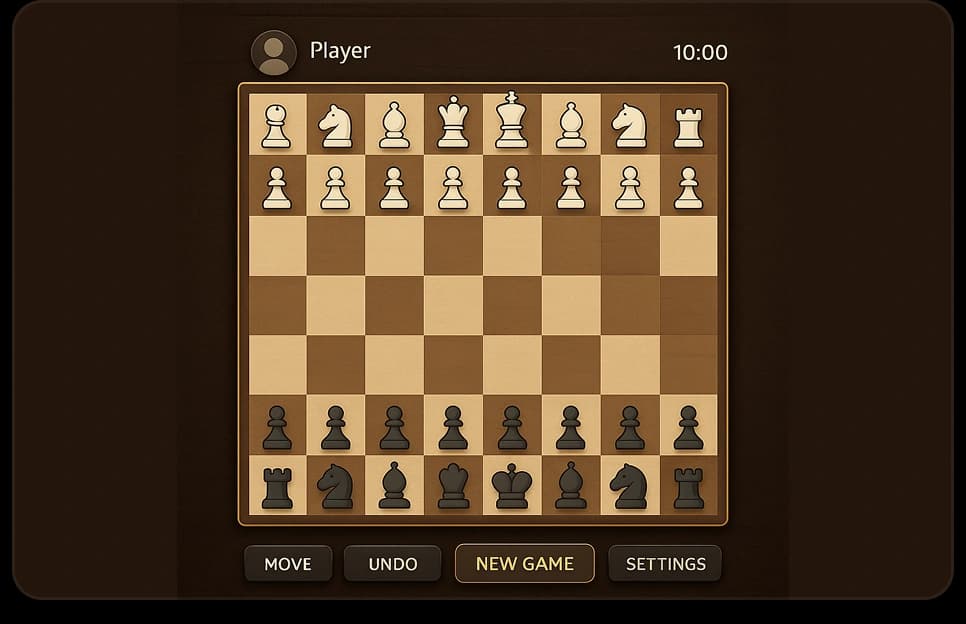
The Alekhine Defense Chess opening is one of the best for the black pieces. It is unlike any other chess opening, which is mainly created for the white player.
The Alekhine Defense opening move starts with 1.e4 Nf6, or you can call it the move that starts with a pawn and a knight. Also, if you play chess online with this Alekhine defense, then surely you're going to attack the white.
Table of contents
What Is the Alekhine Defense

The Alekhine Defense was created by Alexander Alekhine, who was the Russian World Chess Champion during 1921, and it was an excellent top-level defense opening. Even today, people try to learn the Alekhine Defense, which surprises modern chess opening users.
Definition and Move Order
The Alekhine Defense chess position starts with: e4 Nf6
Black now charges the e4 pawn immediately, which provokes the White to move. It is to allow the White to take control of the center temporarily and later destroy it. This leads to lopsided pawn structures and fertile middlegame chances against counterplay, which every aspiring player should have the opportunity to experience.
In contrast to the usual chess openings that focus on controlling the center at the beginning, this defense reverses the pattern and provides Black with long-term strategic opportunities. Using this chess opening, which heavily depends on the knight, you can use the Bishop and Knight Checkmate strategy after opening with the Alekhine defense.
History and Origins
The fourth World Chess Champion was named Alexander Alekhine, after whom the Alekhine Defense appeared in 1921. It was employed by Alekhine to put opponents off with the classical openings that they enjoyed predicting. Gradually, it became an admirable weapon of any grade level, being used at the grandmaster level and even in the world championship.
Its influence extended beyond itself, shaping ideas used in other modern chess openings, such as the Grünfeld Defense and the Benoni Defense, both of which rely on similar counterattacking principles.
Core Concept and Philosophy
Fundamentally, the Alekhine Defense is a hypermodern play, aiming to dominate the center not with pawns, but with pieces. It is quite the opposite of Petrov’s Defence, where the opening starts with a pawn attack.
Black sets targets instead of problems by permitting White to move on with e5 and d4. This is a non-conventional strategy that defends patience and timing, as all one has to do is attack the opponent at a time when the pawns have advanced too far.
Main Variations of the Alekhine Defense
There are different versions of the Alekhine Defense with a variety of strategic options. Knowing them will enable you to adjust to various opponents and change your playstyle.
Modern Variation
Move: e4 Nf6 2. e5 Nd5 3. d4 d6 4. Nf3

This is the line that is mostly played. Black uses a flexible position with ...g6 and ...Bg7 and is about to attack White's advanced pawns. The strategy is based on sound development, planning central breaks such as ...c5 and ...dxe5.
Key Strategy:
Let White overstretch himself, and then pull the middle with piece coordination. This line is reminiscent of positional ideas in the Grunfeld Defense, featuring an active response to a solid structure.
Exchange Variation
Move: e4 Nf6 2. e5 Nd5 3. d4 d6 4. c4 Nb6 5. exd6

The Variation of the Exchange makes the game easy at the beginning. It tends to result in matching arrangements of the pawns and provides both sides with clear plans. Black aims at the piece action instead of the expansion of the pawns, has prepared such moves as ...g6, ...Bg7, and ...Nc6.
It is a convenient option for players who prefer simplicity and strong frameworks, in the same vein as the Ruy Lopez Exchange line.
Four Pawns Attack
Move: e4 Nf6 2. e5 Nd5 3. d4 d6 4. c4 Nb6 5. f4

White responds with the most aggressive attack known as the Four Pawns Attack. Having four pawns in the middle of the board, White wants to attack on the kingside. Nonetheless, this extension leaves vulnerabilities that Black can use in the future.
Plan for Black:
Counter with ...dxe5, ...c5, and fast development. What ensues is an active, strategic conflict — a popular game with gamers who love the wanton mayhem on the board.
This variation tests your understanding of pawn formations and remains one of the most difficult chess openings to master due to its complexity.
Brooklyn Variation
This artistic deviation causes Black to play contrary to expectations at the early stage of g5, and this takes the game to the unknown. It is a risky option, but it is an excellent option for the players, who like the aggressive counterattacks and desire to leave the theory-saturated lines.
How to Play the Alekhine Defense (as Black)
- Encourage overextension. Let White push e5 and d4 early.
- Target the center. Such maneuvers as ...d6, ...c5, and ...Bg4 pose a threat to the pawn chain.
- Prioritize development. Hurrah, prepare your knights and bishops, and attack.
- Striking back at the opportune moment. When the center is weak, attack immediately.
This defense teaches excellent chess opening strategies, blending patience with tactical readiness.
Countering the Alekhine Defense (as White)
Suppose you are playing chess online against the Alekhine Defense, and then check out how to counter the Alekhine Defense. White ought to build the center out without going too far.
Best counters:
- To keep order, play the Exchange Variation.
- Work with Nc3 and Nf3.
- One should not push the pawn too far, such as f4 or c4, unless one is fully prepared.
This is a restricted technique that provides positional stability in the long run and minimizes the possibility of counterplay on the part of Black.
The Question of when and why to play the Alekhine Defense
Alekhine Defense is a positional defense that suits players who have mental and positional battles rather than face-to-face fights. It would be ideal if you would rather lose a play than play aggressively at a tender age.
Play it when:
- You want a fresh alternative to mainstream defenses like the Sicilian Defense or Ruy Lopez.
- You are fond of the politics of battles, in which approach is the most significant fact.
Avoid it when:
- You prefer symmetrical masses of pawns or first exchanges of pieces.
Final Thought
The Alekhine Defense is another underestimated but educative open game in chess. It defies the norm and it trains you on how to take advantage of overextension, how to control the positioning of the pawns, and how to hit with accuracy.
It may not lead to the fastest checkmate pattern, but it rewards strategic players who value planning over immediate tactics.
FAQs
- Alekhine Defense begins with 1.e4 Nf6. Black is the one who provokes White to the center, where he is planning to counterattack it when it is overextended.
- Yes, but it needs one to know positional play and pawn formations. It is excellent for players who are learning how to defend and attack.
- The most important ones are the Modern Variation, Exchange Variation, Four Pawns Attack, and the Brooklyn Variation.
- Be in control, do not be too ambitious, and grow progressively. Exchange Variation Systems are the safest for White.
- It is psychological, strategic, and adjustable, which is why it is ideal when it comes to players who prefer to trick the opponent into making a mistake.
- In order to afford White a massive pawn center, only to be overrun with fine piece play and central counters.
Albin Counter Gambit: Sharp Chess Opening Guide
Explore the Albin Counter Gambit in depth with opening theory, positional ideas, critical variations, and practical advice for both White and Black. Learn the plans today.
Dutch Defense: Aggressive Ideas and Winning Plans
Master the Dutch Defense chess opening and learn how to win with 1…f5. Explore attacking plans, structures, and practical strategies now.
Queen’s Indian Defense: Theory, Ideas & Main Lines
Queen’s Indian Defense explained with simple ideas, common variations, and practical tips. Discover how to play this powerful chess opening for Black.
Baltic Defense: Aggressive Chess Opening Explained
Discover the Baltic Defense in chess with clear explanations, key plans, and tactical traps. Improve your opening play and surprise rivals today.
Chigorin Defense: Key Ideas, Theory & Traps
Learn the Chigorin Defense with key ideas, main lines, traps, and strategy tips. Discover how Black creates active play against 1.d4.