4 Move Checkmate - Checkmate Explained by The Scholar


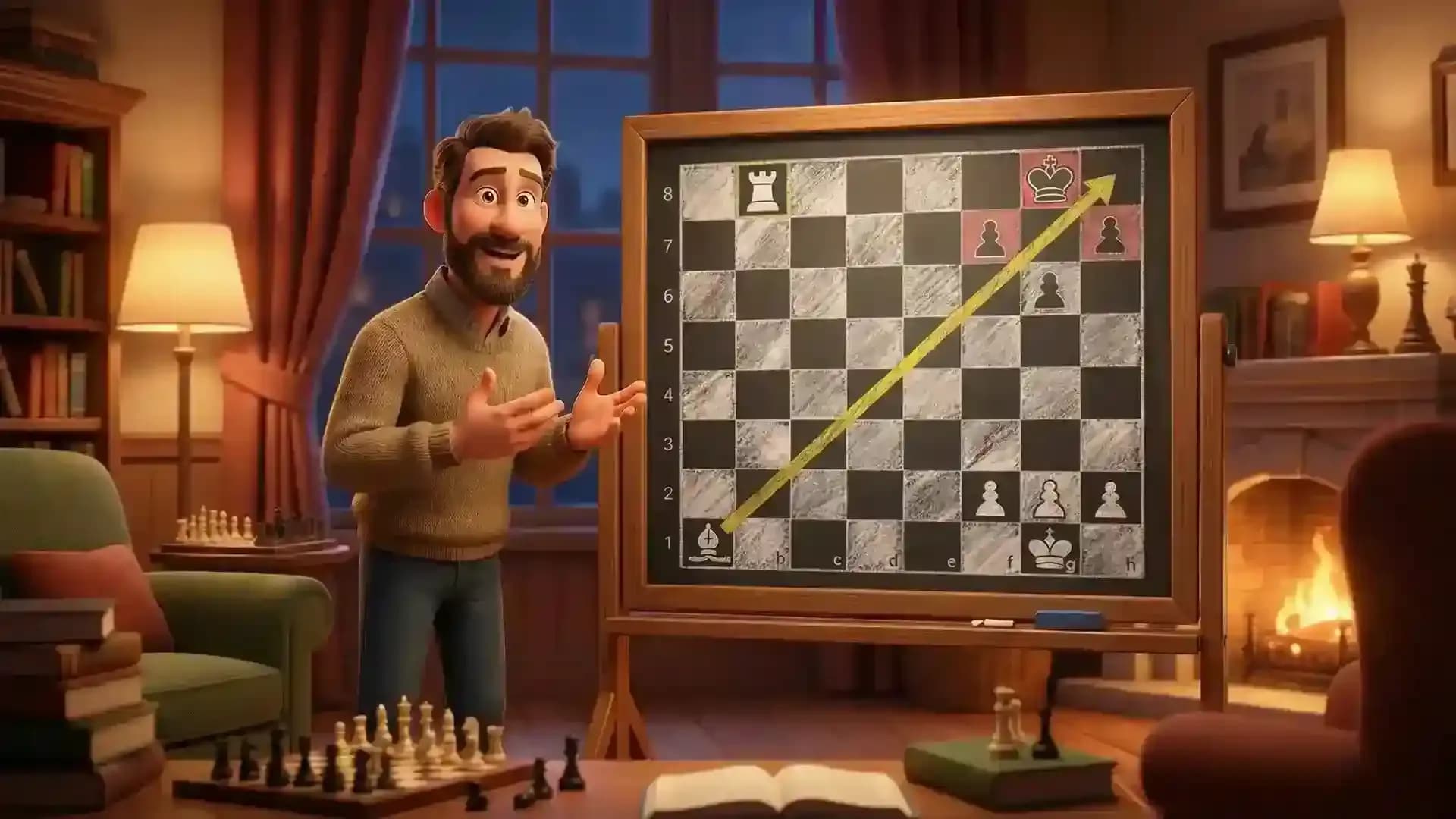
Back Rank Mate: How to Spot and Win Instantly
What is a Back Rank Mate? Learn the key patterns, common traps, and simple strategies to deliver this classic checkmate and win more games today.

Fool's Mate: Fastest Checkmate in Chess Explained
Fool's Mate is the fastest checkmate in chess. Discover how the 2-move mate works, why it happens, and simple ways to avoid it. Learn the pattern and improve your chess.
What Is Zugzwang in Chess? Meaning, Examples & How to Use It to Win
Ever been forced to make a losing move? That’s zugzwang. Learn how it works, see examples, and use it to dominate your opponent.

Can a King Checkmate a King? (Full Chess Rule Explained)
Can a King checkmate a King in chess? Discover the real rule, expert insights, and examples—click to master this key concept in chess strategy!

The 7 Fastest checkmate Moves Every Beginners must know
Discover the fastest checkmate strategies to win chess games quickly. Master quick tactics and impress your opponents—start learning now!

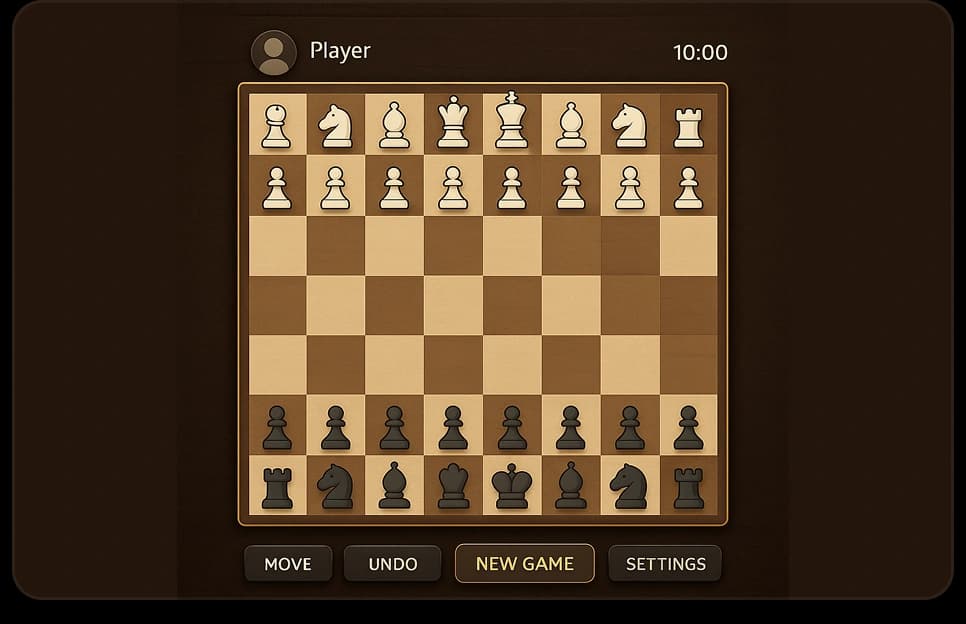
One of the most famous quick-win patterns in chess is the 4 move checkmate, also known as the Scholar's Mate. It is a simple yet strong checkmate that all beginners must learn.
Although it does not necessarily give a player a chance to beat more experienced players, knowledge of it can enable the new player to learn the fundamentals of attacking, defending, and coordinating pieces.
Thus, the pattern demonstrates that you can make use of your queen and bishop at the same time and attack the weakest point in the position of your opponent, the f7 pawn.
Table of contents
What Is the 4 Move Checkmate?
The 4 move checkmate (and sometimes referred to as the Scholar's Mate or Scholars Mate in chess) is a checkmate that occurs when the White attacks the f7-square, which is defended by the black king alone.
This is the weak point of the starting position, which can be utilized with your queen and bishop in combination. The purpose is also straightforward, you must achieve a checkmate in four moves, using the queen without the assistance of the bishop.In some variations, players may even reach a 5 move checkmate when Black delays defense or makes minor adjustments.
Step-by-Step Checkmate in 4 moves chess:
The scheme is founded on rapid development to have your bishop and queen first liberated, so that they may organize an attack on f7. Failure to defend well on the part of Black can lead to a rapid and unexpected defeat.
Step 1 - e4 e5

White begins 1.e4, and the center is controlled, and the lines are open to allow the queen and the bishop to act. Black plays 1...e5, which is the reflection of the center control of White.
Step 2 - Qh5 Nc6

White 2.Qh5, the queen is brought out early to attack at e5 and create pressure on f7. Black may proceed with 2...Nc6 and establish a knight and protect e5, but overlook the threat to come.
Step 3 - Bc4 Nf6

White 3.Bc4 and the bishop are on the same diagonal as f7. The queen and the bishop are both now against that weak square. Black 3...Nf6??, they attempt to assault the queen, and they are ambushed.
Step 4 - Qxf7# (Checkmate)

White 4.Qpf7+, and it is over. The black king is in a check position as it cannot move to a safe position, and no other position can block or capture the queen. This is the 4 move checkmate.
Why the 4 Move Checkmate Works

The 4 move checkmate chess pattern is successful in that it attacks the least defended point on the board f7 pawn. At the beginning of the game, the black king is the only one who defends that square. White forces manage to coordinate the attack of the queen and bishop, thus checkmate before Black can respond accordingly.
The given quick checkmate is played primarily against unthinking beginners who make random developing moves, without even considering the safety of their role model, the king. It is an excellent lesson in how to checkmate in chess with 4 moves, but a lesson to get out there and build up prudently, and to defend your king at the earliest.
Top Errors and How to Fall into the Trap of the Opponents
The Scholar mate is one of the pitfalls that beginners usually commit as they fail to notice the initial attack of the queen on f7. Here's what usually happens:
- Black fails to see the f7 threat and makes sloppy knight or pawn moves.
- They take their knight to f6 too soon and leave it undefended.
- They do not realize the danger that the revealed queen is this early.
With this knowledge of these pitfalls, players can learn how to watch and counter early traps effectively.
Defending the 4 move Checkmate.

Once you know what you are getting into, it is easy to avoid this mistake. Some good defensive plans exist:
- Play g6 at the earliest so as to stem the diagonal attack by the queen.
- Qe7 to cover the f7 pawn.
- Make up your knights and bishops, and do not run after the queen.
- Don't make an early f-pawn movement, as it frequently exposes your king to attack.
Good opening habits and learning 4 move checkmate chess tactics on each side are learned through learning these defenses.
To deepen your understanding of how checkmates fit into official play, review the official FIDE chess rules the global handbook that defines move legality, checkmate conditions, and tournament standards.
4 Move Checkmate vs Fool's Mate
These two checkmates are fast, yet they occur differently:
- Fools mate (2 Move Checkmate): The shortest possible chess checkmate (just 2 moves), where White has thrown up an irresponsible defense of its king and is mated by the queen of the Black side.
- 4 Move Checkmate (Scholar Mate): An offensive by White by coordinated threats against f7. It is the most frequent speedy checkmate in amateur games.
Knowledge of both approaches helps inexperienced players remember the main themes of tactics and avoid mistakes at the beginning.
Conclusion - 4 Move Checkmate Learn and Use Wisely
The Scholar Mate is a great means of preparation for chess patterns of attack and points of weakness. It demonstrates to beginners the value of piece coordination, early development, and king safety. But when you get to know it, you should use it primarily as a learning instrument, but not to play actual games with a more experienced opponent.
It is a valuable exercise that will develop effective tactical awareness and enhance your abilities. Next time you play, you can play the 4 move checkmate to test your skills in openings, but also to avoid that, you should also practice defending against the 4 move checkmate so that you become a truly balanced player.
FAQs
- It is a fast victory strategy called the Scholar's Mate, which is reached by attacking the f7 pawn with the bishop and the queen.
- 1.e4 e5 2.Qh5 Nc6 3.Bc4 Nf6 4.Qxf7 are 4 move checkmate pattern through which you can checkmate.
- Since it attacks the weak f7 pawn, which most beginners do not remember to protect at the beginning of the game.
- You can block it by playing g6 and Qe7, which protects f7 square and leaves your king safe.
- It is good to learn simple tactics, but not to be effective against skilled players. Work on your pieces and your opening strategy as you go.
Back Rank Mate: How to Spot and Win Instantly
What is a Back Rank Mate? Learn the key patterns, common traps, and simple strategies to deliver this classic checkmate and win more games today.
Fool's Mate: Fastest Checkmate in Chess Explained
Fool's Mate is the fastest checkmate in chess. Discover how the 2-move mate works, why it happens, and simple ways to avoid it. Learn the pattern and improve your chess.
What Is Zugzwang in Chess? Meaning, Examples & How to Use It to Win
Ever been forced to make a losing move? That’s zugzwang. Learn how it works, see examples, and use it to dominate your opponent.
Can a King Checkmate a King? (Full Chess Rule Explained)
Can a King checkmate a King in chess? Discover the real rule, expert insights, and examples—click to master this key concept in chess strategy!
The 7 Fastest checkmate Moves Every Beginners must know
Discover the fastest checkmate strategies to win chess games quickly. Master quick tactics and impress your opponents—start learning now!