King's Pawn Opening: Learn the Most Popular Chess Start



Albin Counter Gambit: Sharp Chess Opening Guide
Explore the Albin Counter Gambit in depth with opening theory, positional ideas, critical variations, and practical advice for both White and Black. Learn the plans today.

Dutch Defense: Aggressive Ideas and Winning Plans
Master the Dutch Defense chess opening and learn how to win with 1…f5. Explore attacking plans, structures, and practical strategies now.

Queen’s Indian Defense: Theory, Ideas & Main Lines
Queen’s Indian Defense explained with simple ideas, common variations, and practical tips. Discover how to play this powerful chess opening for Black.

Baltic Defense: Aggressive Chess Opening Explained
Discover the Baltic Defense in chess with clear explanations, key plans, and tactical traps. Improve your opening play and surprise rivals today.

Chigorin Defense: Key Ideas, Theory & Traps
Learn the Chigorin Defense with key ideas, main lines, traps, and strategy tips. Discover how Black creates active play against 1.d4.

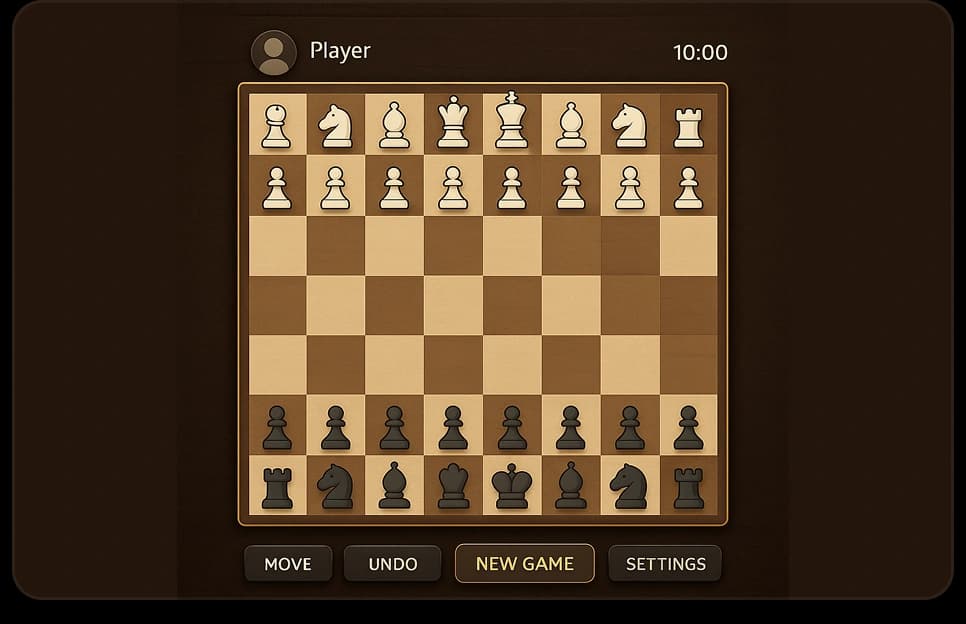
King’s Pawn Opening is one of the most famous and commonly used by players who love to play aggressively, starting with 1.e4. It is one of the greatest openings because Bobby Fischer and Magnus Carlsen used it many times, who are the most famous grandmasters.
The King's Pawn Opening is an important step for all serious players who wish to master the fundamentals of chess, as well as develop good attacking skills. You use the King’s Pawn Opening on the chess platform to understand better.
Table of contents
- What Is the Pawn of the King?
- Advantages of Playing the King’s Pawn Opening?
- Key Ideas and Strategic Concepts
- Major Variations of the King’s Pawn Opening
- Popular Defenses Against the King’s Pawn Opening
- Middle Game Strategy of King Opening
- Common Mistakes Beginners Make
- Best Ways to Study and Practice the King's Pawn Opening
- Conclusion
What Is the Pawn of the King?

It is the King's Pawn Opening, which starts with the opening move 1.e4, transferring the king's pawn from e2 to e4. This step alone controls the center (d5 and f5 squares) with the queen and the light-squared bishop having the open diagonals.
The king pawn opening results in tactical and dynamic positions of open games as opposed to closed positions of 1.d4 (the Queen's Pawn Opening). Where 1.d4 emphasizes strategic maneuvering, the king's pawn opening chess approach creates sharp tactical battles, rewarding rapid piece development and aggressive play.
Advantages of Playing the King’s Pawn Opening?
The King pawn opening opens lines to fast development of the pieces; generally, three pieces are developed, and castling is at move 5-6. It dominates the centre and creates direct dangers on the squares that are weak in Black, at least f7.
The resulting positions are tactical and sharp, favoring accurate players. Of the greatest importance, 1.e4 is an indicator of an attack; the opponent has no choice but to counterattack to the utmost.
Key Ideas and Strategic Concepts
- Center Control: The d5 and f5 squares are made the major targets. Support e4 with pieces (Nf3, Bc4, Be2) to maintain central dominance and prepare d4 expansion.
- Rapid Development: Classic sequences like e4, Nf3, Bc4 (or Be2), and kingside castling ensure all pieces coordinate toward shared objectives.
- King Safety: Castling of your king by move 5-6 to safety before counter-attacking pieces can attack it. Also, keep maintaining a sound pawn structure to keep the King safe.
- Space and Initiative: Controlling space with pawns and pieces creates a tempo advantage. Black has many supporters when there are several pieces targeting his kingside or the center of the board.
Major Variations of the King’s Pawn Opening

King's Pawn opening variations are one of the best chess openings for beginners, which gives each player an upper hand in the opening.
Italian Game (1.e4 e5 2.Nf3 Nc6 3.Bc4)
The bishop of White has a light square targeting f7, giving latent threats. Key themes include f7 tactics, center control with d4, kingside pawn storms, and recurring patterns (pins, forks, discovered attacks targeting Black's king).
Ruy Lopez / Spanish Opening (1.e4 e5 2.Nf3 Nc6 3.Bb5)
The Ruy Lopez chess opening is the most commonly used king-pawn opening reaction. White builds strategic pressure by targeting the c6-knight rather than f7. This makes play slower and more positional, with long-term gain accumulation in mind.
Scotch Game (1.e4 e5 2.Nf3 Nc6 3.d4)
Immediate central tension. Black has to decide whether to trade on d4 or hold up. Scotch Game Chess variation creates sharp tactical play from move three, favoring players comfortable with rapid calculations over positional maneuvering.
Vienna Game (1.e4 e5 2.Nc3)
An adaptable strategy that leaves alternatives. The Vienna may be translated into other chess openings or result in the King's Gambit with various shades. It has a good shape with d4 being available.
King's Gambit (1.e4 e5 2.f4)
The most violent one. White sacrifices the f-pawn to uncover the f-file against the king of Black. This gambit creates rapid piece development, open lines, and attacking initiative. It's favored by tactical enthusiasts and players seeking sharp, forcing positions.
Popular Defenses Against the King’s Pawn Opening
It is based on the way Black reacts that you can prepare some definite plans:
Sicilian Defense (1...c5)
The Sicilian Defense chess opening is the most popular response given by Black. Instead of 1...e5, Black defends d4 at the queenside, and now the positions are not even, and the win is feasible.
French Defense (1...e6)
Solid contains the light-squared bishop. Black is ready to play d5 but is flexible enough to generate positional counterplay (using the bishop's limitations).
Caro-Kann Defense (1...c6)
Caro-Kann Defense is one of the most reliable defenses against the 1.e4, which holds a strong pawn formation and flexible positioning.
Scandinavian Defense (1...d5)
The central challenge is immediate and aggressive. Following 2.exd5 Qxd5 3.Nc3, the queen of the black is exposed, and this makes development difficult.
Pirc Defense (1...d6)
Hypermodern style: Black dominates the center with pieces rather than pawns. This makes Pirc Defense one of the most active chess openings that play in the centre.
Middle Game Strategy of King Opening
- Control Open Files with Rooks: Rooks are most powerful on open files (files which do not have pawns). In the king's opening, regularly utilize after the exchanges and central exchanges. Queens galloping on each side.
- Attack the King: Both sides' castle kingside, making the g-file and f-file natural attacking highways. Normal tricks are g4-g5 advance in pawn, f7/g7/h7 sacrifice, and queen-bishop on the kingside.
- Master Tactical Patterns: Recognize recurring motifs, pins (bishop pinning f7 defenders), forks (knight forks attacking king and rook), discovered attacks (moving a piece reveals an attack from another piece), and back rank tactics. Also, you need to remember that a pawn can capture the king in chess, too, so do use that also.
Common Mistakes Beginners Make
- Creating the Queen Too Early: The queen must be placed on aggressive squares (d4, f3), which are prone to attack by developing Black pieces, so identifying and relocating the queen is a waste of time.
- Pawn extensions: You should not push far forward with unsupported moves such as f4 or g4 because it will only make your own king vulnerable.
- Not Castling Promptly: It is against the basic rules to have your king in the middle after 6-7 moves, and it exposes too much of the board.
- Neglecting Opponent Threats: In making attack plans, Black also carries out attacks. Losses due to sudden defeats, even in positional advantage, are due to missing pins, undefended pieces, or king safety weaknesses.
Best Ways to Study and Practice the King's Pawn Opening
- Play Slow Games: Play 10-minute rapid or 15-minute blitz games, make conscious choices. Then you have to analyze with engines to find out how you have gone wrong in trying to go without good principles.
- Learn games, study grandmaster games to learn games annotated by Fischer (Ruy Lopez, Italian Game), Kasparov (playing aggressively with 1.e4), and the most recent grandmasters of your preferred variation.
Use Modern Tools: Using AI or an Online Platform Can Be The Best Option
- Chessable: Memorizes opening lines with the help of spaced repetition by reviewing them every day.
- Chess.com Opening Explorer: View statistical data on which moves win most often at your rating level.
- Lichess Analysis Board: Import engine analysis / strategic commentary into studies.
- Stockfish Engine: Learn powerful moves by analysing stances.
Specialization: Learn 2-3 Openings. One main weapon (Italian Game, Ruy Lopez, or Sicilian Defense), one minor system (King's Gambit), and one defense. Shallowness is no greater than a superficial knowledge of all things.
Conclusion
The King pawn is more than worthy of its position as the most popular first move in chess. It conveys important values: control of the center, fast growth and development, the safety of the king, and the alertness of tactics.
All the variants of the opening of the game by the pawns of each of the kings, the Italian Game, Ruy Lofed, Scotch Game, King Gambit Chess Opening, possess their own flavor of the game, and the main principles are similar.
The benefits appear quickly: sharper tactical vision, faster decision-making, and most importantly, more wins.
Play 10 games with 1.e4 and work with fundamental ideas. Pay attention to quick growth, the central front, attacking the King, and avoid making the same mistakes. In a few weeks, you will be able to experience tangible progress in the opening performance and the ability to attack in the middle of the game.
FAQs
- Yes, the King Pawn Opening is based on the basic principles straightforwardly, which are center control, development of central pieces, and swift cascading of castles.
- The best defense of Black is the Sicilian Defense (1...c5). It challenges the d4 square and establishes asymmetrical positions where the Black struggles to play as a participant.
- Elite players prefer 1.e4 since it can be used to achieve instant benefits: rapid piece development, better central control, and better chances of attacking on the kingside.
- The Pawn Opening of the King (1.e4) results in dynamic, imbalanced positions which are open and tactical. Queen Pawn Opening (1.d4) focuses on slower positional play in closed forms. Following 1.e4, White castles kingside with 5-6 in place, attacking plans.
- Common continuations include the Italian Game (1.e4 e5 2.Nf3 Nc6 3.Bc4), Ruy López (1.e4 e5 2.Nf3 Nc6 3.Bb5), Sicilian Defense (1...c5), French Defense (1...e6), and Caro-Kann Defense (1...c6). Both result in different middlegame formations and thought ideas.
Albin Counter Gambit: Sharp Chess Opening Guide
Explore the Albin Counter Gambit in depth with opening theory, positional ideas, critical variations, and practical advice for both White and Black. Learn the plans today.
Dutch Defense: Aggressive Ideas and Winning Plans
Master the Dutch Defense chess opening and learn how to win with 1…f5. Explore attacking plans, structures, and practical strategies now.
Queen’s Indian Defense: Theory, Ideas & Main Lines
Queen’s Indian Defense explained with simple ideas, common variations, and practical tips. Discover how to play this powerful chess opening for Black.
Baltic Defense: Aggressive Chess Opening Explained
Discover the Baltic Defense in chess with clear explanations, key plans, and tactical traps. Improve your opening play and surprise rivals today.
Chigorin Defense: Key Ideas, Theory & Traps
Learn the Chigorin Defense with key ideas, main lines, traps, and strategy tips. Discover how Black creates active play against 1.d4.