The King Gambit Chess Starting position: stepwise explanation and variations



Albin Counter Gambit: Sharp Chess Opening Guide
Explore the Albin Counter Gambit in depth with opening theory, positional ideas, critical variations, and practical advice for both White and Black. Learn the plans today.

Dutch Defense: Aggressive Ideas and Winning Plans
Master the Dutch Defense chess opening and learn how to win with 1…f5. Explore attacking plans, structures, and practical strategies now.

Queen’s Indian Defense: Theory, Ideas & Main Lines
Queen’s Indian Defense explained with simple ideas, common variations, and practical tips. Discover how to play this powerful chess opening for Black.

Baltic Defense: Aggressive Chess Opening Explained
Discover the Baltic Defense in chess with clear explanations, key plans, and tactical traps. Improve your opening play and surprise rivals today.

Chigorin Defense: Key Ideas, Theory & Traps
Learn the Chigorin Defense with key ideas, main lines, traps, and strategy tips. Discover how Black creates active play against 1.d4.

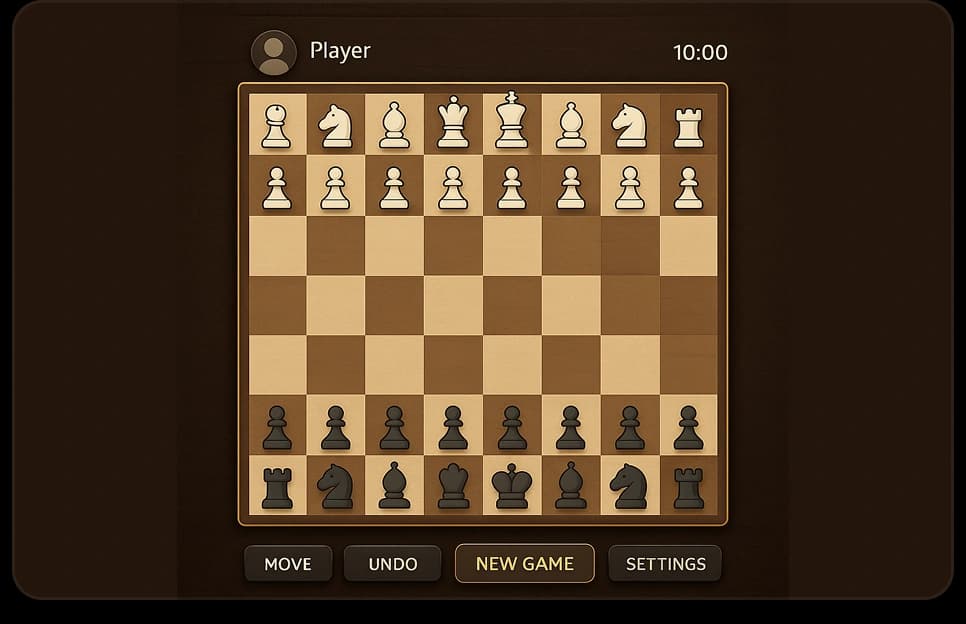
Not all chess players are alike; there are those who employ a defensive approach and others who play an aggressive one. In case you are the player who likes to attack in the very beginning, you may use the King Gambit Chess opening.
The King Gambit is one of the most exciting games you can choose if you prefer to play fast and strategic games with open positions. White presents a pawn to open aggressive lines and gain control in the center at an early stage of the game, beginning with 1.e4 e5 2.f4.
Risk it to develop fast and pressure. It is still widely used by many players today, particularly in the free online chess platforms, where surprise and speed usually win games.
Table of contents
What Is the King's Gamble in Chess?

The King Gambit opening strategy of chess is preferred by those who enjoy striking in the center zone of the chess board, and the moves made by 1.e4 e5 2.f4 prove that the gamer wants to win the game immediately.
The initiation of the King Gambit in chess is done with the moves 1.e4 e5 2.f4. By playing f4, White is foregoing material to open lines and quick development, which leads to sharp, tactical battles whereby both players need to be creative at the first stage.
This opening got its name during the romantic age of chess, which was played by such legendary players as Paul Morphy and Bobby Fischer. It is a very good selection among players who appreciate open gameplay and direct attacks, and also wish to acquire practical skills in aggressive chess opening moves and pawn positioning.
The Major Concepts and Purposes of the King’s Gambit
The gambit used at the beginning of the King is fast development, open files, and attacking the exposed squares of the black king.
White's Main Ideas
- Give the pawn on f4 in order to open the f-file with the rook.
- Blitzkrieg with Nf3, Bc4, and castle early.
- Strike the weak f7 square, which is one of the weakest places for Black.
- Maintenance of a good pawn structure to facilitate the assault.
Black's Counter Ideas
- Choose to accept or reject the gambit (King's Gambit Accepted and King's Gambit Declined).
- Wait for White to stop his initial rush and seek defense.
- Work, plan, and play the open position to make yourself threats.
The opening moves of the King's Gambit are usually wild, but both players can have an opportunity provided that they are familiar with the key concepts.
Primary Deviations of the King Gambit
This awareness will enable you to choose the appropriate plan, be it an attacking or a defending one.
King's Gambit Accepted (KGA)
Moves: 1.e4 e5 2.f4 exf4

Black takes the pawn and puts White to the test in making the compensation. Common lines include:
- Bishop’s Gambit (3.Bc4) – a rapid attack at f7 that develops quickly.
- Fischer Defense (3...d6) – This is a very solid position, which restricts the aggression of the White player.
The most direct and tactical version is the King’s Gambit Accepted, which suits those players, who prefer open and aggressive games.
C30 King's Gambit Declined (KGD)
Moves: 1.e4 e5 2.f4 Bc5 or 2...d5

In this case, Black declines the pawn sacrifice and defends, plays in structure and safety. It is not risky enough, yet full of intriguing play. Slower, more strategic battles are frequently brought about by this version.
Modern and Fischer Defenses
The Fischer Defense (KGA 3...d6) is the most admirable response. It holds the structure of Black firm as it prepares counterplay. It is used by many contemporary players to prevent premature complications.
Introduction to How to Play the King's Gambit (Step-by-Step Guide)
These are the basic steps of playing King of Gambit:
Step 1: Begin with 1.e4 e5 2.f4 that tests the center and attacks with a thrust.
Step 2: Blitz, Nf3, Bc4, and prepare to castle.
Step 3: Castle to get rooks connected and one to f-file.
Step 4: Co-ordinated attacks on weak squares such as f7.
Maintain intensity, do not slack; the aperture rewards rapidity and ingenuity. The greater the practice you put into it, the more you will see ideas such as the 5 move checkmate or even the 4-move checkmate pattern that could occur through this setup. You get these quick wins when you are good at strategies by doing and failing.
Conclusion
One of the oldest and most daring openings of chess is the King's Gambit. It imparts good rules in terms of being active, timing, and initiative. Although it can be viewed as a risky technique, for modern engines, it remains a valuable learning tool and an exciting method for enhancing chess abilities.
You would rather read about the Italian Game strategy or investigate the chess openings as the white, but whatever you play, the King is always ready to attack. If you prefer a quieter but equally powerful pawn sacrifice, the Benko Gambit is worth exploring for long-term queenside pressure.
This is one of the openings that you would wish to master in case you are out to surprise your opponent during your next game or when you are playing chess free online.
FAQs
- Yes, quite simple to master, it makes the beginners grasp development, open lines and attacking lines.
- Moving 1.e4 e5 2.f4, the pieces should be quickly developed, keeping in mind to attack the square at f7.
- Unusual at higher positions with the present day's more defensive tactics, assisted by accurate computer analysis, but are strong in real playing.
- These are the Fischer Defense (3...d6) and the setups with 2...Bc5, which are the best and safest to counter.
- It has been used in most renowned attacking games by such great players as Paul Morphy, Bobby Fischer, and Adolf Anderssen.
Albin Counter Gambit: Sharp Chess Opening Guide
Explore the Albin Counter Gambit in depth with opening theory, positional ideas, critical variations, and practical advice for both White and Black. Learn the plans today.
Dutch Defense: Aggressive Ideas and Winning Plans
Master the Dutch Defense chess opening and learn how to win with 1…f5. Explore attacking plans, structures, and practical strategies now.
Queen’s Indian Defense: Theory, Ideas & Main Lines
Queen’s Indian Defense explained with simple ideas, common variations, and practical tips. Discover how to play this powerful chess opening for Black.
Baltic Defense: Aggressive Chess Opening Explained
Discover the Baltic Defense in chess with clear explanations, key plans, and tactical traps. Improve your opening play and surprise rivals today.
Chigorin Defense: Key Ideas, Theory & Traps
Learn the Chigorin Defense with key ideas, main lines, traps, and strategy tips. Discover how Black creates active play against 1.d4.