Scandinavian Defense: The Ultimate Guide


Albin Counter Gambit: Sharp Chess Opening Guide
Explore the Albin Counter Gambit in depth with opening theory, positional ideas, critical variations, and practical advice for both White and Black. Learn the plans today.

Dutch Defense: Aggressive Ideas and Winning Plans
Master the Dutch Defense chess opening and learn how to win with 1…f5. Explore attacking plans, structures, and practical strategies now.

Queen’s Indian Defense: Theory, Ideas & Main Lines
Queen’s Indian Defense explained with simple ideas, common variations, and practical tips. Discover how to play this powerful chess opening for Black.

Baltic Defense: Aggressive Chess Opening Explained
Discover the Baltic Defense in chess with clear explanations, key plans, and tactical traps. Improve your opening play and surprise rivals today.

Chigorin Defense: Key Ideas, Theory & Traps
Learn the Chigorin Defense with key ideas, main lines, traps, and strategy tips. Discover how Black creates active play against 1.d4.

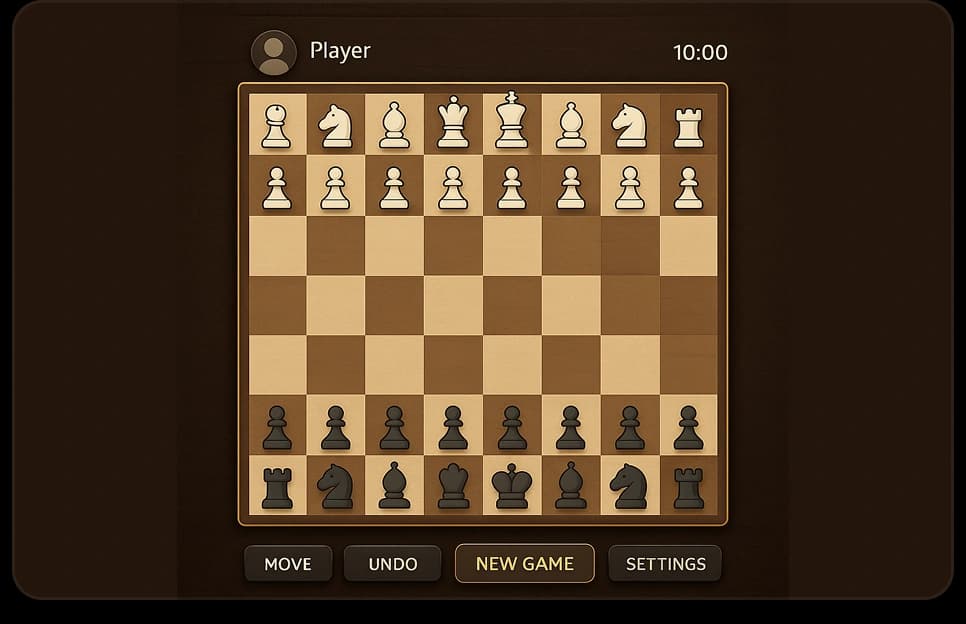
The Scandinavian Defense, or Center‑Counter Defense, is one of the orthodox and most direct chess openings ever used. The move starts with the pawn moving to e4 position, if playing with white, and then the black piece moves to d5. This is the first basic move of the Scandinavian defense.
After that, the player looks for which Scandinavian defense variation to choose, as this can alter the flow of the match, as the chess opening should be solid.
Table of contents
What is the Scandinavian Defense?

Top players like Magnus Carlsen used the Scandinavian Defense, which is also known as one of the most aggressive and oldest chess openings, but it is not easy to memorize the steps because it has few variations. However, if you love to play from the center, then you can use it.
Basic Move Order
e4 d5
exd5 (forced)
In this move, if you go further, you will have two options to choose from either black can use Nf6 or eliminate the white pawn, but then the queen surely eliminates the black pawn, so be ready to give a chance to the opposition queen.
Historical Background
It is one of the first recorded openings in history, mentioned in the 15th-century Catalan poem Scachs d’amor. Over the centuries, masters like Savielly Tartakower, Curt Hansen, and Sergey Tiviakov have used it effectively even at high levels.
Why Players Choose It
- Straightforward plans and minimal memorization
- Direct control over the center
- A flexible system ideal for improving players
Since it teaches the basics of chess strategy, it is an excellent place for new players to start. Learn all the official chess rules from FIDE here to understand how every piece behaves. Also, it is easy for novice players to understand and predict what the other party will do.
How to Play the Scandinavian Defense
Playing with the Scandinavian Defense is one of the great choices for any player, but beginners need to remember the tactics when using this chess opening move.
Core Principles
- Immediate counterattack: Strike at White's e-pawn to disrupt plans.
- Central control: Support pawns with ...c6 and ...e6.
- Fast development: Mobilize knights and bishops before worrying about material.
- Play online practice games: Use online platforms to reinforce move sequences practically.
Common Tactical Themes
- Early Queen exposure and tempo battles
- Control of d4 and c6 squares
- Counter-punches via ...c5 or ...e5
Main Variations of the Scandinavian Defense
1. Main Line (1.e4 d5 2.exd5 Qxd5 3.Nc3 Qa5)

This is the cornerstone and most analyzed line.
Black's Plans:
- Move the queen to a5 for safety and activity
- Develop with ...Nf6, ...c6, ...Bf5, then castle kingside
White's Plans:
- Chase the queen with Nc3 and Bd2
- Expand quickly with d4
This variation helps the player to keep a balance between aggression and simplicity, ideal traits for reinforcing beginner chess strategies.
2. Modern Variation (1.e4 d5 2.exd5 Nf6)

A cautious system where Black prioritizes piece development before pawn recapture.
Typical Line: 3.d4 Nxd5 4.c4 Nb6 5.Nf3 g6 6.Be2 Bg7
Concept: Black ensures solid structure and faster coordination, avoiding early queen chases.
3. Mieses–Kotroc Variation

Often used by attacking players.
Sequence: 1.e4 d5 2.exd5 Qxd5 3.Nc3 Qa5 4.d4 Nf6 5.Nf3 Bf5.
Features: Quick pressure on c2, tactical traps, and sharp middlegames. Be cautious with the queen's safety, and you need to build a great pawn structure.
4. Closed Scandinavian Defense

Move Sequence: 1.e4 d5 2.Nc3. Here, White keeps the center closed, leading to a slower positional battle. Black responds with ...c5, ...Nc6, and ...e6.
5. Declined Scandinavian

Move Sequence: 1.e4 d5 2.e5, When White avoids capture (e.g., 2.Nc3), Black counters with ...d4 or ...Nf6. The result resembles more flexible modern defenses.
How to Play Against the Scandinavian Defense
If you’re playing as White, the goal is to use your development lead.
Best Options for White
- Play 2.exd5, then 3.Nc3 Qa5 4.d4 Nf3 – a reliable setup.
- In online practice, test both the main line and the modern variation responses to build confidence.
Typical Traps:
Overextending pawns or ignoring development to chase the queen.
Playing online chess against players of different styles is the best way to improve quickly because you'll internalize answers more quickly than if you just read them.
Strengths and Weaknesses of Scandinavian Defense
Advantages of Scandinavian Defense
- Simplicity and limited theory
- Direct counterplay
- Active piece development gives plenty of tactics
Drawbacks of Scandinavian Defense
- Early queen exposure creates tempo risk
- May concede central space if mishandled
Despite these, it’s one of the best chess openings for beginners wanting balanced, open positions from the start.
Scandinavian Defense Used by Famous Grandmaster
Grandmasters like Tiviakov and Magnus Carlsen have proven that the Scandinavian Defense holds perfectly fine under modern engines. Carlsen has used it strategically to avoid heavy theory while maintaining dynamic equality, a lesson in adaptability for those studying modern chess openings.
If you prefer clear ideas, low theory, and active counterplay, the Scandinavian Defense is your perfect choice. It provides a lifelong opportunity that teaches positional awareness, tactics, and initiative, skills valued from club to championship.
Combine your Scandinavian repertoire with:
- Consistent practice through free online games
- Reading one or two top beginner chess books
- Applying simple chess strategies in every game
By discipline and inquisitiveness, you will not take long to make this defense to learn it, but this opening is not for players with a lower average IQ. You need to have a higher chess IQ, which has been around for hundreds of years, a valuable asset in today's time.
FAQ
- No, it is not very simple because you need to memorize the variations and the play to use the Scandinavian Defense.
- As White, you should quickly play the piece on d5 (2.exd5), get your knight to c3 in a hurry, and use moves like d4 and Nf3 to drive Black's queen away and to dominate the center.
- Black aims to attack White's center early, with rapid development of pieces, and join in early exchanges of pawns, such as .c5 or .e5, to equalize or gain chances to counterattack.
- Much less popular with super grandmasters than the likes of the Sicilian or Ruy Lopez, it's fine to use, though. Magnus Carlsen and Sergey Tiviakov have used it with success.
Albin Counter Gambit: Sharp Chess Opening Guide
Explore the Albin Counter Gambit in depth with opening theory, positional ideas, critical variations, and practical advice for both White and Black. Learn the plans today.
Dutch Defense: Aggressive Ideas and Winning Plans
Master the Dutch Defense chess opening and learn how to win with 1…f5. Explore attacking plans, structures, and practical strategies now.
Queen’s Indian Defense: Theory, Ideas & Main Lines
Queen’s Indian Defense explained with simple ideas, common variations, and practical tips. Discover how to play this powerful chess opening for Black.
Baltic Defense: Aggressive Chess Opening Explained
Discover the Baltic Defense in chess with clear explanations, key plans, and tactical traps. Improve your opening play and surprise rivals today.
Chigorin Defense: Key Ideas, Theory & Traps
Learn the Chigorin Defense with key ideas, main lines, traps, and strategy tips. Discover how Black creates active play against 1.d4.