What Is Elo in Chess? The Complete Guide to the Chess Rating System



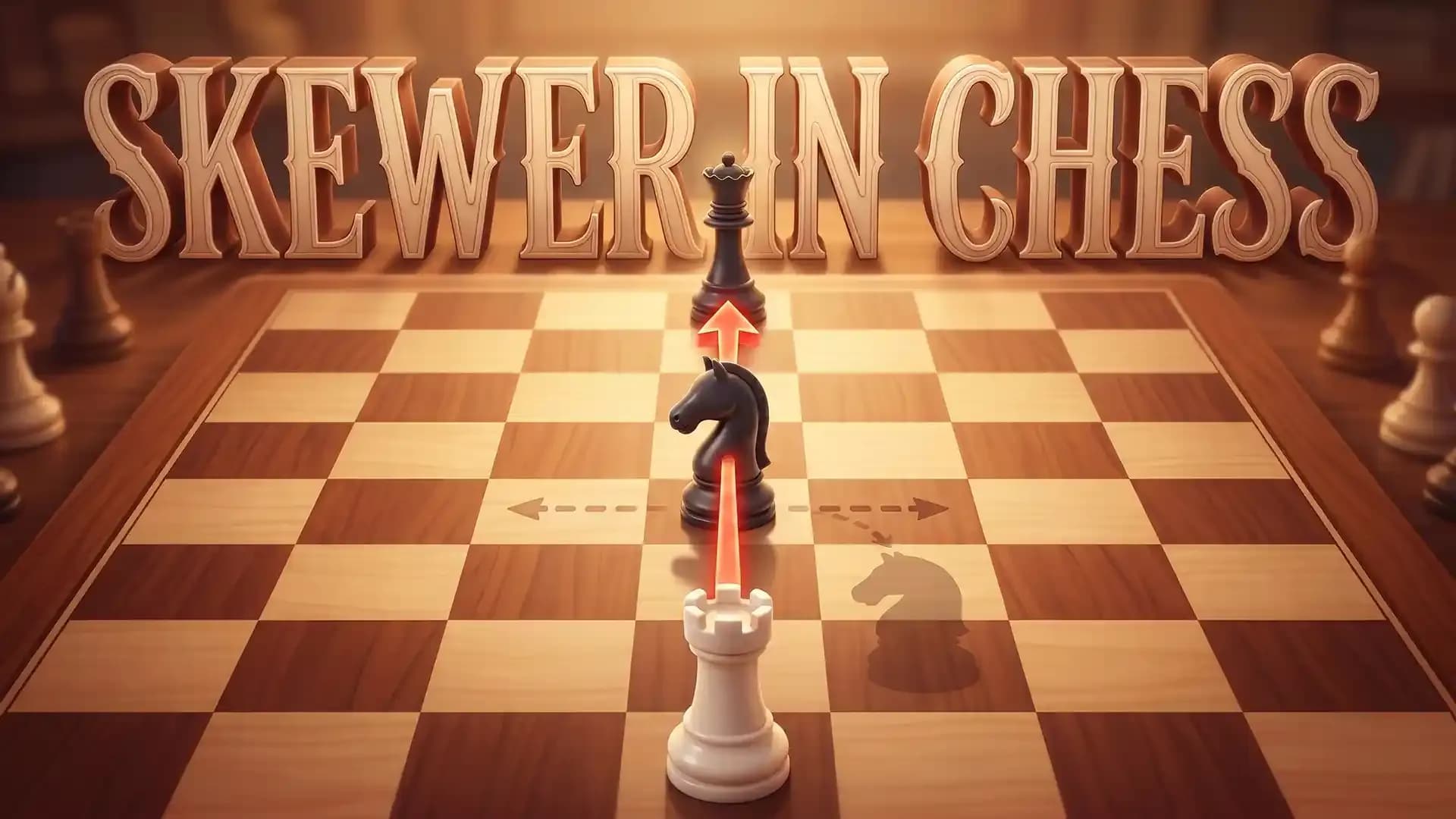
Types of Chess: Explore All Variants and How They're Played
Discover the different types of chess, including classical, rapid, blitz, and modern variants. Learn the rules, differences, and pick the best one to play today.

Castling in Chess: Rules, Long Castling & How to Castle
Castling in chess is a special move that allows the king and rook to move at the same time, helping protect the king and activate the rook for better board control.
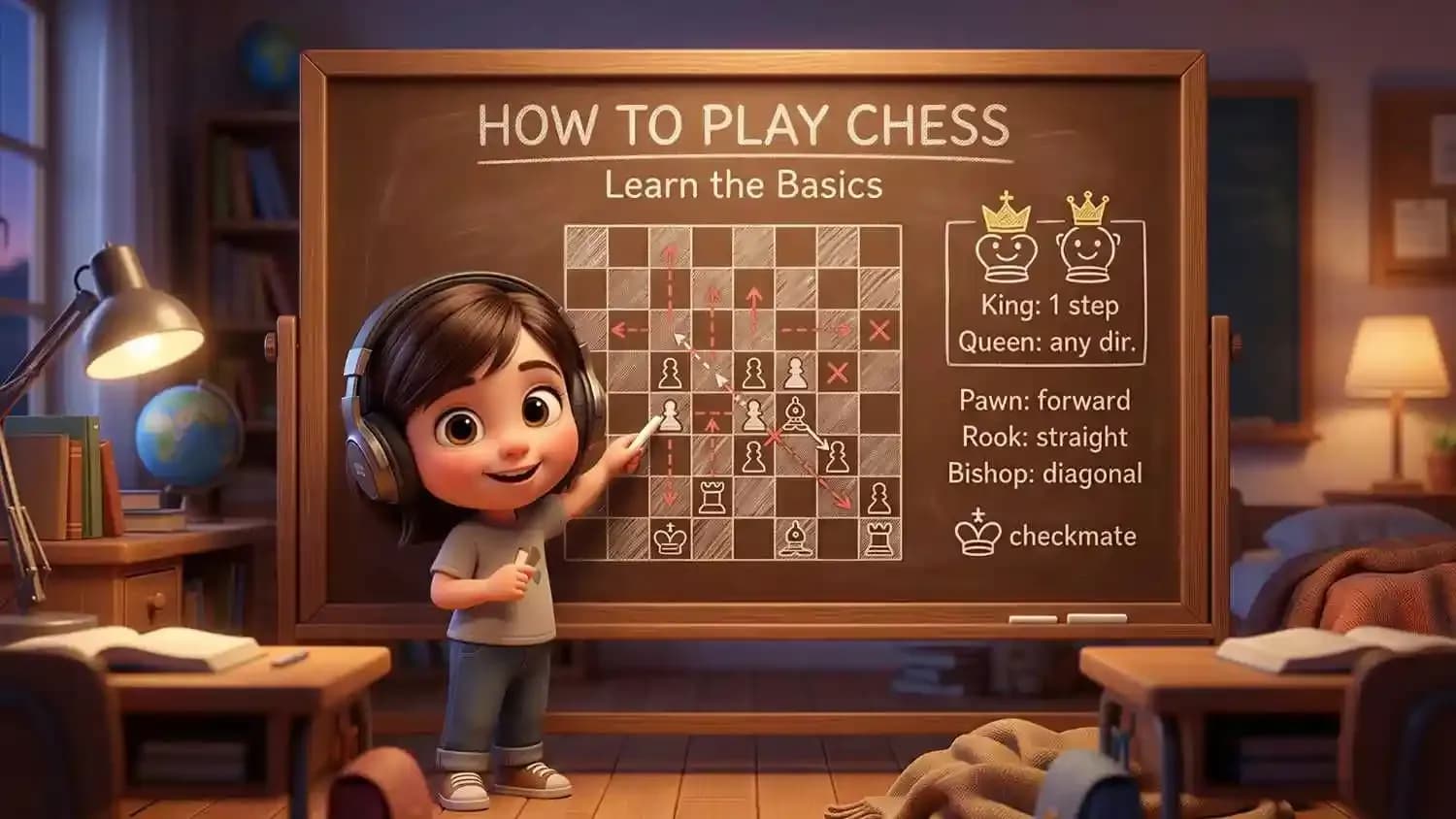
How to Play Chess: Easy Rules & Beginner Tips
How to play chess explained simply with board setup, piece rules, checkmate basics, and beginner strategies. Follow this guide and start playing today.

Youngest Chess World Champion: Top 10 Youngest Champions in History
Only a handful of players have ever claimed the title of youngest chess world champion, and the record keeps getting shattered. From Gukesh Dommaraju's historic 2024 win at just 18 to Kasparov's 40-year reign atop the record books, here's the full ranked list, timeline, and the rising prodigies who could break it next.
Chess Notation Explained: A Complete Guide to Reading and Writing Algebraic Notation
Master chess notation with our complete guide covering algebraic symbols, board coordinates, special moves and annotations. Start reading games today!

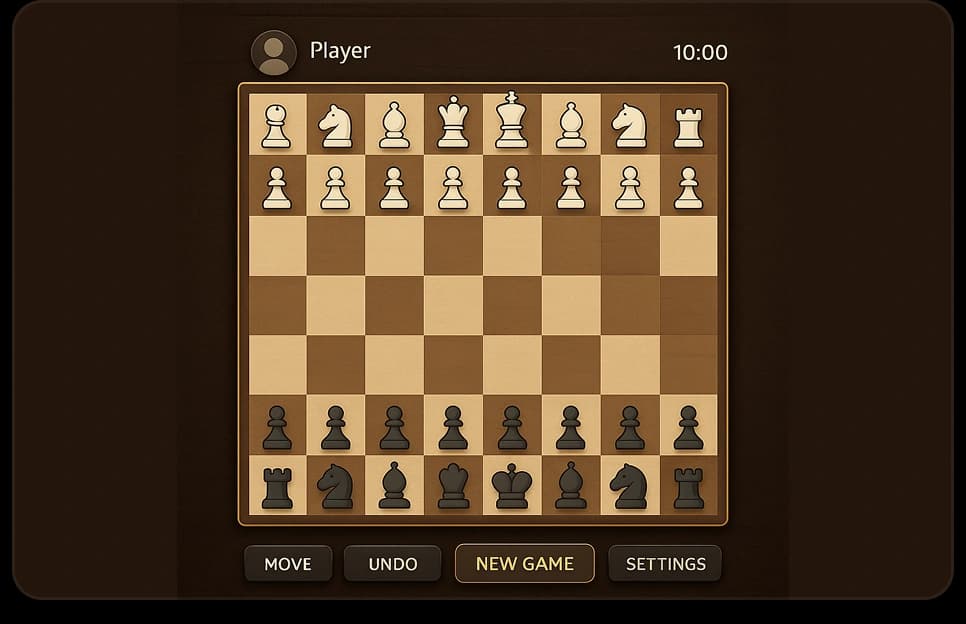
If you have ever played chess online or watched a pro tournament, you probably noticed a four-digit number next to a player’s name. This is called an Elo rating. It is a simple way to measure your skill level. Think of it like a score in a video game that goes up when you win and down when you lose.
Knowing your rating is a great way to see how you are improving. In this guide, we will explain how the system works in plain English. We will also look at your own score and the difference between when you play chess online and when you play in a serious, in-person tournament.
Table of contents
What Does Elo Mean in Chess?
The first thing you must understand about the Elo rating in chess is that it does not stand for anything; it is not an acronym. It is not a list of technical words. It is, in fact, named after its creator, Professor Arpad Elo. Most people start their journey wondering about the average beginner chess rating, which typically lands between 400 and 800, depending on the platform.
It happens that Arpad was a professor of physics and a master of chess, and he lived in the 20th century. He wanted to devise a method for measuring skill level more accurately than the messy methods people had been using up to that point.
Before the World Chess Federation (FIDE) adopted the ratings system in 1970, it was messy, to say the least. The major insight Professor Elo had was the fact that chess was a "probability." In other words, your Elo rating reflects your probability for winning against another player. It's a relative measurement. It only makes sense when you compare your rating to your opponents' ratings.
How Does the Elo Rating System Work?

The Elo rating system is dynamic. It does not just give you points for winning. Instead, it looks at who you beat and how hard that win was. To improve, you must learn to evaluate chess position accurately during your matches, as the system is designed to self-correct over time based on your performance.
If you are a very good player but you have a low rating, the system will help you gain points quickly. And once you are good enough to be good, you will eventually level off, and the rating will be about the same number.
The Points Exchange Explained
The outcome of any game of rated chess is either a transfer of the points of one player to the other player. Imagine it is a bet and the wager is the distance between the two participants. If you are learning how to win at chess against various opponents, here is how the points move:
- Winning against a higher-rated player: You are rewarded with a vast amount of points. This is because you pulled off an upset that the math did not expect.
- Winning against a lower-rated player: You earn a small amount of points. The system expected you to win, so you do not get much credit for doing what was expected.
- Drawing against a lower-rated player: You will actually lose points. Since you were the favorite to win, you are regarded as having not beaten the weaker player as a bad performance.
The K Factor (The Speed Multiplier)
The speed at which your rating moves up or down is controlled by something called the "K Factor." This is a multiplier that acts like a speed limit or a turbo boost for your rating. Even if you lose to the fastest checkmate possible, a high K Factor helps your rating bounce back or settle correctly more quickly.
- High K Factor: This is usually used for new players or children. It allows their rating to climb or fall very quickly, so they can find their correct skill bracket in just a few games.
- Low K Factor: Used for established professionals and Grandmasters. This ensures that a single bad day or one unlucky tournament does not destroy a rating that took a lifetime to build.
Elo Rating Chart: What Does Your Score Mean?
What is a "good" rating? That is a question every player asks. The answer depends on your goals and who you are playing against. You can use this reference table to see where you stand in the global chess hierarchy.
| Elo Range | Player Level | Description |
| Under 1000 | Complete Beginner | Still learning basic rules and how pieces move. |
| 1000 to 1200 | Beginner | Understands basic tactics like forks and pins. |
| 1200 to 1600 | Intermediate | Frequent club player who knows opening principles. |
| 1600 to 2000 | Advanced | Strong tactical vision and starts studying deep theory. |
| 2000 to 2200 | Expert | Candidate Master's level with very few simple blunders. |
| 2200 to 2400 | Master | The top 1 percent of players in most countries. |
| 2400 to 2500 | International Master | Professional level with deep chess knowledge. |
| 2500 and up | Grandmaster | The highest title a chess player can ever achieve. |
| 2700 and up | Super Grandmaster | The elite few who fight for the World Championship. |
FIDE vs USCF vs Online Elo: What Is the Difference?
One of the most common points of confusion for new players is why their rating on a site like Chess.com or Lichess is so different from an official over the board chess rating.
FIDE Ratings
These are the international standards. These ratings are generally the lowest and the hardest to earn. This is because they involve playing in person against serious competitors in a quiet tournament hall.
USCF (US Chess Federation)
These are usually slightly higher than FIDE ratings. An individual rated 1500 USCF may actually be 1350 when playing in a FIDE event. Each country has its own federation, and their scales differ slightly.
Online Elo
Top Chess platforms use Online Elo and various mathematical models, such as the Glicko-2 system. Because the "pool" of players is different and includes millions of casual fans, online ratings are often inflated. It is very common for a 1500-rated online player to struggle against a 1200-rated tournament veteran in real life.
Why Does the Elo Rating System Matter?
The system serves two very important purposes. First, it ensures fair competition. By using ratings, tournament directors can pair people of similar skill together. This makes the game competitive and enjoyable for both players. Nobody likes a game in which somebody is ten times stronger than the other.
Second, it offers a personal development plan. Chess is not like other hobbies, where you cannot tangibly perceive your growth. It is very satisfying to watch that figure increase by 800 to 1000. It is about keeping players entertained throughout their lifetimes, as there is always a level to achieve.
Conclusion
Competitive chess is the Elo rating system. It is frustrating to see yourself drop in the rankings and wonder how to improve chess skills after a hard loss; however, always keep in mind that the rating is merely a means to help you identify the right challenges.
The figure is not what you are as a human being; it shows how far you have come on your path. You need to concentrate on playing better, and the Elo will be an automatic follow-up.
FAQs
- 1000 1200 is a good average level for an average player who plays on fun. At 1500, you have surpassed the vast majority of the millions of people worldwide who play chess.
- Yes. When you hit 1000, then you are no longer a beginner. You are no longer wasting bits without any purpose, and you are beginning to play with a purpose.
- No, it is not an acronym. It is just the last name of the man who created it, Arpad Elo. He was a physics professor and a chess expert who used math to find a fair way to rank players.
- No. They apply various equations and teams. As a rule, you are rated several hundred points higher online than in your official tournament rating.
- Yes. When you lose to an opponent, points are deducted from your total. This is the reason why the system is respected. It involves steady performance to maintain a high score.
Types of Chess: Explore All Variants and How They're Played
Discover the different types of chess, including classical, rapid, blitz, and modern variants. Learn the rules, differences, and pick the best one to play today.
Castling in Chess: Rules, Long Castling & How to Castle
Castling in chess is a special move that allows the king and rook to move at the same time, helping protect the king and activate the rook for better board control.
How to Play Chess: Easy Rules & Beginner Tips
How to play chess explained simply with board setup, piece rules, checkmate basics, and beginner strategies. Follow this guide and start playing today.
Youngest Chess World Champion: Top 10 Youngest Champions in History
Only a handful of players have ever claimed the title of youngest chess world champion, and the record keeps getting shattered. From Gukesh Dommaraju's historic 2024 win at just 18 to Kasparov's 40-year reign atop the record books, here's the full ranked list, timeline, and the rising prodigies who could break it next.
Chess Notation Explained: A Complete Guide to Reading and Writing Algebraic Notation
Master chess notation with our complete guide covering algebraic symbols, board coordinates, special moves and annotations. Start reading games today!