English Opening in Chess – Complete Beginner to Advanced Guide



Albin Counter Gambit: Sharp Chess Opening Guide
Explore the Albin Counter Gambit in depth with opening theory, positional ideas, critical variations, and practical advice for both White and Black. Learn the plans today.

Dutch Defense: Aggressive Ideas and Winning Plans
Master the Dutch Defense chess opening and learn how to win with 1…f5. Explore attacking plans, structures, and practical strategies now.

Queen’s Indian Defense: Theory, Ideas & Main Lines
Queen’s Indian Defense explained with simple ideas, common variations, and practical tips. Discover how to play this powerful chess opening for Black.

Baltic Defense: Aggressive Chess Opening Explained
Discover the Baltic Defense in chess with clear explanations, key plans, and tactical traps. Improve your opening play and surprise rivals today.

Chigorin Defense: Key Ideas, Theory & Traps
Learn the Chigorin Defense with key ideas, main lines, traps, and strategy tips. Discover how Black creates active play against 1.d4.

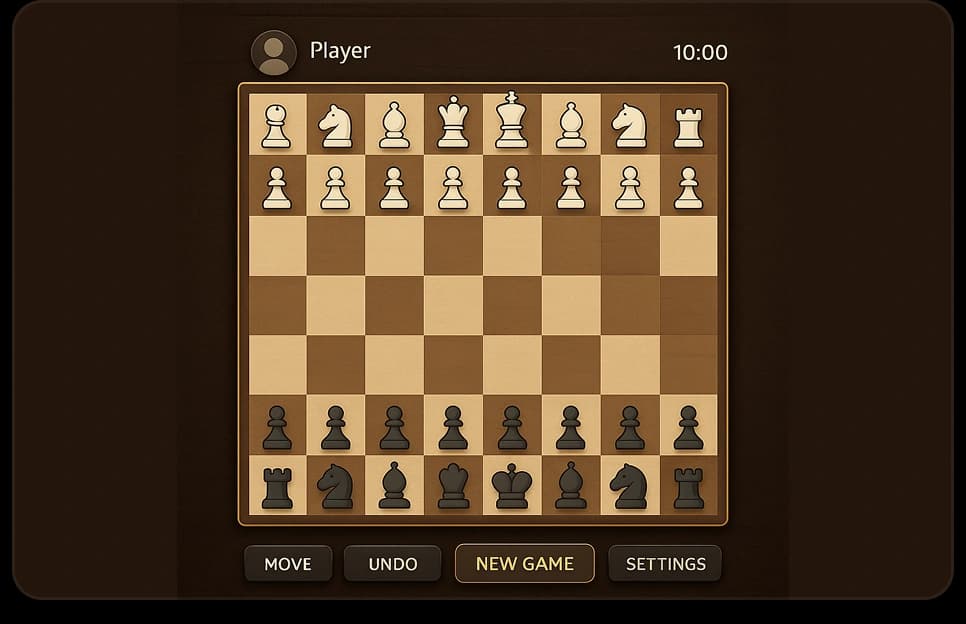
The English opening chess is the most advanced and level for opening with white. If you are a chess player and desire to play at an advanced level, you are required to learn this move. You can learn the best chess opening for white.
The English opening move order leads to positional battles rather than immediate tactical clashes. This concept is popular in classical and modern chess as it offers a hypermodern opening by controlling the centre with pieces and encouraging the opponent.
Table of contents
- What is the English Opening?
- What are the key ideas and concepts behind the English Opening?
- When to choose English Opening over 1.e4 / 1.d4?
- Main Variations of the English Opening
- Strengths of the English Opening
- Disadvantages of the English Opening
- Famous Games with the English Opening
- How to Learn and Master the English Opening
- Conclusion
What is the English Opening?
The English opening is a chess opening for the white, starting with the move 1.c4, and a flexible flank opening, aiming to control the d5 square, thereby leading to modern and classical positions. This popular choice is meant for intermediate to advanced players.

It's a move that controls the d5 square, then prepares to expand in the central region with d4. The English opening in chess is a flank opening demanding influence from the sides before opening to the centre. You may slow down in the central counterplay.
The English opening of chess is explained vividly, while Howard Staunton played this style of chess in the 19th century. As he popularized the 1.c4 opening move, this is known as the English opening.
What are the key ideas and concepts behind the English Opening?
There is an English opening strategy and English opening concepts that defines that Hypermodern strategy. The idea of hypermodern strategy in chess is like occupying the centre with pawns and controlling the centre from a distance.
The c4 pawn strategy is used since the move doesn’t immediately fight with e4 or maybe d4. They control central square d5 from the sides. They prepare a possible expansion of d4 later and open a diagonal for the queen. They help in developing the knight to c3.
Typical Development Plans:
- Nc3: Controls the d5 and e4 squares.
- g3: Exerts long-range pressure on the center.
- c4: Flexible start, controlling g5.
All these setups will help you play the chess opening in the most professional way.
When to choose English Opening over 1.e4 / 1.d4?
There is a significant advantage to choosing the English opening over 1.e4 or 1. d4. You may choose King's Opening pawn 1.e4 while choosing open, tactical, and sharp positions. You would like immediate central control with pawns and prefer the attacking chances, open files, and piece activity.
You choose Queen’s Pawn opening strategy if you prefer positional, solid, and strategic play. If you prefer a closed or semi-closed structure, you will likely appreciate this position in the long term. You will enjoy manoeuvring, endgame play, and space advantages by playing this strategy.
Main Variations of the English Opening
There are various types of forms in the English opening variations, and you can note the best way to tackle your opponent.
Symmetrical Variation (1.c4 c5)
There is a balanced structure and mirror play. After the pawns and knights are positioned along the C-file, both players proceed to establish a fiancetto on the kingside.

There is a planned structure for black and white. In case both the knights are on the f-file and fianchetto are blocked, white can advance the d4 pawn to break the possible symmetry.
Reversed Sicilian (1.c4 e5)
In the reversed Sicilian, the white player plays 1.c4, and the block player reply e5, thereby mirroring the Sicilian structure, having an extra tempo for white. White plays Sicilian ideas but with an extra tempo. There are chances of aggressive attacks.

Four Knights Variation (1.c4 e5 2.Nc3 Nf6 3.Nf3 Nc6)
This is the most common sequence, and the knights will develop any order for reaching the position. This is a solid and classical development. There are middle game plans. The Four Knights leads to quiet positional play, although there are some variations. This opening is popular with beginners who strictly adhere to the opening principle.

Fianchetto Systems (g3, Bg2 setups)
In this setup, the opening is characterized by black allowing the white to establish an intense pawn center with pawns on d4 and c4. There is control of long diagonals, as well as positional and strategic battles. The resulting middle-game positions can be highly complex and double-edged.
Other sidelines (e6 setups, Slav-like, Hedgehog systems)
Like the different setups, the E6, Slav-like, and Hedge Hogs include various defense system. The Black pays the e6 and d6 down pawn, they are generally fianchetted bishops on g7 and pawns on c6 and b6. These are the most common English opening lines. You may know more about the chess mistakes beginners make.
Strengths of the English Opening
- There are several advantages and reasons why people play English opening
The English opening offers a rich variety of structures and styles, appealing to players of various preferences. They can be used as a transpositional weapon, i.e. they can be used to steer games into different openings. - Positional richness: The opening provides a long-term positional edge, focusing on various strategic advantages. They allow the white to delay central paw tension and adopt various strategic positions.
- Surprise factor against unprepared players: The advantages of the English opening is that it can be considered a surprise factor against unprepared players, and makes it easier for players to learn.
- This approach is preferred by top grandmasters such as Magnus Carlsen, Kramnik, and Kasparov. Follow moves from Magnus Carlsen chess openings for the best learning.
Disadvantages of the English Opening
While there are various perks, there are certain disadvantages to the English Opening.
- They cause slower development compared to 1.e4. Since the white’s place is based on white control rather than immediate central occupation, the growth could be slower.
- Black can steer into symmetrical/equal positions, and they can mirror the white’s moves. This leads to dry and maneuvering games, making it easier for the white to make structural moves.
Requires a good understanding of pawn structures. This tends to be slower and more positional.
These are considered some of the English Opening drawbacks. They are suitable for the best aggressive chess openings.
What are the typical plans and strategies for English opening plans?
If you are wondering how to play English openings, then there is a guide for white and black games. Learn more about the chessboard setup from online resources.
For White:
- Central break (d4 push): The d4 push fights for the centre and opens lines for pieces. They gain space, and the time is critical.
- Kingside expansion with f4: This is meant to advance if f4 weakens, and it will seize space and prepare attacks on the king. Playing against Black’s pawn weaknesses.
For Black:
- In the case of Symmetrical defense (mirror), for white moves, the most notable play in 1.c4 to c5 and maintaining symmetry. The control of dark squares is often done by d4. You may learn more on chess checkmate from online resources.
- Counterplay with d5 involves black challenging with a pawn in the center. This aims solid structure and active play without a counter play and uses f5 for center control and attack on the king.
The Hedgehog system is a resilient defense structure serving long-term counterpart against aggressive openings. This is applicable if you are playing black against 1.c4 or 1.Nf3 setups. You can watch for your chess time controls and learn to improvise. You may learn more on chess premove.
Famous Games with the English Opening
If you are following some famous English opening players, then you must read the following:
- Garry Kasparov’s use of the English in World Championships.
- Magnus Carlsen’s modern games.
- Example positions that shaped chess theory.
You may emphasize on the best chess books for beginners.
How to Learn and Master the English Opening
If you are eager to learn about the English opening Chess then you can look for some online resources meant for English Opening for the beginners.
- Study books like Grandmaster Repertoire: The English Opening.
- Study some model games by Kasparov, Carlsen and other grandmasters.
- You can practise with tips from Fianchetto or learn the pawn structures. You can learn more about complex chess openings.
Conclusion
The English Opening in chess is all about flexibility and strategic richness. The English opening strategy is all about providing a global opportunity to the most inquisitive player. If you are eager to learn some English opening variations, then some credible books and online resources are available.
The best way to understand the English is not just by reading but by actually playing it. You can easily play chess against different opponents to practice this opening and see how it fits your style
FAQs
- The idea is to control the center indirectly rather than occupying it immediately with pawns like 1.e4 or 1.d4.
- Yes, it's good for beginners as it teaches control of the centre from a distance.
- The best defences are Symmetrical English, Reversed Sicilian, Four Knights Variation, and Fianchetto Systems.
- Garry Kasparov and Magnus Carlsen are among the famous ones.
- It is generally considered a positional opening in significant cases.
- These are compared to the English Opening mainly as 1. e4 leads to direct, tactical, and open games. 1.d4 leads to solid, positional, and semi-solid games.
- Yes, the English opening can transpose into many other openings, such as Symmetrical English, Reversed Sicilian, Catalan Opening, and others.
Albin Counter Gambit: Sharp Chess Opening Guide
Explore the Albin Counter Gambit in depth with opening theory, positional ideas, critical variations, and practical advice for both White and Black. Learn the plans today.
Dutch Defense: Aggressive Ideas and Winning Plans
Master the Dutch Defense chess opening and learn how to win with 1…f5. Explore attacking plans, structures, and practical strategies now.
Queen’s Indian Defense: Theory, Ideas & Main Lines
Queen’s Indian Defense explained with simple ideas, common variations, and practical tips. Discover how to play this powerful chess opening for Black.
Baltic Defense: Aggressive Chess Opening Explained
Discover the Baltic Defense in chess with clear explanations, key plans, and tactical traps. Improve your opening play and surprise rivals today.
Chigorin Defense: Key Ideas, Theory & Traps
Learn the Chigorin Defense with key ideas, main lines, traps, and strategy tips. Discover how Black creates active play against 1.d4.