Chess Piece Names: All 6 Pieces, Their Moves, Positions & Values


Types of Chess: Explore All Variants and How They're Played
Discover the different types of chess, including classical, rapid, blitz, and modern variants. Learn the rules, differences, and pick the best one to play today.
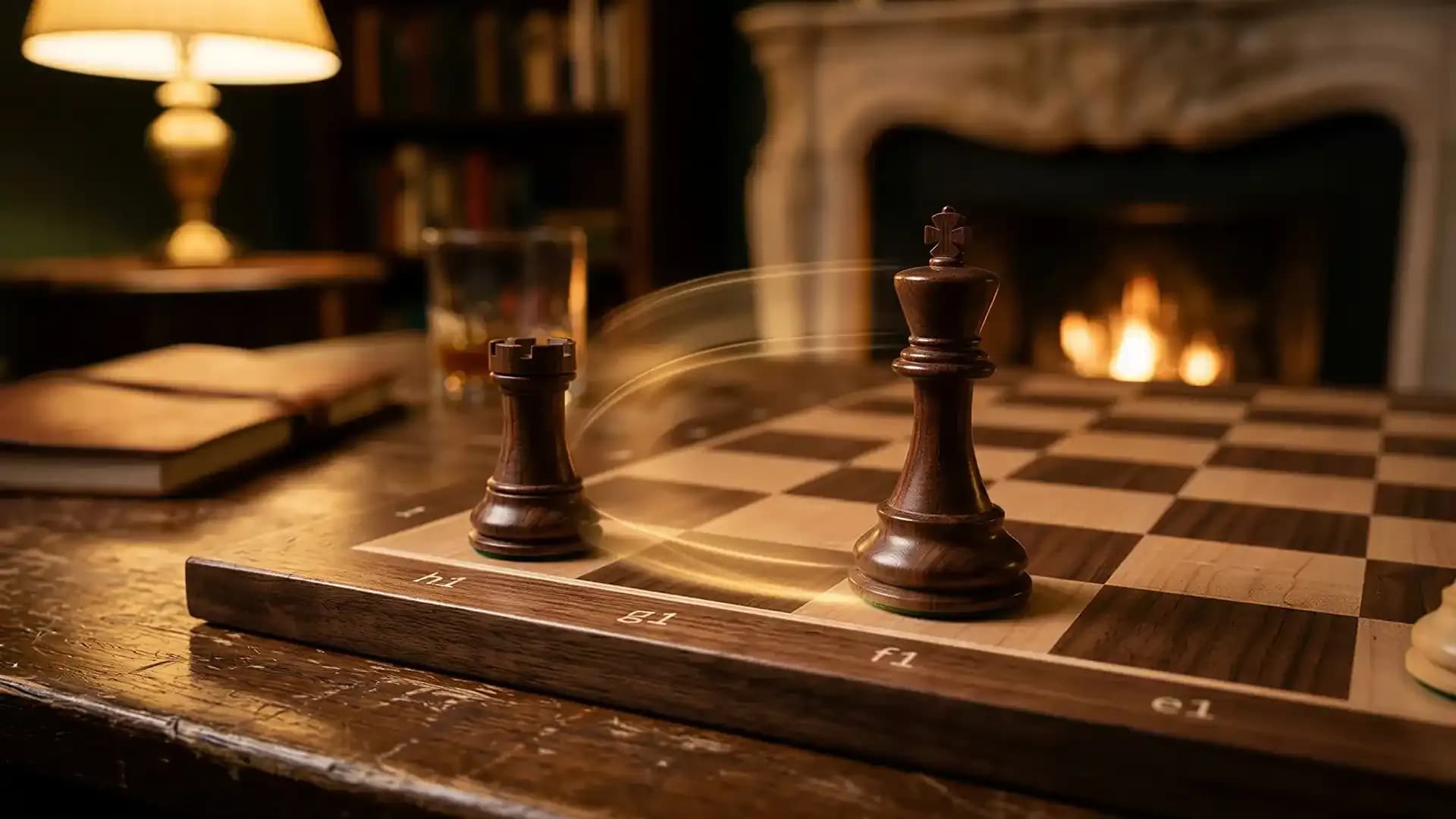
Castling in Chess: Rules, Long Castling & How to Castle
Castling in chess is a special move that allows the king and rook to move at the same time, helping protect the king and activate the rook for better board control.
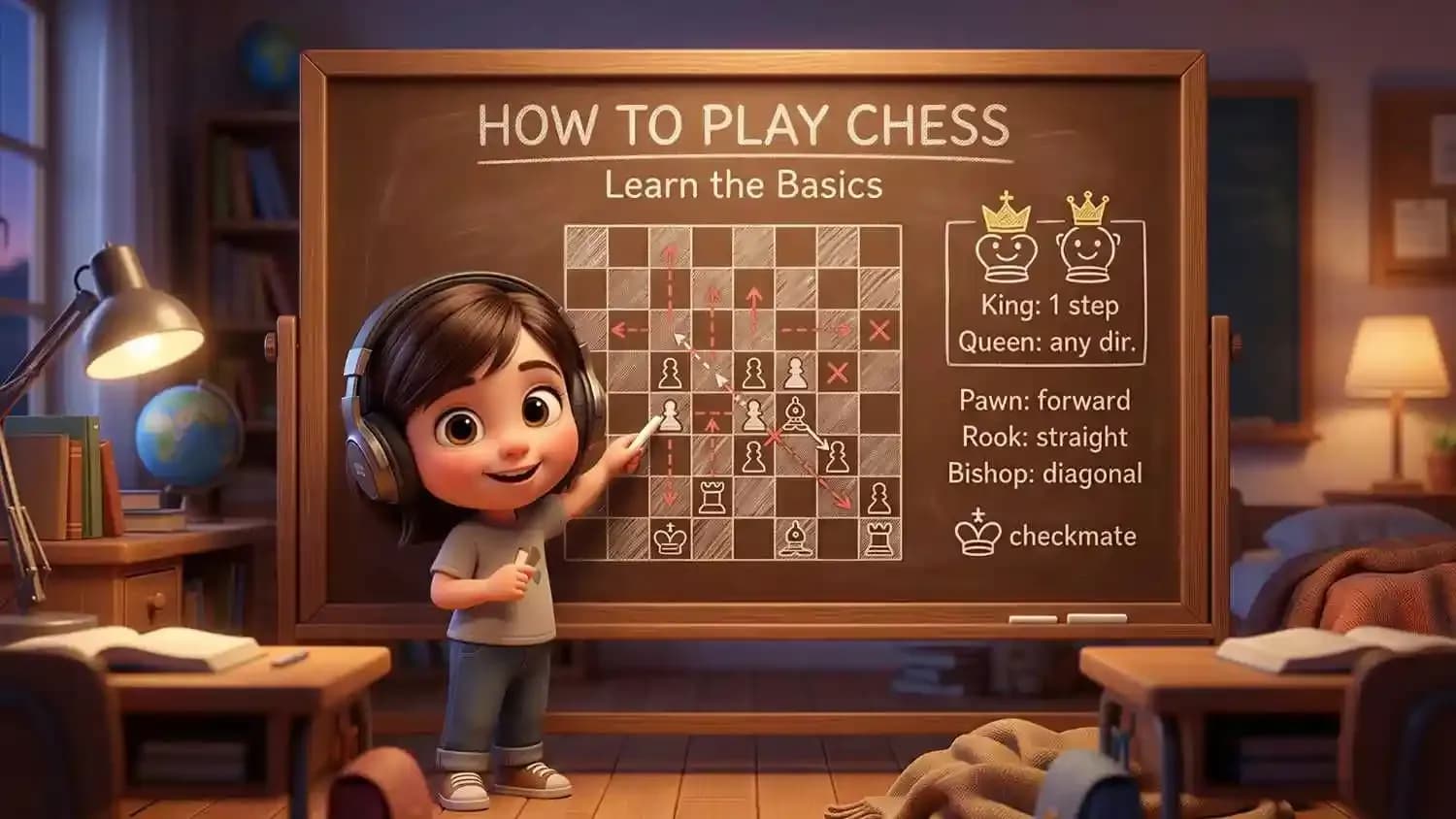
How to Play Chess: Easy Rules & Beginner Tips
How to play chess explained simply with board setup, piece rules, checkmate basics, and beginner strategies. Follow this guide and start playing today.

Youngest Chess World Champion: Top 10 Youngest Champions in History
Only a handful of players have ever claimed the title of youngest chess world champion, and the record keeps getting shattered. From Gukesh Dommaraju's historic 2024 win at just 18 to Kasparov's 40-year reign atop the record books, here's the full ranked list, timeline, and the rising prodigies who could break it next.
Chess Notation Explained: A Complete Guide to Reading and Writing Algebraic Notation
Master chess notation with our complete guide covering algebraic symbols, board coordinates, special moves and annotations. Start reading games today!

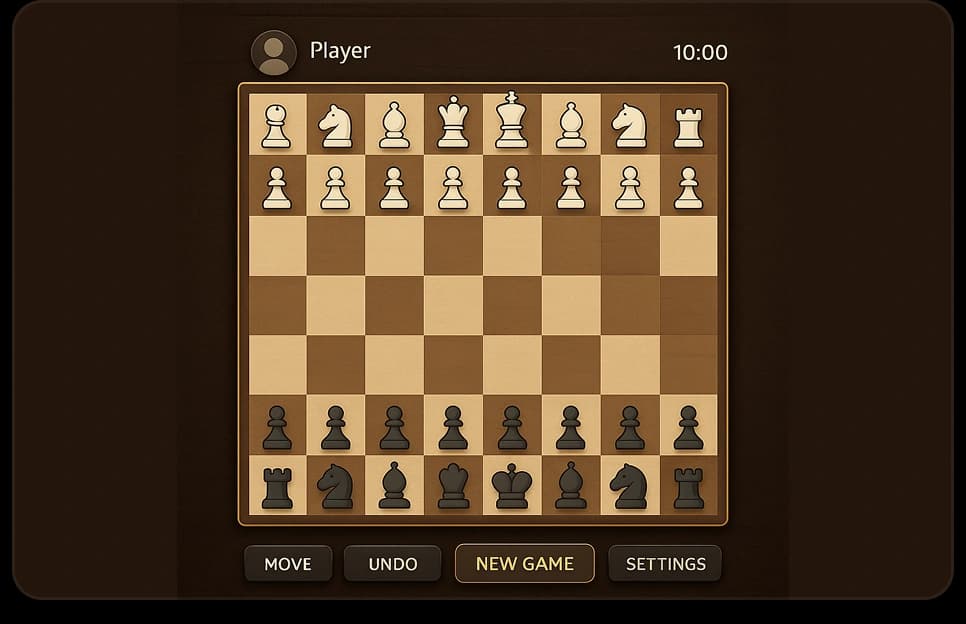
Picture stepping into a world where every piece tells a story. Getting familiar begins not with grand moves, but with small steps. One by one, they reveal how they step, slide, or leap across squares. Each has habits, a rhythm all their own. Mastering them comes later - first, just learn who they are.
Right where you stand today, every grandmaster once began too. Piece by piece, they figured out what each chess figure was called. Movement rules came next: how a knight jumps, why bishops slide diagonally. Their starting spots on the board mattered just as much. Thirty-two pieces fill a regular set. Sixteen of those belong to you at the start. The rest go to your rival across the table. Each tries to think further ahead than the other.
Setting up your pieces correctly is the most important part of starting a match. If even one piece is in the wrong spot, it can mess up your whole strategy. Whether you use a real board or like to play chess online, knowing where everything goes gives you the best start.
Table of contents
- All 6 Chess Piece Names — Moves, Positions & Values
- 1. King — The Most Important Chess Piece
- 2. Queen — The Most Powerful Chess Piece
- 3. Rook — The Long-Range Attacker
- 4. Bishop — The Diagonal Slider
- 5. Knight — The Only Piece That Jumps
- 6. Pawn — The Most Numerous Piece
- Chess Piece Value
- Chess Piece Names in Other Languages
- Conclusion
All 6 Chess Piece Names — Moves, Positions & Values
Every piece on the board has a specific job. Some are long-range snipers, while others are close-quarters combatants. Here is the complete breakdown of the chess pieces' names and moves.
1. King — The Most Important Chess Piece
The King is the center of the chess universe. Everything on the board happens either to protect your King or to hunt your opponent's. Mastering the safety of this piece is widely considered the best way to get better at chess for any aspiring player.
- Starting Square: e1 for White, e8 for Black.
- How it Moves: One square in any direction, up, down, left, right, or diagonally.
- Value: Infinite. You cannot "lose" or "trade" your King. If the King is trapped with no escape, the game ends (checkmate).
- Special Move: Castling. That's what happens when the King shifts two spaces sideways during castling. A Rook then leaps past, settling right next to him on the opposite side. This dual motion occurs only once per game. Protection takes shape fast, especially with pawns forming a shield up front. That single move repositions both key figures at once. The Commander gains cover just before pressure builds.
- Key Rule: A king cannot step where an opponent's piece threatens it. One space must separate both kings at all times. They repel like matching magnetic ends, refusing to touch. That one-square limit means the king directly controls up to 8 of the 204 total squares on the board, a small reach on a grid far larger than most players realize when asking how many squares in a chess board.
2. Queen — The Most Powerful Chess Piece
The Queen might not wear the crown, yet she carries the sharpest threat on the board. When the game tightens, it is her reach that makes opponents hesitate. Power spreads where she moves - farther than any other except the pawn in rare surges. Fear grows quietly when she steps forward.
- Starting Square: d1 for White, d8 for Black.
- Pro Tip: Here is a handy way to recall where each chess piece goes. white queen on white, black queen on black. That little detail sticks once you see it. Light meets light, dark pairs with dark. It just fits, somehow. Most players find this click fast. Spot the color, place the queen. No need to memorize extra rules. Works every time. Looks right because it is.
- How it Moves: Sliding smoothly, it travels any count of spaces straight across, up, down, or slanting corners. This piece works as both a Rook and a Bishop fused together, yet it blocks if something sits in its path.
- Value: 9 Points.
- Key Tip: Watch out if you're just starting. Rushing the Queen forward early might seem smart. Yet it rarely works well. Since she's worth more than most pieces, the other player gains time by chasing her with weaker ones like Knights or Bishops. Each move you spend saving her lets them set up stronger positions instead. Slow down and let pawn take the first steps. Learning the correct chess piece placement and development early on ensures your strongest piece enters the battle at the perfect moment.
3. Rook — The Long-Range Attacker
The Rooks (sometimes incorrectly called "castles") are the heavy artillery of your army. They start in the corners and often don't join the fight until the middle or late game.
- Starting Square: a1 and h1 (White), a8 and h8 (Black).
- How it Moves: It slides square after square along straight lines. Obstacles block its path - no leaping allowed, just like the Queen. Movement stops when another piece stands in the way.
- Value: 5 Points.
- Special Move: A sudden shift happens when castling unfolds. This move pairs the King with the Rook, linking them for mutual protection. New players often fixate on one key detail - both pieces must stand untouched before acting. That small rule becomes their starting point. Only then does defense gain real shape.
- Key Tip: Here's something worth noting. Open files are where rooks shine - these are columns without any pawns in sight. Picture one sitting there, stretching its reach from one edge to the other. That kind of presence puts pressure on everything nearby. Crossing such a line suddenly feels risky for whoever’s facing it.
4. Bishop — The Diagonal Slider
Bishops belong to every player right from the start. It is a chess piece that moves diagonally. - two of them, tucked beside the knights. These small but sharp pieces thrive when they stretch across diagonal lanes on the board. A single Bishop can trap an opponent's unit by pressing it toward something worth more. Their strength shows best when paths stay clear, and sightlines run long.
- Starting Square: c1 and f1 (White), c8 and f8 (Black). They sit right next to the King and Queen.
- How it Moves: Any number of squares diagonally.
- Value: 3 Points.
- Key Rule: Color-Bound. A single rule shapes how Bishops move - color defines them. One travels only across white squares, always will. The second sticks to black, without exception. Switching sides of color? That never happens. Lose the one on white early, then watch - light-square spots grow weak, harder to reach. Missing that piece means some parts of the board stay out of touch.
- Key Tip: Bishops move best when pawns of the same shade do not block them. When your foot soldiers sit where your Bishop steps, movement gets tight. That long-range piece starts dragging like it's stuck in mud. This coordination is a vital middle game strategy chess principle, as active bishops often decide a match's outcome long before the endgame.
5. Knight — The Only Piece That Jumps
A leap here, a jump there - that's how the knight in chess moves across squares. Not like others, sliding straight ahead, this one twists its path into an L-shape. Some call it the horse, maybe because it gallops over obstacles. Most newcomers stumble at first, trying to guess where it lands next.
- Starting Square: b1 and g1 (White), b8 and g8 (Black).
- How it Moves: L-shaped paths define its motion. Moving two spaces straight, then turning at right angles for one step. This odd pattern slips past barriers that others cannot. Unseen threats emerge where least expected. The knight's path disrupts steady lines. Its jump defies normal flow on the board.
- Value: 3 Points.
- Special Ability: Over any crowd, the Knight moves alone. Should pieces block every path, still it leaps without pause. A line of pawns? No holdback. Even a Queen standing firm won’t stop its stride. Where it lands depends not on space but shape - its move is always bent, never straight.
- Key Tip: Knights on the edge are far less effective than those in the center. A central knight reaches eight squares, while one on the edge has its options cut in half. Centralized horse control the board because knights move backwards just as easily as forward, making them versatile defenders once they claim the middle.
6. Pawn — The Most Numerous Piece
Pawns earn that label for good reason. Though each moves slowly, together they shape how pieces flow across the board. Their collective presence defines space, guiding where power can travel.
This contrast becomes clearer when looking at chess vs checkers, where piece movement is far more uniform and lacks the layered structure that pawns bring to chess strategy.
- Starting Square: The entire second rank (a2 through h2 for White, a7 through h7 for Black).
- How it Moves: Forward one square. However, on its very first move, a pawn has the option to jump two squares forward.
- Capturing: Pieces differ in how they take opponents; this one stands apart. Moving directly ahead, its capture occurs at an angle, just a single space forward. Unlike the Knight, jumping is beyond its ability. New players sometimes wonder whether such units can remove monarchs during play. Many beginners ask can a pawn take a king in chess, but while they can deliver checkmate, no piece ever actually removes the King from the board.
- Value: 1 Point.
- Special Rules: Promotion occurs when a pawn reaches the farthest row of the board - rank eight. Upon arrival, transformation follows; choice includes any piece, most often a queen. Such advancement shifts the balance quietly. Each small step forward carries hidden weight. Victory may rise from the least expected path.
Chess Piece Value
When you are playing, you will constantly face the question: Should I trade my piece for theirs? To answer that, you need to know the names of chess pieces and their relative point values.
| Chess Piece | Quantity | Point Value | Relative Strength |
|---|---|---|---|
| Pawn | 8 | 1 | Low (Individually) |
| Knight | 2 | 3 | Moderate |
| Bishop | 2 | 3 | Moderate |
| Rook | 2 | 5 | High |
| Queen | 1 | 9 | Extreme |
| King | 1 | Infinite | N/A |
Chess Piece Names in Other Languages
Because chess originated in the East and spread through Persia and Europe, the names of chess positions and piece titles vary widely around the world.
| Piece | French | German | Russian | Spanish |
|---|---|---|---|---|
| King | Roi | König | Korol | Rey |
| Queen | Dame | Dame | Ferz (Vizier) | Reina |
| Rook | Tour | Turm | Ladya (Boat) | Torre |
| Bishop | Fou (Fool) | Läufer (Runner) | Slon (Elephant) | Alfil |
| Knight | Cavalier | Springer | Kon (Horse) | Caballo |
| Pawn | Pion | Bauer (Farmer) | Peshka | Peón |
One might observe that Russian chess terminology refers to the Bishop as an "Elephant." Meanwhile, in French usage, the piece is called a "Fool" or "Jester." Such terms point toward historical roots within medieval courts. The evolution of these labels reveals cultural influences on the game's development.
Conclusion
Understanding how each piece moves turns confusion into strategy. Every figure has a specific role, and movement gains purpose when intent replaces chance. For an aspiring player, studying the average IQ of chess grandmasters matters less than building a consistent habit. Success comes from clarity, not speed. A single pawn moves forward as part of a larger balance, leading to victory once every role is fulfilled.
FAQ
- Start from the outer edges, position Rooks first. Moving closer, the knights take their places afterward. Following them, Bishops settle beside. The Queen aligns with her own shade of square. Beside her, the King takes a position. Pawns occupy the rank directly ahead. Upon setup completion, confirm that a light-colored square is at the lower right.
- A Bishop travels only along diagonal paths. From its first position, it remains bound to squares of one shade throughout play. Its movement allows no shift to opposing tones across the board.
- A single pawn stands alone. When combined with the possibility of advancement, it has the potential to go far beyond its size. Transformation into a queen sets it apart. Though simple in movement, such a change shifts the balance unexpectedly. Its power lies not in strength but in patience, slowly moving forward without haste.
- Only the Knight. This makes the Knight extremely valuable in "closed" positions where pawns block all straight lines.
Types of Chess: Explore All Variants and How They're Played
Discover the different types of chess, including classical, rapid, blitz, and modern variants. Learn the rules, differences, and pick the best one to play today.
Castling in Chess: Rules, Long Castling & How to Castle
Castling in chess is a special move that allows the king and rook to move at the same time, helping protect the king and activate the rook for better board control.
How to Play Chess: Easy Rules & Beginner Tips
How to play chess explained simply with board setup, piece rules, checkmate basics, and beginner strategies. Follow this guide and start playing today.
Youngest Chess World Champion: Top 10 Youngest Champions in History
Only a handful of players have ever claimed the title of youngest chess world champion, and the record keeps getting shattered. From Gukesh Dommaraju's historic 2024 win at just 18 to Kasparov's 40-year reign atop the record books, here's the full ranked list, timeline, and the rising prodigies who could break it next.
Chess Notation Explained: A Complete Guide to Reading and Writing Algebraic Notation
Master chess notation with our complete guide covering algebraic symbols, board coordinates, special moves and annotations. Start reading games today!