Modern Defense Chess: Master This Flexible Opening Strategy



Albin Counter Gambit: Sharp Chess Opening Guide
Explore the Albin Counter Gambit in depth with opening theory, positional ideas, critical variations, and practical advice for both White and Black. Learn the plans today.

Dutch Defense: Aggressive Ideas and Winning Plans
Master the Dutch Defense chess opening and learn how to win with 1…f5. Explore attacking plans, structures, and practical strategies now.

Queen’s Indian Defense: Theory, Ideas & Main Lines
Queen’s Indian Defense explained with simple ideas, common variations, and practical tips. Discover how to play this powerful chess opening for Black.

Baltic Defense: Aggressive Chess Opening Explained
Discover the Baltic Defense in chess with clear explanations, key plans, and tactical traps. Improve your opening play and surprise rivals today.

Chigorin Defense: Key Ideas, Theory & Traps
Learn the Chigorin Defense with key ideas, main lines, traps, and strategy tips. Discover how Black creates active play against 1.d4.

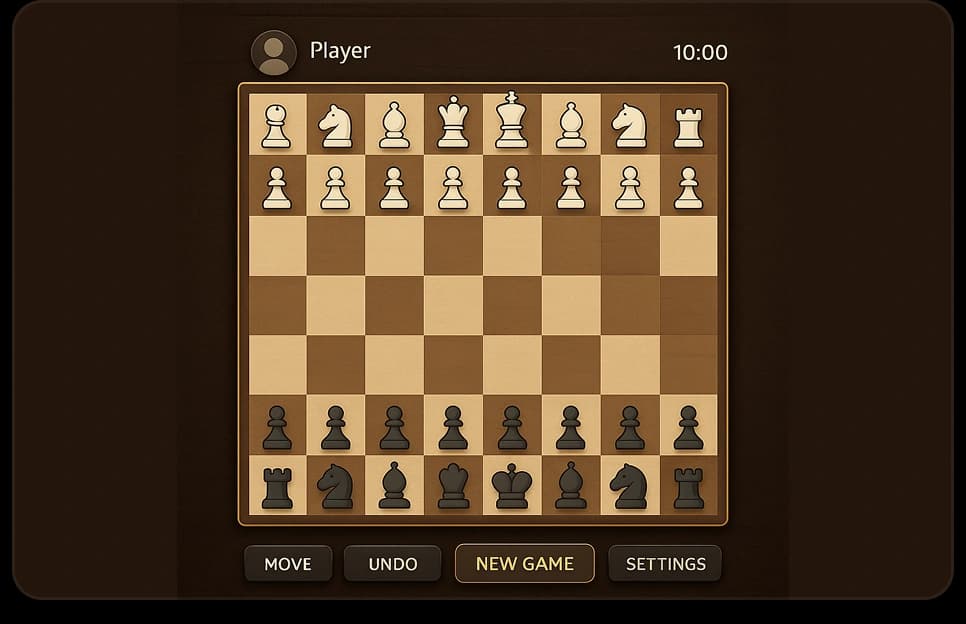
When playing black pieces, it is strategic to apply the Modern Defense, which is one of the most suitable for black. It is 1.e4 g6 2.d4 Bb7 that every novice has to learn first.
This opening is also referred to as the Robatsch Defence and fits into the hypermodern school of chess openings. The hypermodern school of chess rests on one major principle: allow the adversary to occupy the center of the board first, and then break through at the proper moment.
Among the wide variety of chess openings, the Modern Defense remains at the top in popularity, a popularity that stems from the fact that the Modern Defense also allows the practitioner to opt for a range of flexible and adaptable strategies. These range from the Pirc Defense to the King's Indian Defense, and often leave the opposition baffled due to the sheer number of different methods that can be deployed.
Table of contents
Modern Defense Chess Strategies
Hypermodern Philosophy: Allowing Center Control & Undermining It
The Modern Defense follows the hypermodern principle. In contrast to other opening strategies, Black simply allows White to play d4 and e4 Pawns, opening the center.
The White player, unbothered, takes center position as Black seeks to counter with a break on c5 or e5, or pressure with the g7 bishop. The plan is to invite White to overextend and then strike at the right time.
Delayed Nf6 & Fianchetto Setup

The variation in move order has a greater impact on the defensive strategies of the Modern and Pirc Defenses. While in the Pirc Defense, Black develops the knight to f6 early. In the Modern, he delays this move in favor of a fianchetto on g6, Bg7, and d6.
This move prevents White from advancing the e-pawn to e5 prematurely and affords Black greater flexibility in deciding the placement of the knight.
Pawn Breaks & Counterplay Plans
Black’s counterplay usually revolves around well-timed pawn breaks:
- c5 puts direct pressure on White’s d4 pawn.
- e5 strikes at the center and opens lines for pieces.
- a6 and b5 can expand on the queenside in some lines.
- In certain positions, Black even pushes f5 to start a kingside attack.
The timing of these breaks is critical. If Black plays too slowly, White’s pawns can dominate and leave Black with little space.
Main Variations & Move Orders of Modern Defense
Standard System / Classical Setup
The most common path is: 1.e4 g6 2.d4 Bg7 3.Nc3 d6. Here, Black develops in relative silence, postponing the operation of the center until later or potentially with c5 or e5. The position is flexible and can lead to many different middlegames. It is solid black openings against 1.e4.
Averbakh System (with c4)

One sharp option for White is to play c4 early: 1.e4 g6 2.d4 Bg7 3.c4 d6 4.Nc3. This creates a broad pawn center. Black often responds by transposing into King's Indian-style setups, where White has more space but Black prepares counterplay with e5 or c5.
Modern Pterodactyl / Early c5 Lines

The Pterodactyl Variation starts with 1.e4 g6 2.d4 Bg7 3.Nc3 c5. Instead of waiting, Black immediately attacks White's center. This creates unbalanced, tactical positions that can surprise opponents who are familiar only with the Classical setup.
Unusual Lines & Sidelines
The Modern Defense also has some rare sidelines:
- Monkey’s Bum Attack: White plays Qf3 and Bc4 early, targeting f7. It’s tricky but risky for White.
- Norwegian / North Sea Defense: 1.e4 g6 2.d4 Nf6 3.e5 Nh5. This unusual move tries to surprise White and avoid theory.
While these are not the main lines, they can be fun in blitz or rapid games.
Pros & Cons — When the Modern Defense Works & When It Doesn't
Strengths
- The Modern Defense works well for players who like flexible setups that can switch into other openings.
- Prefer counterattacking instead of memorizing heavy theory.
- Want to surprise opponents at the club level or in online games.
- Enjoy imbalanced positions with room for creativity.
Drawbacks & Risks
- If Black plays passively, then White will have too strong a center.
- Timing is everything: a mere moment's neglect will lead to a restricted position.
- Versus strong players, White can guide the game into positions in which Black has very little room to operate.
- Some coaches even say it can be a “bad chess opening for amateurs” if played without understanding the ideas. But for players who study the concepts, it is an excellent practical weapon.
How White Can Challenge the Modern Defense
- 2.d4 is the main move, grabbing space.
- 3.Nc3 or 3.c4 increases control of the center and prepares rapid development.
- 3.f4 is an aggressive option, aiming for a quick kingside attack.
- Early h4 or Bc4 + Qf3 (Monkey’s Bum Attack) can surprise unprepared opponents.
- To avoid Black’s transpositions into the King’s Indian or Pirc, White can choose move orders carefully, keeping Black in pure Modern Defense territory.
Building a Modern Defense Repertoire

If you want to add the Modern Defense opening to your games, here's a practical roadmap:
- Start with the Classical System. Learn 1.e4 g6 2.d4 Bg7 3.Nc3 d6. This provides a safe and flexible foundation.
- Add one sharper line. Try the Pterodactyl Defense (with .c5) or the Norwegian Defense to surprise your opponents.
- Study thematic positions. Practice the typical pawn breaks and piece maneuvers. The bishop on g7, knight jumps, and central counterattacks are your main tools.
- Handle transpositions carefully. Be aware of when you are entering a Pirc or King’s Indian structure so you don’t mix up your plans.
The Modern Defense in chess is not about memorizing long lines. It’s about understanding the ideas so you can adapt to what White plays. If you are looking for the answer to how to get better at chess, then you should learn about the Modern Defense.
Conclusion & Next Steps
Recap of the Modern Defense's Appeal
The Modern Defense is malleable, imaginative, and suitable for players eager to defend without committing to extensive theory. It enables you to entice the opponent into creating a center, then destroy it in the future using formidable counterattacks. You have known the tips to memorize chess openings of the Modern Defense, which will surely help you against your opponents.
Suggested Paths for Readers
If you are new to this opening, start with the Classical System, then experiment with the sharper Pterodactyl lines. Play training games online, focusing on pawn breaks, and review master games that utilize Modern Defense.
Play online chess and use all the given Modern Defense openings that will help you improve your chess game and let you dominate against your opponent.
FAQs
- Yes, it works very well at the club level because most opponents don't know how to respond properly. It is also effective at the top level and can be used there as well.
- The main move is 2.d4, followed by Nc3 or c4 to build an intense pawn center. It is great for beginners to use, as it will give a defensive setup.
- It’s fully playable at amateur and intermediate levels. At the top level, it is less popular, but still used as a surprise weapon.
- Yes, Black can play 1…g6 against both 1.e4 and 1.d4. Against d4, it often transposes into the King's Indian Defense.
Albin Counter Gambit: Sharp Chess Opening Guide
Explore the Albin Counter Gambit in depth with opening theory, positional ideas, critical variations, and practical advice for both White and Black. Learn the plans today.
Dutch Defense: Aggressive Ideas and Winning Plans
Master the Dutch Defense chess opening and learn how to win with 1…f5. Explore attacking plans, structures, and practical strategies now.
Queen’s Indian Defense: Theory, Ideas & Main Lines
Queen’s Indian Defense explained with simple ideas, common variations, and practical tips. Discover how to play this powerful chess opening for Black.
Baltic Defense: Aggressive Chess Opening Explained
Discover the Baltic Defense in chess with clear explanations, key plans, and tactical traps. Improve your opening play and surprise rivals today.
Chigorin Defense: Key Ideas, Theory & Traps
Learn the Chigorin Defense with key ideas, main lines, traps, and strategy tips. Discover how Black creates active play against 1.d4.