The Story Behind Chess.Game: Building the Smartest Chess Platform on the Internet



Chess.Game Growth Explained: The Most Popular New Chess Platform
Discover how Chess.Game reached 1.5M monthly users and became the most popular new chess platform with free learning and smart matchmaking.

What Is a Good Chess Rating? Complete Guide for Beginners to Experts
What is a good chess rating? Learn what 800, 1000, 1200, and 1600 ratings mean, plus average chess ratings and how to improve fast.

Chess Pieces That Can Move Diagonally
Which Chess Pieces Can Move Diagonally? Rules Explained
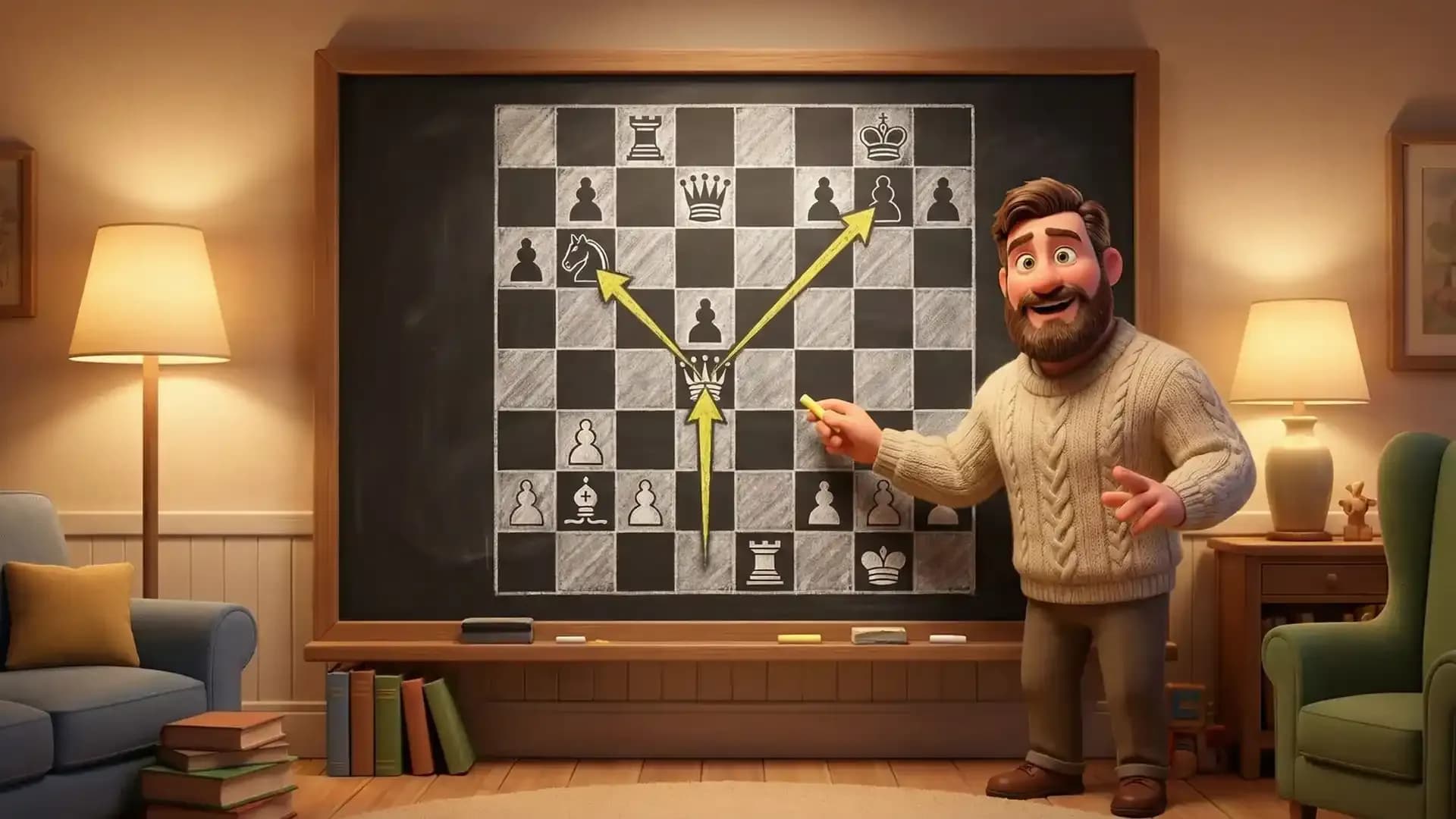
What Is a Fork in Chess? Meaning & Examples
What Is a Fork in Chess and why is it so powerful? Find out how to create deadly double attacks, trap major pieces, and start winning more games today.

10 Greatest Chess Players in History Who Changed the Game
Explore the 10 Greatest Chess Players ever, from classical masters to modern geniuses. Learn their achievements, styles, and lasting impact—start reading now.

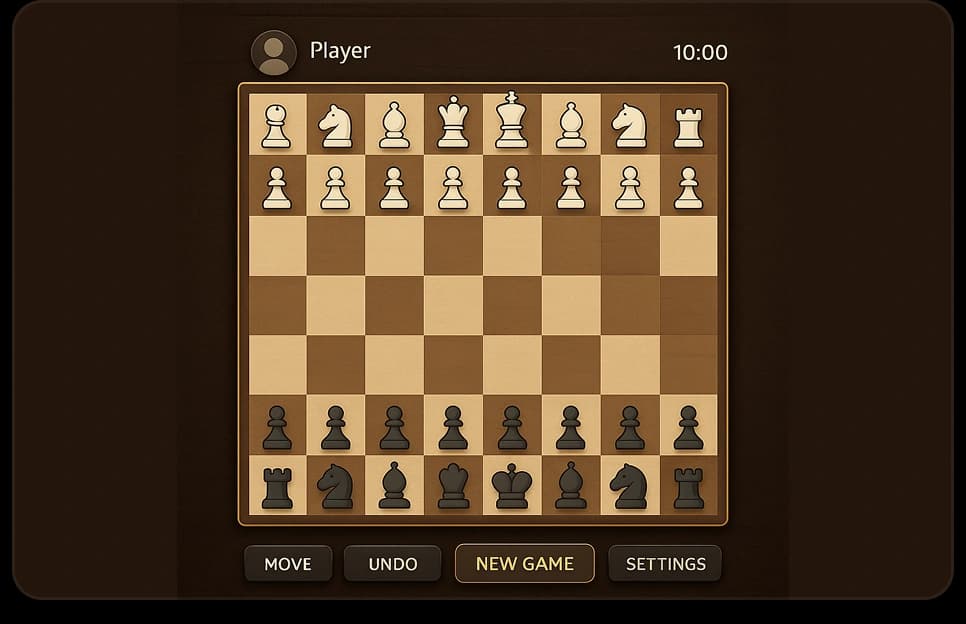
Ever wonder about the Chess.game story and vision, and what makes it one of the smartest chess platforms online? Behind every move, algorithm, and interface choice lies a deliberate effort to reshape how players learn and compete.
From concept to code, how Chess.game was built reflects a dedication to teaching through technology, blending precision with intuition.
Table of contents
What is the Story Behind Chess.Game
This is the story behind Chess.game, a platform where passion for chess meets breakthroughs in artificial intelligence. Its journey unveils how a clear vision, cutting-edge technology, and human-centered features came together to create a platform that doesn't just play better, it helps you play smarter. Let's step behind the scenes of Chess.game and uncover what truly sets it apart.
The Vision Behind Chess.Game
The Chess.game founding vision was simple yet ambitious: to build an intelligent platform that helps every player, beginner to grandmaster, improve through experience. During its early research, the team saw a gap in traditional online platforms: most were built for competition, not comprehension. That market insight shaped the Chess.game founding vision, which grew around three core pillars of chess platform innovation.
- Dynamic Difficulty – The system automatically adjusts challenge levels based on your growth curve rather than static ratings.
- Explainable AI – Every move suggestion includes clear reasoning, not cryptic computer lines, empowering players to learn, not just copy.
- Continuous Learning – The platform learns from players to enhance future recommendations, creating a true feedback loop of progress.
With these principles, building an intelligent chess platform wasn’t just a technological mission; it was an educational one. The Chess.game founding vision blended human learning psychology with cutting-edge data science to redefine chess platform innovation. Each feature connects back to this ideal of building an intelligent chess platform that teaches as effectively as it competes.
How Chess.Game's AI Actually Works
What really powers the magic? The heart of Chess.game lies in its proprietary Chess.game AI technology, designed from the ground up to adapt, explain, and evolve. Unlike traditional chess engines that fixate on brute-force analysis, Chess.game AI technology integrates adaptive machine learning with Monte Carlo Tree Search (MCTS) and neural network modeling to mimic human decision-making.
Most engines, including Stockfish or Komodo, depend on exhaustive evaluations. Chess.game AI technology, however, prioritizes learning context. It doesn’t just find the best move; it identifies why you missed it, then tailors future matches to fill that cognitive gap. The AI is clearly changing the way chess is played.
Traditional Engines vs. Chess.game's Adaptive Approach
| Aspect | Traditional Chess Engines | Chess.game AI Technology |
|---|---|---|
| Goal | Calculate the strongest move | Teach an optimal decision process |
| Style | Static evaluations | Dynamic, profile-based feedback |
| Player Model | None | Individual learning profile |
| Output | Best line only | Move + reasoning + counterexamples |
The secret sauce is its three-stage profiling system:
- Cognitive Mapping – Identifies your strengths and mistakes across tactical, strategic, and endgame phases.
- Adaptive Scenarios – Customizes puzzles and matches to strengthen weak areas.
- Context Reinforcement – Enhances retention with post-game lessons and comparison data.
Independent research cited by Chess.game’s dev team shows players using Chess.game AI technology improved 25–40% faster than those trained on conventional engines. Through consistent innovation on the chess platform, the system turns every game into an interactive lesson, making Chess.game AI technology is a benchmark in adaptive learning within online chess ecosystems.
Key Features That Actually Matter
From concept sketches to launch builds, Chess.game platform development focused on simplicity, meeting intelligence. Rather than overloading players with stats, the design emphasized clarity, feedback, and purpose. Every feature in Chess.game platform development advances learning through incremental mastery. It is also great for beginners, as you can learn how to improve at chess.
- Adaptive Matchmaking – Matches you with opponents who challenge but don’t overwhelm, using AI-driven skill mapping.
- Personalized Puzzles – Curates daily puzzles tailored to your tactical blind spots and recent mistakes.
- Post-Game Analysis – Explains each blunder or brilliancy through interactive timelines that show why moves worked.
- Opening Explorer 2.0 – Tracks your success rates across openings and suggests alternatives for better performance.
Every milestone in Chess.game platform development is guided by one question: Does this help the player improve? That principle pushed the product team to humanize the tech stack, turning data scientists and developers into digital chess mentors. Ultimately, Chess.game platform development aimed to teach smarter, not just play stronger.
Chess Study Plans in Chess.Game
At Chess.Game, you can surely have the chess study plan, which you can prepare by learning different chess openings, chess strategies, and how to implement them in a real-time game.
Chess.Game vs. Competitors
When users peek behind the scenes, Chess.game positions itself differently from the industry giants. While others chase analytical depth or social scale, Chess.game’s innovation centers on teachability over strength. Understanding how Chess.game behind the scenes works highlights why it's disrupting the chess-tech status quo through consistent chess platform innovation.
| Platform | Core Focus | Training Approach |
|---|---|---|
| Chess.com | Community + competition | Video & puzzle packs |
| Lichess | Accessibility + open source | Self-study tools |
| Chess.game | Learning intelligence | Adaptive personalized guidance |
So when you look behind the scenes, the defining factor isn’t just processing power, it’s progress power. With its human-centered AI, constant chess platform innovation, and research-driven design, Chess.game proves that the best opponent is the one that helps you grow.
Many people still ask why chess is better than other board games. The answer is straightforward because there are several benefits, and the thrill of playing chess.
Chess.Game Growth Explained: The Most Popular New Chess Platform
Discover how Chess.Game reached 1.5M monthly users and became the most popular new chess platform with free learning and smart matchmaking.
What Is a Good Chess Rating? Complete Guide for Beginners to Experts
What is a good chess rating? Learn what 800, 1000, 1200, and 1600 ratings mean, plus average chess ratings and how to improve fast.
Chess Pieces That Can Move Diagonally
Which Chess Pieces Can Move Diagonally? Rules Explained
What Is a Fork in Chess? Meaning & Examples
What Is a Fork in Chess and why is it so powerful? Find out how to create deadly double attacks, trap major pieces, and start winning more games today.
10 Greatest Chess Players in History Who Changed the Game
Explore the 10 Greatest Chess Players ever, from classical masters to modern geniuses. Learn their achievements, styles, and lasting impact—start reading now.