French Defense: Master the Strategy, Variations, and Mind Games



Albin Counter Gambit: Sharp Chess Opening Guide
Explore the Albin Counter Gambit in depth with opening theory, positional ideas, critical variations, and practical advice for both White and Black. Learn the plans today.

Dutch Defense: Aggressive Ideas and Winning Plans
Master the Dutch Defense chess opening and learn how to win with 1…f5. Explore attacking plans, structures, and practical strategies now.

Queen’s Indian Defense: Theory, Ideas & Main Lines
Queen’s Indian Defense explained with simple ideas, common variations, and practical tips. Discover how to play this powerful chess opening for Black.

Baltic Defense: Aggressive Chess Opening Explained
Discover the Baltic Defense in chess with clear explanations, key plans, and tactical traps. Improve your opening play and surprise rivals today.

Chigorin Defense: Key Ideas, Theory & Traps
Learn the Chigorin Defense with key ideas, main lines, traps, and strategy tips. Discover how Black creates active play against 1.d4.

The French Defense is well-famed for its history, value, and marvel as a chess opening. The essence of its in-depth formation, structure, strong counter-attackability, and intricacy more than explains its praised position in chess history.
If you love to play chess online, the French Defense is one of the best openings to test your patience and strategy.
Table of contents
What is the French Defense?
Definition and Overview
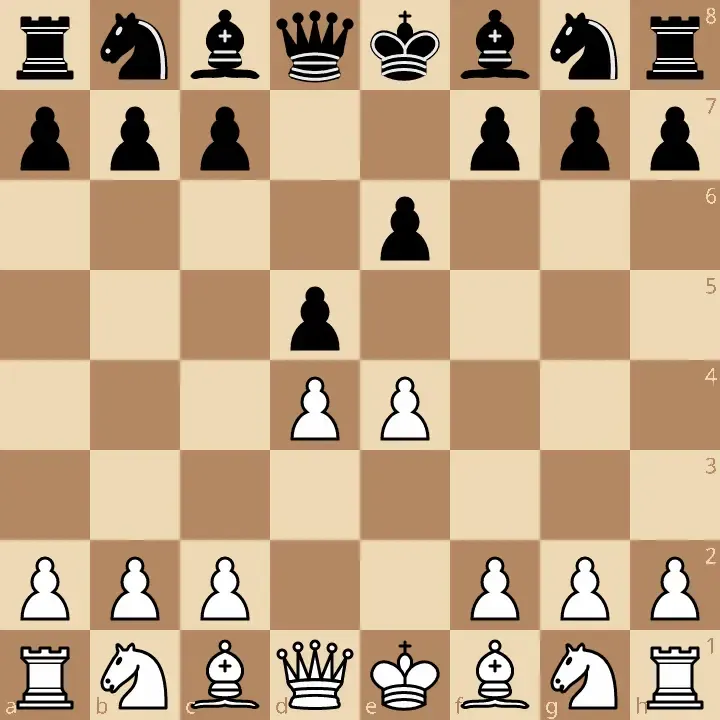
The French Defense is put into practice using the moves 1.e4 e6 2.d4 d5. After the first move by the white player, who is trying to control the center, one can utilize the French defense and remain stable in the structure as long as it remains balanced and organized.
Unlike the Sicilian, the French Defense opening does not focus on swift openeline movements, but instead pays keen attention to constructing strong, strategically placed formations.
Key Ideas Behind the Opening
The French Defense aims to achieve the goal of allowing the White player to take control of the center. This is then followed by the counter moves of …c5 or …f6.
This results in closed and positionally complex positions, wherein the structure of the pawns, as well as plans for the future, take priority over the desire to mount an immediate tactical attack.
Typical themes include:
- A strong pawn chain for both sides.
- Counterattack on the queenside.
- Space control and positional maneuvering.
History and Notable Players
In 1834, a Paris and London Chess Club Duel Took Place, where the Paris side was the first to employ this opening. The term French Defense Chess was probably created after.
We can also fathom how the French Defense can still be taught today. For example, there are Morozovich, Petrosian, and Botvinnik, who created utter marvels.
How to Play the French Defense
Main Strategic Concepts
The key move in every line is ...d5, fighting for central control. Black aims for a solid structure first, then counterplays with ...c5 or ...f6 once the moment is right.
Main strategic ideas:
- Defend first, counter later.
- Keep pawns connected with e6–d5–c5.
- Look for piece activity over pawn grabbing.
This is why it’s one of the best chess openings for beginners who want to develop patience and discipline.
Ideal Piece Setup
In most French Defense variations, Black develops as follows:
- Knights to f6 and c6.
- Dark-square bishop to e7 or d6.
- Queen often supports c5.
- King castles kingside early for safety.
The light-square bishop, often blocked by its own pawns, can develop later via b6 or a6, depending on the variation.
Mind Games in the French Defense
One of the most fascinating parts of this opening is the French Defense mind games.
Many aggressive players dislike facing the French because it slows them down; they're forced into a closed position where their attack loses speed.
Psychological factors that define this opening:
- Frustration factor: Opponents can’t easily break through.
- Strategic traps: Common themes like the Poisoned Pawn or the Winawer traps.
- Mental patience: Success comes to those who can wait for counterplay instead of rushing.
Major Variations of the French Defense
Advance Variation (1.e4 e6 2.d4 d5 3.e5)

In the Advance Variation of the French Defense, attention shifts towards controlling the center, as a strategic battle is about to unfold. As White smoothly advances into the territory, Black tactically gets ready to… launch the counteroffensive along the underpinning of the pawn chain by …c5 and …f6.
Plans:
- Black painstakingly, albeit surely, cuts the center down.
- White balances between slow improvement and careful counterplay.
- Common Mistake: White’s d4 pawn “overextends” and becomes the focus of attacks.
Exchange Variation (1.e4 e6 2.d4 d5 3.exd5)

Just like in the example before, the French Defense Exchange Variation has both sides balancing each other and forming a symmetric structure. However, despite the seeming tranquility the balance might indicate, the game's strategy is even more important regarding the positioning and time management of the pieces.
Plans:
This is well-suited for beginners learning the tactics of chess. Here, the focus is on achieving tactical balance while balancing the timing.
Classical Variation (1.e4 e6 2.d4 d5 3.Nc3)

This particular line perhaps equates to a balanced and logical position; the rest of the world revels in the dynamic yet reliable nature of the French Defense. The moment Nf6 is played, Black shifts into a defensive posture, attacking e4 while preparing…Bb4, opening variation positions for both tactical and positional play.
Plans:
- Strike e4 using pieces, not pawns.
- Cast soon and grow naturally.
Knight Variation (1.e4 e6 2.Nf3)

Unlike other openings, the French Defense Knight Variation is less theory-intensive yet remains very strong. Several times, this has been translated into the Exchange or Classical lines, which gives both the White and Black players plenty of room to be creative.
Plans:
- Black still plays …d5, …Nf6, and …Be7.
- Not only are both sides flexible, but the positions are also easy to navigate.
Key Ideas and Strategies
Strengths of the French Defense
- Very solid and reliable.
- Counterattacking is easy once the center is stabilized.
- Even in a cramped position, the French Defense still has plans of attack.
Weaknesses of the French Defense
- The light-square bishop is often hard to develop.
- Disadvantage in space in the opening phase.
- Experienced players know how to turn these into long-term assets.
Typical Middlegame Plans
- Pawn breaks: Utilize the …c5 and …f6 moves to free your position.
- Queenside play: Create a solid position with …a6 and …b5 while applying pressure on the c4–d4 complex.
- Central play: Always secure the king before engaging in the center.
These are part of the many basic chess strategies every player, even those starting out, should know.
Famous Games with the French Defense
Classic Example: Botvinnik vs. Capablanca (1938)
The French Defense in this match is exemplified by Botvinnik's ability to counter aggressive play. He meticulously built a fortress and countered, maintaining proper precision and structure to win ultimately.
Modern Example: Wesley So vs Hikaru Nakamura (2020)
Wesley So applied the French Defense Advance Variation to gain central control, then break through on the queenside. It has been demonstrated that the French Defense remains a highly regarded weapon, even in the contemporary era of computer chess.
Chess players who are called ‘defensive’ love the French Defense. If you love building a game with strong pawn structures, counterplay, and psychological wrestling, then this is the opening for you.
It is ideal for:
- Players want to dominate a match in a more laid-back, methodical fashion.
- Beginners wishing to boost their positional thinking skills.
Anyone in need of a counter to 1.e4. Once you learn the plans and structures, the French Defense's ‘defense to attack’ philosophy is easily mastered.
FAQ
- Retain the center with …d5 while constructing a strong defensive structure with a timely …c5 or …f6 flank attack.
- Yes, there also aren't many other chess openings that develop and encourage patience, defensive play, and planning as much as this.
- The Classical and Advanced Variations are the most popular, but the Exchange and Knight Variations are easier for beginners.
- Play the Tarrasch Variation (3.Nd2) or the other setups that King’s Indian Attack to avoid Black’s extensive preparation.
Albin Counter Gambit: Sharp Chess Opening Guide
Explore the Albin Counter Gambit in depth with opening theory, positional ideas, critical variations, and practical advice for both White and Black. Learn the plans today.
Dutch Defense: Aggressive Ideas and Winning Plans
Master the Dutch Defense chess opening and learn how to win with 1…f5. Explore attacking plans, structures, and practical strategies now.
Queen’s Indian Defense: Theory, Ideas & Main Lines
Queen’s Indian Defense explained with simple ideas, common variations, and practical tips. Discover how to play this powerful chess opening for Black.
Baltic Defense: Aggressive Chess Opening Explained
Discover the Baltic Defense in chess with clear explanations, key plans, and tactical traps. Improve your opening play and surprise rivals today.
Chigorin Defense: Key Ideas, Theory & Traps
Learn the Chigorin Defense with key ideas, main lines, traps, and strategy tips. Discover how Black creates active play against 1.d4.