Larsen's Opening (1.b3): The Complete Guide to the B3 Chess Opening


Albin Counter Gambit: Sharp Chess Opening Guide
Explore the Albin Counter Gambit in depth with opening theory, positional ideas, critical variations, and practical advice for both White and Black. Learn the plans today.

Dutch Defense: Aggressive Ideas and Winning Plans
Master the Dutch Defense chess opening and learn how to win with 1…f5. Explore attacking plans, structures, and practical strategies now.

Queen’s Indian Defense: Theory, Ideas & Main Lines
Queen’s Indian Defense explained with simple ideas, common variations, and practical tips. Discover how to play this powerful chess opening for Black.

Baltic Defense: Aggressive Chess Opening Explained
Discover the Baltic Defense in chess with clear explanations, key plans, and tactical traps. Improve your opening play and surprise rivals today.

Chigorin Defense: Key Ideas, Theory & Traps
Learn the Chigorin Defense with key ideas, main lines, traps, and strategy tips. Discover how Black creates active play against 1.d4.

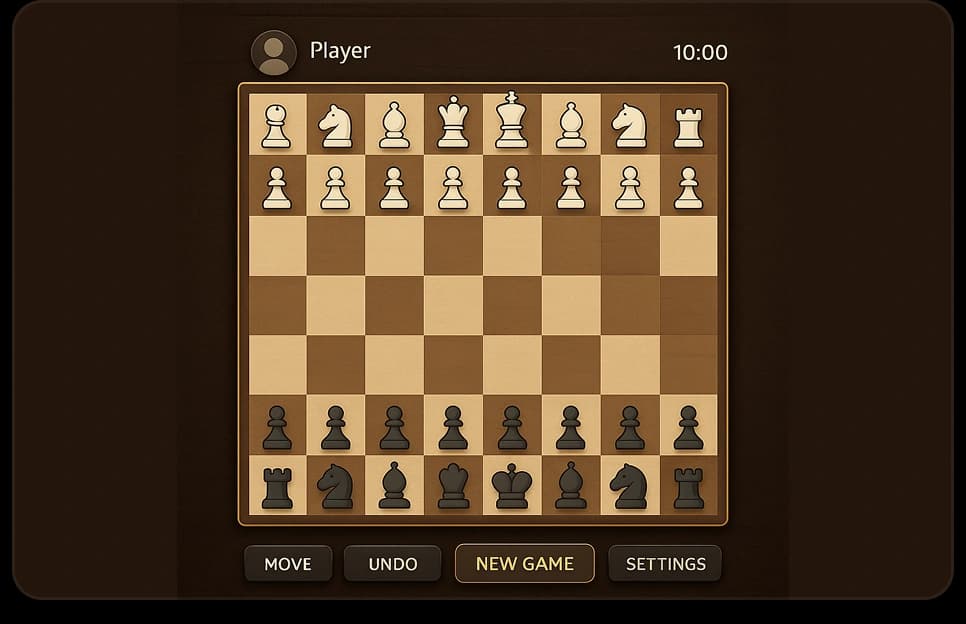
The Larsen's Opening in chess is one of the most interesting because it starts with 1.b3, while other famous chess openings start with 1.e4 and 1.d4.
It is named after the distinguished Danish Grandmaster Bent Larsen and is the perfect surprise opening to employ. It is the system of control, whether you call it the B3 Opening or the Nimzo-Larsen Attack.
You give your opponent the middle of the board, only to be able to attack the middle of the board on the sides, a strategy that most professionals employ when playing chess online in order to surprise the opponent.
Table of contents
What Is Larsen's Opening? (The 1.b3 Explained)

The Larsen Opening begins with 1.b3. On the surface, this looks like a calm opening, but it is anything but that. This opening begins with an aggressive purpose – that of fiancettoing the Bishop on the Queenside to b2. The Bishop can apply strong pressure along the long diagonal from b2 to e5 and the Black King Side.
The b3 chess opening is a so-called hypermodern opening. The aim of classical chess is to fill the center with the pawns as soon as possible. Hypermodernism is based on the idea that you can manage the center using flank pieces. White targets by asking Black to place pawns on e5 or d5.
Following the fianchetto formation of the Bishop on b2, the next set of moves consists of e3, Nf3, Bb5, or c4, which destroys the opposing player’s central setup. The flank strategy is considered one of the best chess openings.
The Classical Variation: 1…d5
When Black plays 1.d5, they play in a classical manner, asserting their presence in the center and ready to build their pieces naturally. This is among the most frequent replies to the Larsen opening chess players face.
If the player starts with 1.b3 d5 2.Bb2, he or she may follow up with e3 and c4. If Black attempts to defend the central squares with c6, White may continue developing with Nf3.
The beauty of the b3 opening chess strategy here lies in the fact that the Queen Bishops' pawns of Black will tend to block its own pawns, whereas the Bishop of White on b2 is the most powerful chess piece on the board and cuts through the center.
The Modern Variation: 1…e5
It is important to note that the most principled and ambitious response to 1.b3 is 1.e5. In this action, Black puts the pawn at e5 and threatens the bishop at the b2 square diagonally.
The Modern Defense Chess Variation can be very tactical in the game. White is likely to respond with 2.Bb2, vs. e5 pawn. Black has to protect it, usually with 2.Nc6. White can take a number of ways out of this:
- The Nimzo-Larsen Style: White opens e3, Nf3, and Bb5, exerting pressure on the Knight, which protects the e5 pawn.
- The Double Fianchetto: 1.b3 e5 2. White.Bb2 Nc6 3.g3, preparing to play the other Bishop to g2 so as to have complete diagonal control.
This variation often leads to open games where the player who understands typical tactical patterns, such as the back rank checkmate or complex pins, rather than just memorizing moves, will come out on top.
Move Order: 1.b3 or 1.Nf3 followed by 2.b3
The b3 chess system has one of the biggest benefits: the ability to be flexible with the order of moves. Most masters prefer to start with 1, though you can start with 1.b3.Nf3.
- Starting with 1.b3: This is the most direct way. It instantly tells your opponent what type of game you want to play.
- Starting with 1.Nf3: This move is very flexible. It prevents Black from playing 1...e5 immediately. If Black plays 1...d5, you can then play 2.b3. This delayed Larsen opening often transposes into the same positions but prevents certain aggressive Black setups.
A flexible move order will give you the ability to lure your opponent into systems they are not at home with. If they expect a Reti Opening (1.Nf3 d5 2.c4), they might be caught off guard when you suddenly pivot into a b3 opening setup.
Why Use the B3 Opening?
The main reason why the opening tactics used by Larsen should be used is to put the opponent out of their comfort zone. The majority of players waste their time learning about the Ruy Lopez or the Queen's Gambit. Their book knowledge frequently stops at move one when they look at 1.b3.
Moreover, the b3 chess opening is so low-maintenance. Unlike the Sicilian defense, in which you may have to study 30 moves of theory to survive, the b3 opening is based on the knowledge of the major concepts:
- Control the e5 square.
- Use the b2 Bishop as your primary weapon.
- Strike at the center with c4 or f4 at the right moment.
The Opening by Larsen is a very interesting and imaginative way to play chess. It rewards players with a high level of piece coordination and those who like to think outside the box, and it is also one of the best chess openings for white. Through the 1.b3 system, you can have a psychological advantage before the game is even really started.
FAQs
- It is an opening for White that begins with the move 1.b3. It focuses on developing the Queen's Bishop to b2 to control the center from the flank.
- Yes. It is a system that is theme-based and pattern-based, rather than theory-based, and this is what makes it best suited to beginners who need a simple system, which does not demand a complicated theory.
- Absolutely. It is not as frequently used in professional chess as 1.e4 and 1.d4, but has been found sufficiently useful to be employed by numerous world champions, such as Bobby Fischer, Garry Kasparov, and Magnus Carlsen.
- Although Aron Nimzowitsch used to employ it on occasion back in the early days of the 20th century, Bent Larsen was the one to perfect the system and demonstrate that this opening can be employed as a major tool in Grandmasters' games.
- There is no difference between them at all, as they are just different names of the same opening.
Albin Counter Gambit: Sharp Chess Opening Guide
Explore the Albin Counter Gambit in depth with opening theory, positional ideas, critical variations, and practical advice for both White and Black. Learn the plans today.
Dutch Defense: Aggressive Ideas and Winning Plans
Master the Dutch Defense chess opening and learn how to win with 1…f5. Explore attacking plans, structures, and practical strategies now.
Queen’s Indian Defense: Theory, Ideas & Main Lines
Queen’s Indian Defense explained with simple ideas, common variations, and practical tips. Discover how to play this powerful chess opening for Black.
Baltic Defense: Aggressive Chess Opening Explained
Discover the Baltic Defense in chess with clear explanations, key plans, and tactical traps. Improve your opening play and surprise rivals today.
Chigorin Defense: Key Ideas, Theory & Traps
Learn the Chigorin Defense with key ideas, main lines, traps, and strategy tips. Discover how Black creates active play against 1.d4.